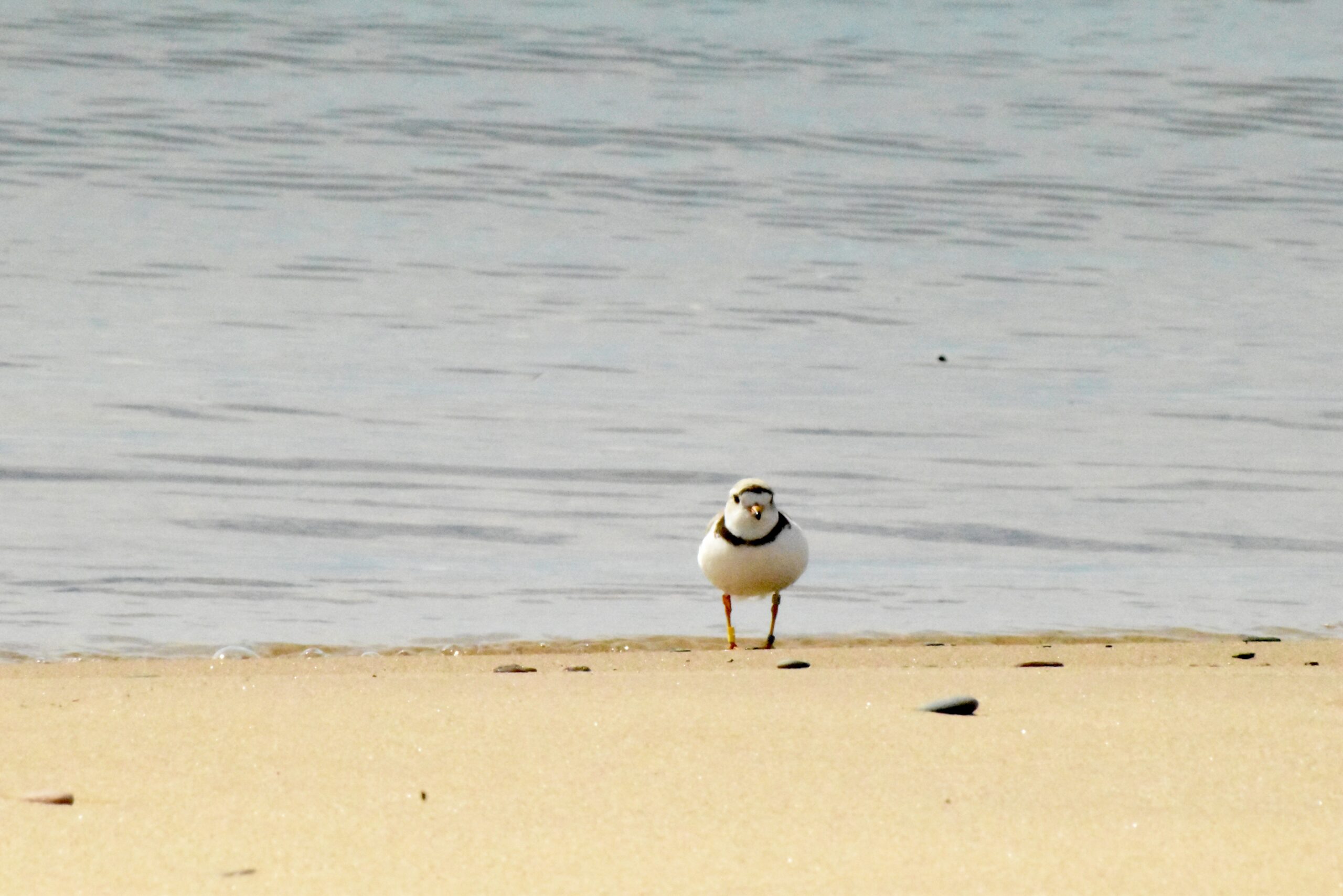
After nearly a month of incubation, Whitefish Point’s resident Piping Plovers are entering the final stretch before hatch day. Our resident pair of Piping Plovers are now just days away from their expected hatch date (June 28), and the nest has become the center of attention during daily monitoring.
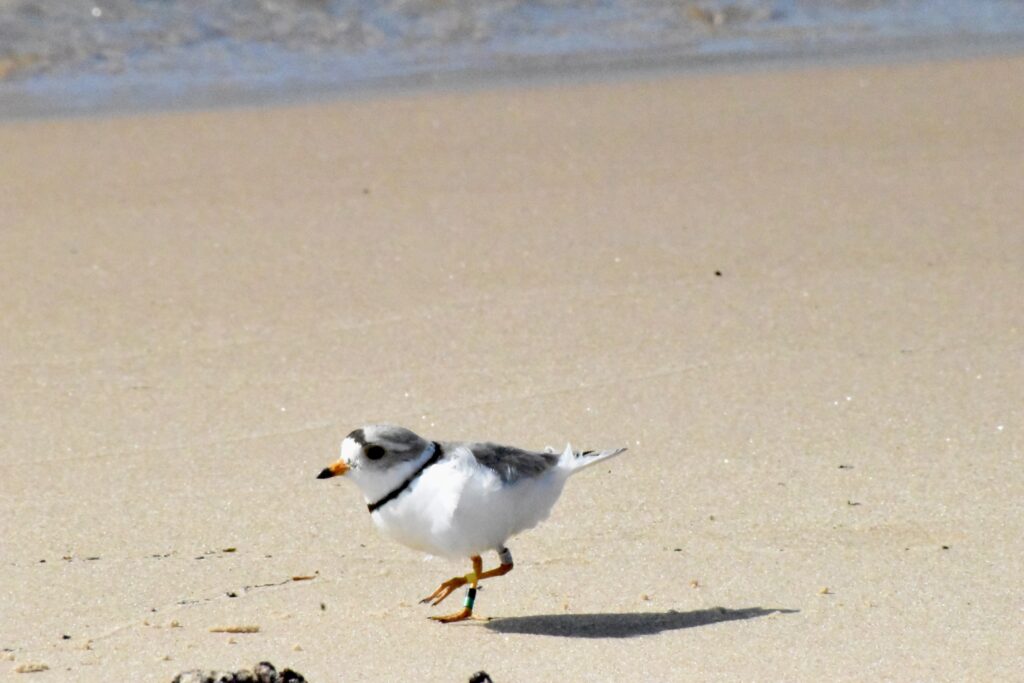
G Plover Stomp. Photo by Morgan Ness
For the past few weeks, V and G have been carefully incubating their four eggs. Incubation may not be the most exciting stage of the nesting process, but it is one of the most important. Nearly every hour (although these two like to switch it up on occasion), the adults switch places on the nest, ensuring the eggs remain warm and protected.
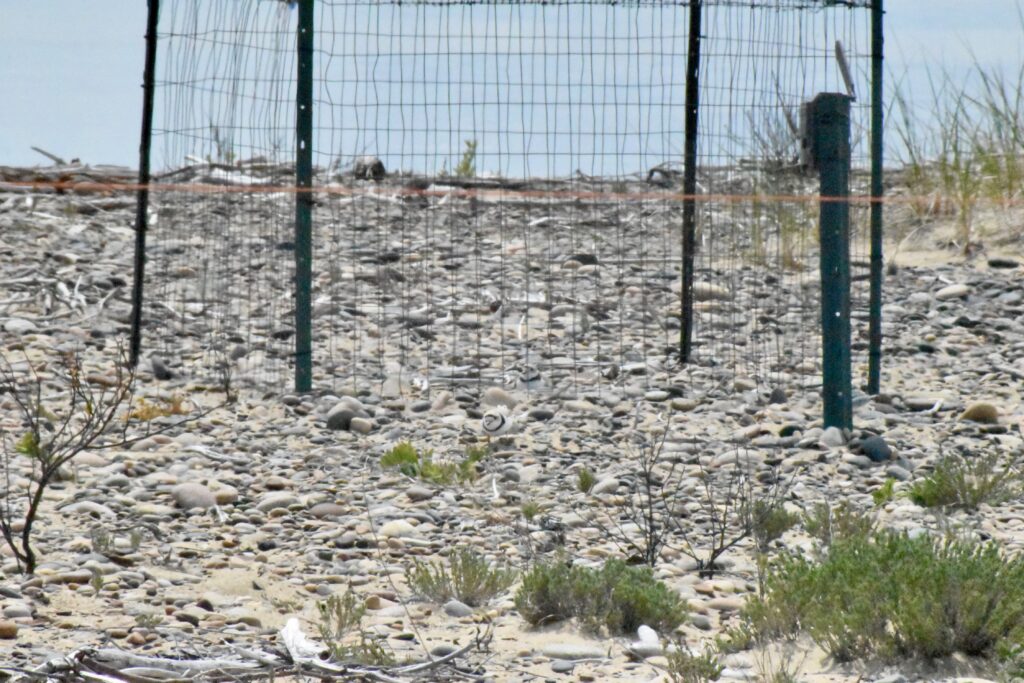
PIPL Incubation Switch. Photo by Morgan Ness
These exchanges have become a familiar sight, with one plover approaching the nest while its partner slips away to feed along the shoreline. Watching them dart across the sand in search of insects and other small invertebrates offers a glimpse into the constant balancing act of raising a family. Even before the chicks arrive, the parents are working hard to ensure the nest’s success.
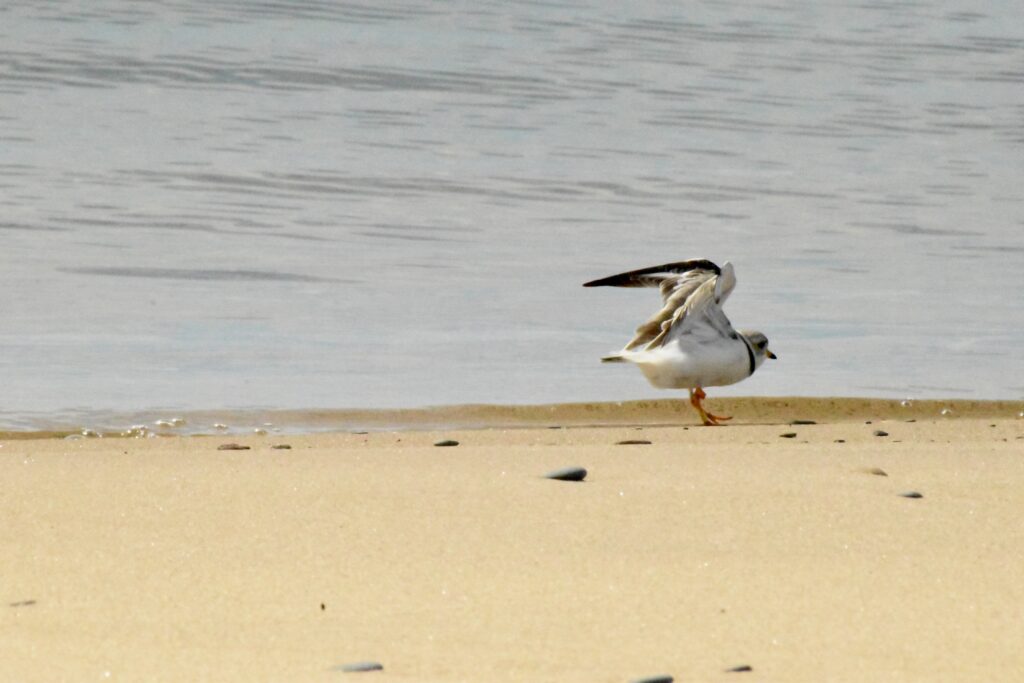
V Plover Stretch. Photo by Morgan Ness
Now, with hatch day rapidly approaching, anticipation is growing. Piping Plover chicks are precocial, meaning they leave the nest and begin exploring almost immediately after hatching. Within hours, the tiny chicks will be running across the beach, searching for food alongside their parents.
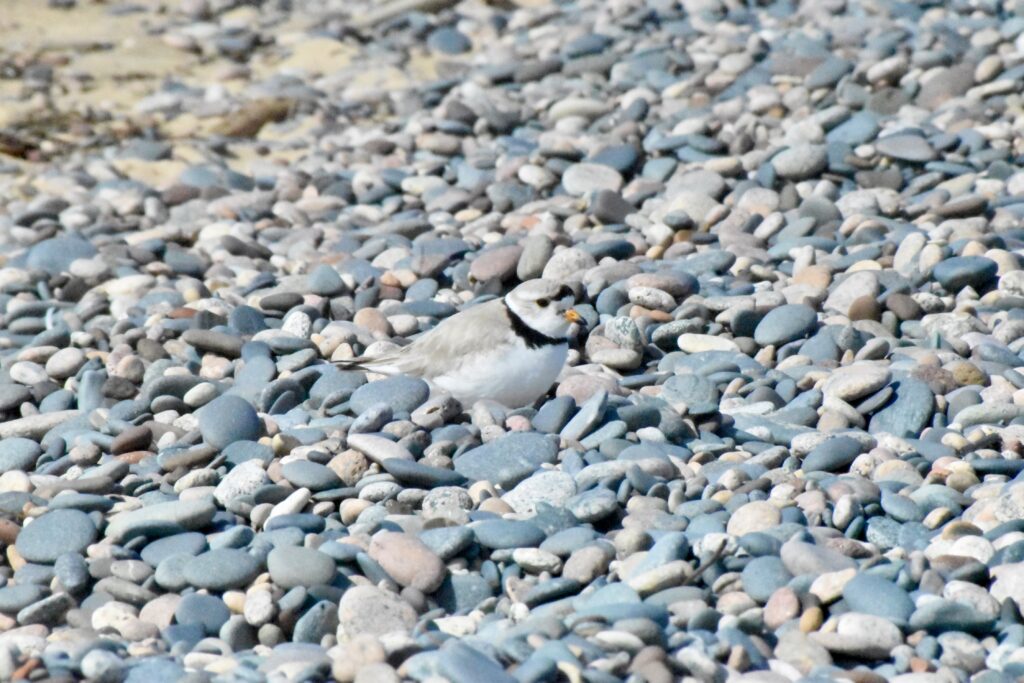
G in the Rocks. Photo by Morgan Ness
For now, the beach remains quiet with V and G faithfully taking turns tending to their nest. But if all goes according to plan, that quiet shoreline could be transformed by the arrival of four energetic chicks beginning their first stages of life on the shores of Lake Superior.
-Morgan Ness, 2026 Piping Plover Monitor
Feature Photo: PIPL V by M. Ness
Piping Plover monitoring is a collaborative effort between Michigan Audubon and Seney National Wildlife Refuge (USFWS).
You can keep up with the 2026 Piping Plover action at WPBO by reading Morgan’s blog posts and following WPBO’s social media (Facebook, Instagram, and X).
Morgan Ness: 2026 Piping Plover Monitor
 Having studied Environmental Science, Policy, and Management at the University of Minnesota Twin Cities, Morgan developed a passion for protecting migratory birds and forest ecology. After spending time in Montana conducting avian monitoring, Morgan is excited to experience Michigan’s species during migration season and to take in the change in scenery. Whether she’s identifying leg bands or chatting with beachgoers about the importance of plover conservation, Morgan’s enthusiasm for the outdoors is contagious. She is thrilled to call the Michigan shoreline her office this summer and contribute to the recovery of such an iconic species. When she isn’t bird-watching, Morgan is often crocheting, hiking, or watching Bravo.