Week 8 (July 2-8 ) began with V, G, and their two chicks exploring the shoreline. V and G have proven to be excellent parents, constantly remaining alert for potential threats and quickly becoming territorial whenever new birds venture along their shoreline. G, especially, has embraced his role as a first-time dad. He is always scanning for predators and is not afraid to fire off a series of loud warning calls if you get too close.
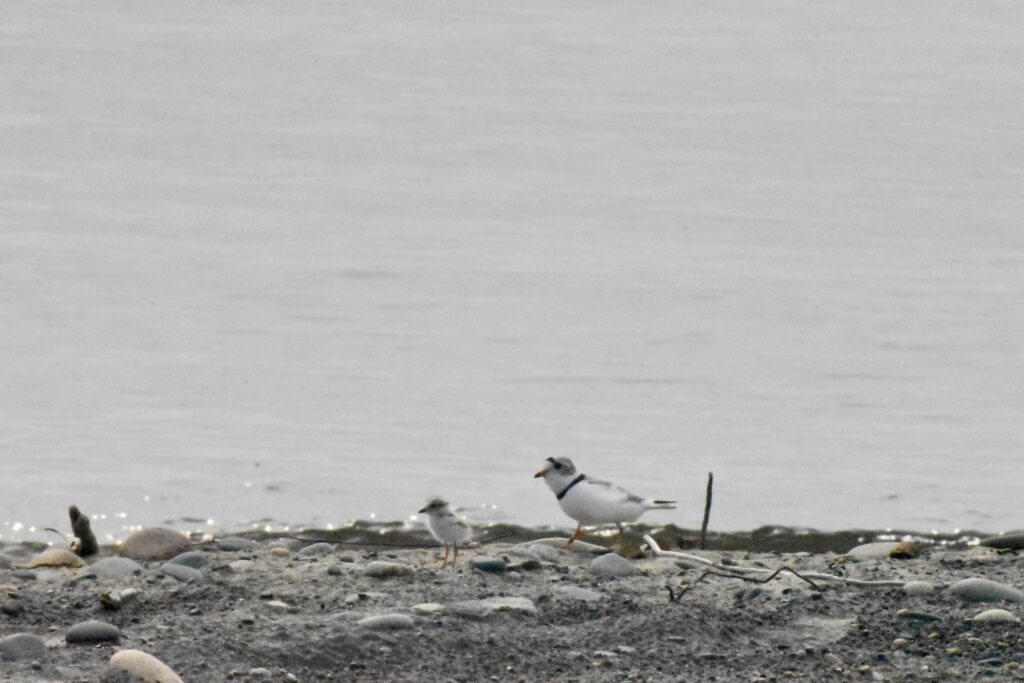
G and Chick. Photo by Morgan Ness
One of my favorite parts of the chick stage has been watching V and G interact with each other again. During incubation, they spent most of their time taking turns on the nest, so it has been super rewarding to watch them work together as parents. They are equally protective of their young, and I love looking over to see both standing alert and responding together to anything they suspect may be a threat.
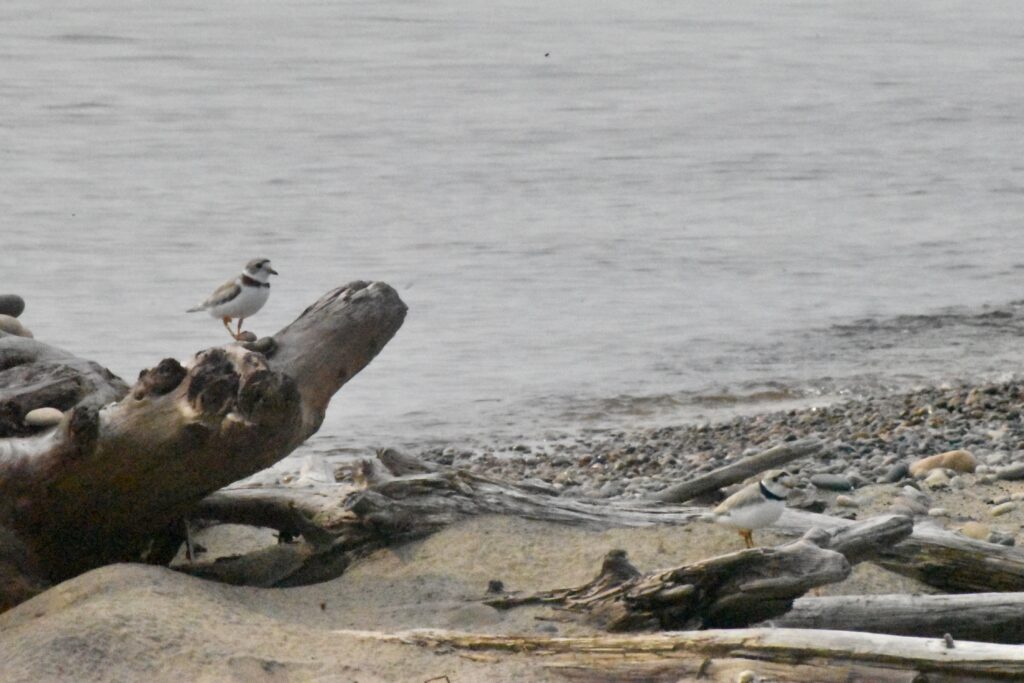
V and G on High Alert. Photo by Morgan Ness
Last Thursday and Friday, a family of Killdeer moved into the Piping Plover enclosure. It was adorable so see the two shorebird families raising their chicks in the same area. Although they were technically “sharing” the shoreline, the adults had frequent disputes over the territory.
By Saturday, the Killdeer family had moved on, but were soon replaced by four Spotted Sandpiper chicks and their parents. The tiny Spotted Sandpiper chicks were especially fun to watch as they bobbed their little tails while darting across the beach. Interestingly, V and G were much more tolerant of the sandpipers than they had been of the Killdeer.
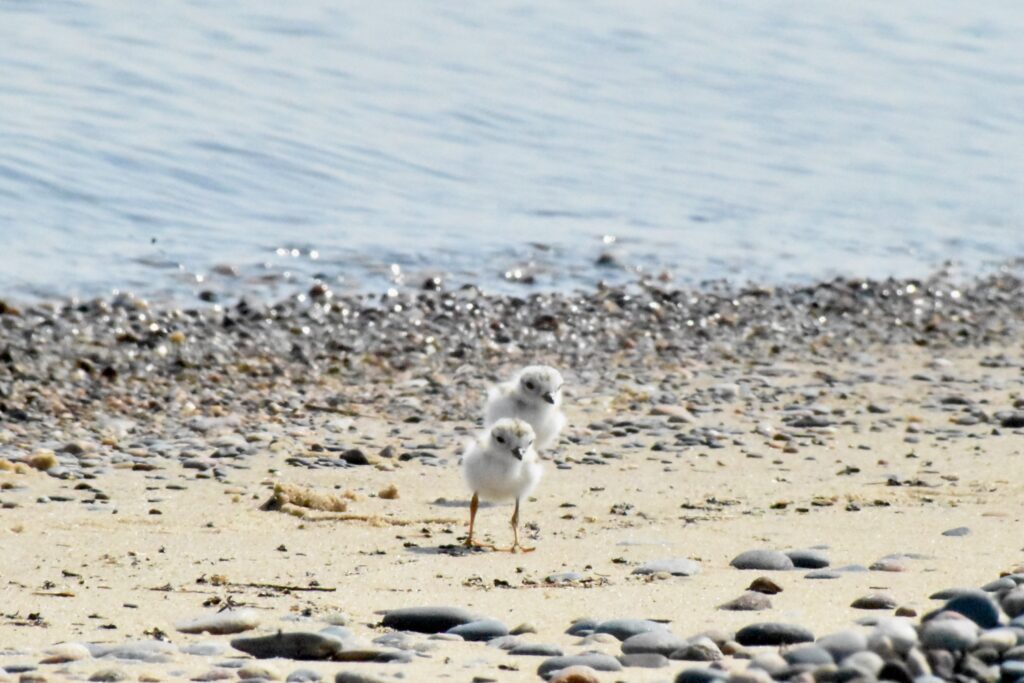
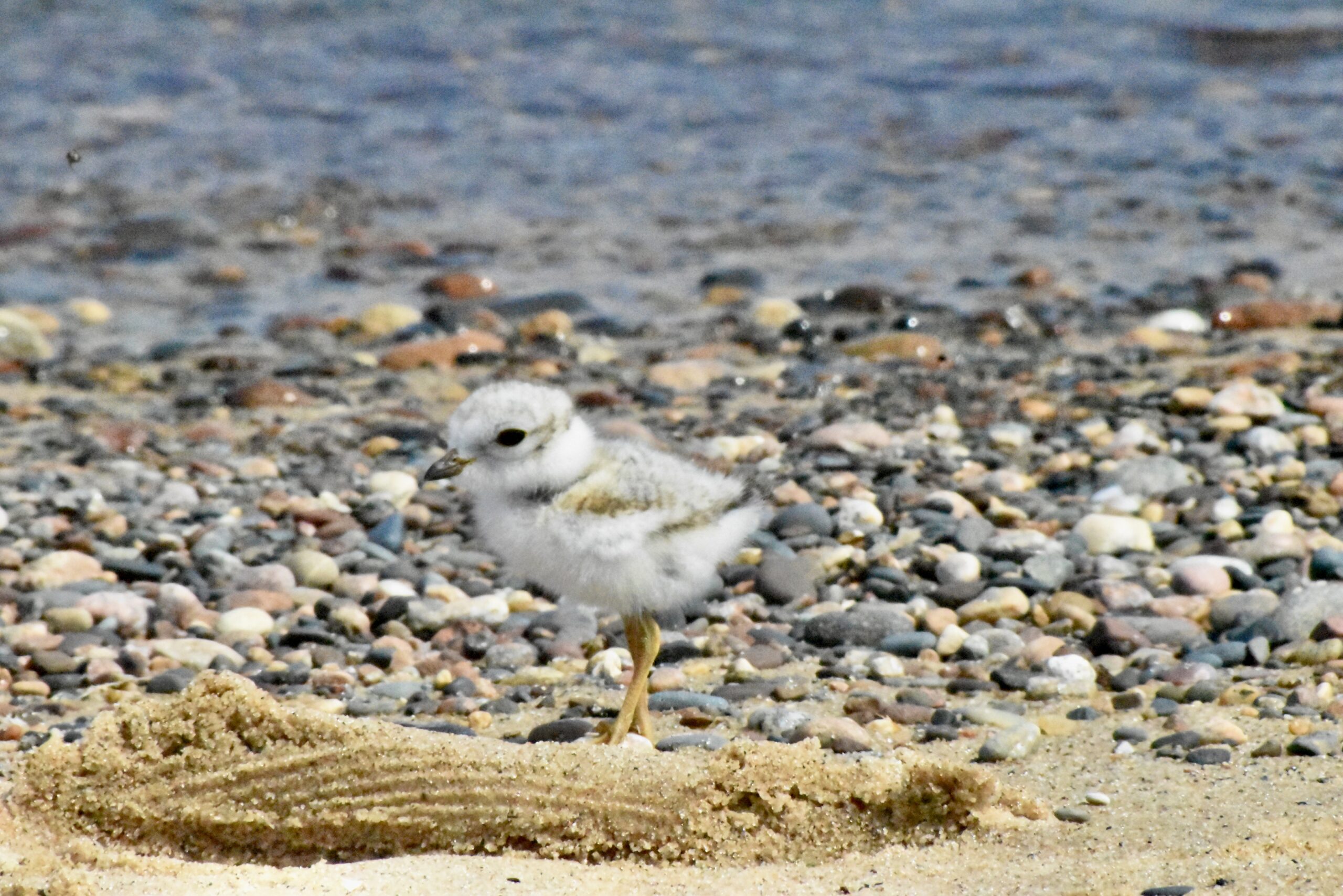
Piping Plover Chicks. Photo by Morgan Ness
On Sunday, however, only one Piping Plover chick was found with the adults. Although the cause of the chick’s disappearance is unknown, losses like this are an unfortunate reality for this endangered species. It was a difficult day for everyone invested in this nest, and we are hopeful that the remaining chick will continue to grow, survive, and eventually reach fledgling status.
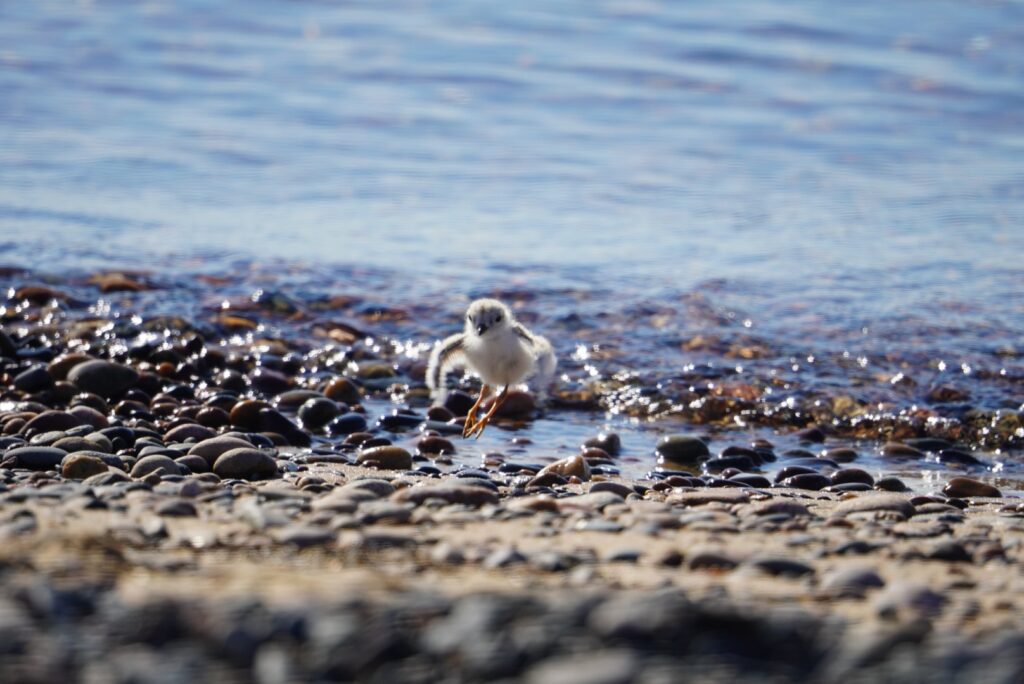
Surviving Plover Chick Learns to Fly. Photo by Gen Miller
Since then, V and G have devoted all of their attention to their remaining chick, who grows stronger and more independent with each passing day. Watching the little one become more confident as it explores the shoreline has been a reminder of just how resilient these birds are, and we are all cheering it on as it continues its journey towards fledging.
-Morgan Ness, 2026 Piping Plover Monitor
Feature Photo: PIPL Chick Along Shore by M,Ness
Piping Plover monitoring is a collaborative effort between Michigan Audubon and Seney National Wildlife Refuge (USFWS).
You can keep up with the 2026 Piping Plover action at WPBO by reading Morgan’s blog posts and following WPBO’s social media (Facebook, Instagram, and X).
Morgan Ness: 2026 Piping Plover Monitor
 Having studied Environmental Science, Policy, and Management at the University of Minnesota Twin Cities, Morgan developed a passion for protecting migratory birds and forest ecology. After spending time in Montana conducting avian monitoring, Morgan is excited to experience Michigan’s species during migration season and to take in the change in scenery. Whether she’s identifying leg bands or chatting with beachgoers about the importance of plover conservation, Morgan’s enthusiasm for the outdoors is contagious. She is thrilled to call the Michigan shoreline her office this summer and contribute to the recovery of such an iconic species. When she isn’t bird-watching, Morgan is often crocheting, hiking, or watching Bravo.