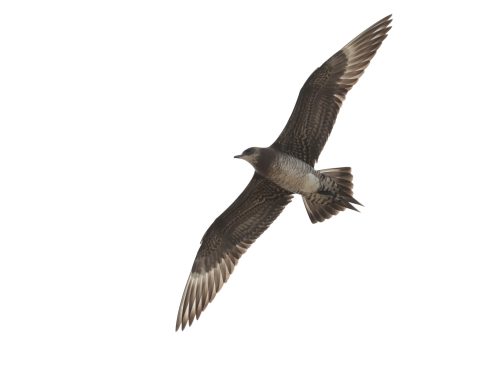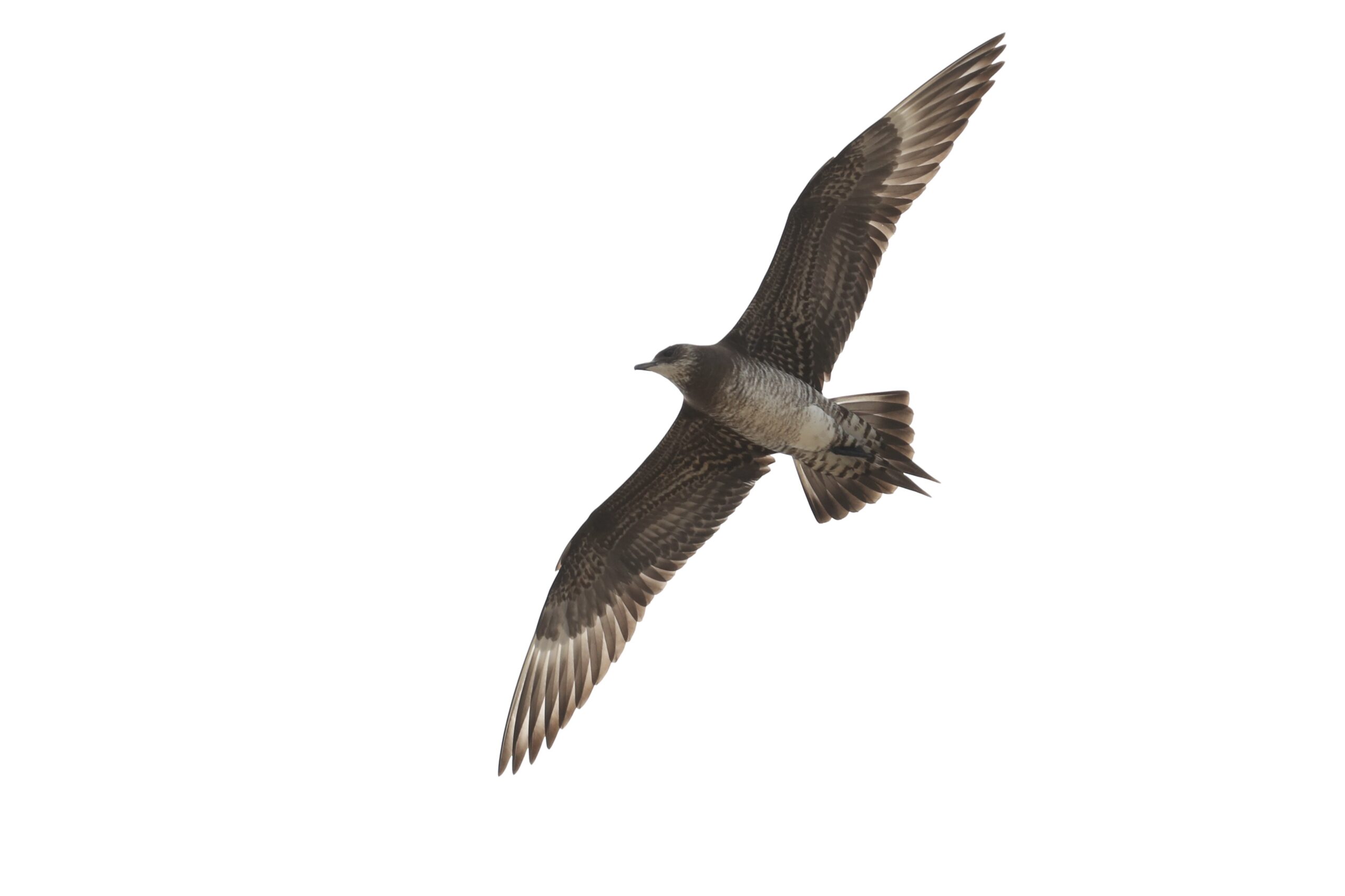
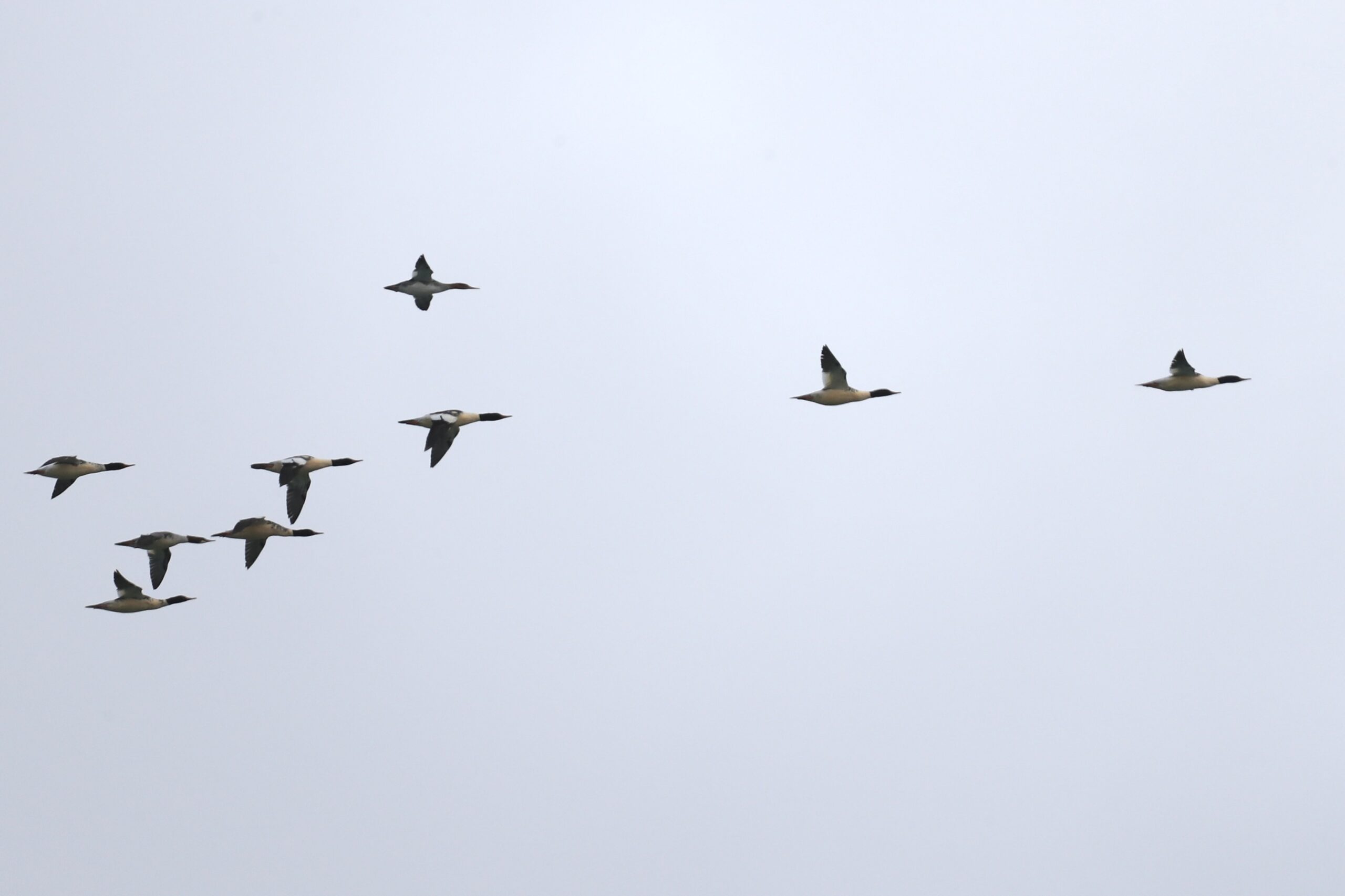
The last week of November for the count had some fun flights. We were lucky to have northerly winds off the James Bay again and that brought down an influx of Buffleheads and Common Goldeneyes. This week, we counted 1,300 Buffleheads and 1,200 goldeneyes, which was a nice boost from what was looking like a poor season for Bucephala. On the 14th, that streak continued with what would be our only Harlequin Duck of the season. A lone female flew southeast during an early morning push of goldeneyes.
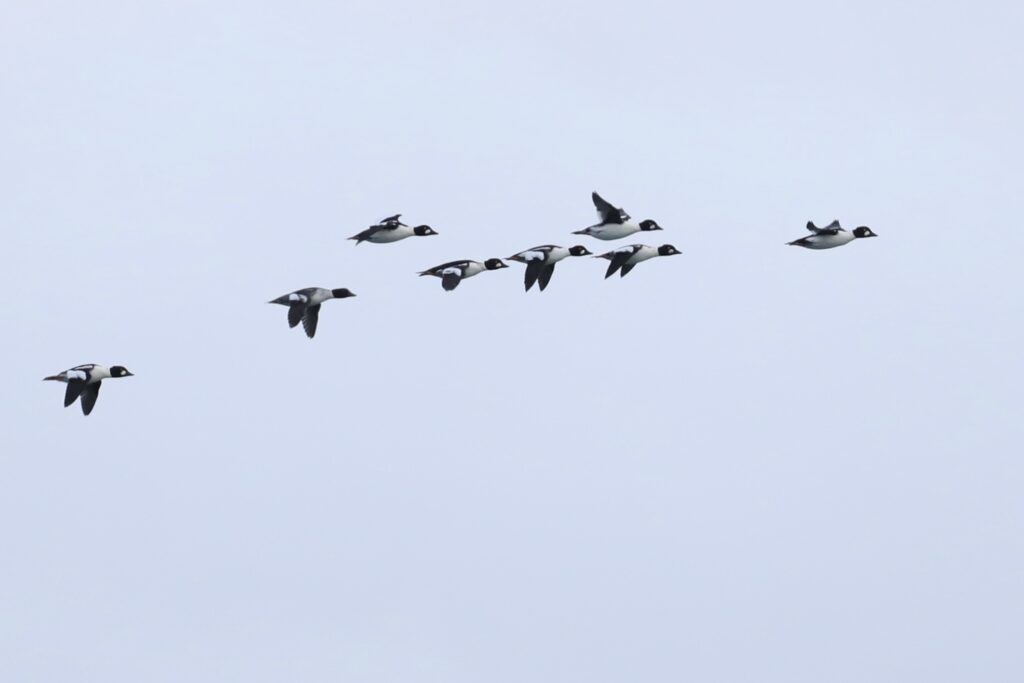
Common Goldeneyes. Photo by Jack McDonough
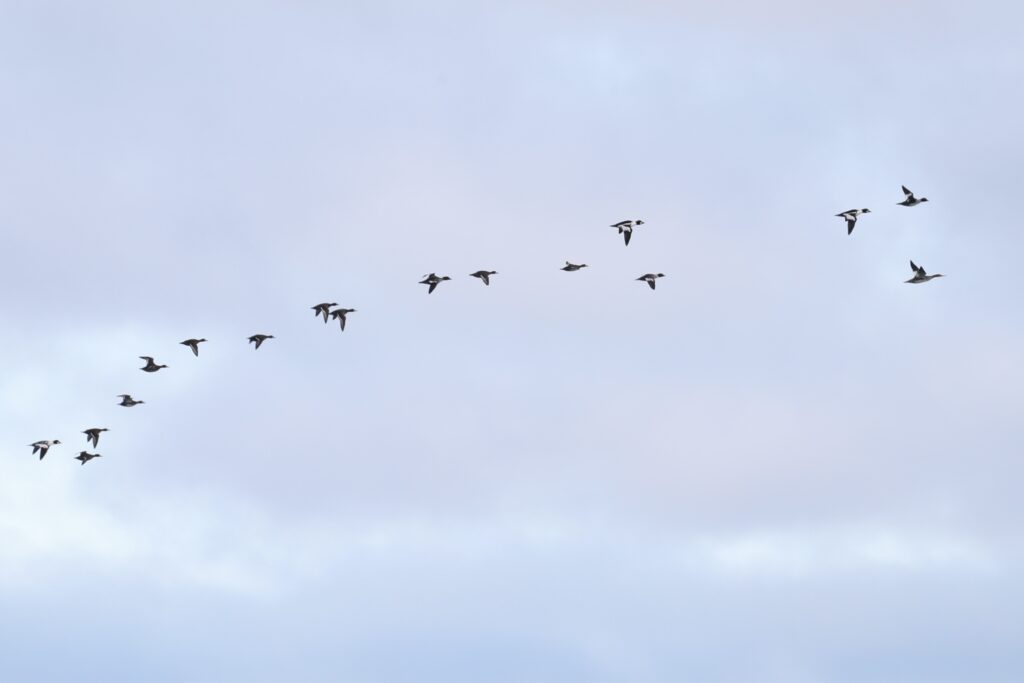
Common Goldeneye and Greater Scaup. Photo by Jack McDonough
Additionally to Bucephala, the snow and cold temperatures to our north brought over a few days of nice Common Merganser migration, as well as a few Hooded Mergansers. Common Mergansers typically move very late, only affected by the hardest frosts. It was a nice to see adult males of all three mergansers for the first time this season. The Common Mergansers were especially pretty in the morning light.
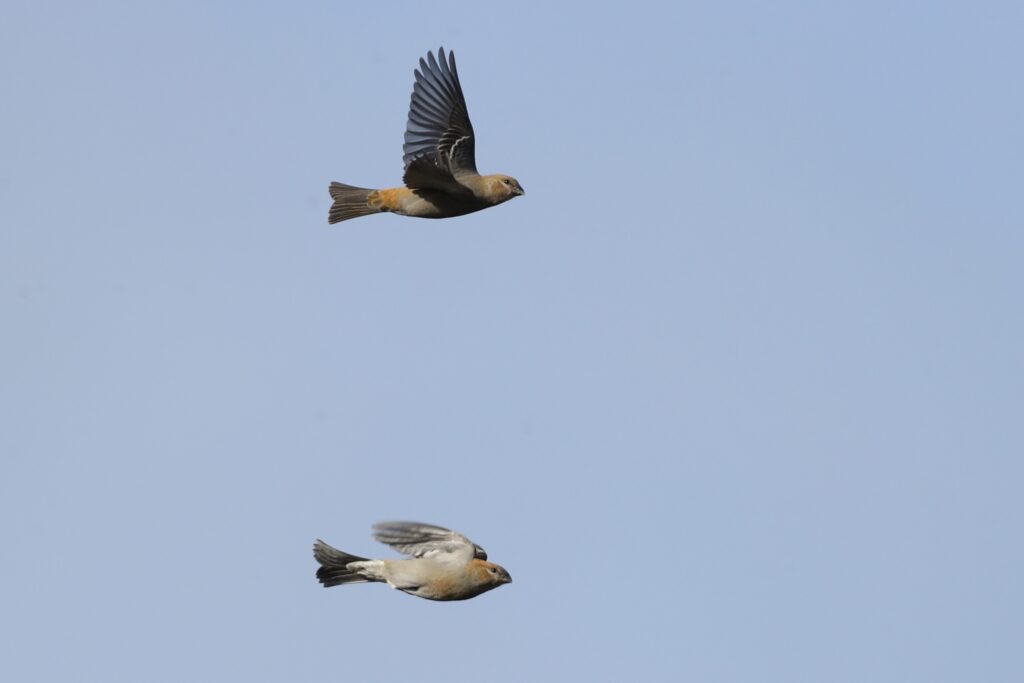
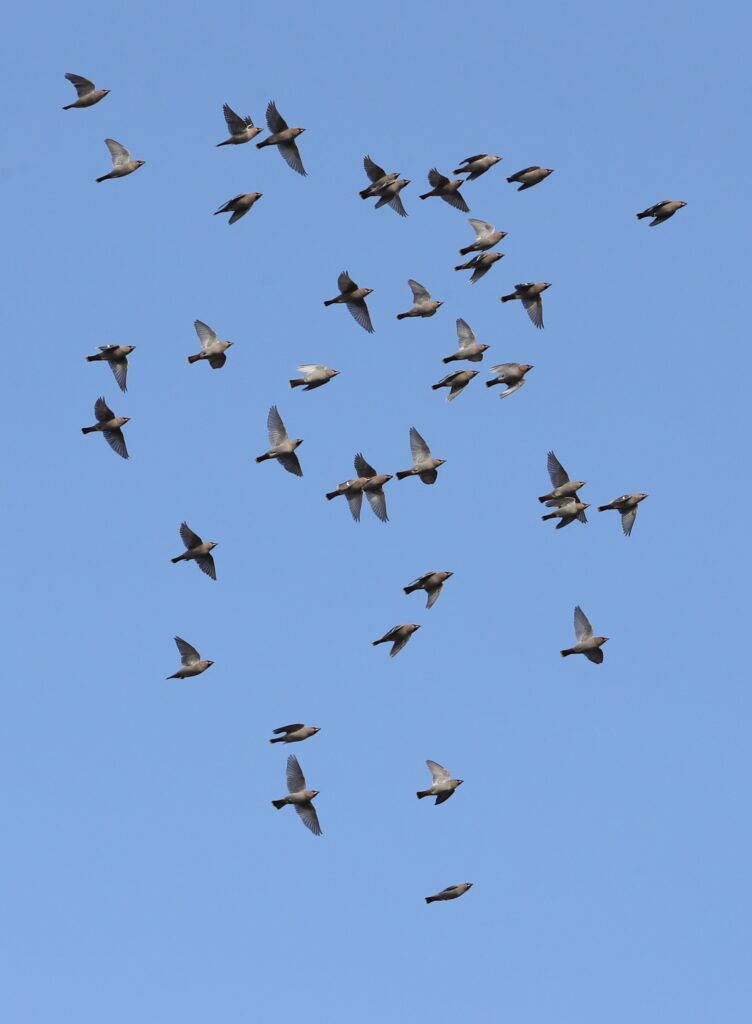
Pine Grosbeaks. Photo by Jack McDonough
You can now see the waterbird count data on Trektellen! Check it out at trektellen.org/count/view/5727.
You can keep up with the 2026 Fall Waterbird Count by reading Jack’s weekly blog posts and following WPBO’s social media (Facebook, Instagram, and X). The fall waterbird count runs August 15 through November 15.
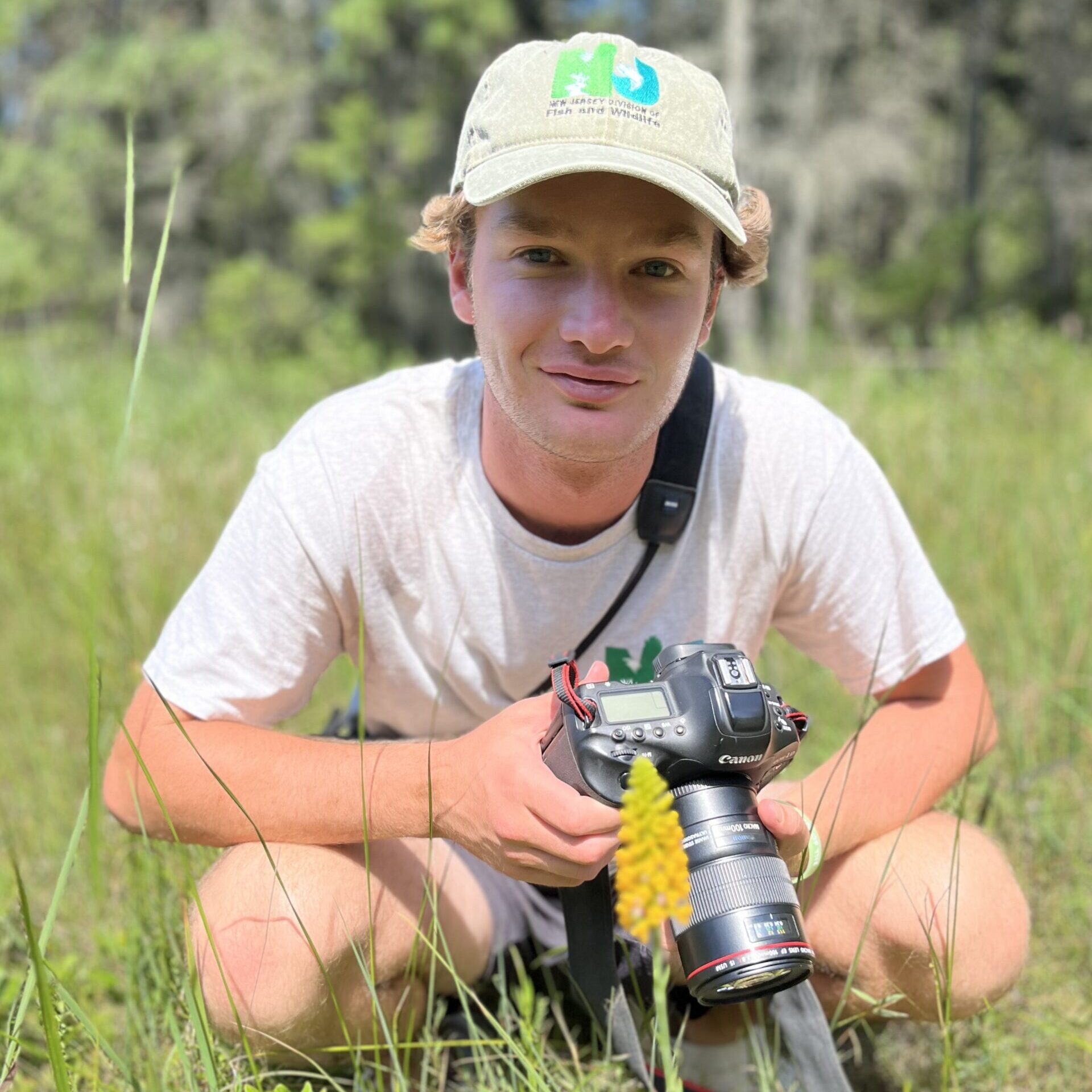
Jack McDonough: 2026 Fall Waterbird Counter
Jack grew up in Cape May, New Jersey, where he developed an early passion in life for anything migrating. At New Jersey Audubon’s Cape May Bird Observatory (CMBO), Jack worked for the Monarch Monitoring Project for six years and coordinated it for the last three. Jack was a migratory bird counter for two seasons for CMBO’s Springwatch project and was a swing counter for several fall counts such as CMBO’s Morning Flight, Avalon Seawatch, and Cape May Hawkwatch. Additionally for NJ Audubon, he preformed aerial imagery annotating for seabirds with USGS. Jack worked as a biologist for NJDEP Fish & Wildlife under the Endangered and NonGame Species Program for several years doing surveys and management work for state-listed species. Owning his own business in ecological consulting and biological monitoring, Jack has worked across Nevada and California in the past year. He spends most of his free time out in nature, studying behavioral ecology through the arts.