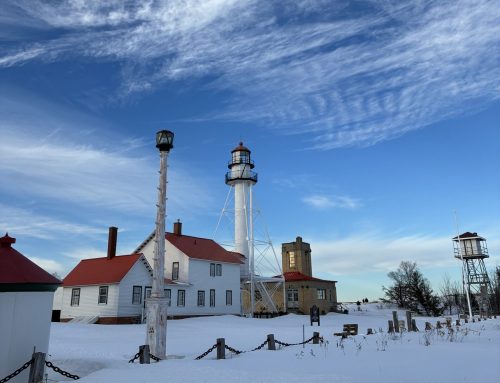
Week 13 was the final week of the fall waterbird count, with two days to spare. This will be my last blog post (unless we see something phenomenal in the last two days). With our total numbers for the week (4,278 birds) compared to early September, we are beginning to see migration tapering off. On 11/12, we had our first groups of adult male Common Mergansers fly past the Point, which is a sign that the waterbird migration is coming to an end. Despite the drop in numbers, we still had some decent diversity this week.
Long-tailed Ducks and Red-breasted Mergansers are the only birds that continue to come through in larger numbers daily; we’ve also had Common Goldeneye flights on some days this week. We see White-winged Scoters most days still but quit seeing Surf and Black Scoters as frequently. We had a late Double-crested Cormorant fly past the Point on 11/9. We haven’t seen this species regularly since early October. On 11/13, we had our third Harlequin Duck of the fall. We finally added a couple more gull species to our list, with our first Lesser Black-backed Gull on 11/7 and two Glaucous Gulls on 11/13.
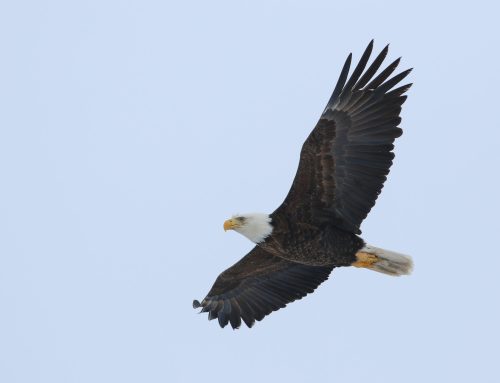
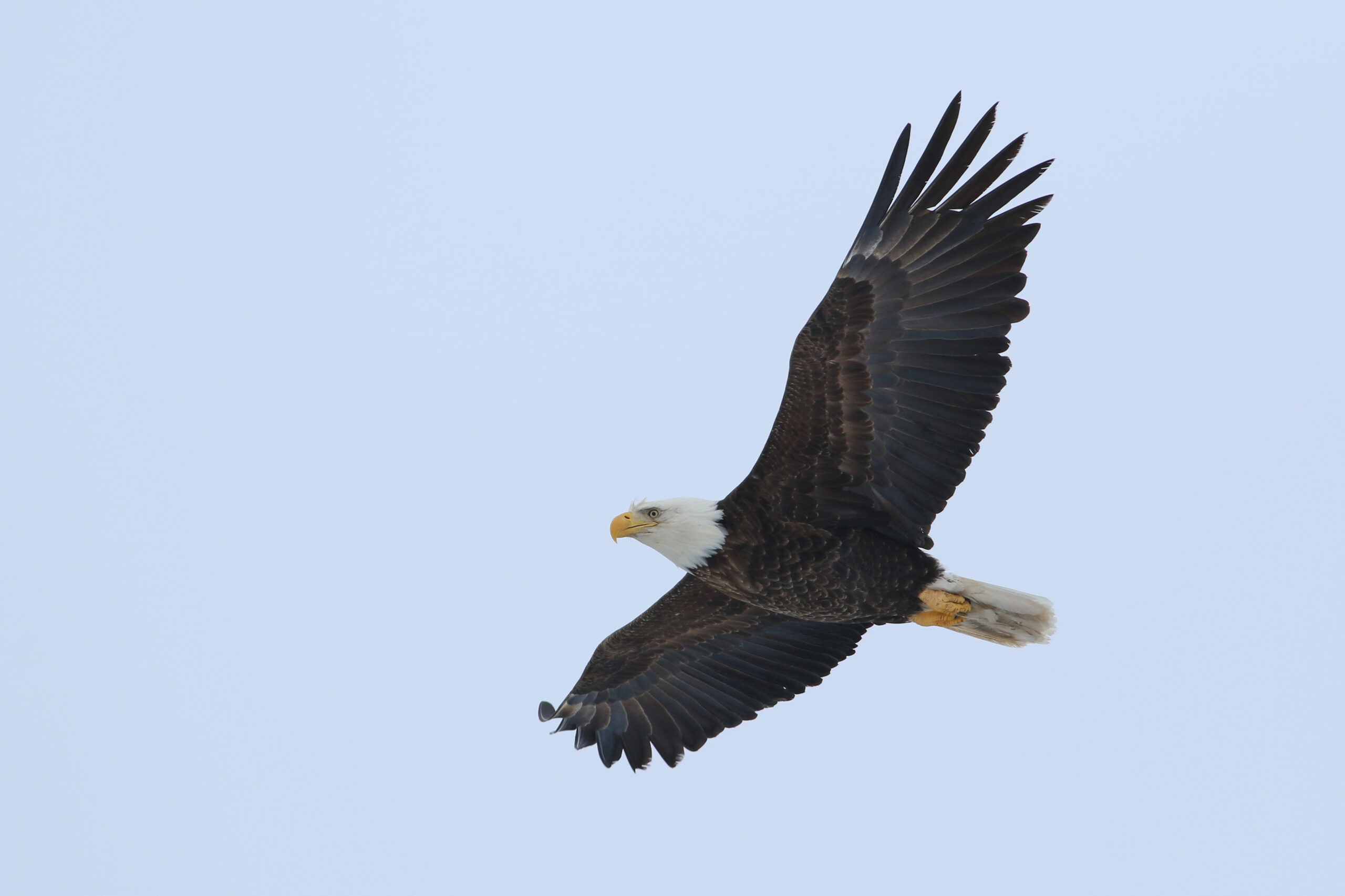
The diversity of other birds has also really dropped in the last week. Bald Eagles are now the only raptors we see daily. We are still seeing some diversity in finches, such as Pine Siskins and American Goldfinches, around the Point, but in smaller numbers than before. We had a Townsend’s Solitaire on 11/12 that briefly perched behind the count site. On 11/10, we had three swallows flying low over the water; it was determined later by looking at photos that at least one of these swallows was a Cave Swallow, which is quite rare!
Overall, I had an amazing time as the Fall Waterbird Counter here at Whitefish Point! Thank you to everyone who has spent time birding with me and to everyone who has read my blog posts throughout the fall!
~ Hannah Leabhart
2024 Fall Waterbird Counter
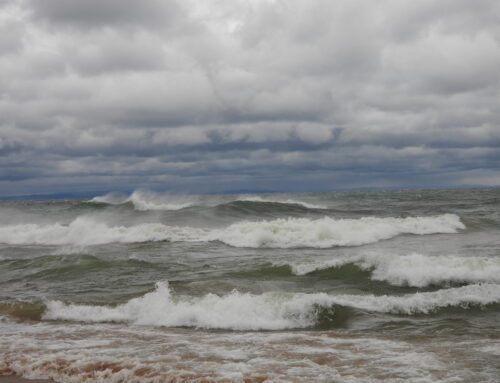
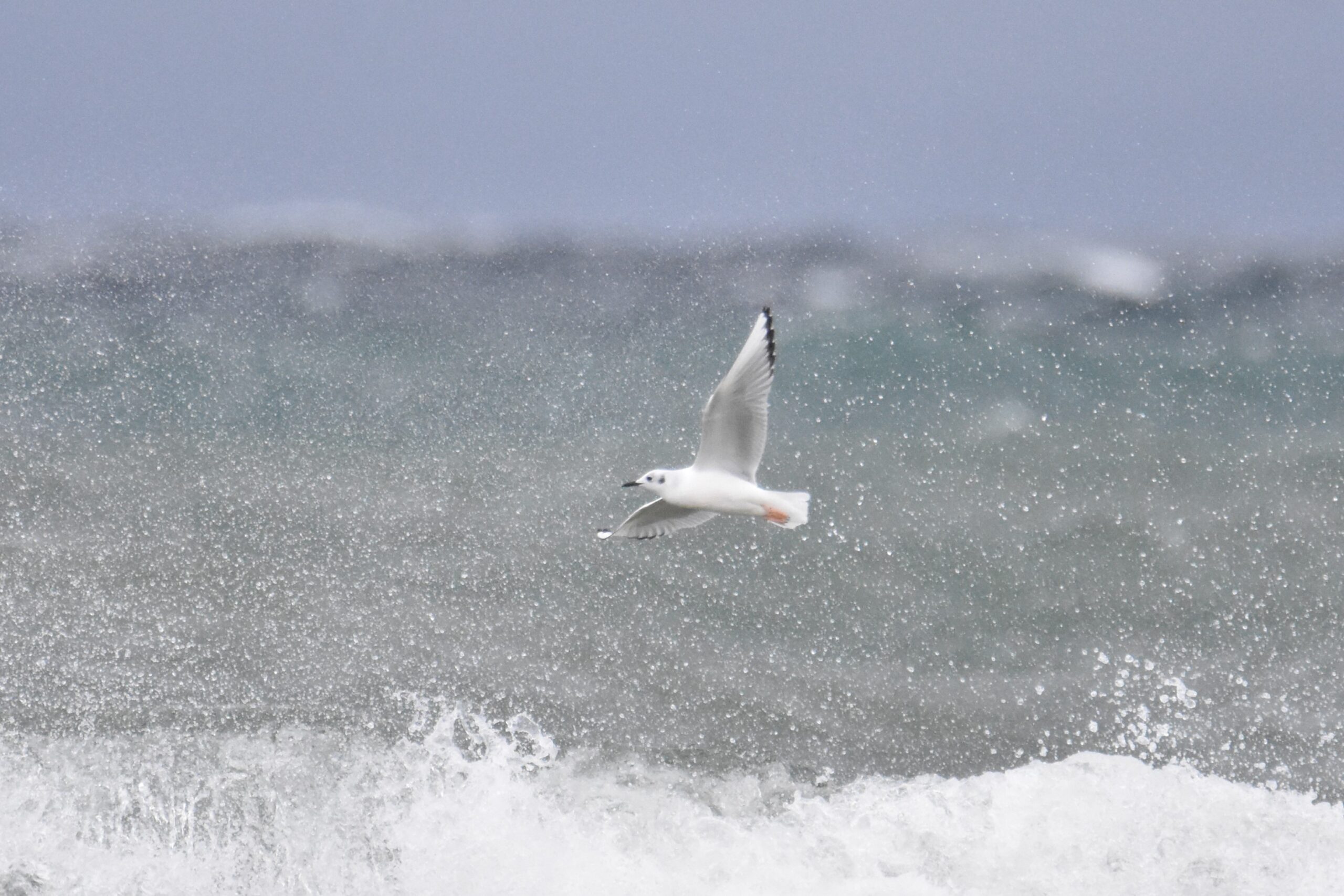
Featured photo: A Bonaparte’s Gull with waves crashing behind it. Photo by Hannah Leabhart
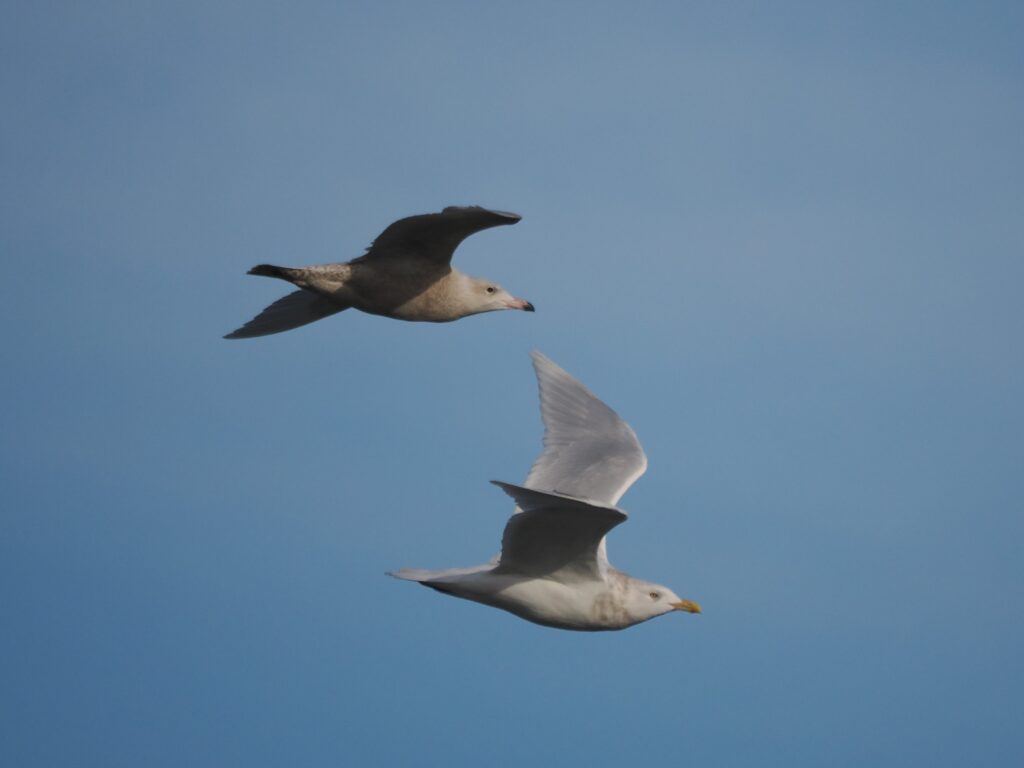
Our first Glaucous Gull of the fall and a nice side by side comparison of an immature (top left) and an adult (bottom right). Photo by Clay Bliznick
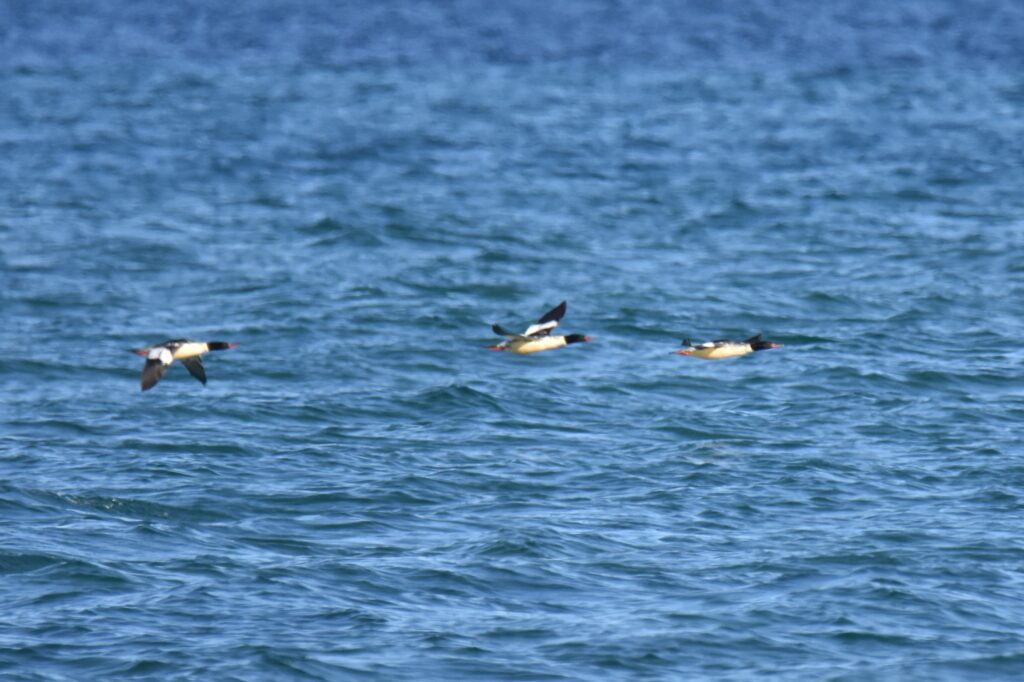
Our first adult male Common Mergansers of the fall, a sign that migration is coming to an end. Photo by Hannah Leabhart
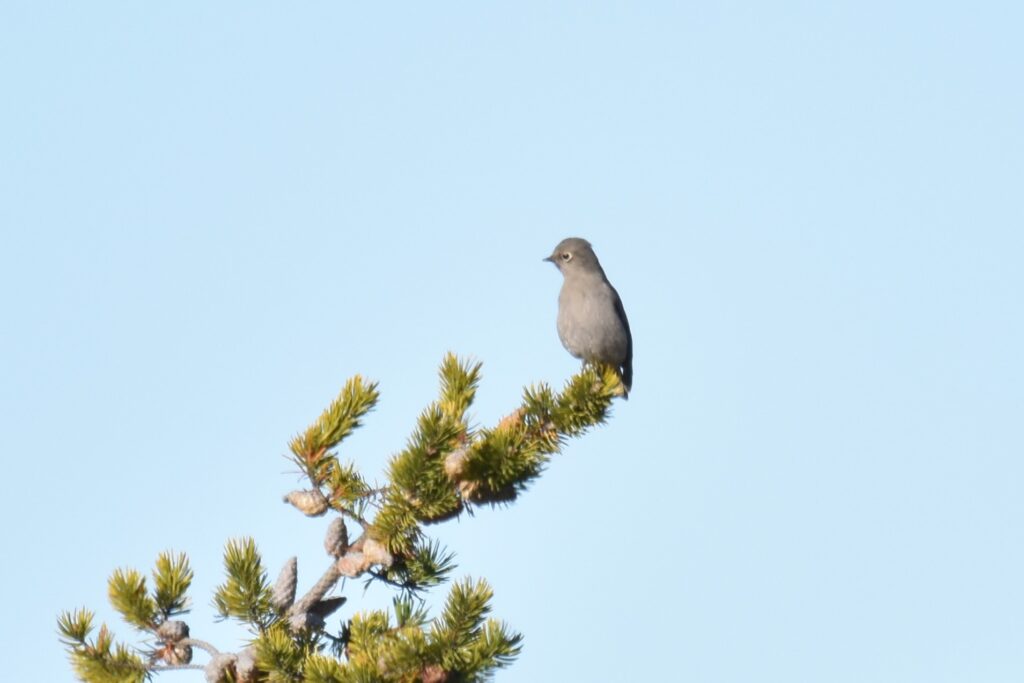
A Townsend's Solitaire perched near the waterbird count. Photo by Hannah Leabhart