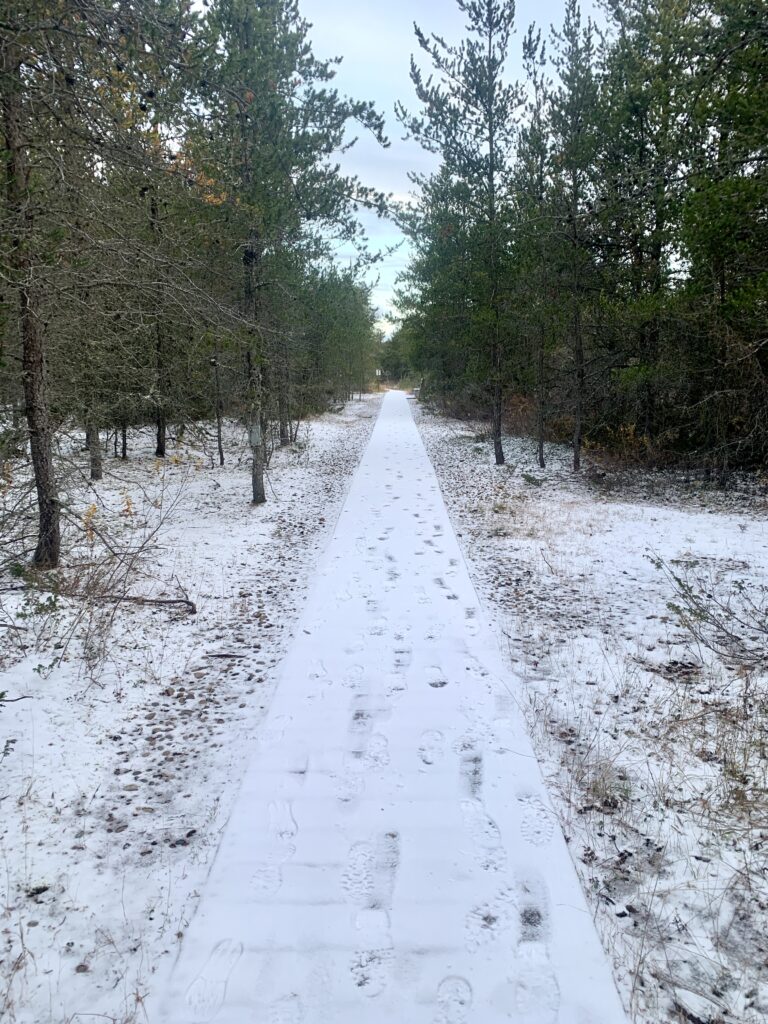
This past week brought a distinctly wintery feel to Whitefish Point. From November 5th-7th, temperatures lingered in the mid-30s to low-40s with light to moderate west winds, offering chilly but manageable conditions. Things shifted starting on the morning of the 8th as temperatures fell into the upper-20s and low-30s and north winds took hold for the weekend. Sunday the 9th brought the strongest push of cold air, and while it didn’t match the intensity of the recent gales, the combination of icy temps and stinging gusts made birding along the lakeshore a bit uncomfortable at times. Light snow arrived over the weekend too, leaving a thin layer on the ground from the 8th through the 10th resulting in a pleasant change in aesthetic, to me at least. It wasn’t much compared to the heavy lake effect totals elsewhere, but it was enough to change the mood of the landscape and mark the season’s turn.

The early morning snow on the boardwalk on Friday the 8th. Photo by Clay Bliznick.

Migration has continued to taper as we move deeper into November. Finch activity remains the main source of movement, though even that has slowed noticeably compared to last week. American Goldfinches have mostly moved on, Redpolls have dropped off a lot, but Pine and Evening Grosbeaks continue to hold fairly steady. Outside of finches and Black-capped Chickadees, songbird numbers have thinned significantly. Sparrow diversity has dwindled almost entirely, with only occasional American Tree Sparrows or small handfuls of Dark-eyed Juncos hanging on. Snow Buntings have also dropped to just a few scattered birds after weeks of frequent flocks, and Horned Larks are scarce as well. We still have several Blue Jays which are doing their best to brighten up the cloudy days just a bit!

Blue Jay collecting as many peanuts as it can. Photo by Clay Bliznick.
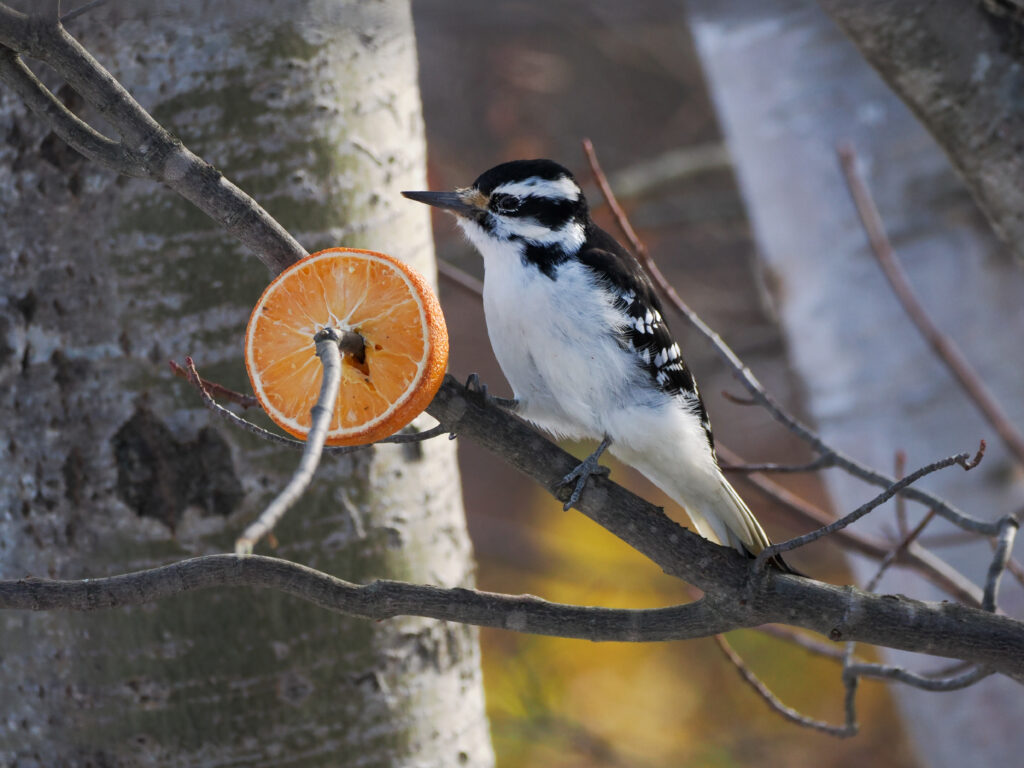
A funny sight was this Hairy Woodpecker sampling an orange we left out for the Bullock’s Oriole (The oriole never turned back up). Photo by Clay Bliznick.
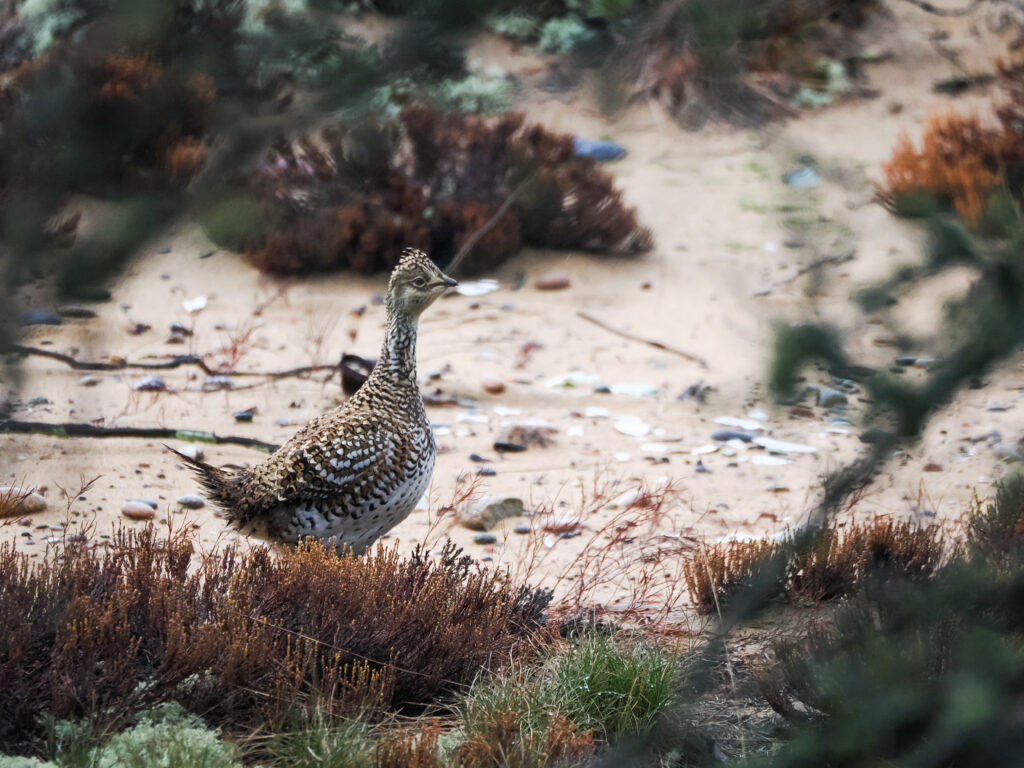
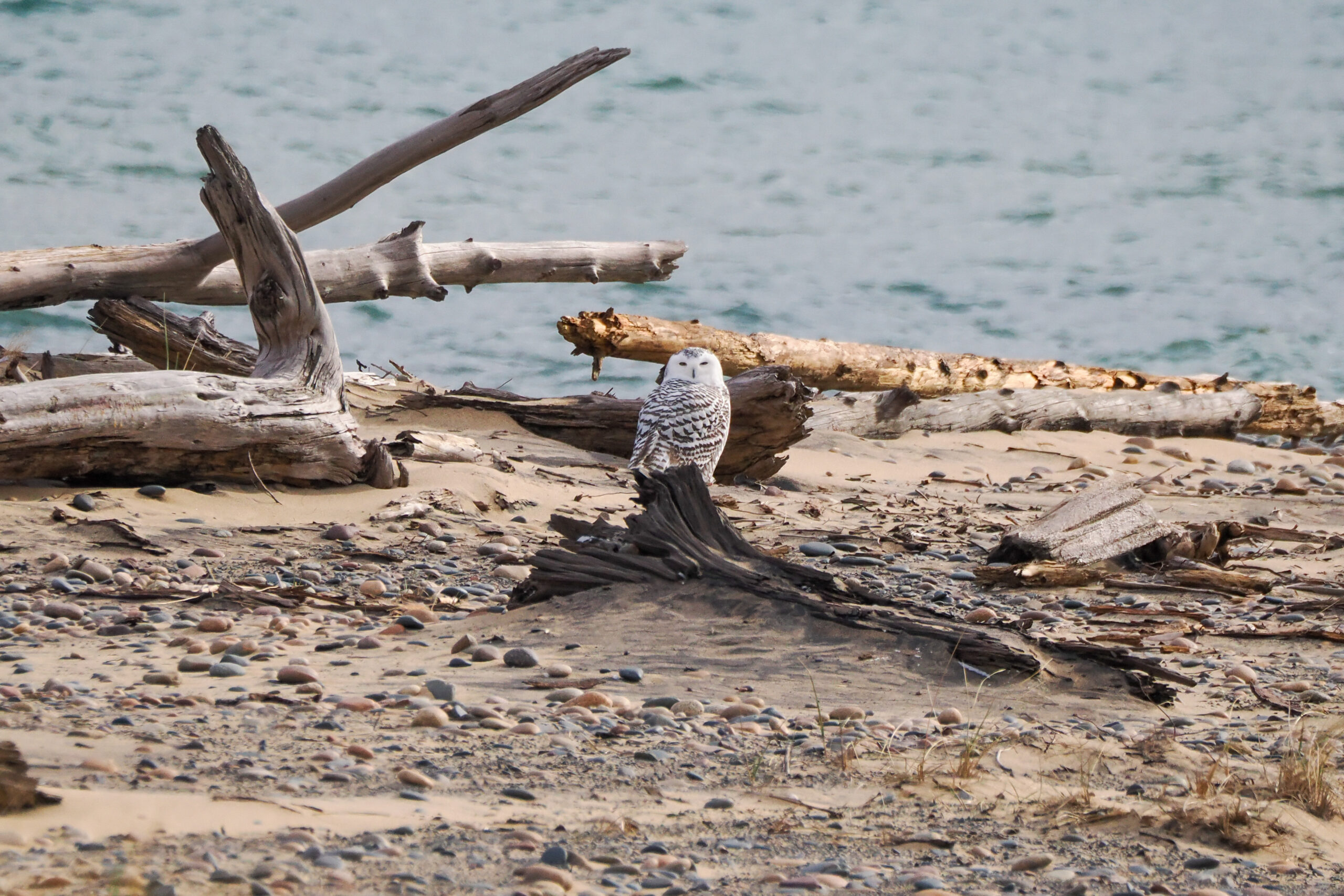
Even with the lower overall numbers, the week brought some exciting highlights. The clear standout was the arrival of three Snowy Owls starting on Saturday the 8th. Each bird spent time along the beach before moving on, often tucked beside driftwood that doubled as either shelter or a perch. Their arrival lined up neatly with our first meaningful snow showers, which felt fitting. Sightings across the upper Great Lakes have surged in the same timeframe, hinting at a broader regional movement of Snowies that could develop further in the coming weeks. Other notable birds around the Point included a female-type Black-backed Woodpecker, Northern Shrikes, small numbers of both Sharp-tailed and Ruffed Grouse, and a handful of Bohemian Waxwings.

Sharp-tailed Grouse! It is rare to catch them for a look or photo at the Point before they flush. They are typically very skittish. Photo by Clay Bliznick.
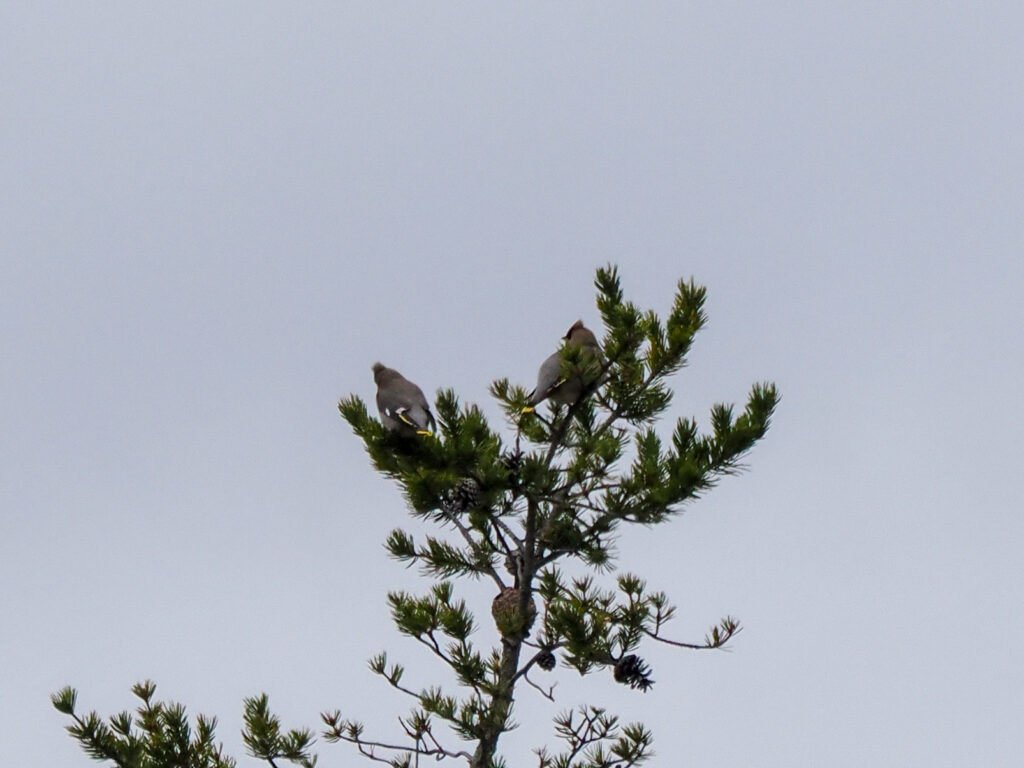
Brief look at a couple of Bohemian Waxwings right before they took flight. Photo by Clay Bliznick.

Weekend bird walks were a mixed bag thanks to the weather. Sunday’s conditions were some of the harshest we’ve had all fall, so it wasn’t surprising that we had no participants show up to brave the elements. Saturday was much kinder, and fourteen birders joined the morning walk. After a quiet start, things escalated quickly when a Snowy Owl flew in along the beach and perched right in front of us for great looks! After we enjoyed the Snowy for a bit and departed for the woods, we spotted three Sharp-tailed Grouse perched high in the jack pines along with a Merlin perched in that same area. We finished with great views of Evening Grosbeaks at the feeders, wrapping up a very enjoyable walk.

At times the Evening Grosbeaks would forage for bird seed hidden in the snow. Photo by Clay Bliznick.

Although the overall volume of birds has dropped, the Point continues to offer memorable moments that make the cold worthwhile. The landscape is settling fully into its early winter phase, with lots of bare trees/shrubs, choppy waves, and the occasional snow. With only a few days left in the WPBO counting season, we’re hoping for a strong finish and maybe a few more surprises before fall migration officially winds down. We’ve got some south winds in the immediate forecast, so it seems things will warm up slightly over the next few days.

– Clay Bliznick
2025 Fall Field Ornithologist

Featured Photo: Snowy Owl | Clay Bliznick

Track the morning flight counts on Trektellen.

Keep up with the 2025 Fall Field Ornithologist’s weekly blog posts and follow WPBO’s social media (FacebookInstagram, and X).

Join Clay for one of his WPBO Migratory Bird Walks offered every weekend through November 15.
Learn more at wpbo.org/events.
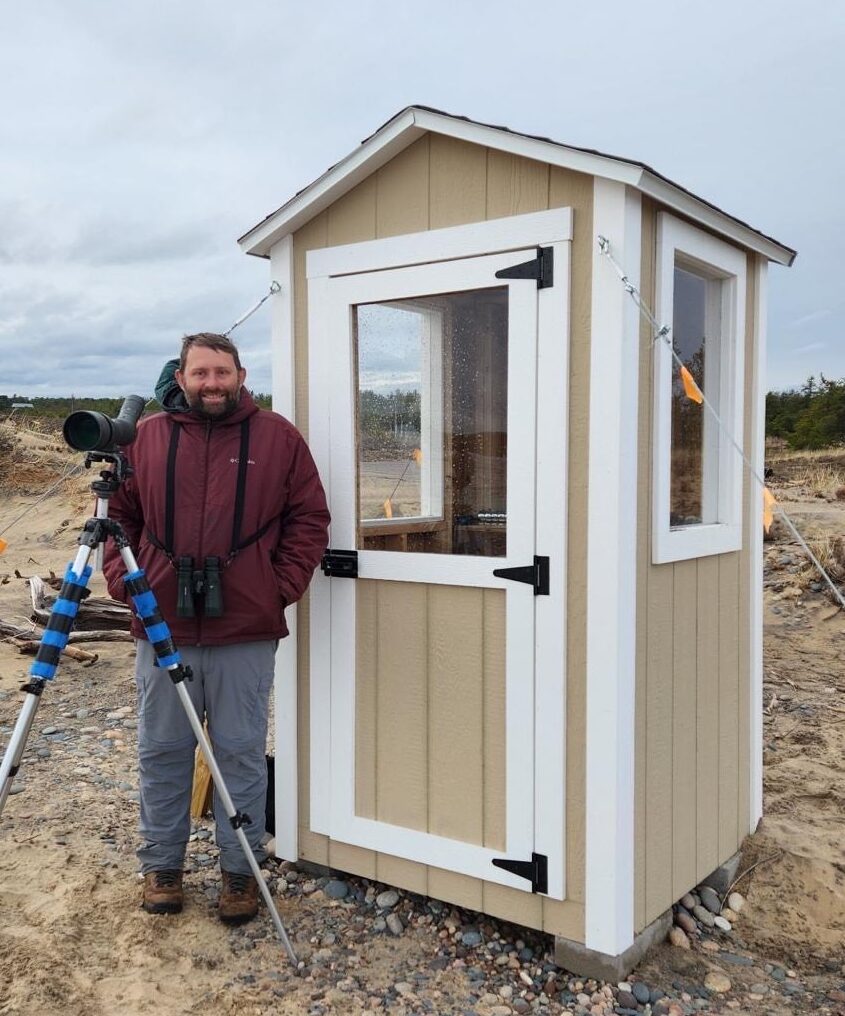
Clay Bliznick, MS: 2025 Fall Field Ornithologist

Clay worked as the WPBO fall field ornithologist in 2024 and is excited to return for the fall of 2025. He first took an interest in birds during a high school trip to Alaska, where he was struck by the flamboyance of magpies, the sleek, penguin-like appearance of alcids, and the sheer number of waterbirds residing along the coast. He dove headfirst into the world of birding while an undergraduate at the University of Kentucky, spending every free second exploring his home state for exciting new birds and places. Afterwards, he attended graduate school at Murray State University and wrote a master’s thesis examining the response of bird communities to environmental factors in Western KY bottomland hardwood forest restorations. For the last several years, Clay has traveled throughout the US working with birds in varying capacities, including nest monitoring of Florida Grasshopper Sparrows and Crested Caracaras, conducting surveys of Swallow-tailed Kite post-breeding roosts, and collecting breeding bird data in North and South Dakota for the Bird Conservancy of the Rockies.