Last week, our pair finally established an official nest, with 2 eggs. This week, May 28 – June 3, two more eggs were laid, for a full clutch of four eggs. With incubation now underway, we are one step closer to welcoming Whitefish Point’s first chicks of the season. If all goes according to plan, there could be four mini Piping Plovers storming the beach.
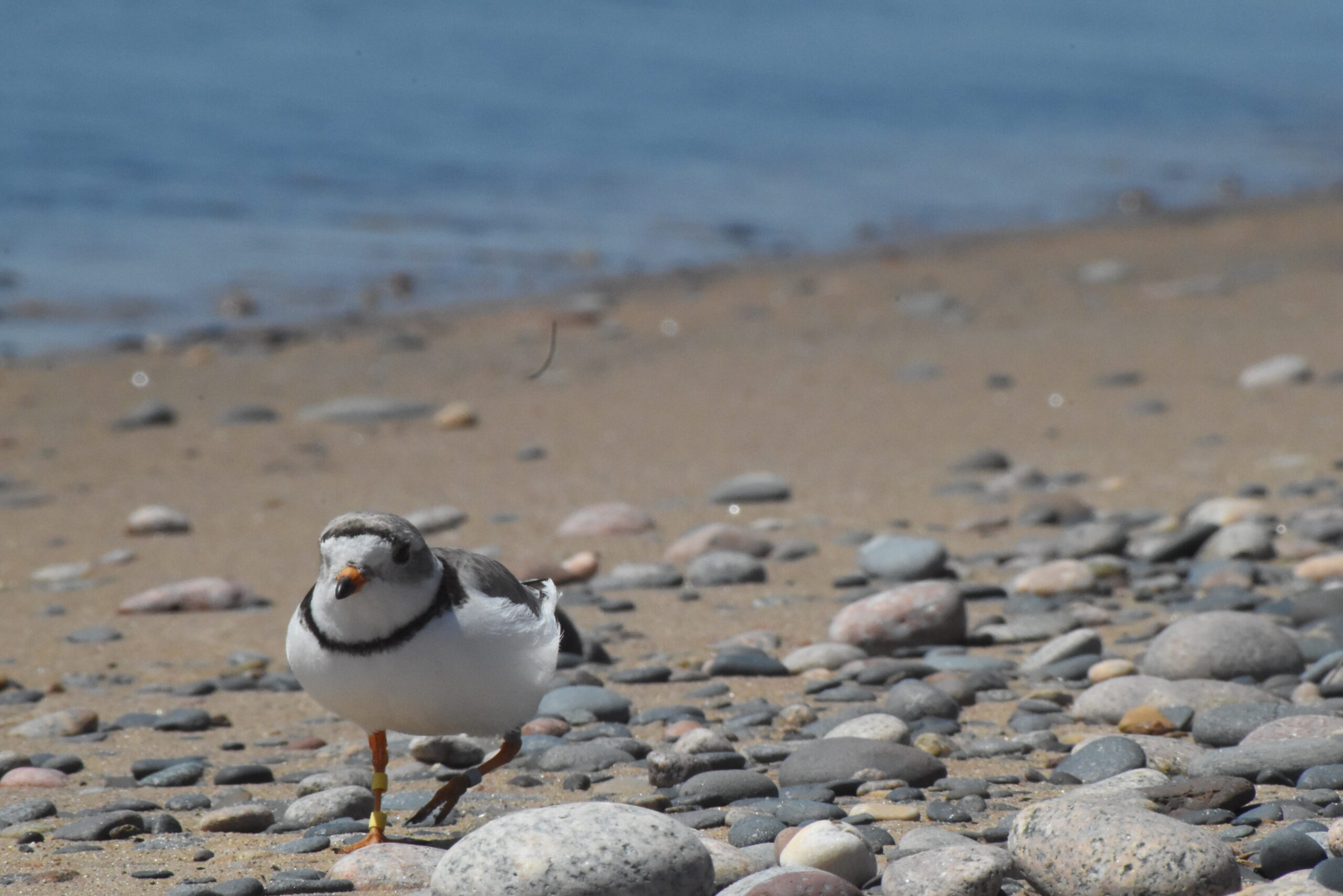
The pair spent most of the week focused on incubation and defending their nest. V and G have settled into a routine, carefully taking turns incubating the eggs while the other parent forages along the shoreline. Throughout the day, they can often be seen swapping duties, ensuring the eggs remain protected while both birds have the opportunity to feed. Their teamwork has been impressive to watch, and both birds appear dedicated to keeping the nest safe.
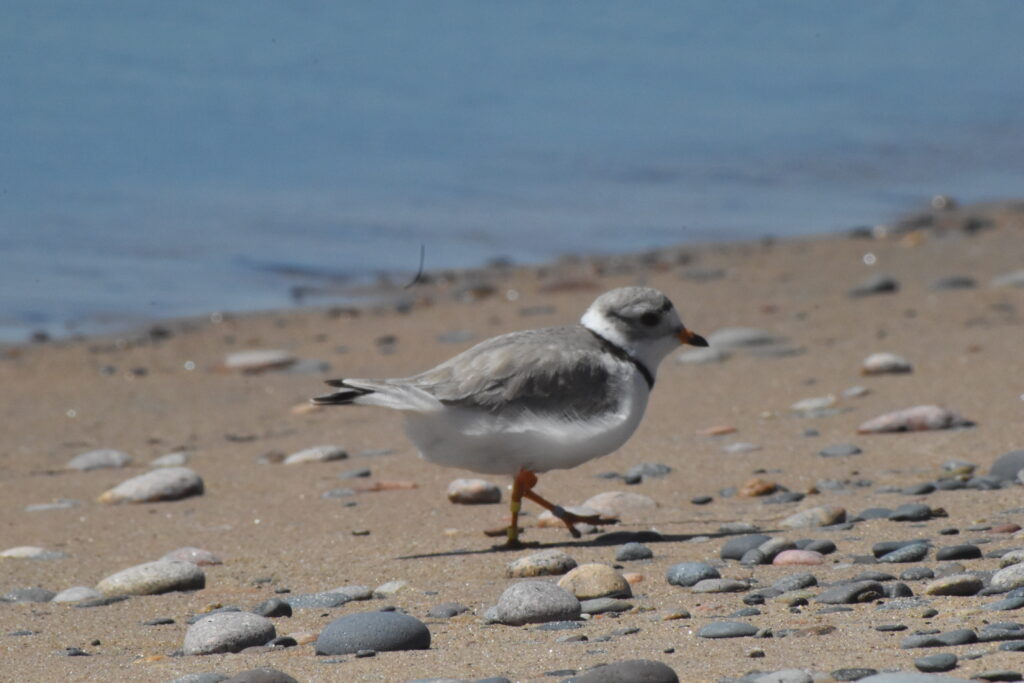
PIPL “V”. Photo by Morgan Ness
While nesting season has brought some stability for the pair, drama still remains at Whitefish Point. X,L/O:Of,GR (“LO”) has made a couple appearances this week. Given the pair are actively incubating eggs, I expected tensions to run extra high, but that wasn’t always the case. V and LO seemed to enjoy what could only be described as a girls’ day on the beach. The two females spent time foraging close together and remarkably, they both seemed okay with the others’ presence. V only became territorial when their wandering brought them closer to the nest site. Outside of that immediate area, the pair seemed content to share the beach.
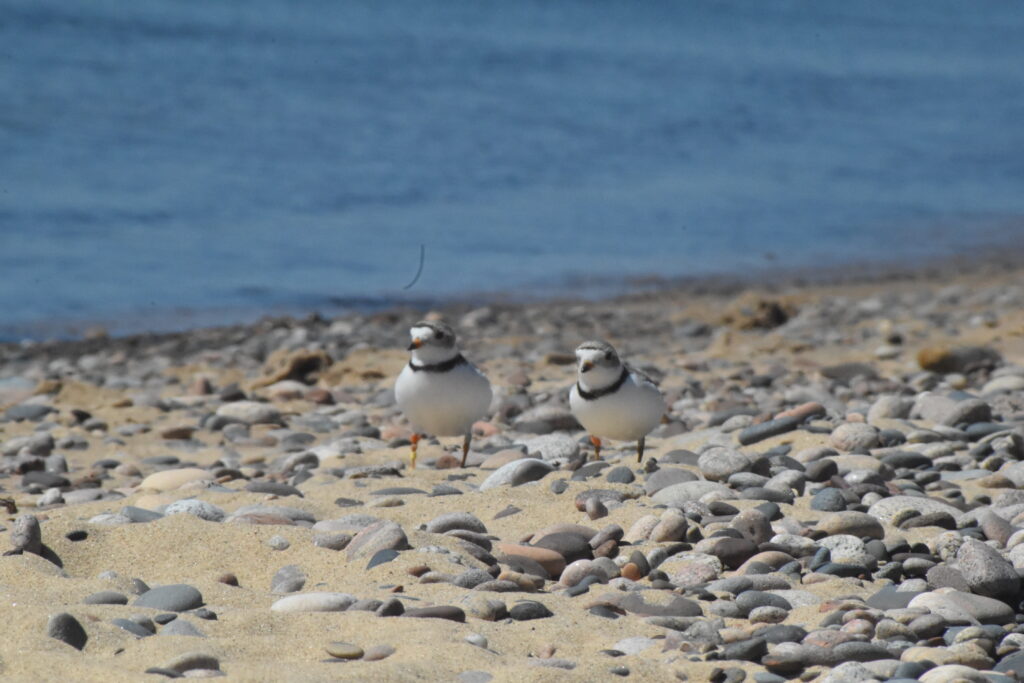
V and LO’s girls’ day on the beach. Photo by Morgan Ness
G, however, was far less welcoming to LO. After being relieved from incubation duties, he quickly joined LO at the shoreline. Even when well away from the nest, G repeatedly displayed defensive behavior toward her. He would lower his body close to the sand and charge toward her on his tiny feet, clearly trying to convince her to move elsewhere.
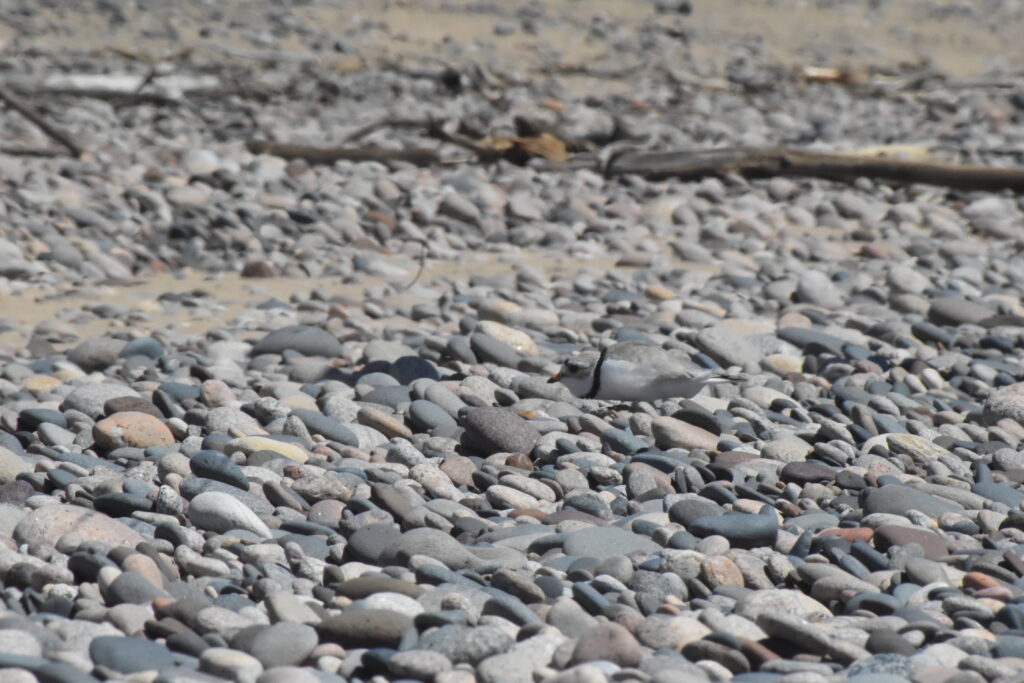
G defending his territory from LO. Photo by Morgan Ness
After several of these encounters, LO eventually decided to settle in a sunny spot further from their nesting territory. Although she remained on the beach the rest of the afternoon, she stayed away from V and G’s nesting site.
Since Sunday, LO has not been seen at Whitefish Point. While she may have moved on to explore new nesting sites, we remain hopeful that she will find a mate and perhaps establish a territory of her own. It would be wonderful to have another successful pair at the Point this summer!
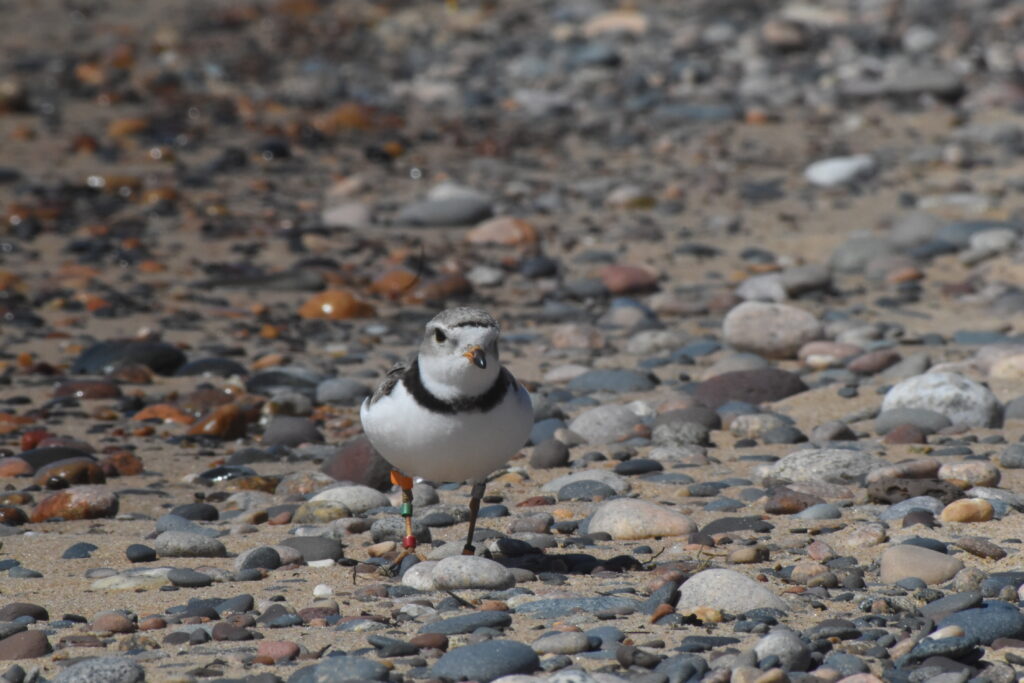
PIPL “LO”. Photo by Morgan Ness
For now, all eyes remain on G and V as they continue incubating their precious eggs. Each day brings us closer to hatch time, and we eagerly await the arrival of Whitefish Point’s next generation of Piping Plovers!
-Morgan Ness, 2026 Piping Plover Monitor
Feature Photo: “Mama V” by M. Ness
Piping Plover monitoring is a collaborative effort between Michigan Audubon and Seney National Wildlife Refuge (USFWS).
You can keep up with the 2026 Piping Plover action at WPBO by reading Morgan’s blog posts and following WPBO’s social media (Facebook, Instagram, and X).
Morgan Ness: 2026 Piping Plover Monitor
 Having studied Environmental Science, Policy, and Management at the University of Minnesota Twin Cities, Morgan developed a passion for protecting migratory birds and forest ecology. After spending time in Montana conducting avian monitoring, Morgan is excited to experience Michigan’s species during migration season and to take in the change in scenery. Whether she’s identifying leg bands or chatting with beachgoers about the importance of plover conservation, Morgan’s enthusiasm for the outdoors is contagious. She is thrilled to call the Michigan shoreline her office this summer and contribute to the recovery of such an iconic species. When she isn’t bird-watching, Morgan is often crocheting, hiking, or watching Bravo.