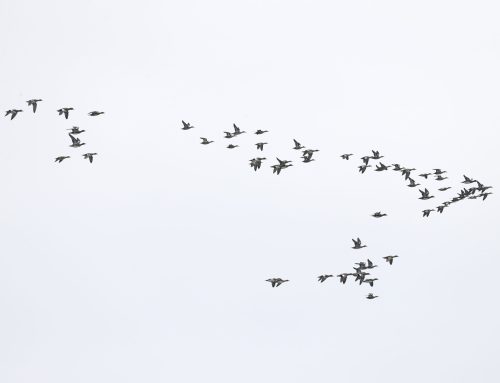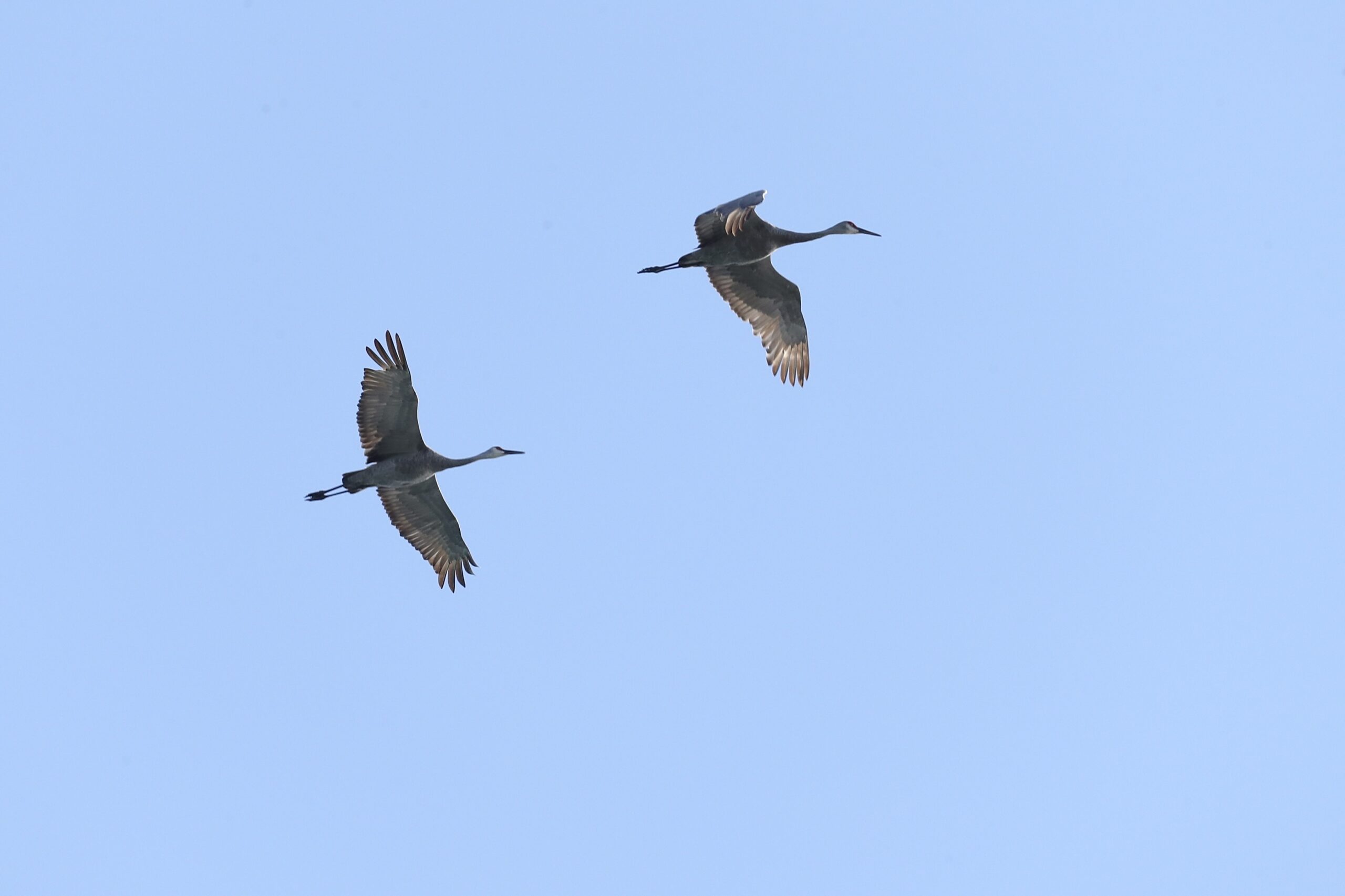
The great thing about the end of the season here is that things haven’t completely slowed down, and there are still plenty of birds to see. Early mornings can reveal a beach teeming with shorebirds, along with several species of waterfowl still moving through. The morning of May 27 brought light winds, fairly clear skies, and only a slight rise in air pressure throughout the day. Any shorebird heard required constant scanning to locate, as many of the calls came from flocks passing high overhead. At one point, what sounded like a lone Black-bellied Plover revealed to be a high flock of 24 individuals flying north over the lake. Shorebirds were present on the beach as well, including 24 Ruddy Turnstones during the early hours. Seeing continued good numbers of the species at what I would still consider an inland location, despite being on a major lake, comes as a surprise to myself. The “molt migrant” Canada Geese flocks also continue to stream by. These slow-moving flocks often number in the hundreds and head north in a variety of ways: high above the lake, low to the water, or emerging along the shoreline before departing from the tip of the point. The secondary push of birds, likely made up of post-breeders from farther south, accounts for a substantial portion of the season’s total. On this morning alone, 582 individuals were recorded.
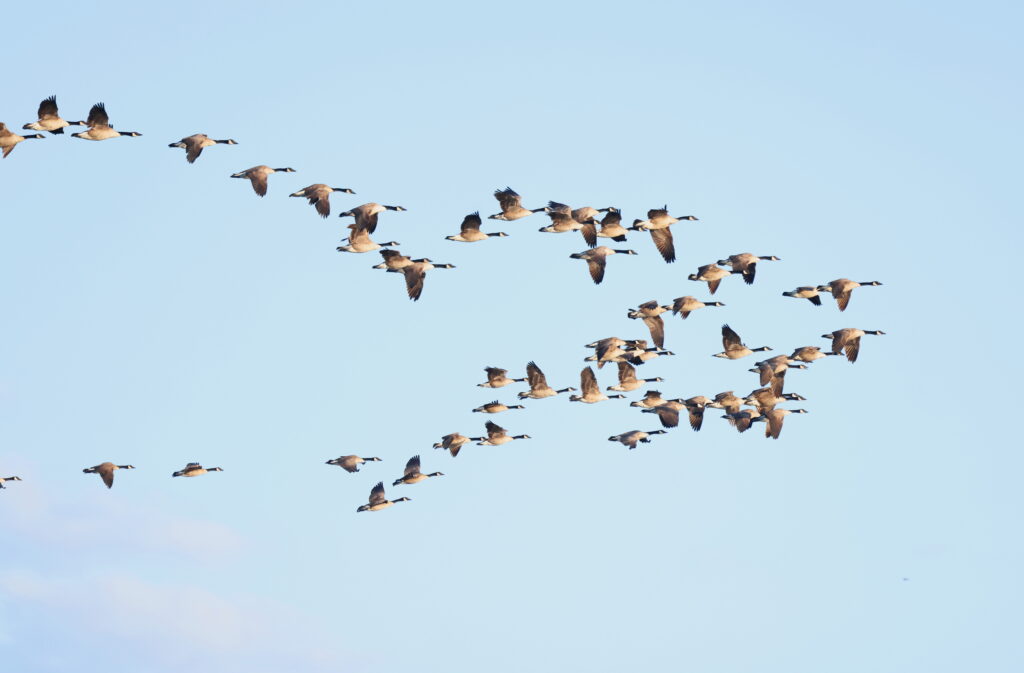
A flock of Canada Geese passing back over the point. Photo by Aaron Graham
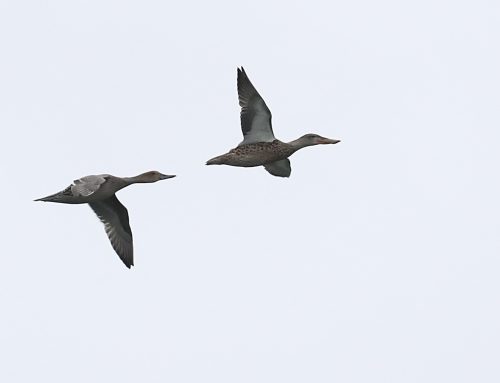
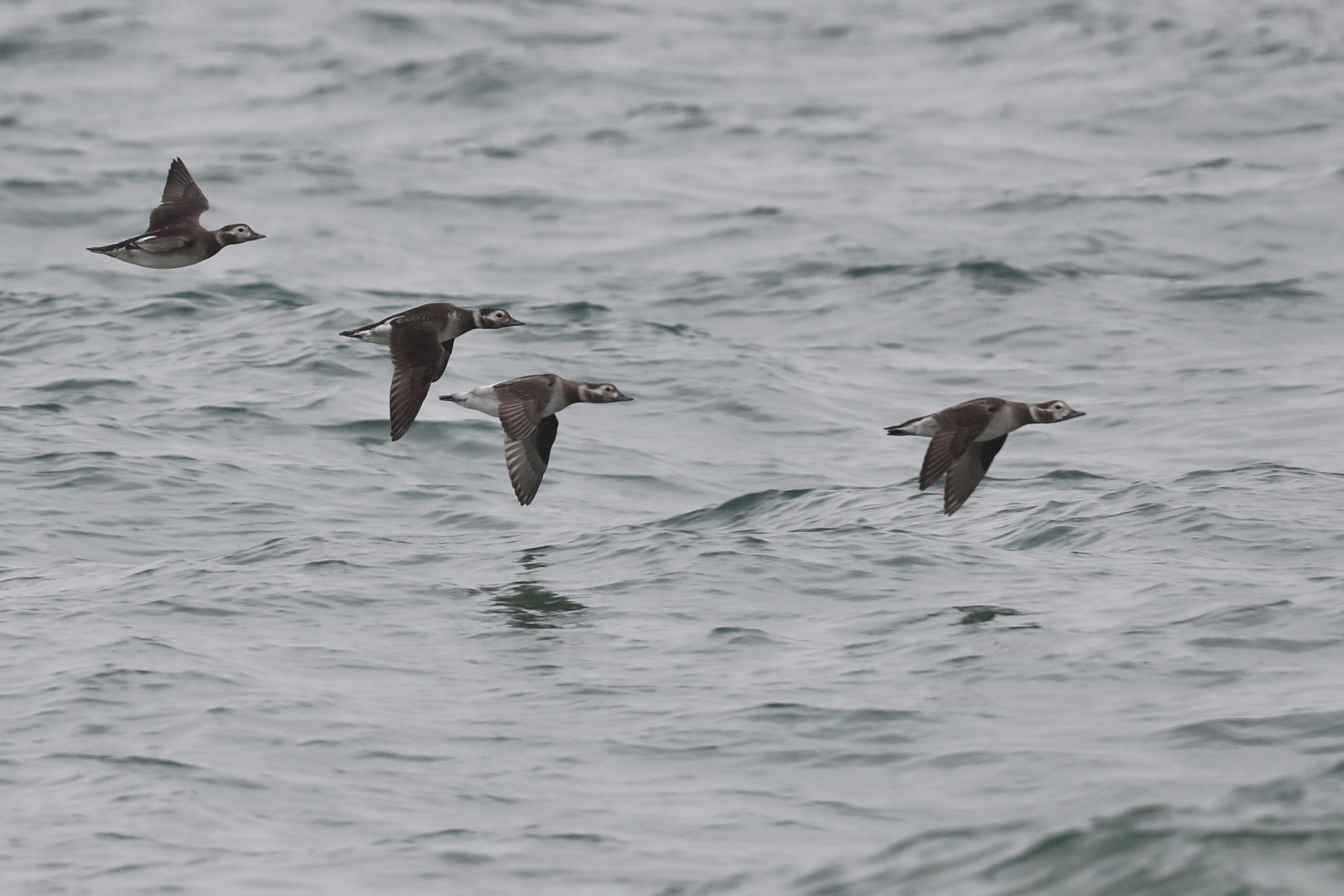
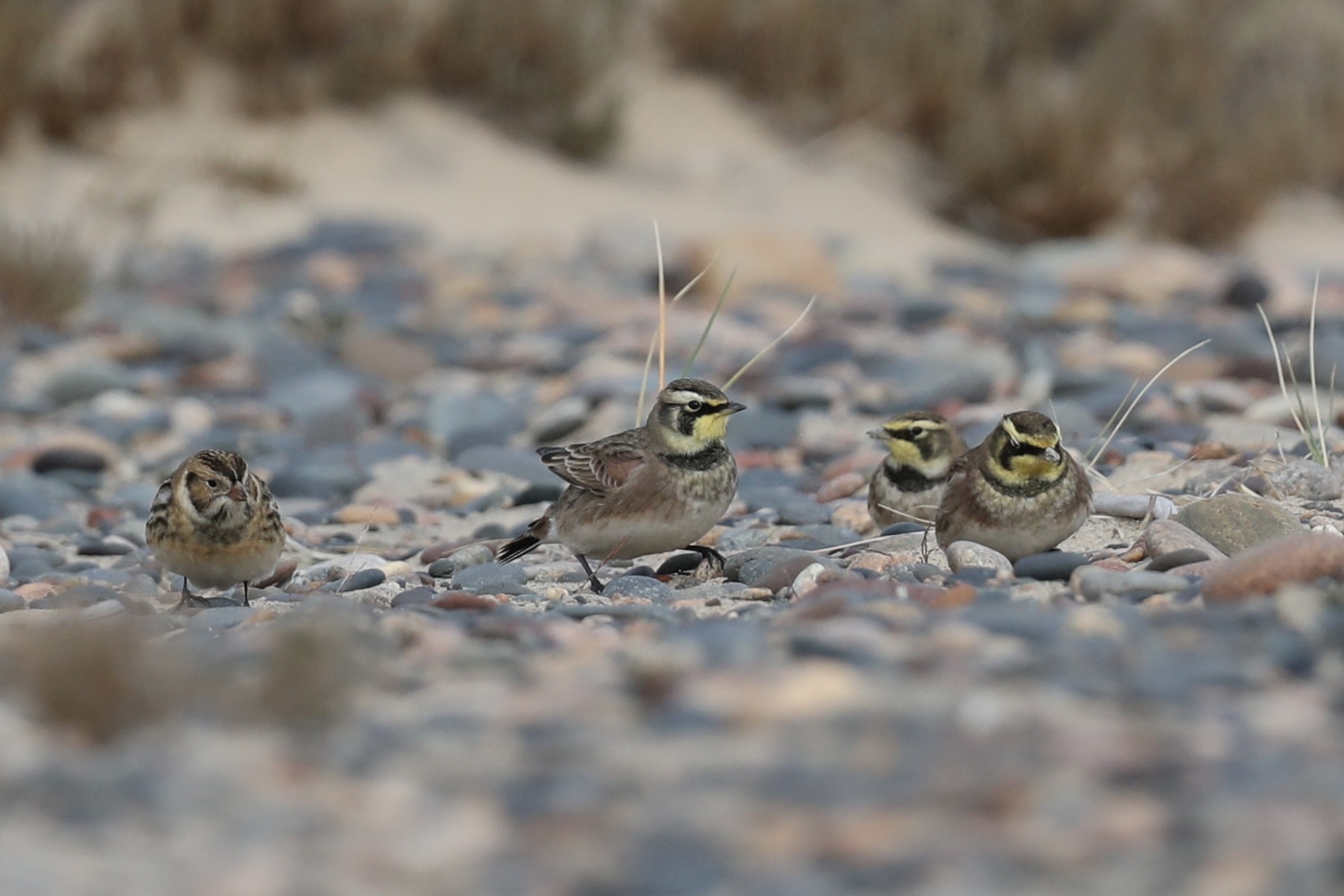
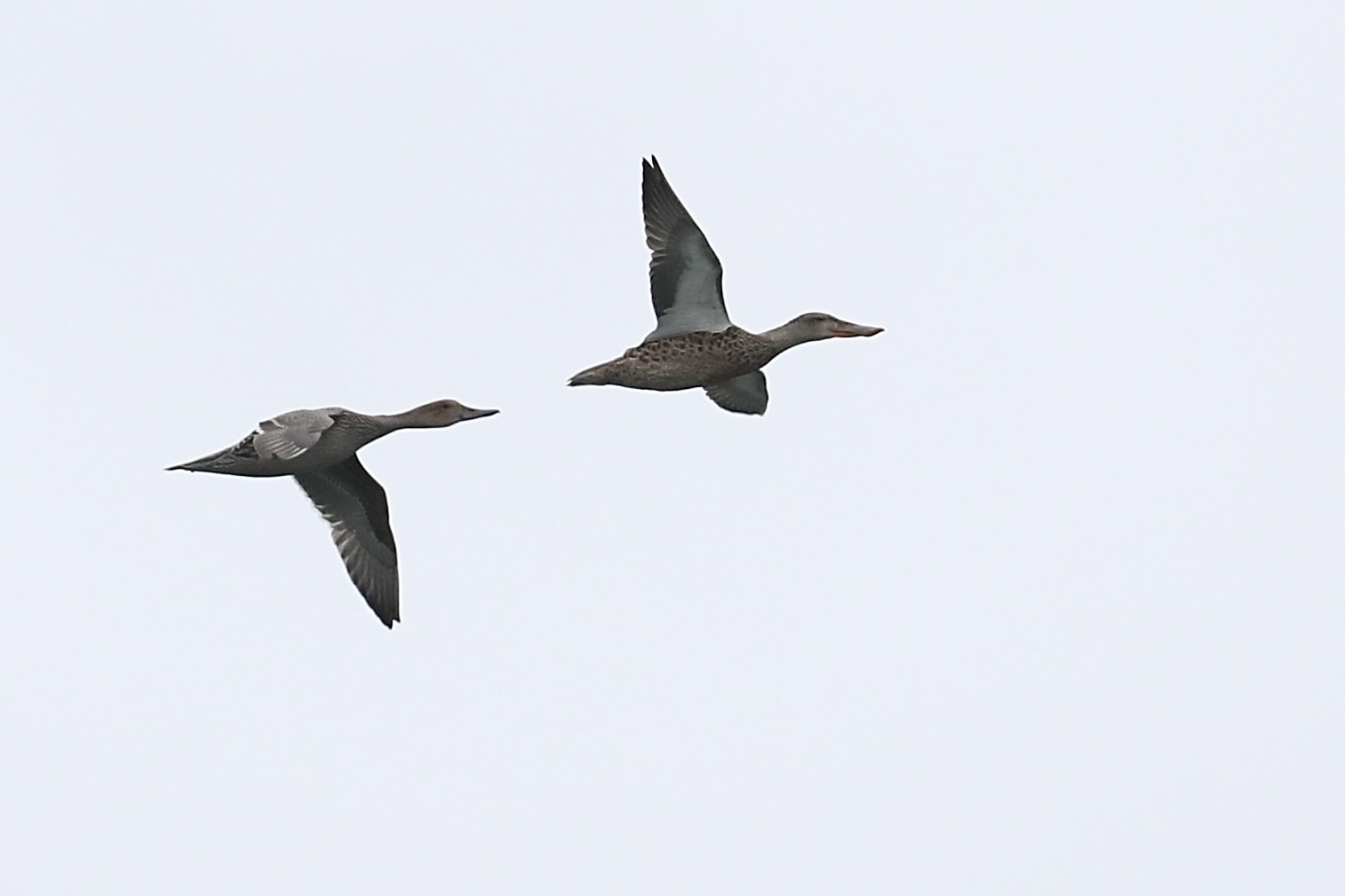
On the following morning, May 28, similar conditions resulted in even more flocks of Canada Geese, with a total of 745 recorded. Just prior to sunrise, the fourth Black Scoter of the season was recorded. A single Northern Shoveler, the first individual recorded in quite some time, was also noted exiting the bay right at sunrise. Dunlin were the most numerous shorebird of the day, with 15 individuals counted. Eurasian Tree Sparrows also continued to be counted from my position, including at least one individual attempting to work out the tree line behind the station. These sparrows appear to be undertaking some form of movement here, which is obviously how they ended up here in the first place.
It was once again a pleasure to be joined by hawk counter Sean McLaughlin on his day off. Raptors could still be seen from our position, highlighted by a Peregrine Falcon that came ripping out along the point early in the morning before choosing to perch atop the lighthouse upon arrival. However, it did make a brief foray down to the beach and is pictured below.
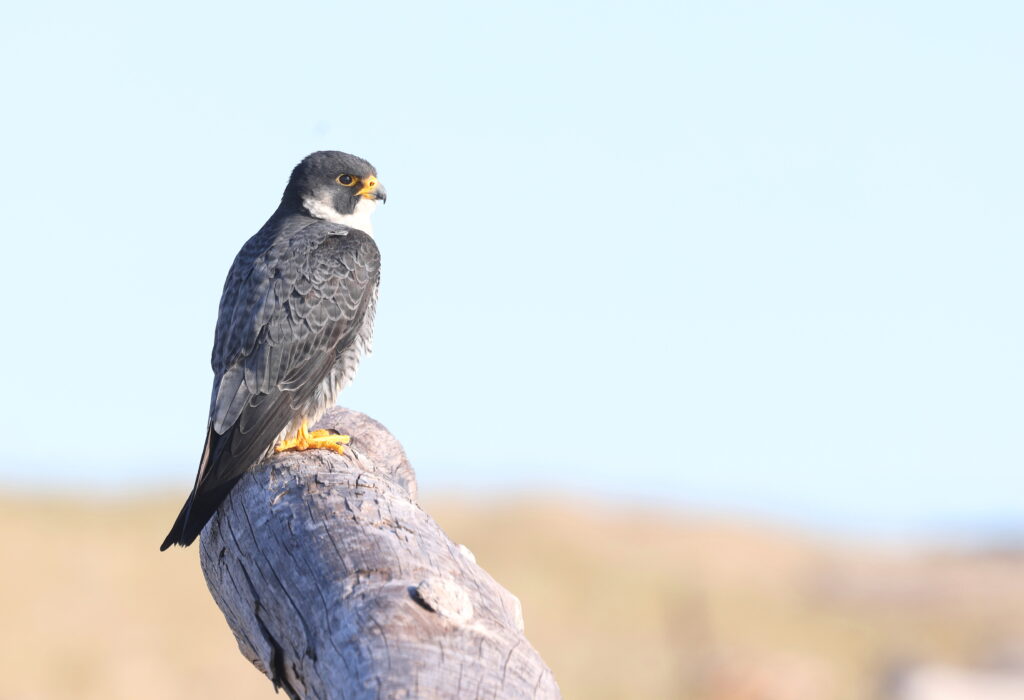
Peregrine Falcon perching on the beach’s finest driftwood. Photo by Aaron Graham
We were lucky to have alternate counter, Jack Kew, back for a final time during the spring 2026 season on May 29. Following the recent trend, Jack was met with several flocks of molt migrant Canada Geese, with 603 individuals observed. Impressive numbers of shorebirds continued to line the beach as well. Lacking much of the previous shorebird habitat that previously existed (the actual tip with the pond is gone for those of you who have not been out here in recent years) I continue to find these numbers and sightings particularly noteworthy. A flock of 52 Ruddy Turnstones was a highlight, while fair numbers of Semipalmated Sandpipers were also observed, with 13 individuals. The day’s true highlights, however, came from over the point during the waterbird count, where both a Black Vulture and a Swainson’s Hawk were recorded. The Black Vulture represents only the seventh record for the point, though it is worth noting that this marks the third occurrence in the last four years. The Swainson’s Hawk was finally a different individual than those seen previously, this time a light-morph adult.
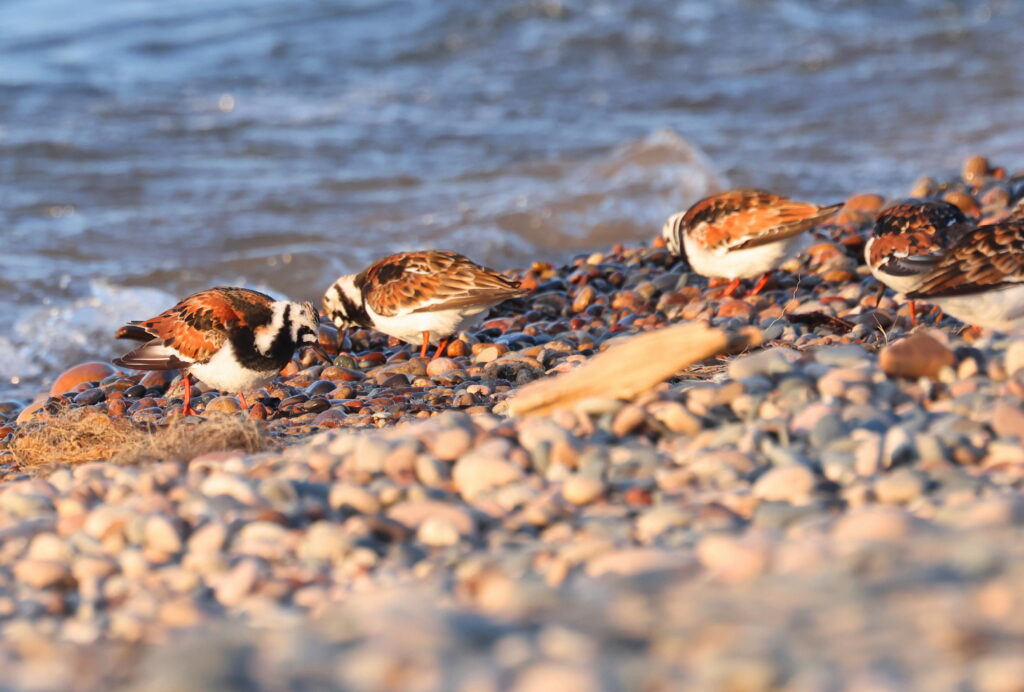
Ruddy Turnstones on the beach during the early morning. Photo by Aaron Graham
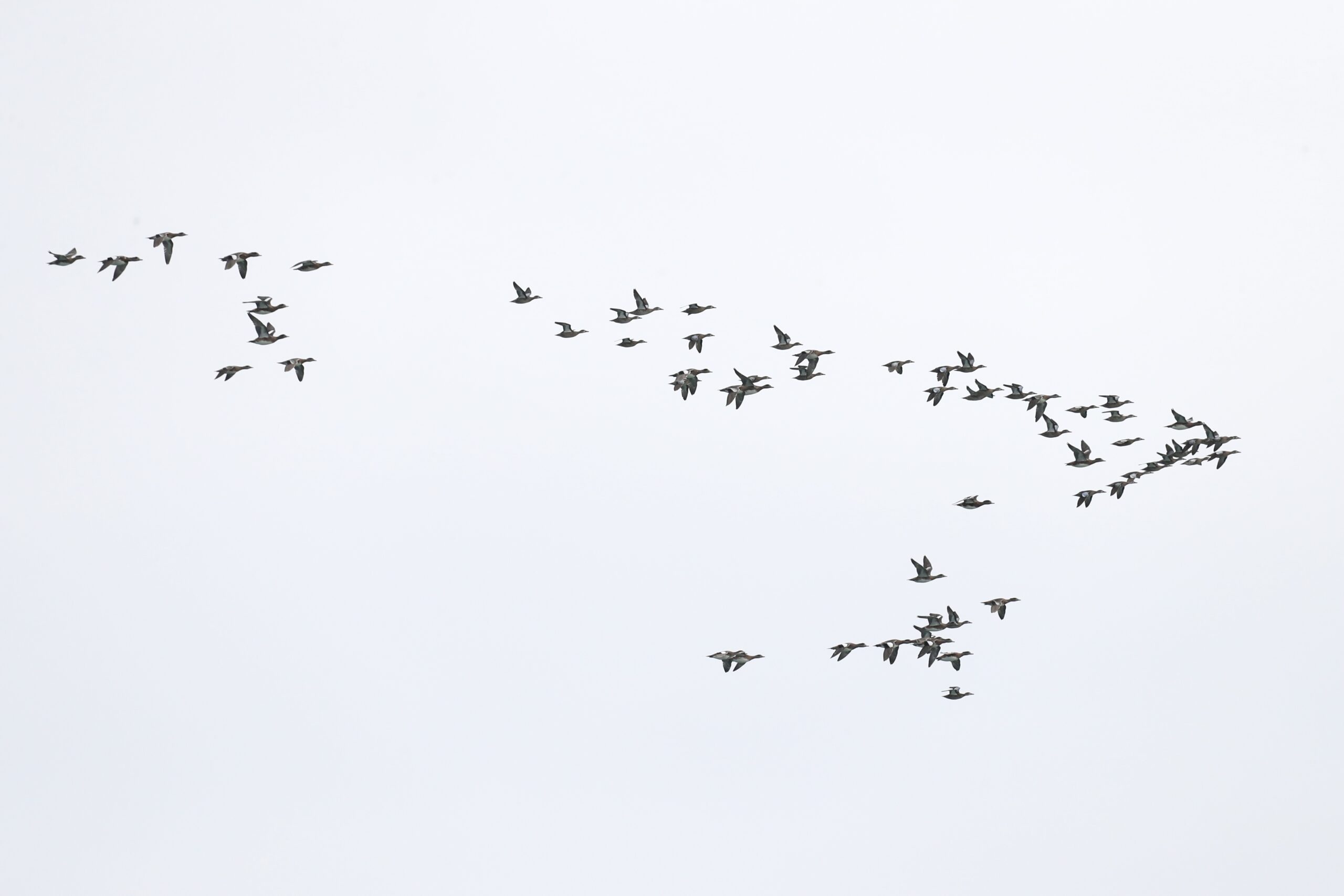
Back on my regular post on the morning of May 30, I was met with light to moderate winds dominated by easterlies throughout the observation period. A smattering of waterfowl was observed, once again led by the 579 Canada Geese, but also with a lone drake American Wigeon and two Common Goldeneye. I was also able to snag the Black Vulture for myself today, first spotting it low around Sandy Lane. The highlight of the morning came when conditions calmed and the water turned to glass. A rather unhappy Common Loon was obviously pursuing something from its fishing territory, which alerted me to the presence of a rather elegant looking Pacific Loon sporting its full alternate plumage out on the water. Being able to see their serpentine shape on calm waters ranks up there as one of the overall season highlights.
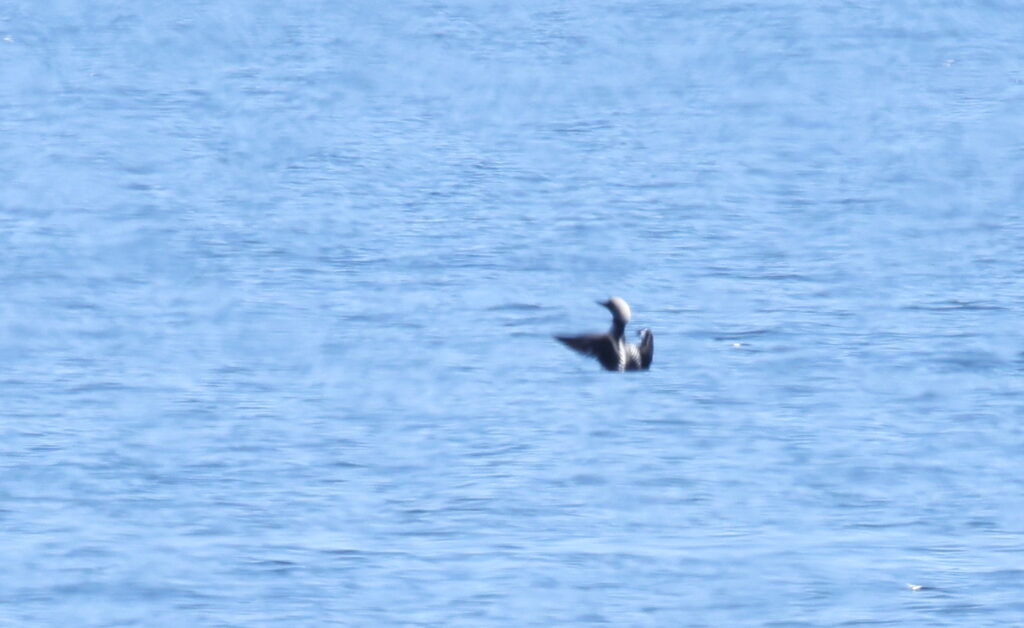
A distant shot of a beautifully plumaged Pacific Loon. Photo by Aaron Graham
The final morning of the season, May 31, was perhaps the calmest start of the season. Scoping conditions over the lake were fantastic, and while scanning I picked up a flock of Bonaparte’s Gull that inadvertently flushed a small flock of 4 Red-necked Phalaropes off the water! This was a species that had certainly been on my radar for late spring, and I was pleased to finally connect with them. A good variety of waterfowl were also present for the date, including a Lesser Scaup and a few Common Goldeneye. Shorebirds moved by throughout the day, mostly consisting of 43 Semipalmated Sandpipers. By mid-morning two American White Pelicans briefly joined a kettle of Broad-winged Hawks before continuing out the point and north out across the lake. This is only the second observation this season of this species here at the point. Passerines were active in morning flight as well. A Black-backed Woodpecker was briefly detected from my position as it worked its way around the point, while a single Olive-sided Flycatcher moved along the tree line behind the station and perched up nicely for a short time. It was a diverse morning full of individuals that made for such a pleasant ending to the season.
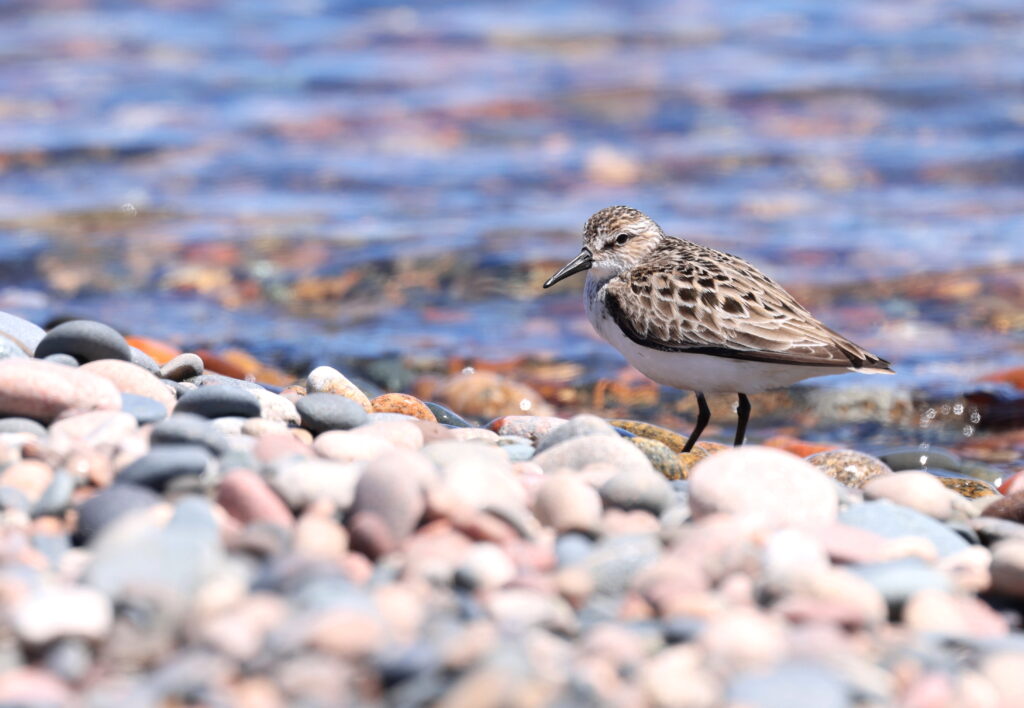
Semipalmated Sandpiper resting on the beach. Photo by Aaron Graham
It was an absolute pleasure to be able to take the lead on the 2026 Spring Waterbird Count. I am so glad I was able to be stationed at the point during what proved to be a productive and memorable year. Whitefish Point is such a fantastic place, not to only learn about vagrancy patterns, but also for overall migratory patterns as a whole. Finding a spot in the spring that not only has good waterbird flights, but raptor and passerine flights as well truly showed me what the Great Lakes have to offer in terms of visual migration. I certainly would be interested in the prospect of counting here during another season! Thank you so much to those at Michigan Audubon and within the fantastic local Whitefish Point birding community for this opportunity and continued support throughout the season. I’ve met so many knowledgeable individuals who I have forged relationships with that will continue for years to come.
Aaron Graham, 2026 Spring Waterbird Counter
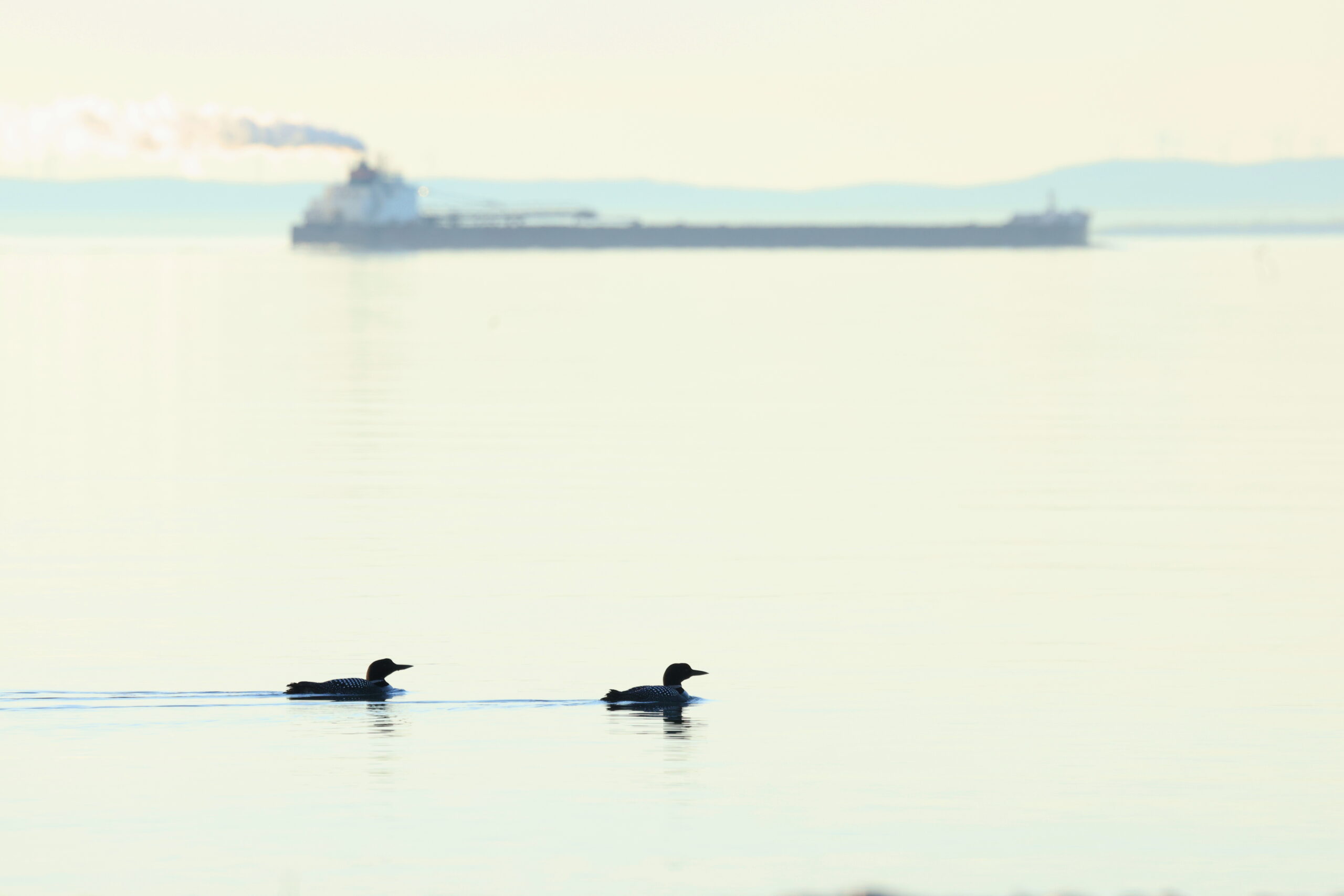
Featured Photo: Common Loons in front of one of the many passerby boats by A. Graham
You can now see the waterbird count data on Trektellen! Check it out at trektellen.nl/count/view/4209.
You can keep up with the 2026 Spring Waterbird Count by reading Aaron’s weekly blog posts and following WPBO’s social media (Facebook, Instagram, and X). The spring waterbird count runs April 15 through May 31.

Aaron Graham: 2026 Spring Waterbird Counter
Aaron is a migration monitor from West Virginia with a love for birds starting in his early elementary years. Calling the central Appalachian ridgelines home, he ventured throughout this region from a young age trying to better understand the local avifauna. This pursuit has taken him all over the United States as his focus has dialed into migration counts, with particular focus on morning flight and sea/lake watch counts. Being able to witness active migration all from a stationary point is what awes him, and better understanding these phenomena is what drives him. Aaron is looking forward to a season at Whitefish Point and wonders what all he will see migrating past the point from the waterbird count! When not birding, Aaron coaches college soccer, takes to the snow with freestyle and cross-country skiing, and can be found far afield searching out new butterflies, dragon and damselflies, and tiger beetles.