With only one Piping Plover remaining at Whitefish Point, this week marked the beginning of a new chapter. As migration season ramps up, the beach has become busier with shorebirds passing through, and our Piping Plovers prepare to head south for the winter. It’s a bittersweet time of year, filled with exciting new arrivals and difficult goodbyes.
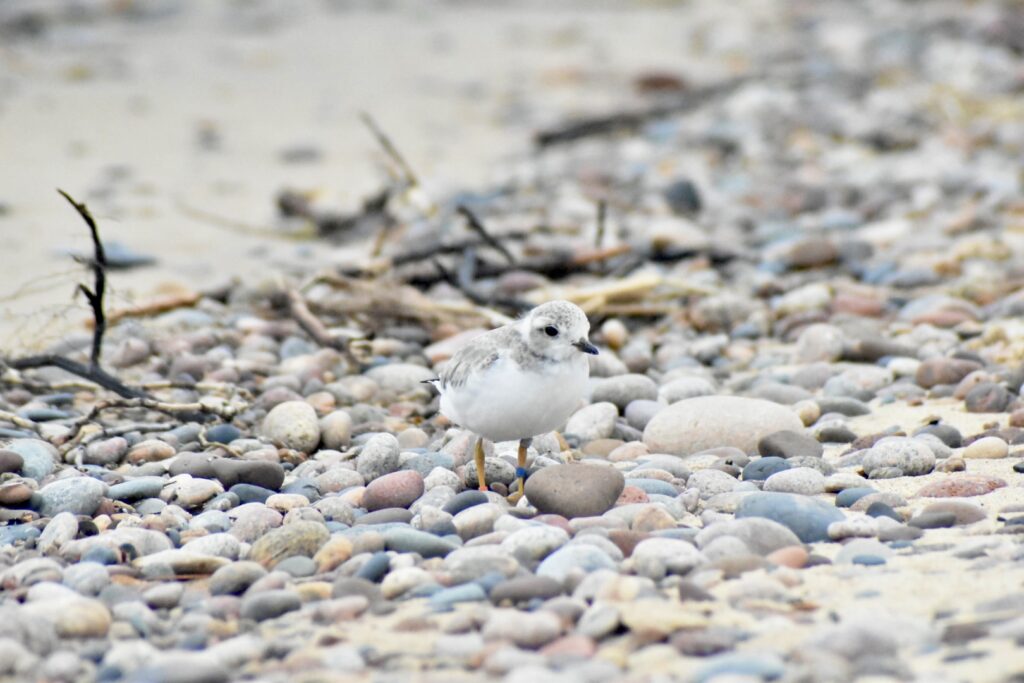
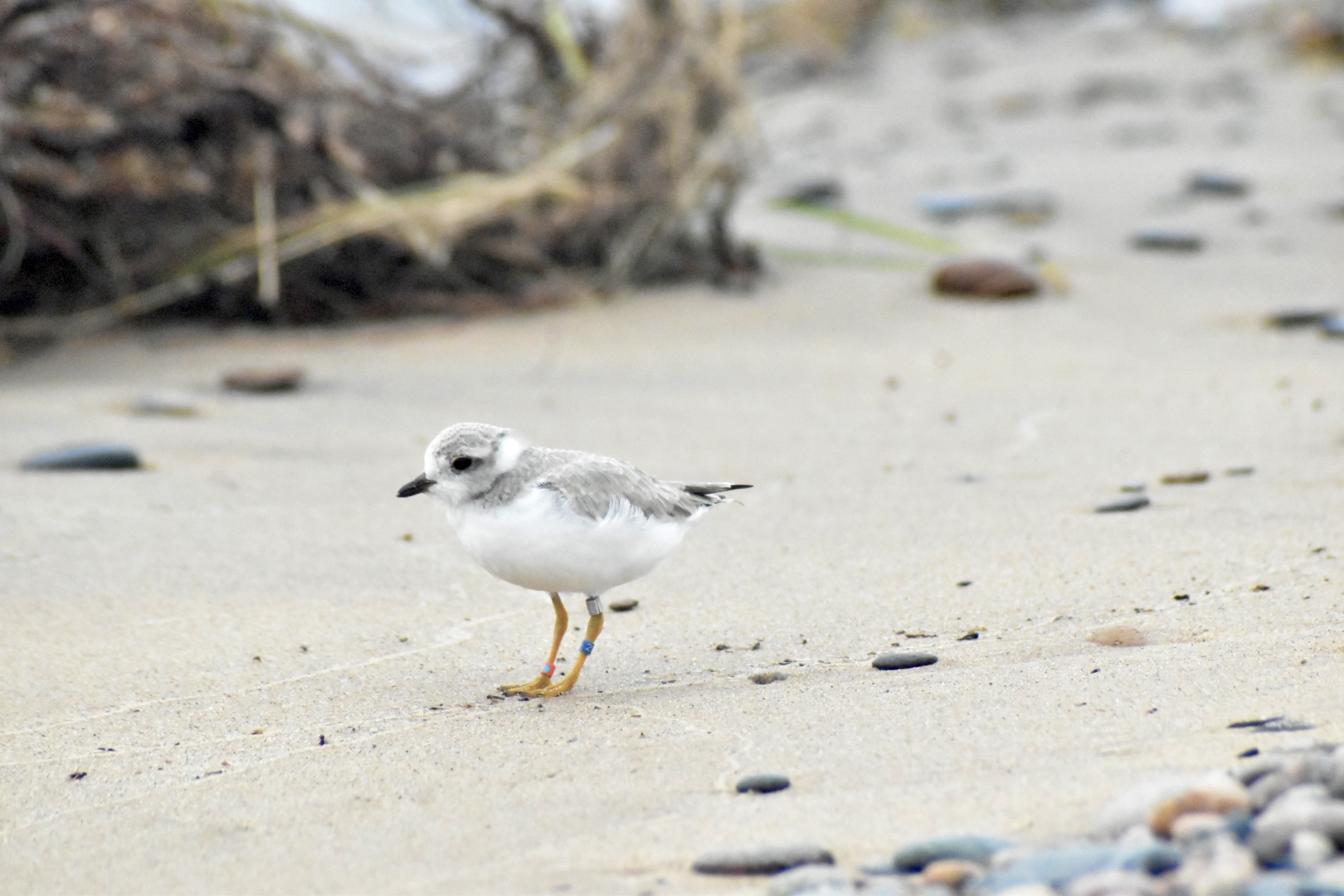
Butters Foraging in the Rocks. Photo by Morgan Ness
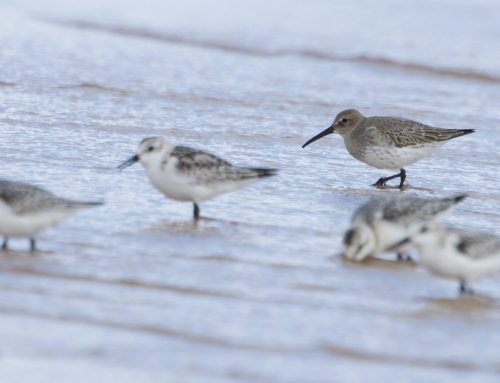
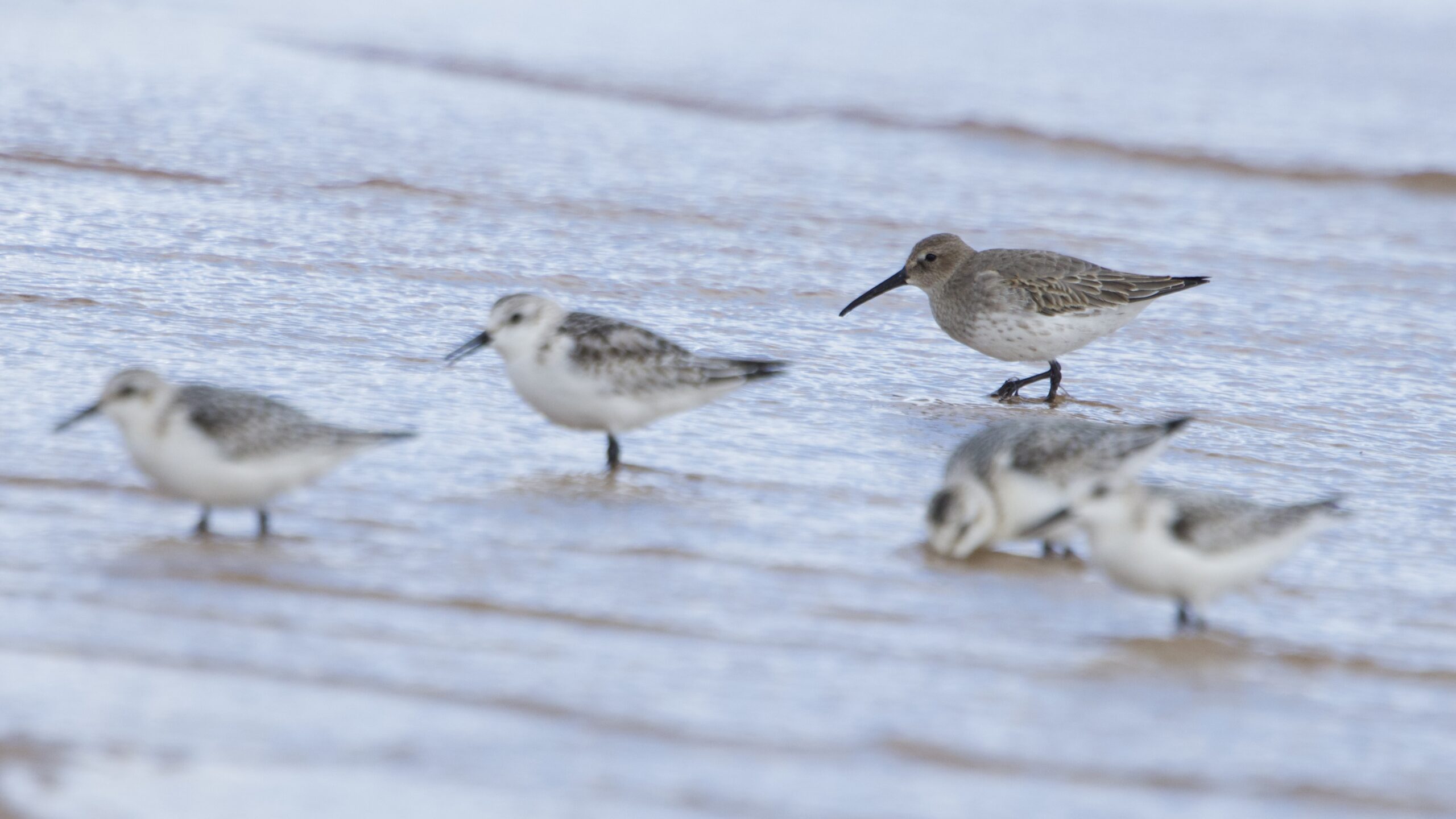
On July 23, the week started like any other. G and Butters spent the morning foraging along the shoreline and hiding from the unusually high number of corvids at the Point that morning. But, by lunch there was already drama as another Piping Plover stopped by. G immediately began chasing away the migratory visitor, and just as quickly as he arrived, he was gone. As migration picks up, we can expect to see more Piping Plovers stopping at the Point before continuing their trip south for the winter. Migration season also means an increase in other shorebirds, and the plovers shared the shore with many Sanderlings, Least Sandpipers, Semipalmated Plovers and even the occasional Willet!
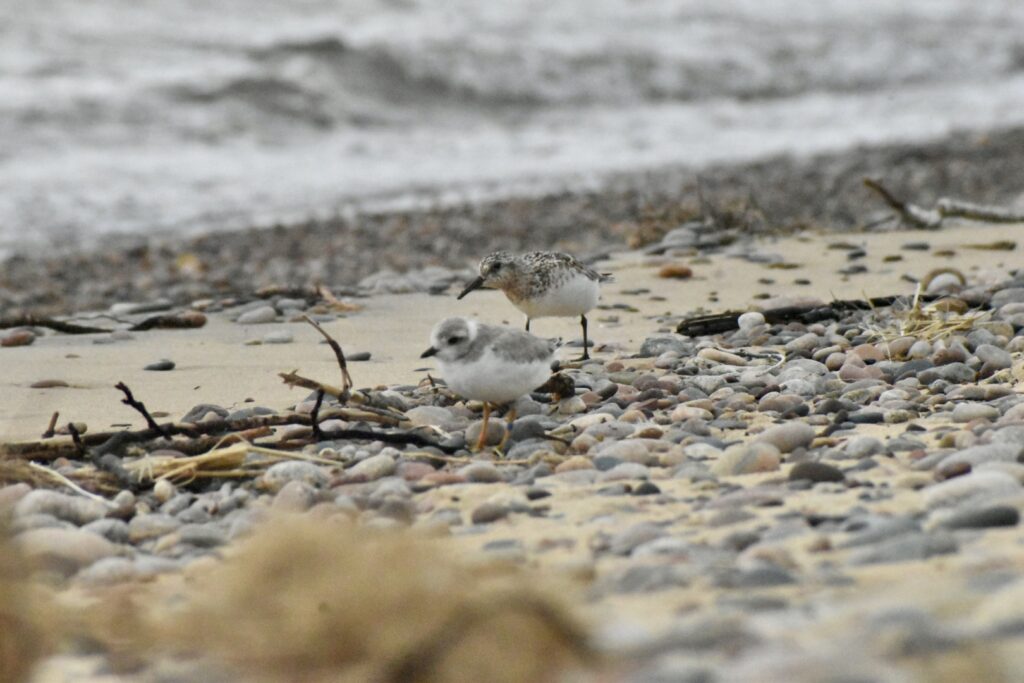
B and Sanderling. Photo by Morgan Ness
As exciting as migration can be, it also means saying goodbye to our resident Piping Plovers. G was last seen on Monday and has likely begun his journey south, with B soon to follow. This was G’s first successful breeding season after returning to the Point every year since 2023, and he did such a great job with the chicks!
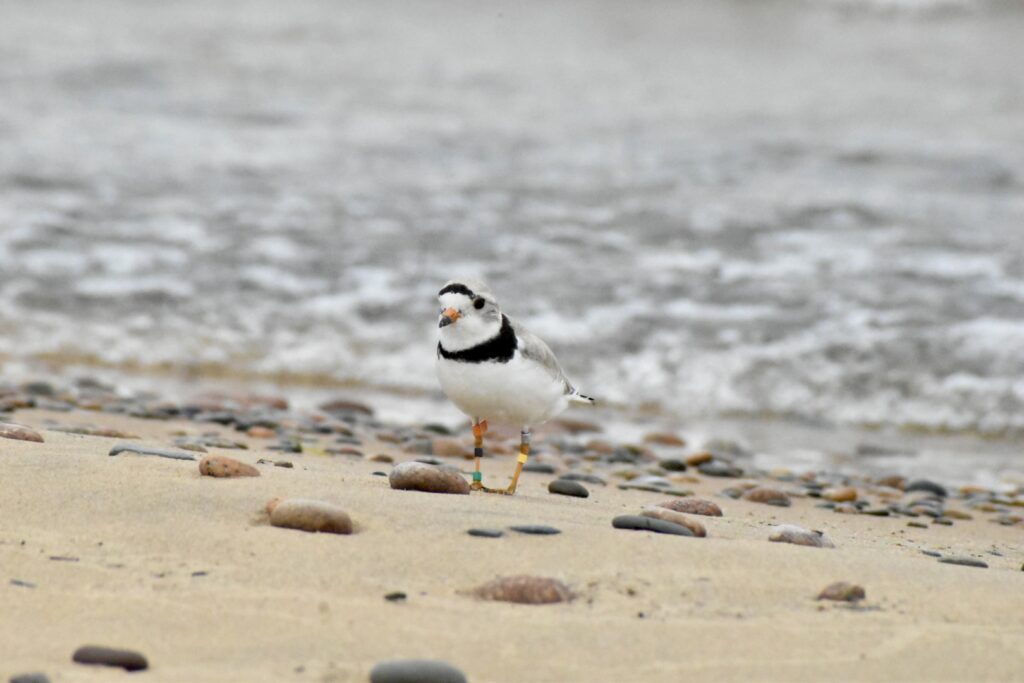
G Before Migrating. Photo by Morgan Ness
Although it’s hard to see a successful nesting season come to an end, watching these birds reach a point where they can migrate on their own is exactly what recovery efforts are all about. Here’s to hoping that V, G, B, and the other Piping Plovers that travel through the Point have safe journeys and that we’ll be welcoming familiar birds back to the Point next spring!
-Morgan Ness, 2026 Piping Plover Monitor
Feature Photo: Butters On the Beach by Morgan Ness
Piping Plover monitoring is a collaborative effort between Michigan Audubon and Seney National Wildlife Refuge (USFWS).
You can keep up with the 2026 Piping Plover action at WPBO by reading Morgan’s blog posts and following WPBO’s social media (Facebook, Instagram, and X).
Morgan Ness: 2026 Piping Plover Monitor
 Having studied Environmental Science, Policy, and Management at the University of Minnesota Twin Cities, Morgan developed a passion for protecting migratory birds and forest ecology. After spending time in Montana conducting avian monitoring, Morgan is excited to experience Michigan’s species during migration season and to take in the change in scenery. Whether she’s identifying leg bands or chatting with beachgoers about the importance of plover conservation, Morgan’s enthusiasm for the outdoors is contagious. She is thrilled to call the Michigan shoreline her office this summer and contribute to the recovery of such an iconic species. When she isn’t bird-watching, Morgan is often crocheting, hiking, or watching Bravo.