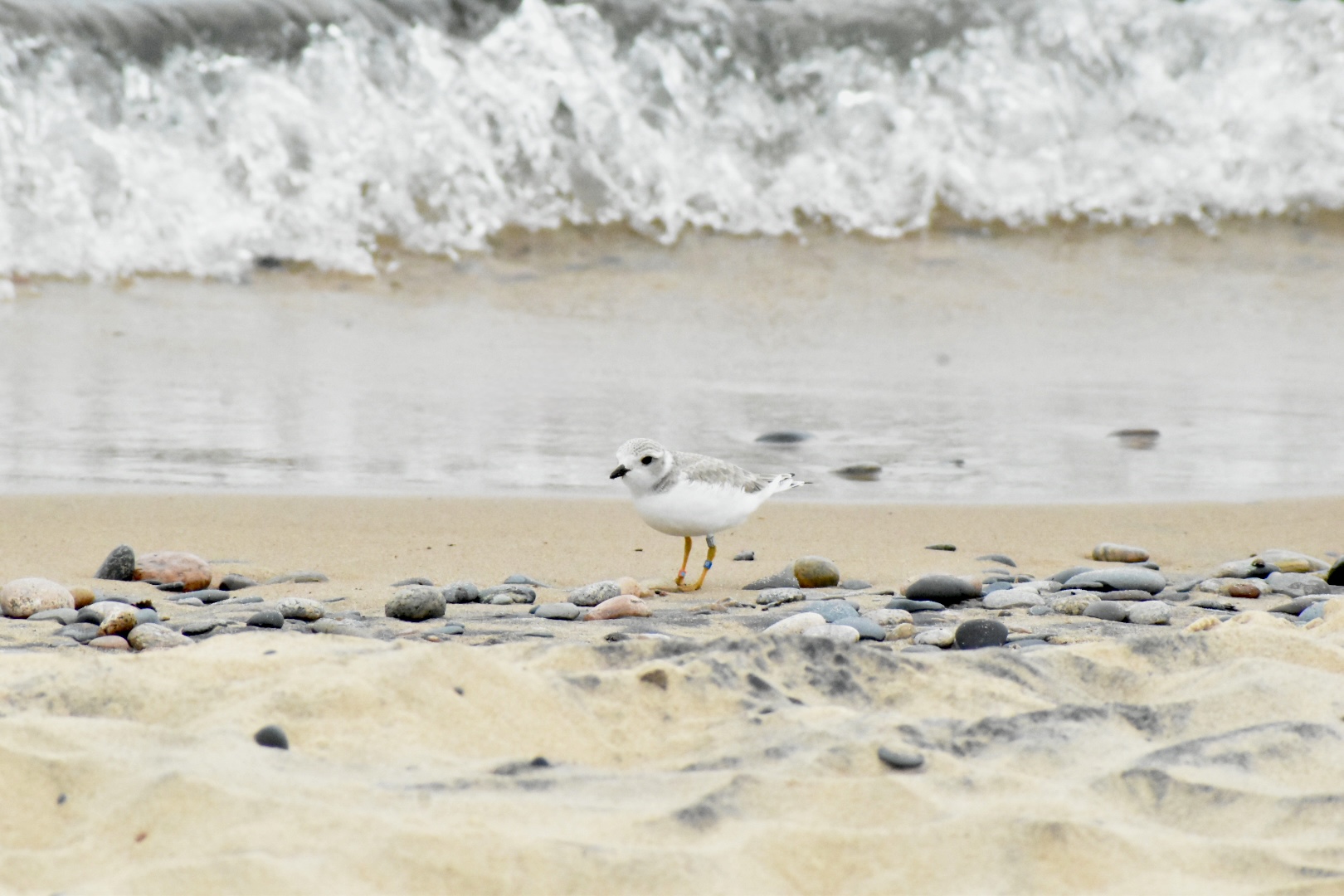
When I arrived at Whitefish Point from Minnesota on May 11, I was nervous to begin my first monitoring season. There had only been a handful of Piping Plover sightings, and patches of snow still lingered around the Point. A lot of questions were running through my head: Is it always this cold and windy here? Will there even be Piping Plovers to monitor? Where do you recycle in this town? Everything was very new and unfamiliar to me. As the days went on, my nerves calmed, and the Piping Plovers thankfully showed up! By the end of my first week, we were confident V and G had established a pair bond and set up psychological fencing around where we expected them to nest.
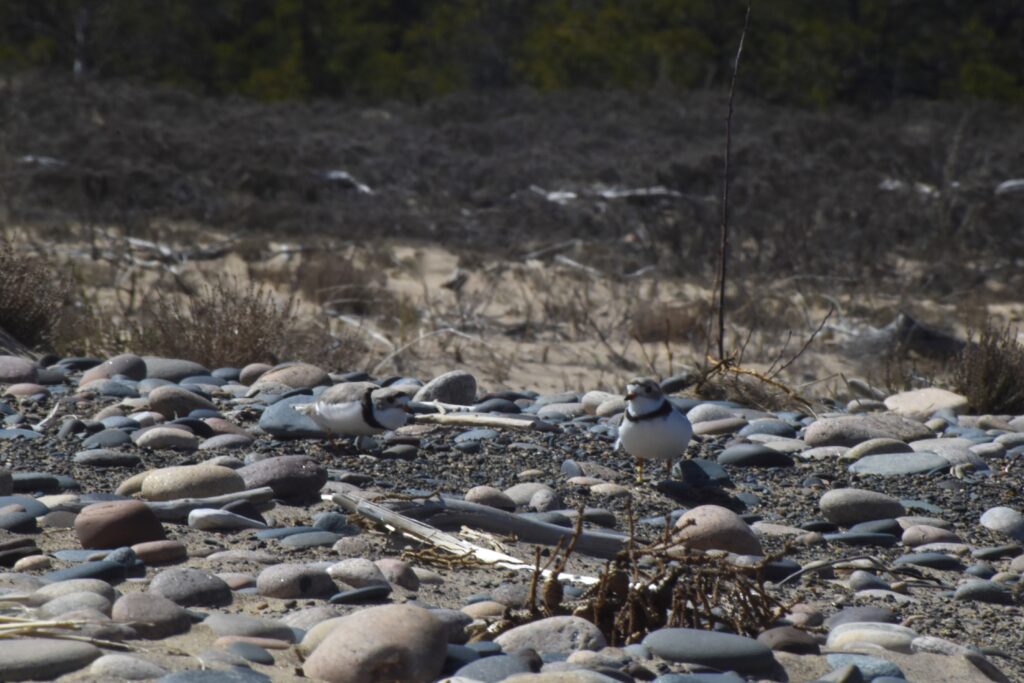
V and G together on May 18. Photo by Morgan Ness
Over the next few weeks, V and G continued strengthening their pair bond. On May 26, one of our volunteer monitors, Polly Sheppard, suspected that the pair had begun nesting. After carefully searching through the cobble beach for over an hour, we finally found the nest: one small speckled egg surrounded by pebbles. These plovers sure don’t make it easy to find! Once the nest was located, we placed an enclosure over it to help keep any predators away from their eggs. By May 31, the full clutch of four eggs had been laid, and incubation was in full swing.
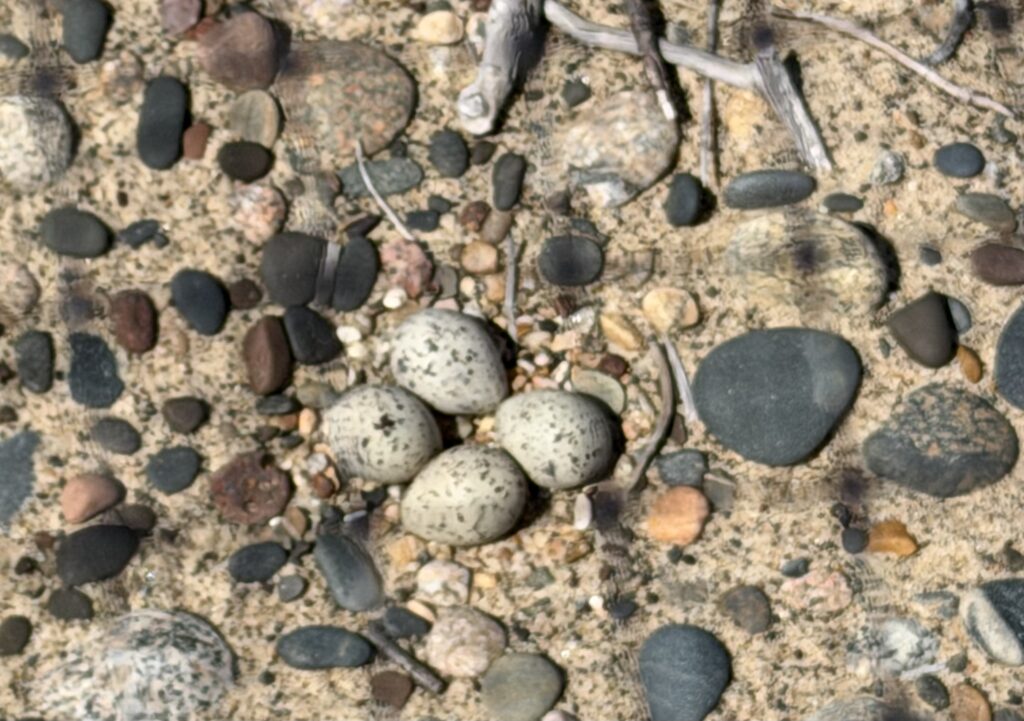
PIPL nest on June 3. Photo by Morgan Ness
June began and our plover pair was in a new routine of incubation, each parent switching on and off the nest to keep the eggs safe and warm. While incubation shifts were admittedly a bit less interesting to monitor, I gained an appreciation for their predictable routine and was impressed by the dedication they showed to their nest. Watching the pair slowly settle into a routine also helped me settle into mine.
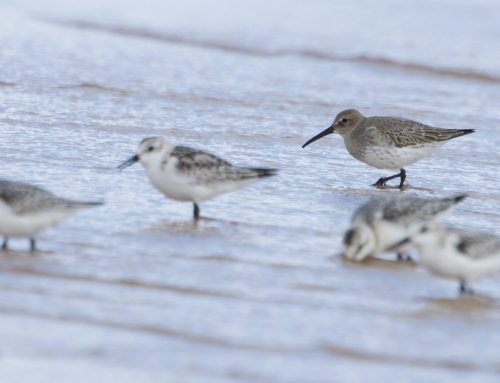
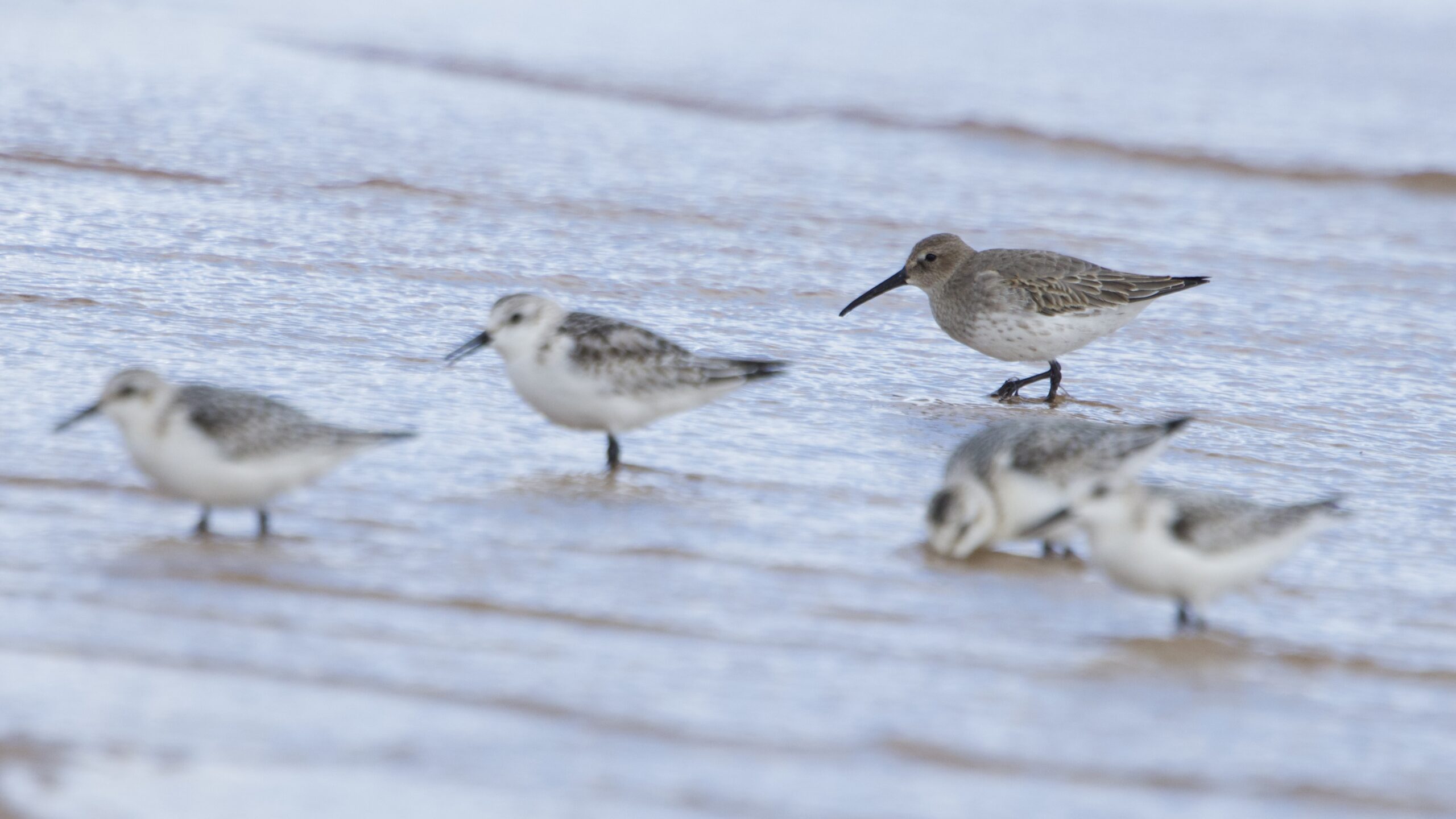
Incubation settled into a predictable rhythm, but the routine made one memorable day stand out. On this particular day, G, who was typically more territorial than his partner, decided to befriend a Dunlin. Wherever G went to forage, his Dunlin friend would follow. It was endearing and surprising to watch the unlikely pair hang out for the day. As it was time for G to relieve V from incubating the eggs, G walked up to the nest, and the Dunlin continued close behind as if he planned to take a turn incubating the eggs himself. Unfortunately, the plover-sized holes in the enclosure were not made for the Dunlin, who continued foraging the shoreline instead.
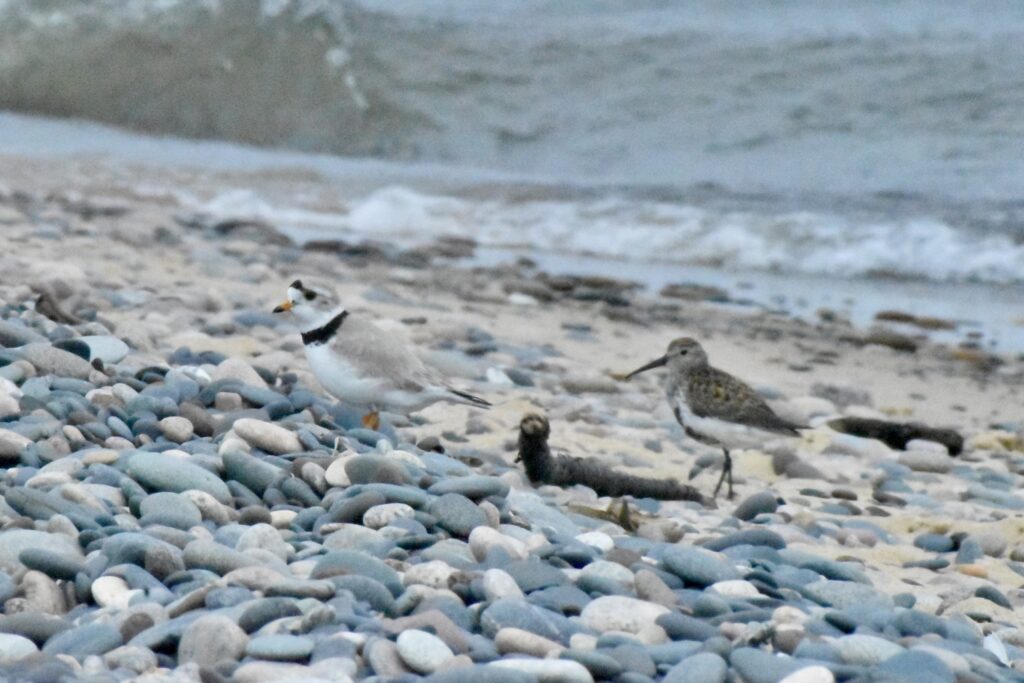
G and Dunlin friend on June 13. Photo by Morgan Ness
After 26 long days, three of the eggs finally hatched. I was sent a photo of the nest that morning from the trail camera showing an adult on the nest and three tiny fluff balls huddled around. I have never raced to the beach so fast. When I got there, the excitement immediately overcame me. I looked to see which parent was still in the nest, and saw G standing 5 to 10 feet away, not too pleased to have me watching the chicks. Sorry, G, but I had a job to do. After watching for a while, I noticed V was still sitting on one last egg. I was a little nervous that only three would hatch, but the pair spent one more day splitting incubation duties, and on June 27 all four had hatched.
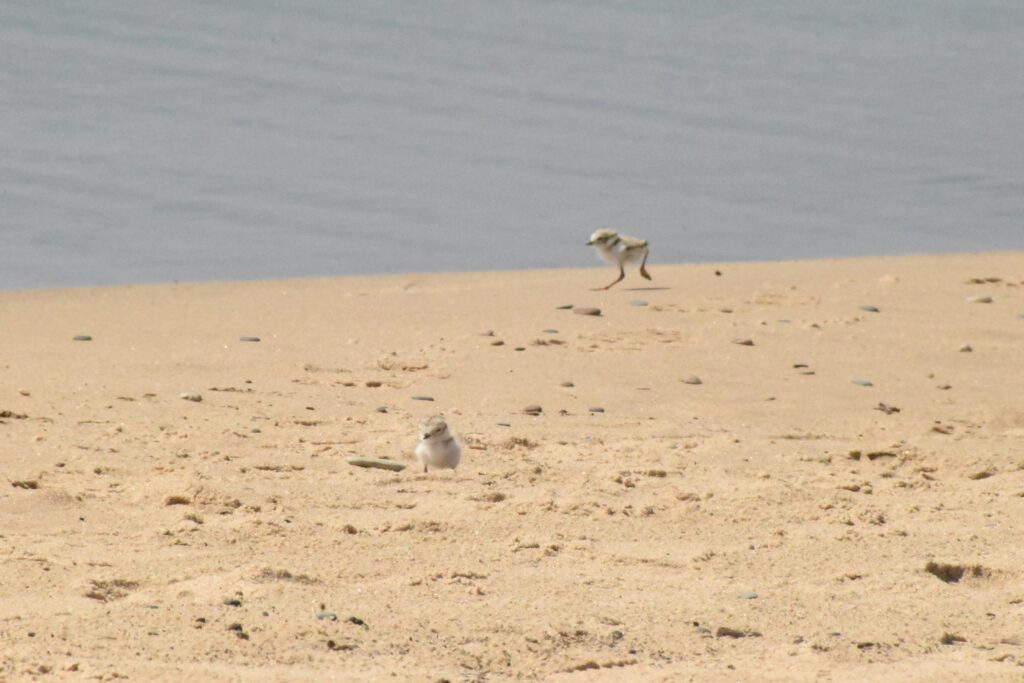
Piping Plover chicks on June 27. Photo by Morgan Ness
The next few weeks were definitely the most thrilling (and nerve-racking) for me as their monitor. I loved the new chaos of trying to keep track of four tiny chicks – very different from the incubation routine of finding one always at the nest. Although all four chicks hatched successfully, only one would survive beyond the first week. I nicknamed him Butters, and over the next month I had the privilege of watching him grow from a tiny ball of fluff into a fledgling ready to begin migration.
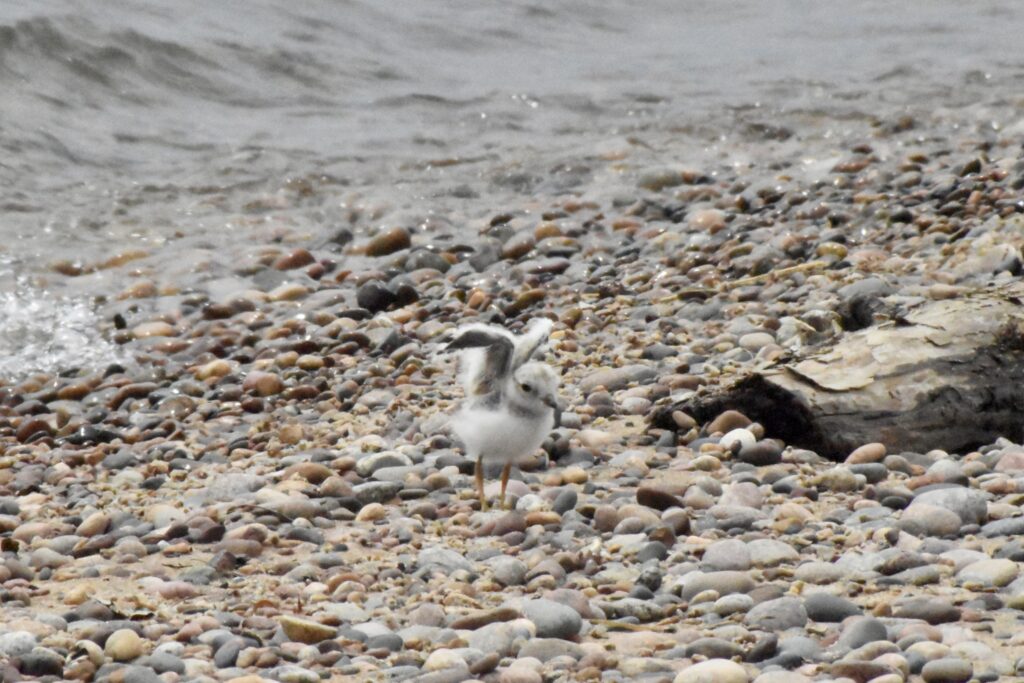
Butters spreads his wings on July 9. Photo by Morgan Ness
Adult females typically begin migration first, followed by males, while juveniles are usually the last to leave. On July 10 and 11, V spent two days at the Vermillion site seemingly having a girls’ getaway with the other nesting females. On July 12 she spent a final day with G and Butters, and hasn’t been seen back at the Point since. G remained with Butters every day, never straying too far away from the little one. On July 19, Butters turned 23 days old, making him a certified fledgling! He was a little small to be doing much flying at the time, but a huge accomplishment nonetheless. G was the next to leave for his migration journey, having last been seen at the Point on July 27.
With Butters now alone, he spent the first two days seemingly quite nervous about his plover skills. He wasn’t foraging much, and appeared to spend most of his time hiding behind driftwood. As the days went on, he became more and more confident, looking like a brand new Piping Plover. The pride I felt watching him discover his abilities was unmatched. I even got to see him make some of his first friends, three unbanded Piping Plover fledglings! The shoreline was packed on July 30, with four Piping Plovers, a Semipalmated Plover, Sanderlings, and a few Least Sandpipers. I saw Butters make a couple of attempts to scare off the sandpipers, and was so proud of him! He was much more confident than he had been when G first left.
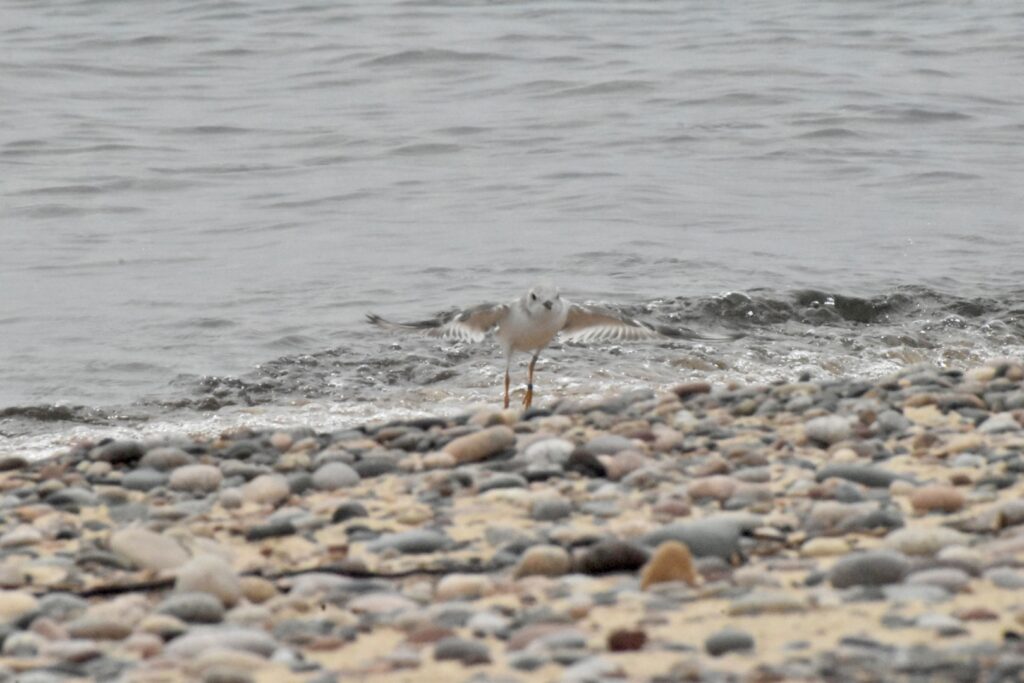
Butters taking off on July 31. Photo by Morgan Ness
The next day, the unbanded fledglings were gone, but replaced by a new Piping Plover fledgling from the Vermillion site. Butters immediately cozied up to the new friend, and the two spent the next two days together. On August 2, there was no sign of Butters or his new friend at Whitefish Point.
I am hoping they are both now on their way south. Having Butters leave felt like my child went off to college, but I am amazed at the incredible journey this little plover is about to make. It’s wild to think that in June he was just a tiny ball of fuzz, daring to run around the beach, and now he’s flying hundreds of miles to spend the winter on warmer beaches. I sincerely hope to see him return to Michigan next spring.
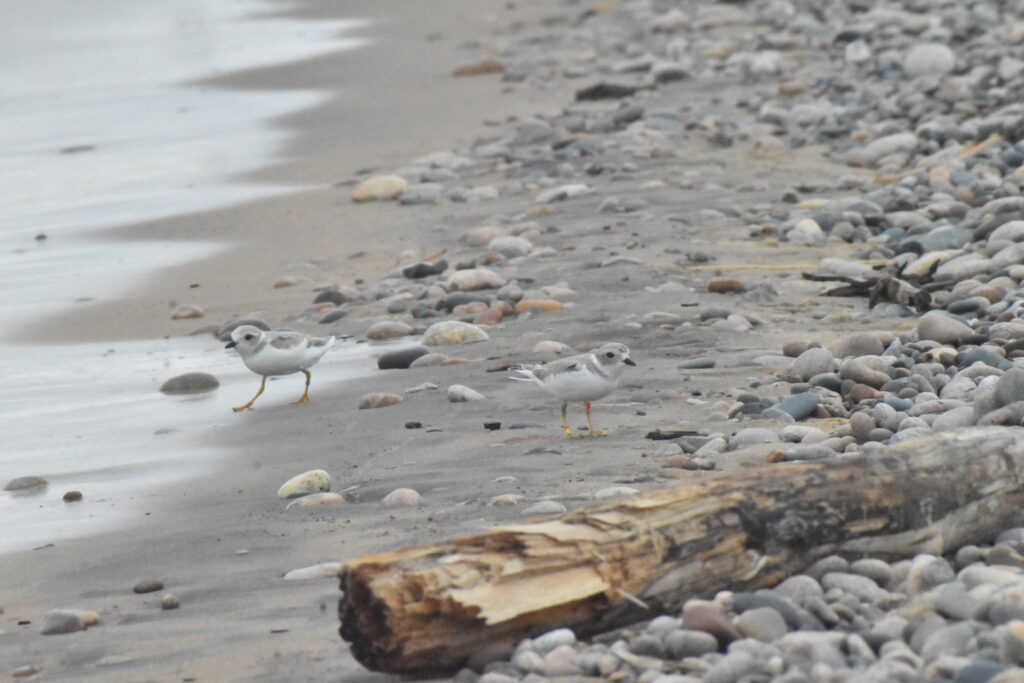
Butters and fledgling friend on August 1. Photo by Morgan Ness
As my first Piping Plover monitoring season comes to an end, I could not be more grateful. I’m incredibly thankful to everyone who made this season possible: to our dedicated volunteers, Gen and Lynn Miller, and Polly Sheppard; Max Henschell and Michigan Audubon; Stephanie Schubel and her crew; the Whitefish Point community for making this place truly feel like home; and everyone who followed along and gave the birds the space they needed to succeed.
Through the wind, rain, fog, cold, humidity, swarms of mosquitoes, and biting flies that persisted this summer, the Piping Plovers made it all worth it. When I arrived in May, Whitefish Point felt unfamiliar and intimidating. By August, it had become home. Watching V, G, and Butters throughout the season reminded me that every successful breeding season represents hundreds of small victories with every nest, every hatchling, every first flight. I feel incredibly lucky that my first monitoring season allowed me to witness one of those stories from beginning to end.
-Morgan Ness, 2026 Piping Plover Monitor
Feature Photo: Juvenile Butters by M. Ness
Piping Plover monitoring is a collaborative effort between Michigan Audubon and Seney National Wildlife Refuge (USFWS).
You can keep up with the 2026 Piping Plover action at WPBO by reading Morgan’s blog posts and following WPBO’s social media (Facebook, Instagram, and X).
Morgan Ness: 2026 Piping Plover Monitor
 Having studied Environmental Science, Policy, and Management at the University of Minnesota Twin Cities, Morgan developed a passion for protecting migratory birds and forest ecology. After spending time in Montana conducting avian monitoring, Morgan is excited to experience Michigan’s species during migration season and to take in the change in scenery. Whether she’s identifying leg bands or chatting with beachgoers about the importance of plover conservation, Morgan’s enthusiasm for the outdoors is contagious. She is thrilled to call the Michigan shoreline her office this summer and contribute to the recovery of such an iconic species. When she isn’t bird-watching, Morgan is often crocheting, hiking, or watching Bravo.