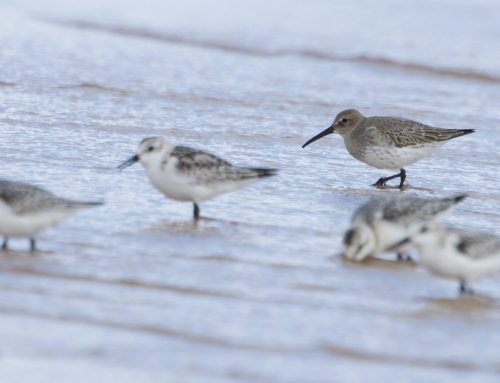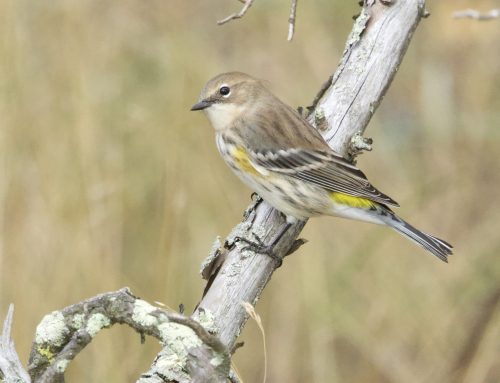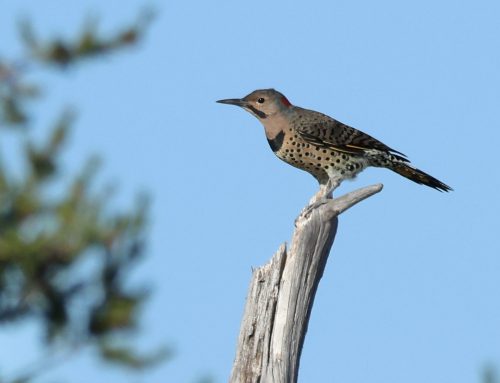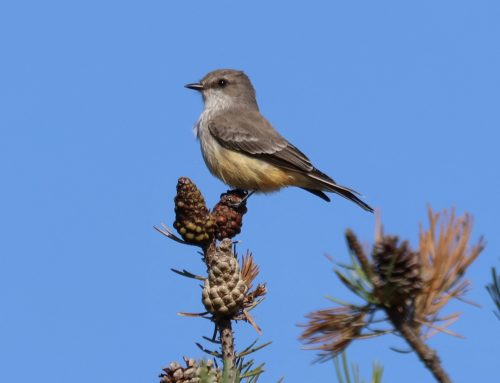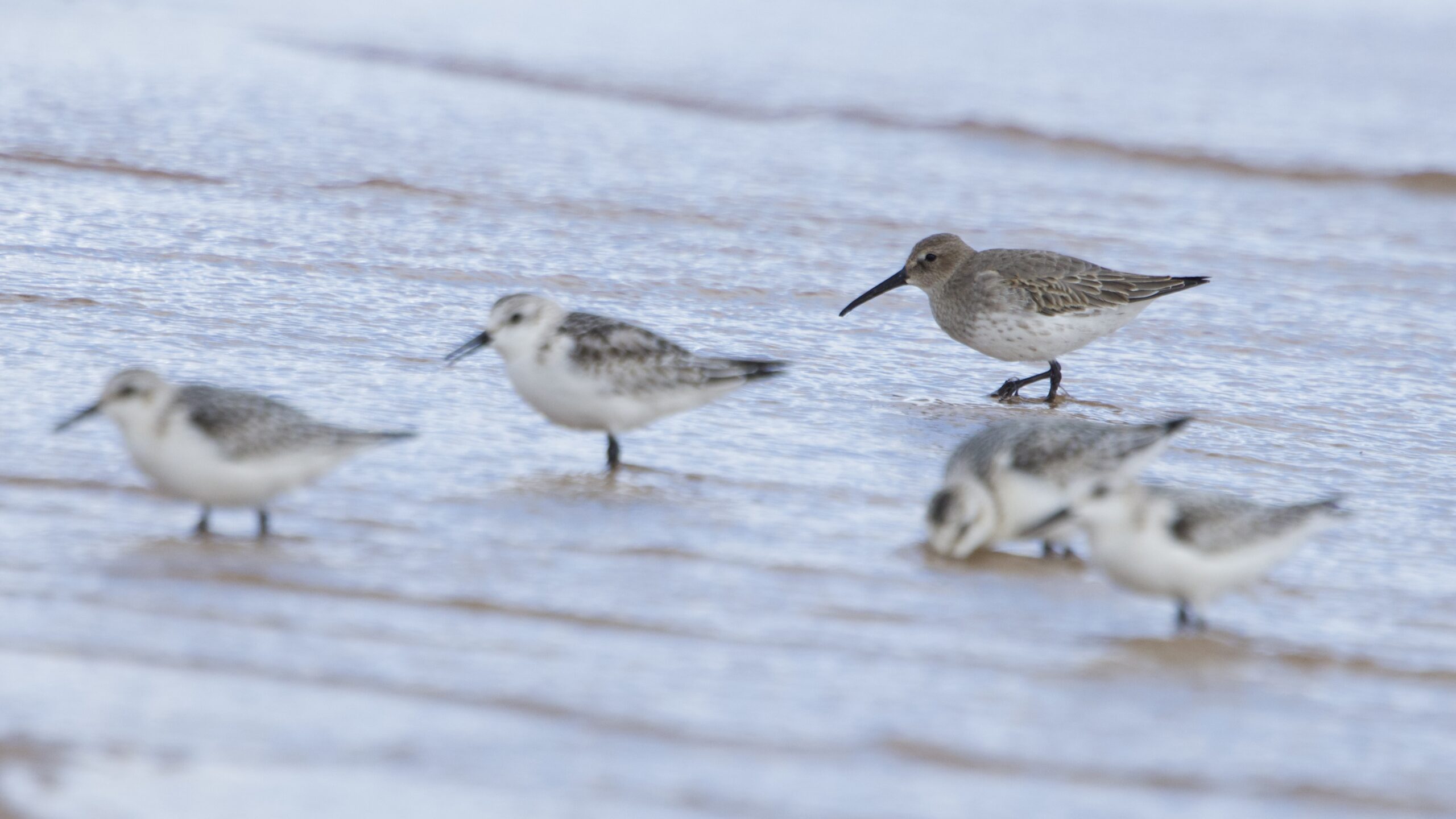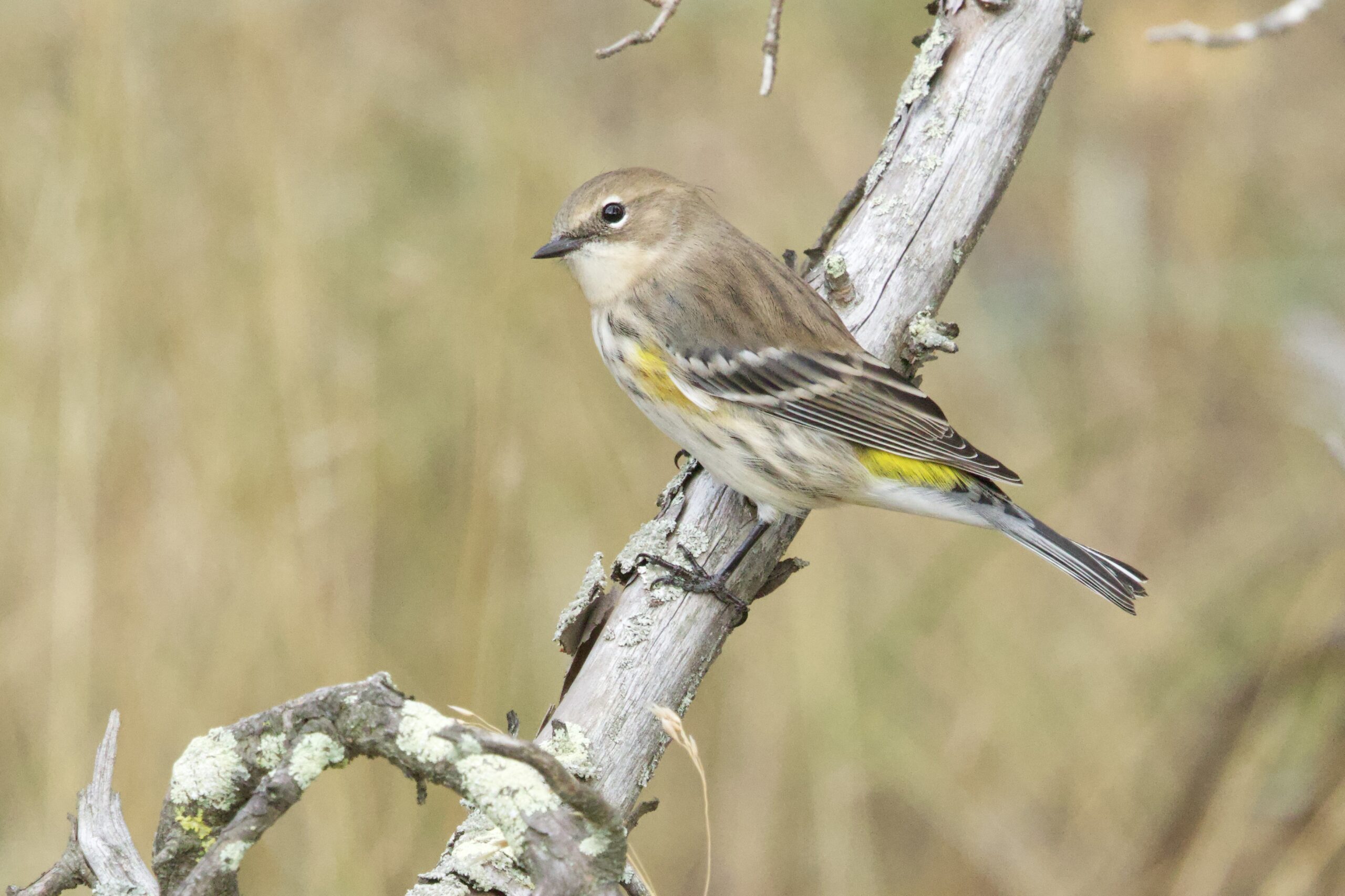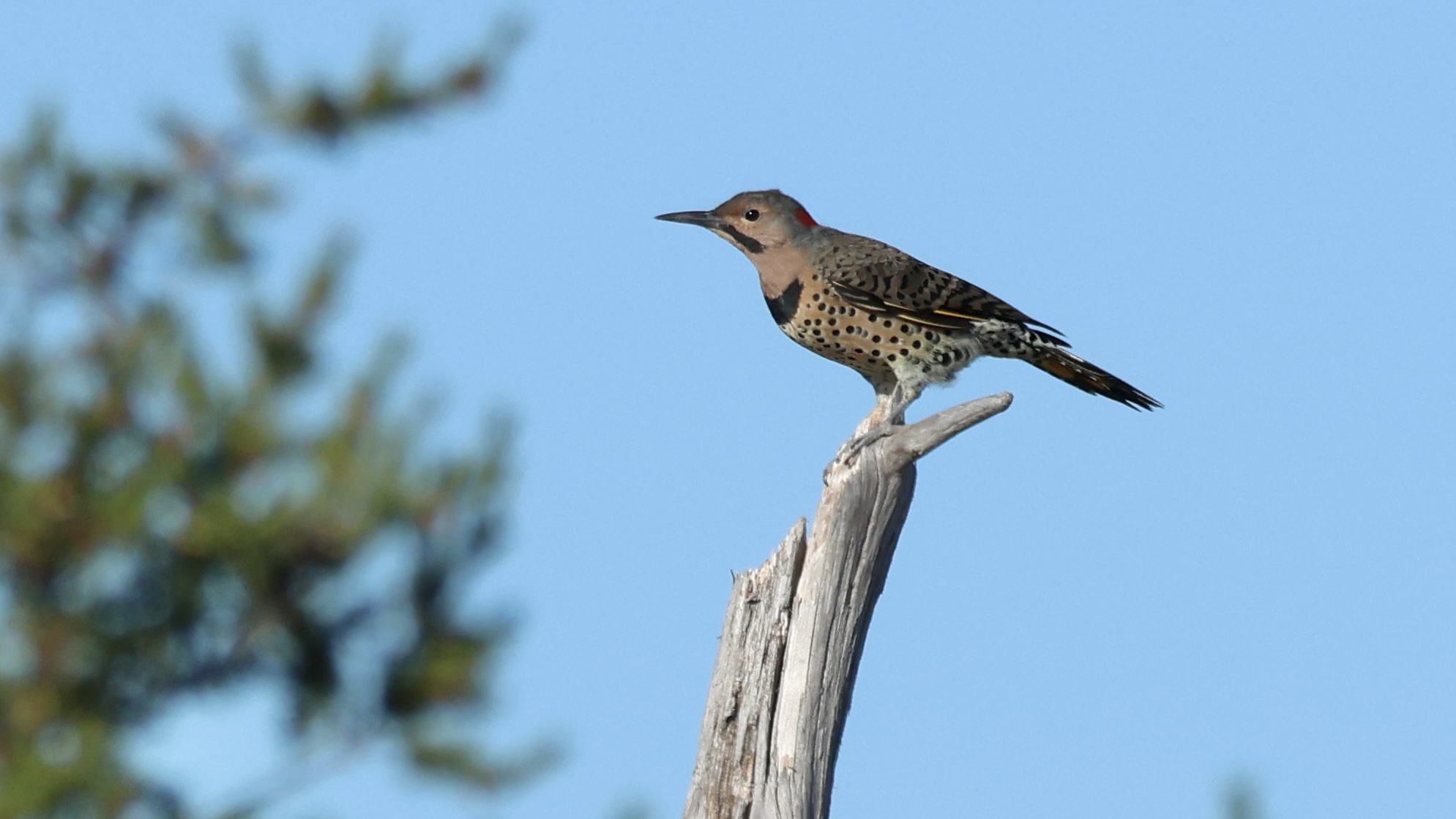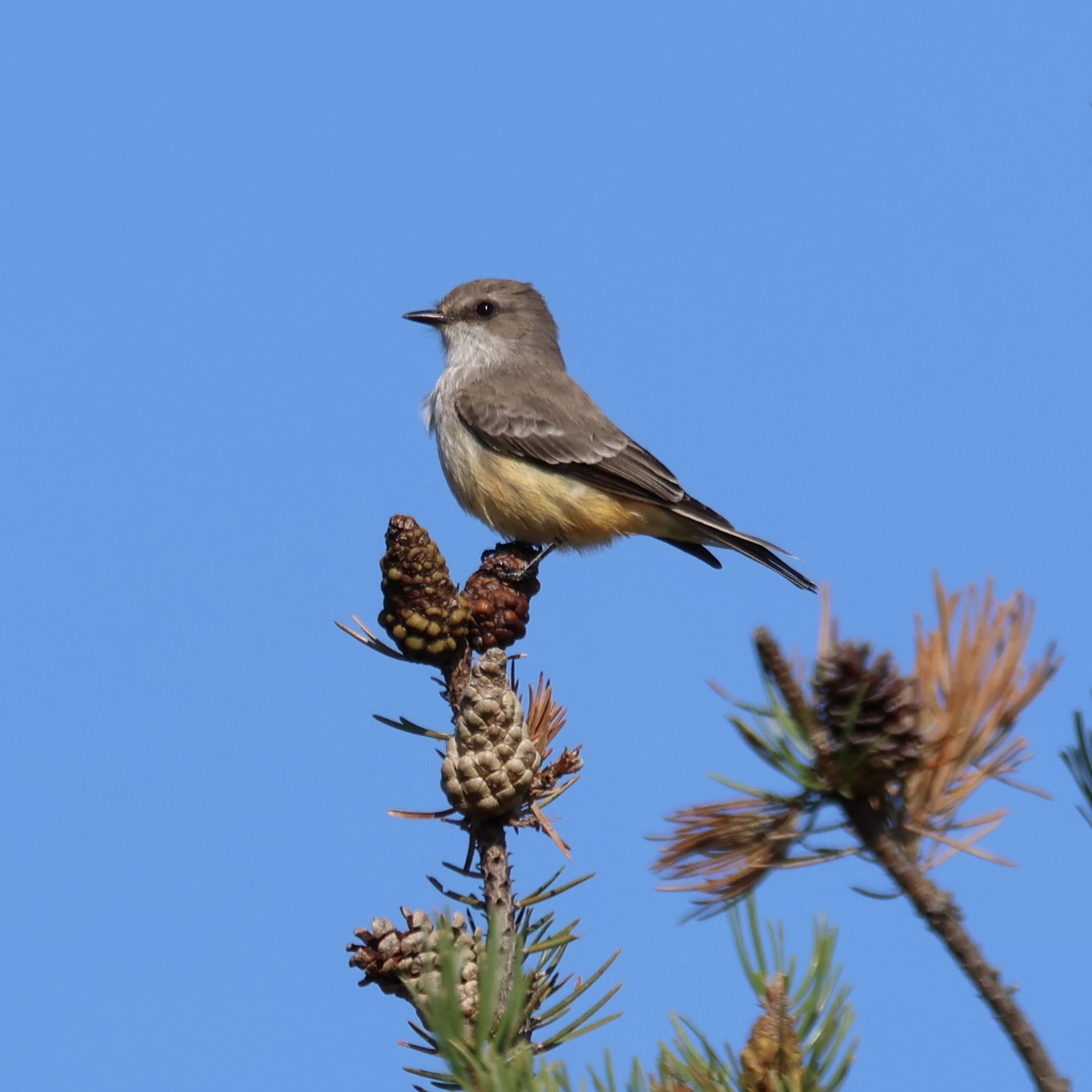
By August, warblers lose their vibrant spring colors. Fall plumages are dull, helping blend into the environment, and songbirds are no longer required to attract a mate so they do not sing. Migrants stop at Whitefish Point to refuel, building vital fat reserves along a long journey south. Flocks move at lightning speed in constant search of insects, seeds, and berries.
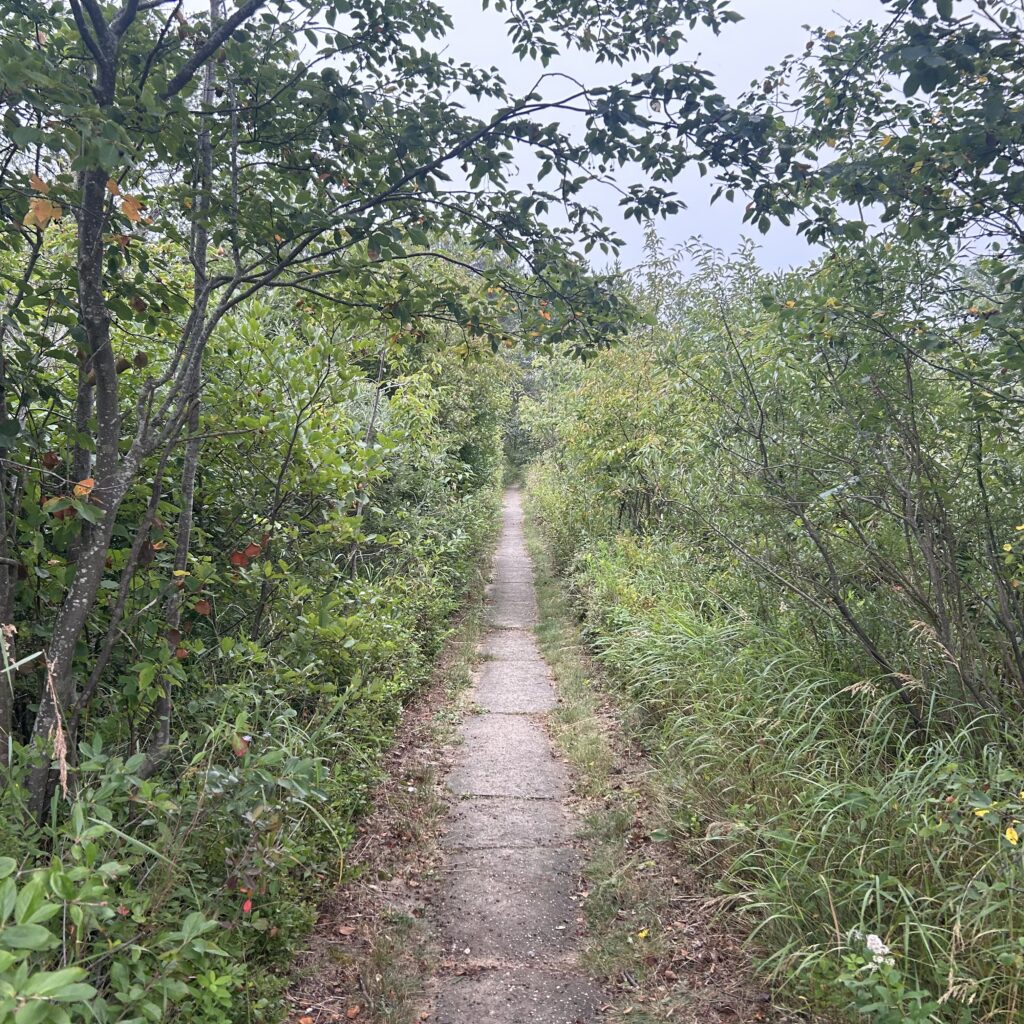
Memory Lane. Photo by Oliver Kew
Warblers will continue to be the highlight of the woods until mid September. We have already recorded 23 different species! This week brought the first Chestnut-sided Warblers of the season. An immature Black-throated Blue Warbler was found foraging low to ground along memory lane on 08/31.
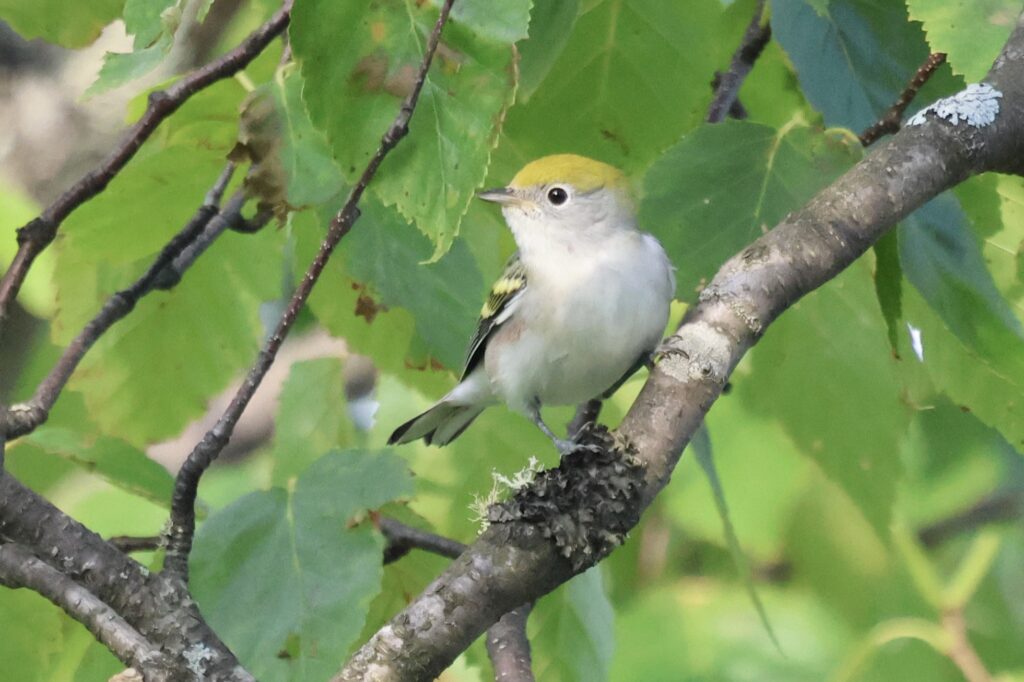
Chestnut-sided Warbler. Photo by Oliver Kew
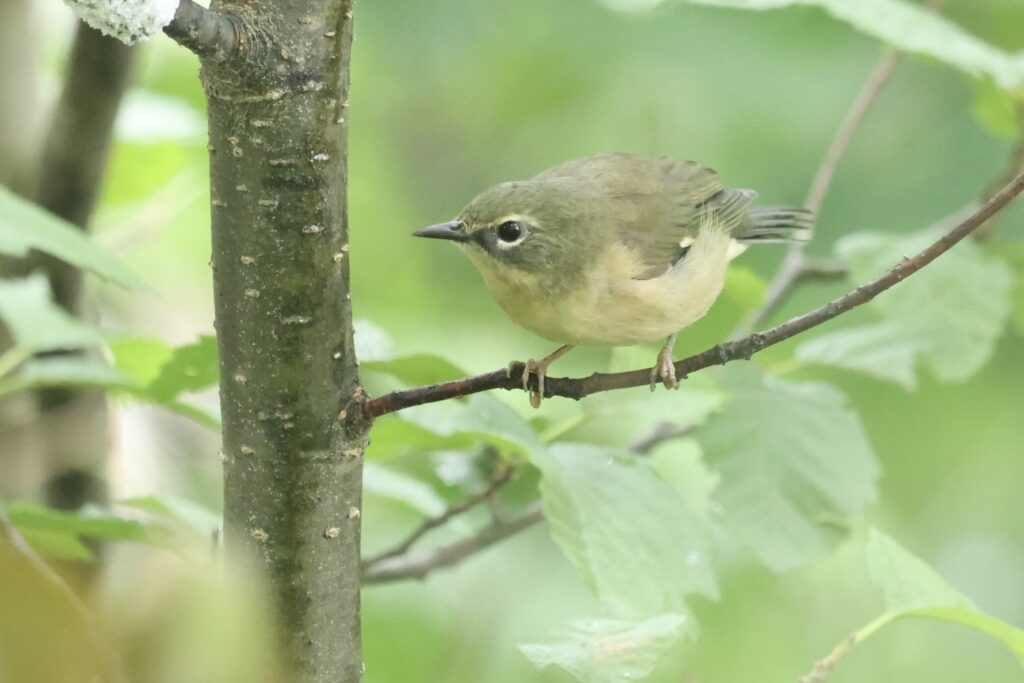
Black-throated Blue Warbler. Photo by Oliver Kew
Common Yellowthroat have been notably abundant at the point this week. Normally cryptic during breeding season, foraging migrants often provide more satisfying looks.
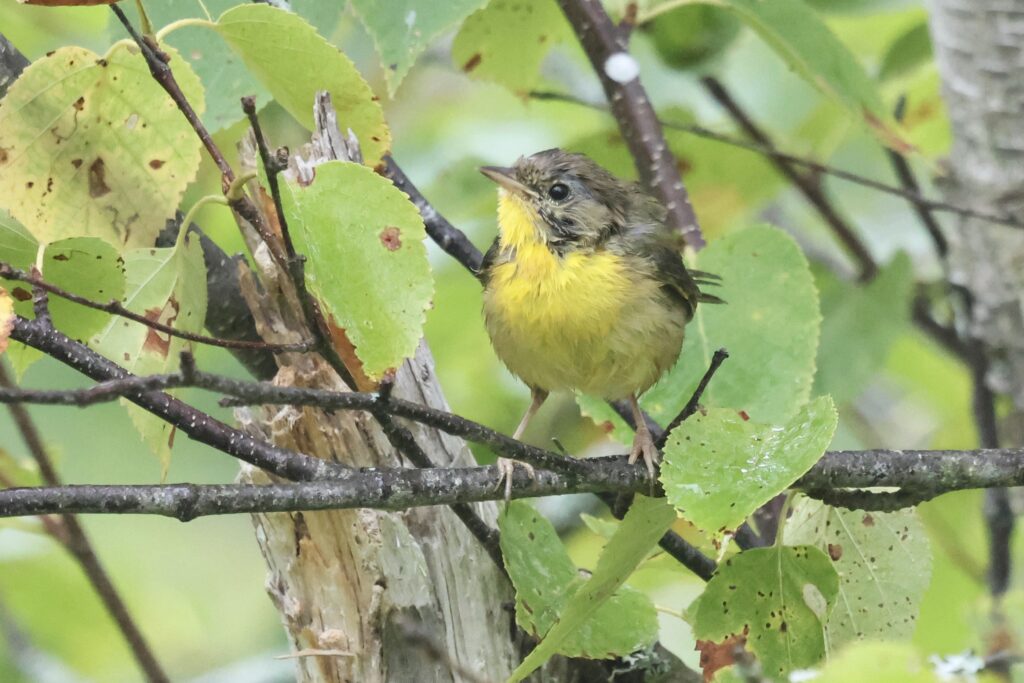
Common Yellowthroat. Photo by Oliver Kew
Only two species of Vireos are common visitors to Whitefish Point: Blue-headed and Red-eyed. Both breed in the area and were regularly observed for the first two weeks. Red-eyed Vireos were recorded in larger numbers.
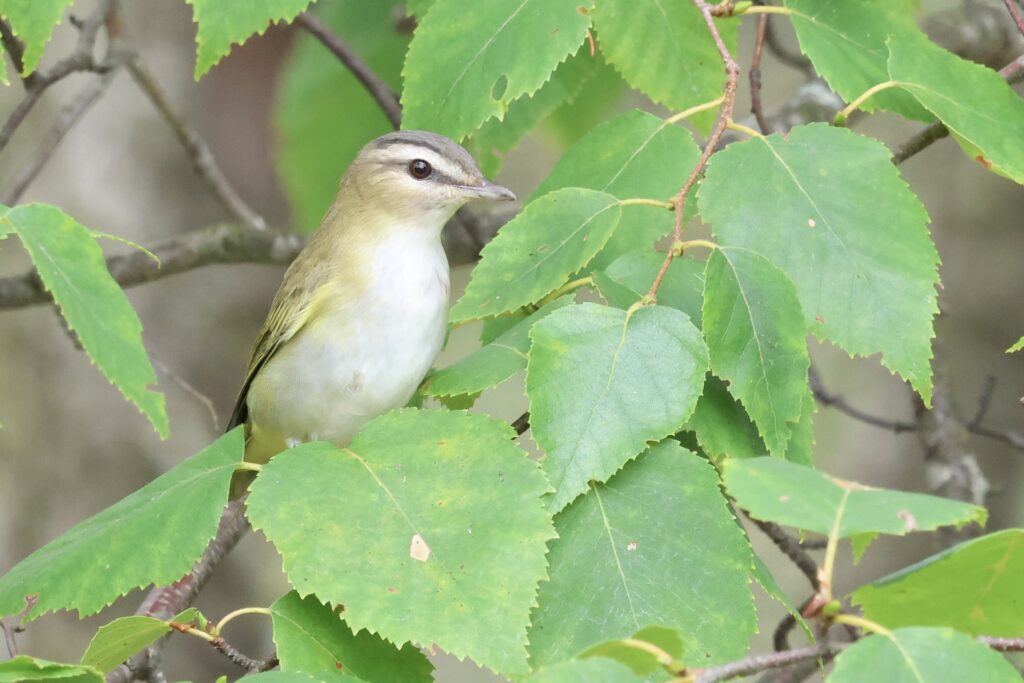
Red-eyed Vireo. Photo by Oliver Kew
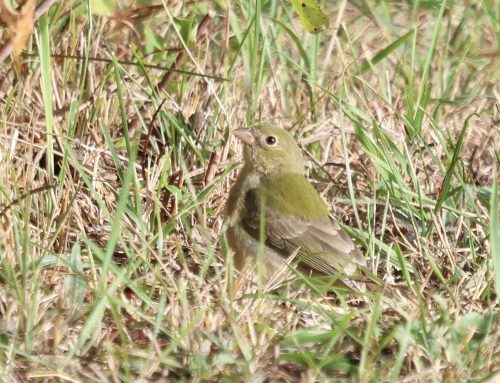
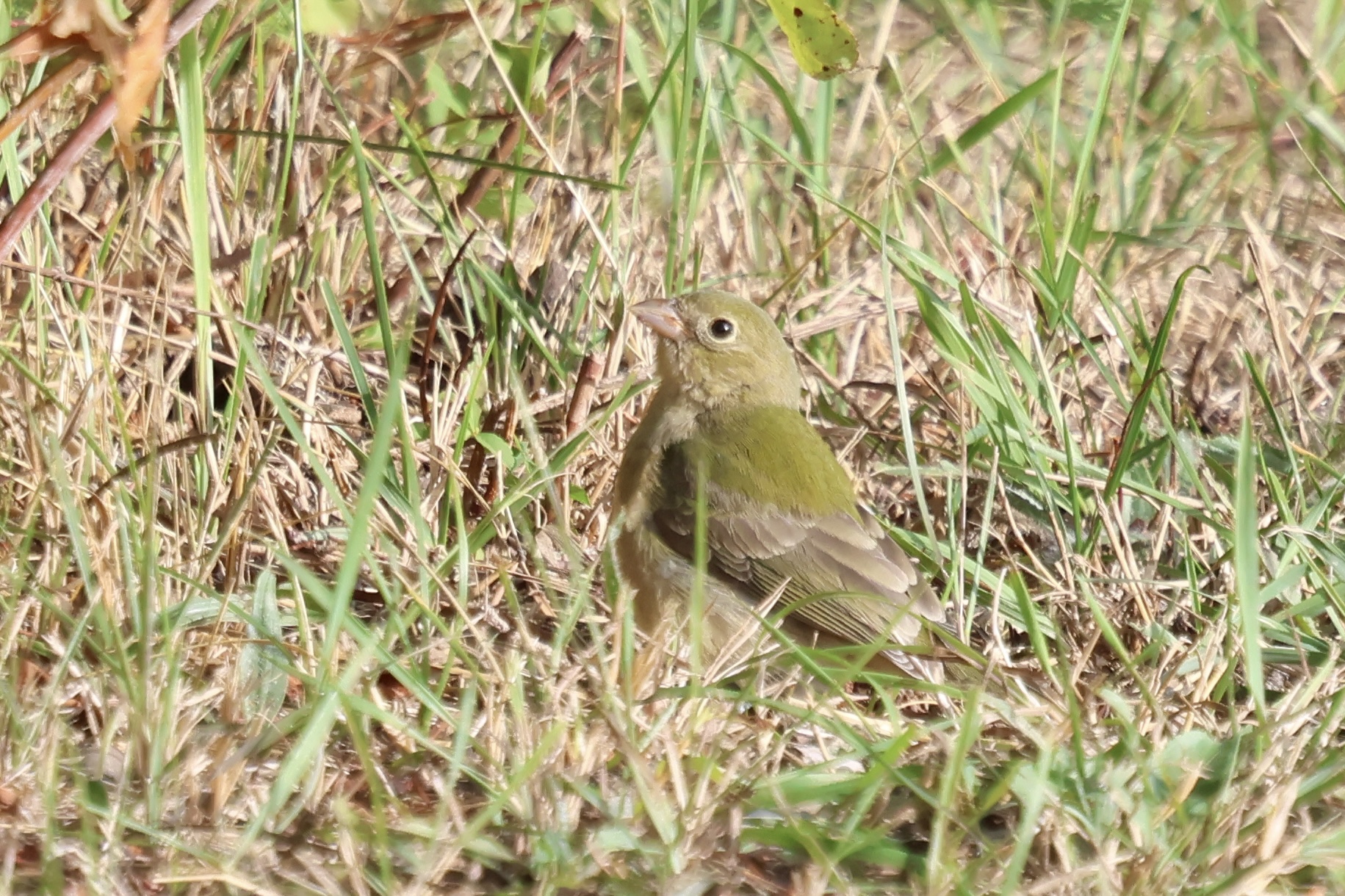
Male Indigo Buntings have transitioned from their bright blue spring breeding plumage to a pale brown, similar to females. Sightings of Indigo Buntings were consistent this week. A weekend tour witnessed an ambitious individual attempting to eat a large grasshopper. After carefully removing the wings and appendages, the bunting successfully downed its meal, much to the delight of spectators!
Sparrow diversity is slowly starting to increase. Song, Swamp, Chipping and White-throated Sparrows are already present as breeders. Begging juveniles are still common this time of year.
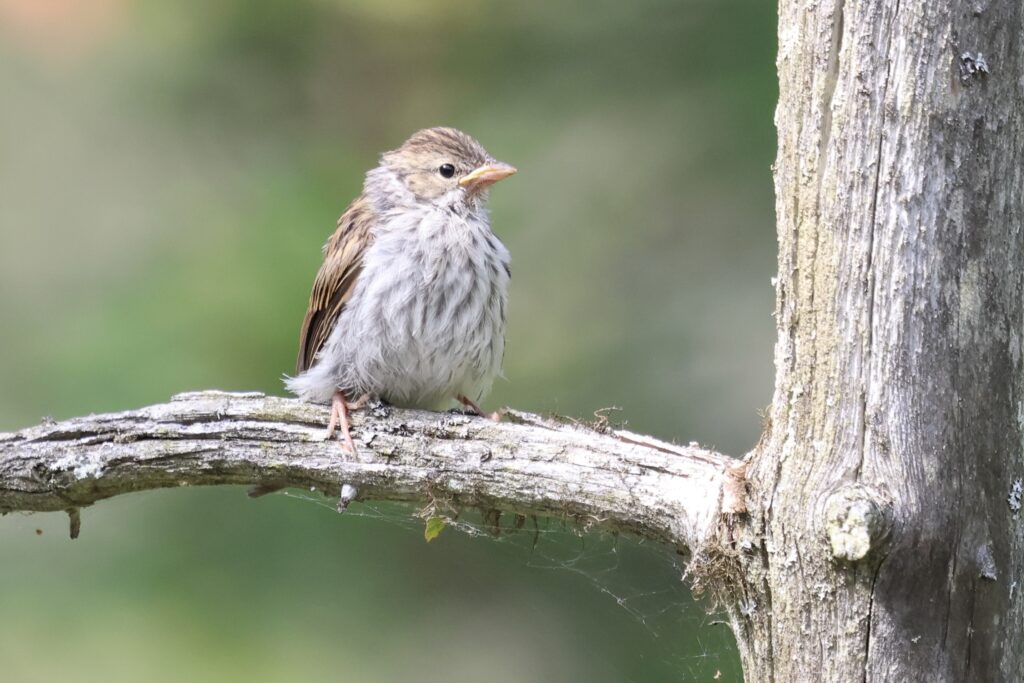
Immature Chipping Sparrow. Photo by Oliver Kew.
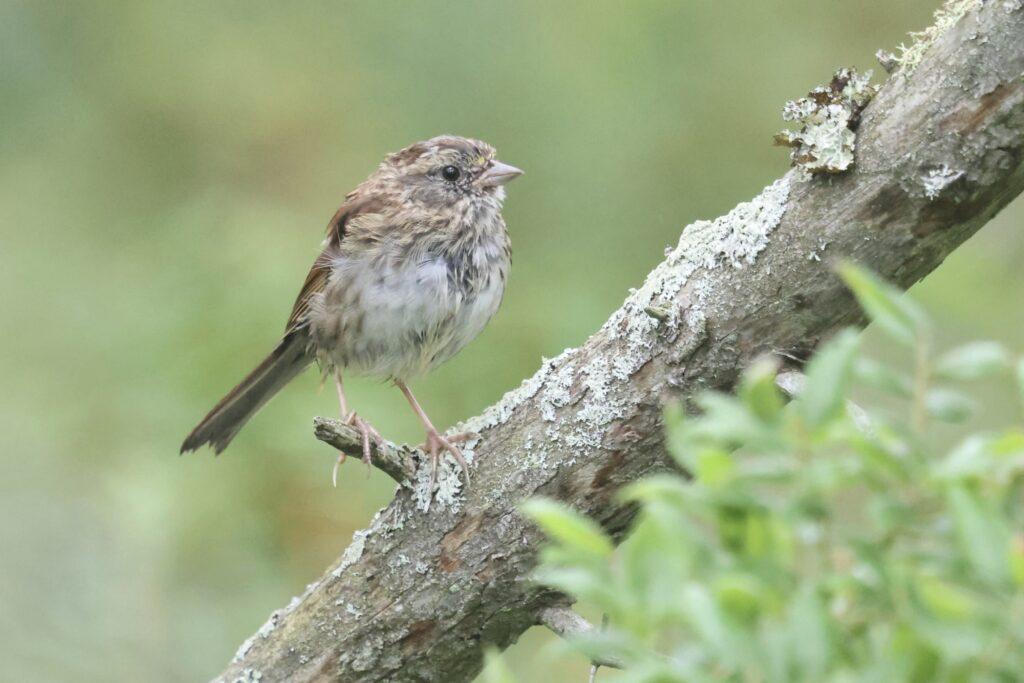
Immature White-throated Sparrow. Photo by Oliver Kew
Flocks of migrant Chipping Sparrows remain abundant. This week, a handful of newly arrived Clay-colored and Lincoln’s Sparrows were found around the point. A pair of White-crowned Sparrows has been consistent at the feeders.
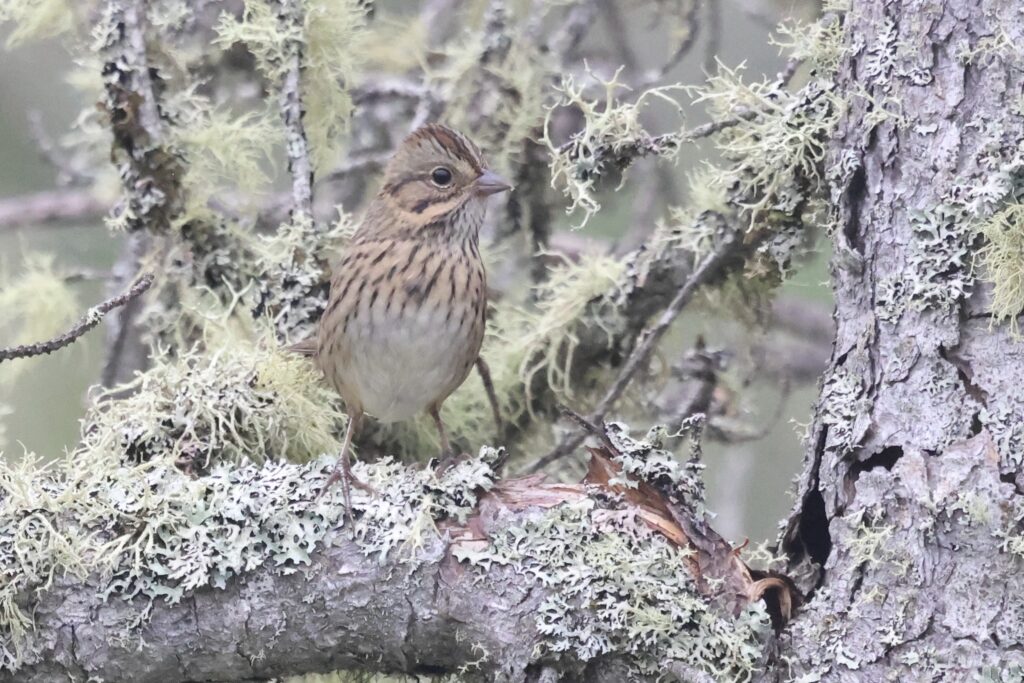
Lincoln’s Sparrow. Photo by Oliver Kew
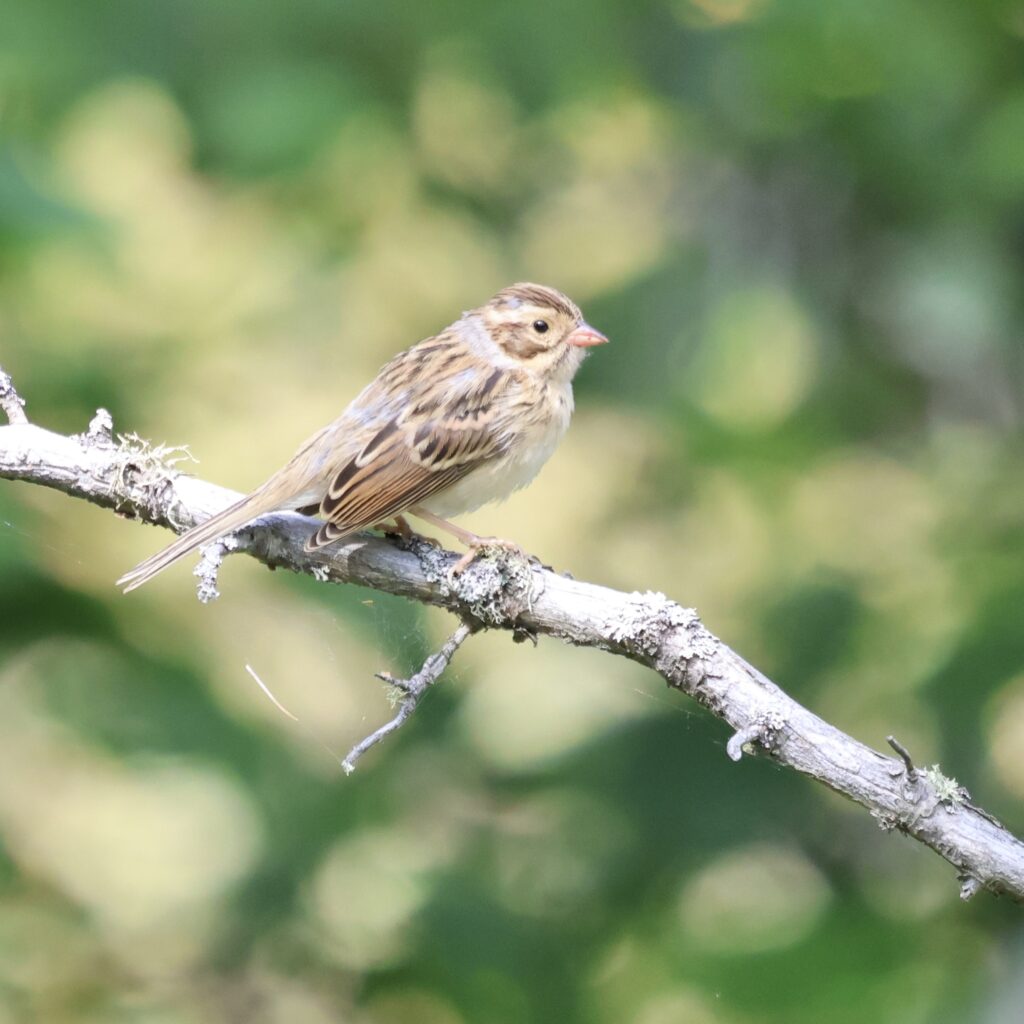
Clay-colored Sparrow. Photo by Oliver Kew
As the woods start to quiet during the day, action continues behind the Research Building at the feeder station. Our bird baths are still a popular stop for songbirds on warm early afternoons. The constant calming buzz of Ruby-throated Hummingbird activity is also a great aspect of late August.
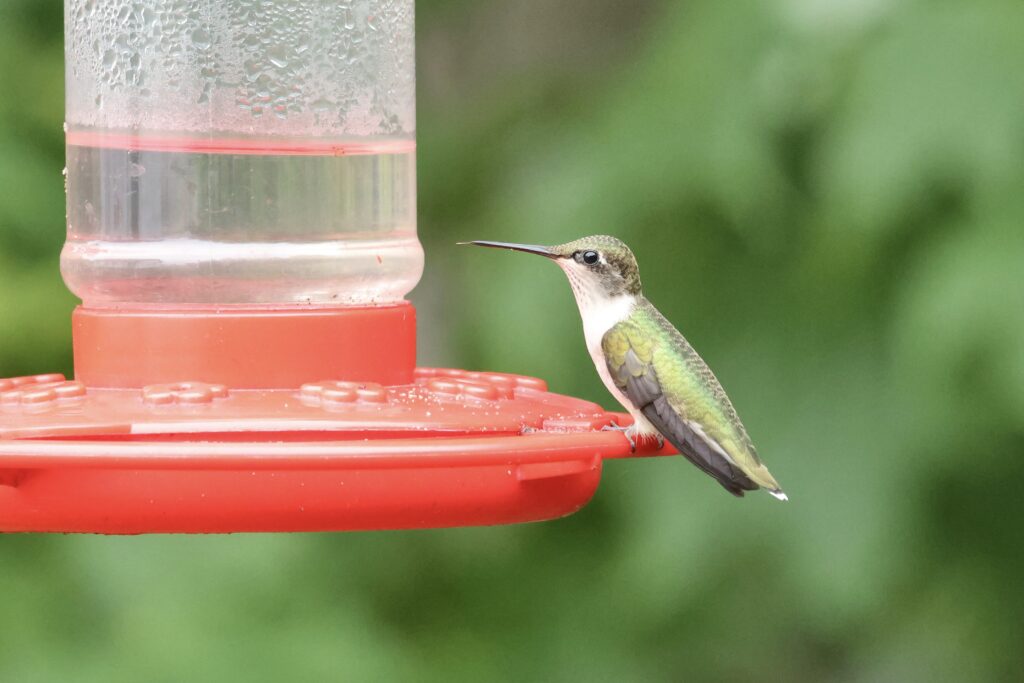
Ruby-throated Hummingbird. Photo by Oliver Kew
Grouse at the point can be difficult to find, staying highly camouflaged in dense pines. Diversity increases towards late October when migrant Sharp-tailed Grouse arrive. For now, Ruffed Grouse are already present in small numbers. A family group of 6 was spotted behind the feeders on 08/20.
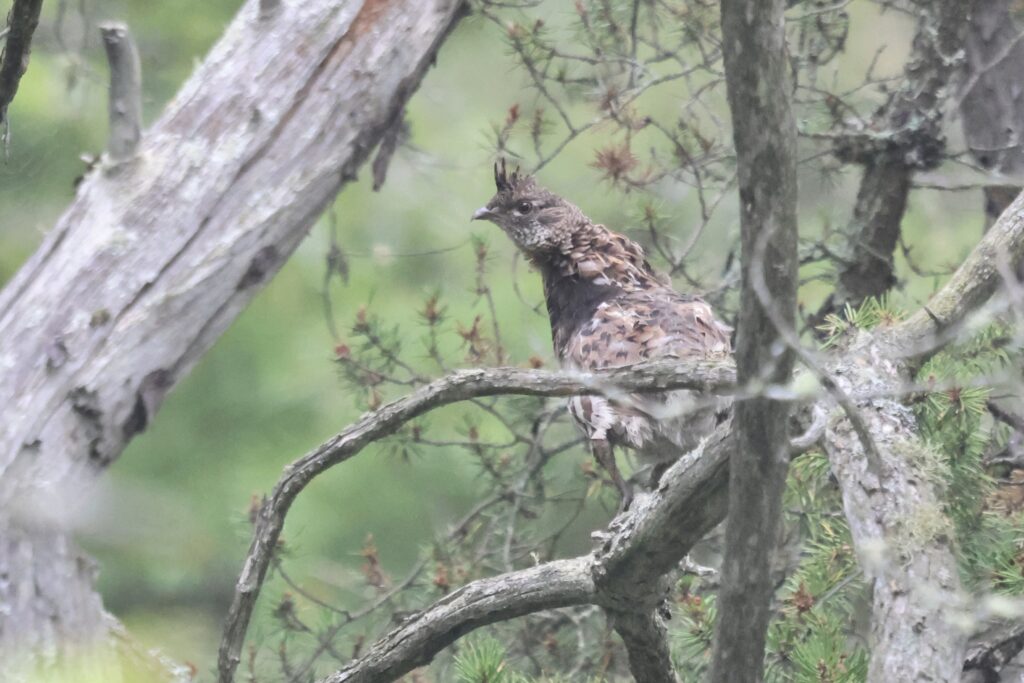
Ruffed Grouse. Photo by Oliver Kew
Similar to raptors, Common Nighthawk prefer not to cross large bodies of water during migration. Sites at the west end of Lake Superior in Duluth, MN record incredible numbers. We were fortunate to have a sizable flock of 21 fly up the peninsula and check out the point on the evening of 08/28.
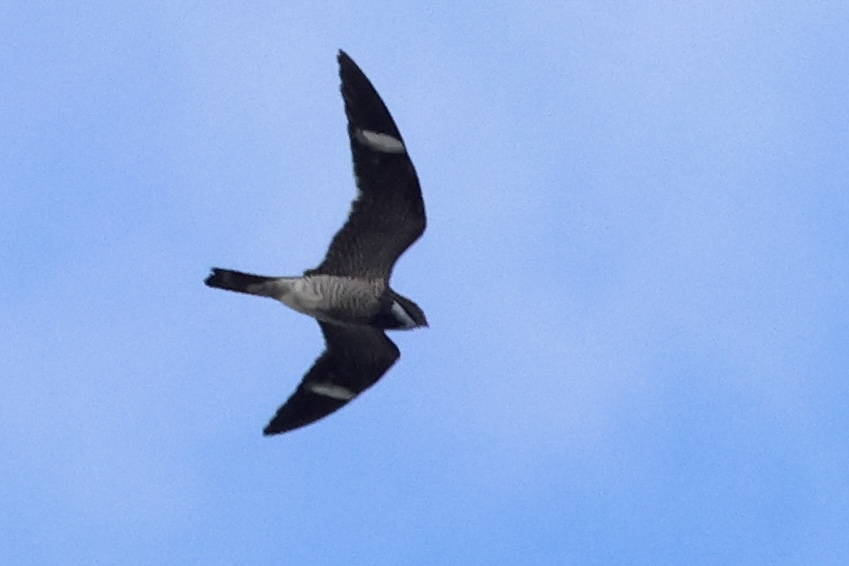
Common Nighthawk. Photo by Oliver Kew
While warm temps and southern winds stall bird migration, reptile and amphibian activity has increased. A Red-bellied Snake and Eastern Newt were a fun surprise along the boardwalk. Spring Peepers regularly take advantage of small puddles on the hawkwatch platform.
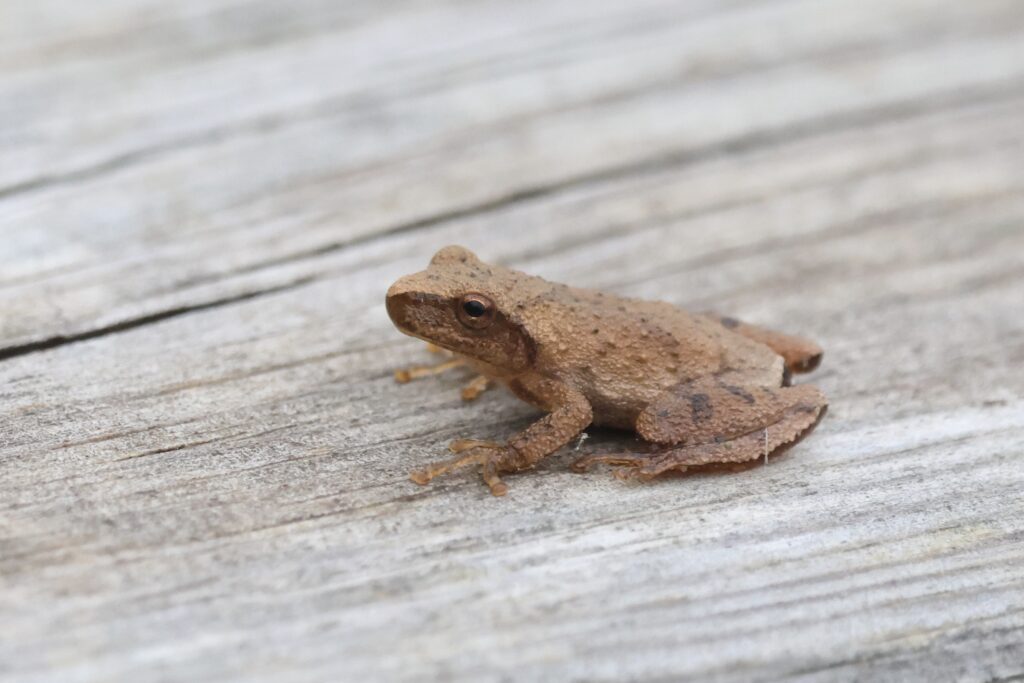
Spring Peeper. Photo by Oliver Kew
The month of August is in the books! Make sure to take is a peek at our recent sightings board and checklist near the parking lot. By mid-November we hope to have them filled up with great birds and memories!
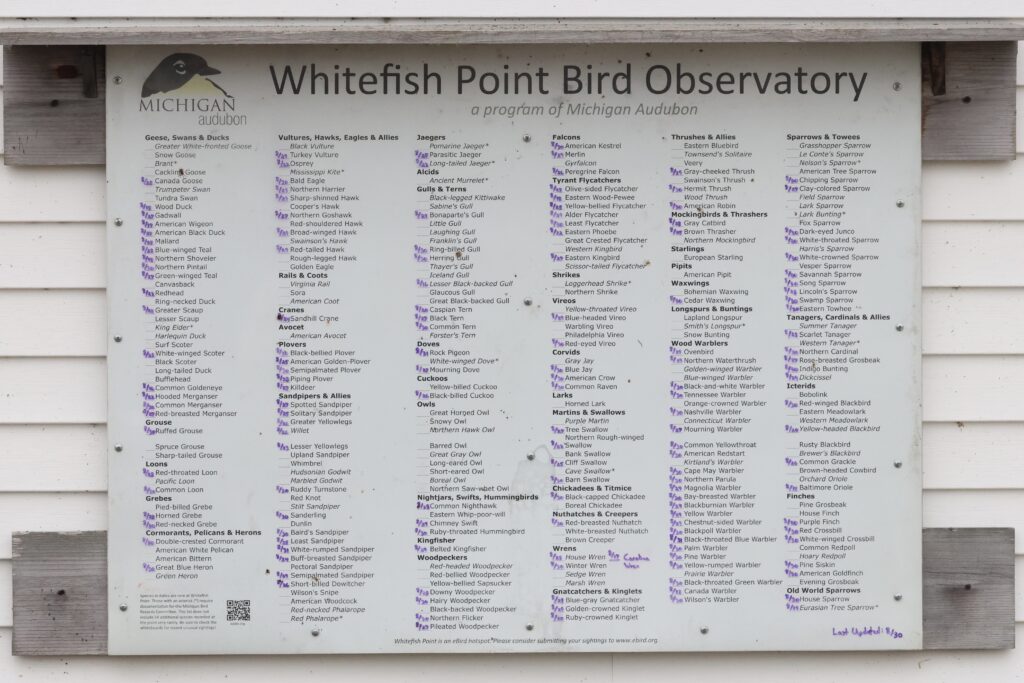
WPBO Checklist Board. Photo by Oliver Kew
Oliver Kew, Fall Field Ornithologist
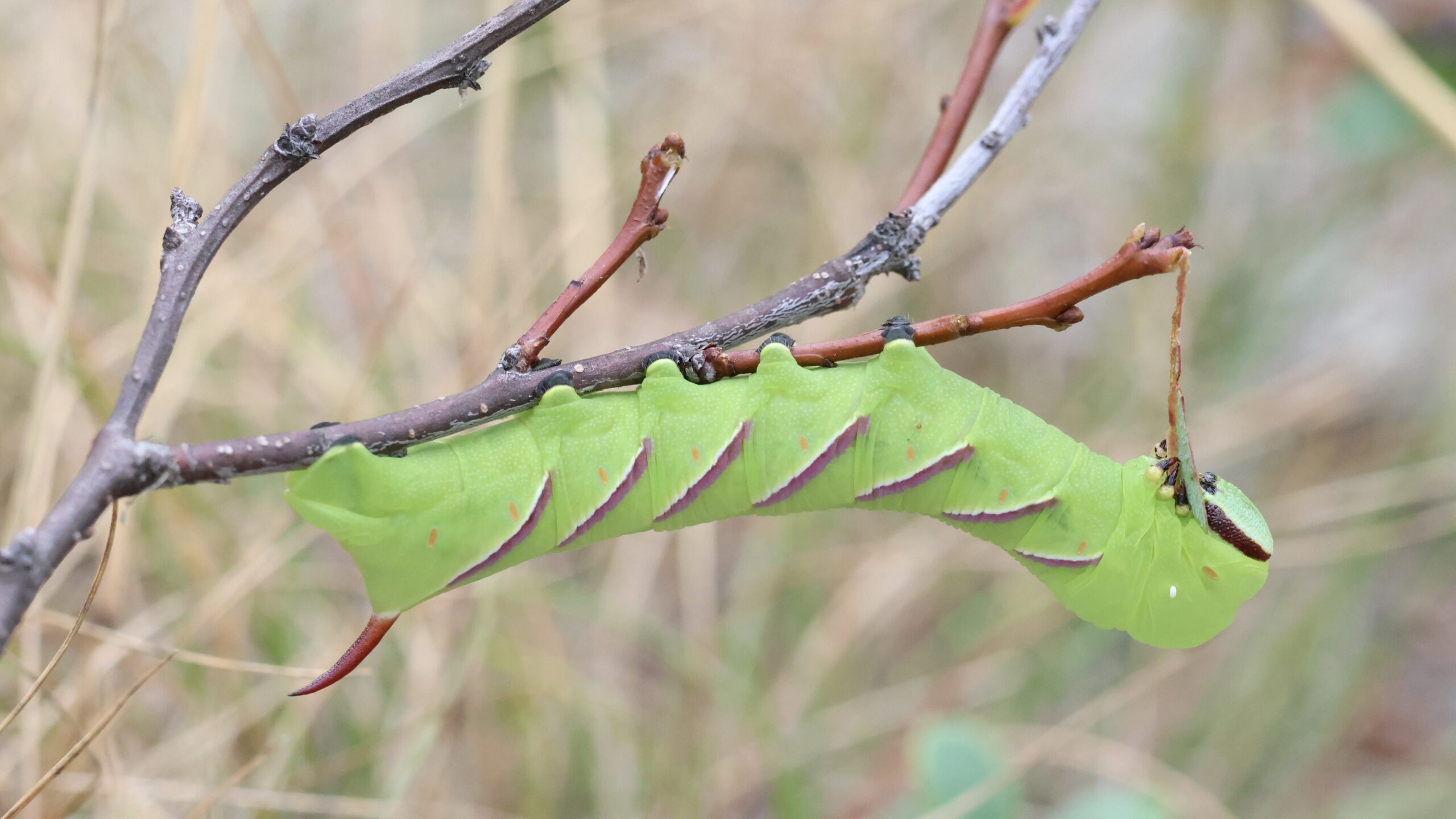
Featured Photo: Wild Cherry Sphinx Moth Caterpillar by O. Kew
Track the morning flight counts on Trektellen.
Keep up with the 2026 Fall Field Ornithologist’s weekly blog posts and follow WPBO’s social media (Facebook, Instagram, and X).
Join Oliver for one of his WPBO Migratory Bird Walks offered every weekend through November 15. Learn more at https://wpbo.org/wpbobirdwalks/.

Oliver Kew: 2026 Fall Field Ornithologist
Oliver is a passionate naturalist from Petoskey, Michigan. He worked for Mackinac Straits Raptor Watch as a waterbird counter for seven seasons. Oliver graduated from Michigan State University in 2017 with a B.S. in Zoo & Aquarium Science. His previous roles include working as an Animal Husbandry Technician and Zookeeper Aide, where he helped maintain large collections of exotic birds and reptiles. Originally from Coventry, England, Oliver developed an immense appreciation for the natural world through his family of foresters. He loves exploring the shorelines of northern Michigan in pursuit of exciting and unexpected birding experiences and is honored to help convey the importance of Whitefish Point as a migration pathway. When he is not birdwatching, Oliver enjoys playing disc golf, looking for insects and plants, and spending time with his two cats.