This past week started off with a bang on September 2nd, with over one thousand songbirds coming in off the lake, including 18 species of warblers. It was a cloudy to partly sunny day out of the WNW, very calm, and dozens of birds were coming in off the water and crashing into the dunes in the early morning. Other land bird notables included a few Dickcissel, an early flight of Golden-crowned Kinglets, and Swainson’s Thrush. On the waterbird front, almost 300 Common Tern and two Black Tern moved south, over 400+ Red-necked Grebes cruising by, some light duck diversity, and an immature Parasitic Jaeger right over the beach! Not only were there birds coming in off Lake Superior, but also Monarchs and even bats. Both Silver-haired and Eastern Red Bats were recorded, and a red bat landed in a nearby pine for the day.
The rest of the week remained pretty slow, with lots of easterlies. However, on a NE afternoon on the 5th, a good hawk flight developed. We had 45 Broad-winged Hawks, Red-tailed Hawks, Sharp-shinned Hawks, an American Goshawk, Bald Eagles, Turkey Vultures, Northern Harrier, Merlins, American Kestrels, and a rare sighting of an immature dark morph Swainson’s Hawk. On the 7th, a rare sighting of a Cloudless Sulphur came in off Lake Superior to Whitefish Point. We also saw our third Striped Saddlebags of the fall. Both these insects are vagrants from the Southeast. Additional first of the season birds this week included Great Crested Flycatcher, Lapland Longspur, lots of American Pipits, Whimbrel, Dunlin, Lesser Scaup, Canada Warbler, and Savannah Sparrows.
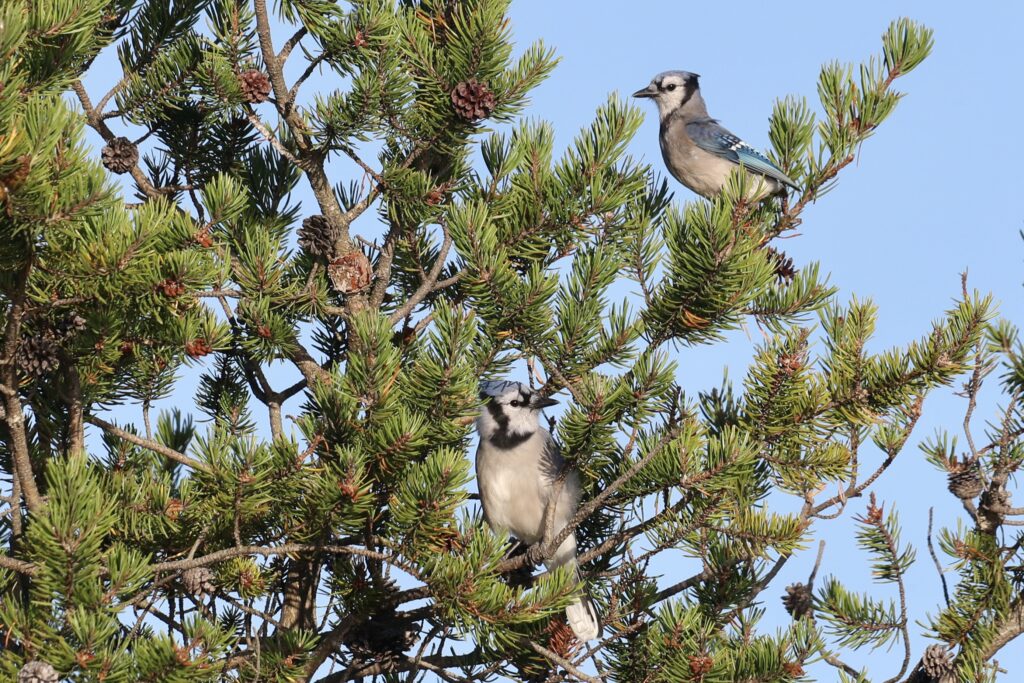
Blue Jays. Photo by Jack McDonough
Red Crossbill numbers have continued to be consistent in higher than usual numbers, but have slowed down since some of the larger surges in August. The best time to encounter crossbills is early in the morning. The majority of this movement has continued to be Type 2 Red Crossbills, with smaller but almost daily numbers of Type 4s and Types 12s. On one occasion, Type 10s were recorded from Vermillion Rd this season. The best way to identify crossbill types is by recording their flight calls and reviewing your audio spectrograms. Each Red Crossbill “type” sounds a little different, which can be hard to hear sometimes, but shows up more distinctly on a spectrogram. Each call type has their own unique shapes and frequencies. Most commonly, Type 2s look like little lightning bolts (darkest in the middle); Type 4s are straight and often appear as two little thin lines tightly next to each other; Type 12s are long and hooked on the left side like a candy cane or are upside down “V”s; and Type 10s are thin, slightly wavy, or short and wavy and tend to lean to one side (usually the right side). The spring Raptor Deck, located down the boardwalk near the restroom area of the lighthouse, is a great place to listen for crossbills flying overhead wait for some to potentially land in nearby Eastern White Pines.
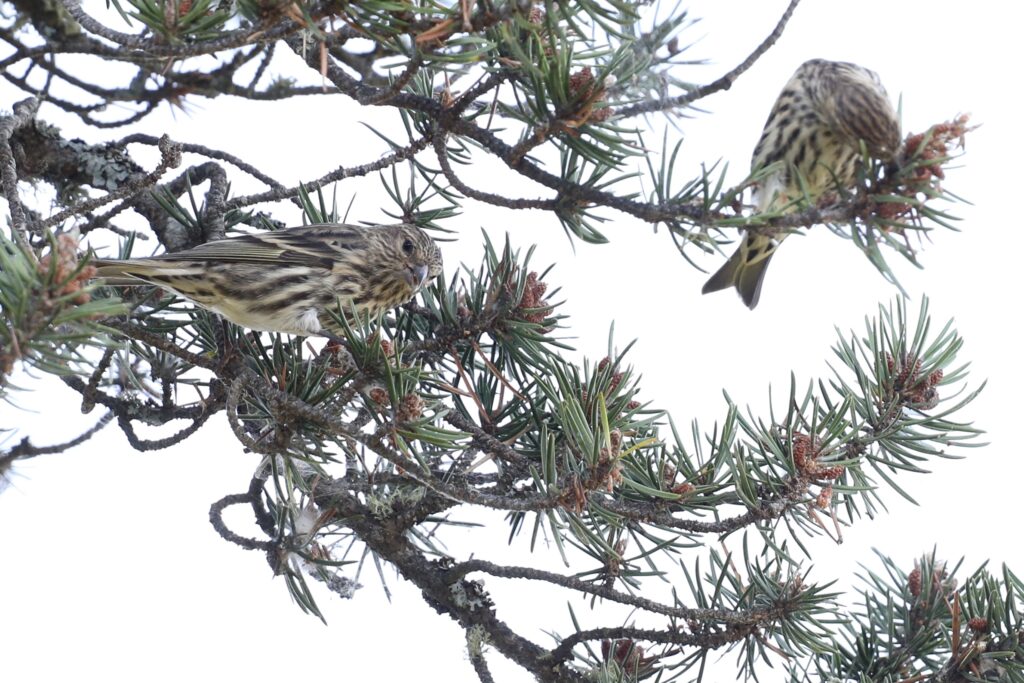
Pine Siskins. Photo by Jack McDonough
Pine Siskin numbers have been steadily increasing, with a few substantial sized flocks migrating. Some groups have been observed feeding in the afternoons on the primordia of Jack Pines. Increasing numbers of Blue Jays, American Robins, Cedar Waxwings, Common Loons, Black-throated Green Warblers, Blackpoll Warblers, and Western Palm Warblers have also been noticeable this week. Western Palm Warblers, in particular, are very common in the dunes right now.
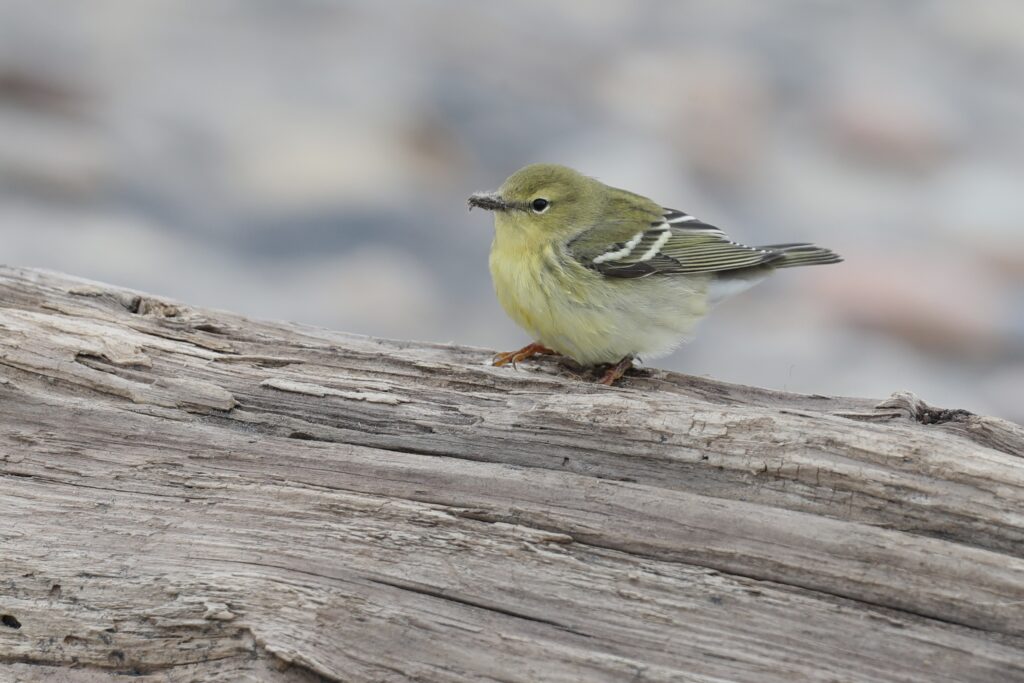
Blackpoll Warbler. Photo by Jack McDonough
Different wind directions and weather, although hard to anticipate, often reflect consistent patterns in migration. If you’re hoping to see something specific on your visit to Whitefish Point, there are a few things you should know! If you are a waterbird person and want to be there on the best flights, Northwesterly winds are the most ideal, as it pushes birds across the lake to the Southeast. These cold fronts are the best set ups for seeing jaegers, especially under stronger winds and cloudy weather. Calmer Northwesterly or Westerly days are best for Red-necked Grebes and ducks. Calmer sunny days out of the West, such as SW or WNW, produce our biggest songbird flights if you want to see warblers, finches, and other passerines. Easterly, low pressure days with cloud cover can bring birds in off the lake if there’s a good enough nocturnal migration the night before which can also result in lots of songbirds coming to land at dawn.
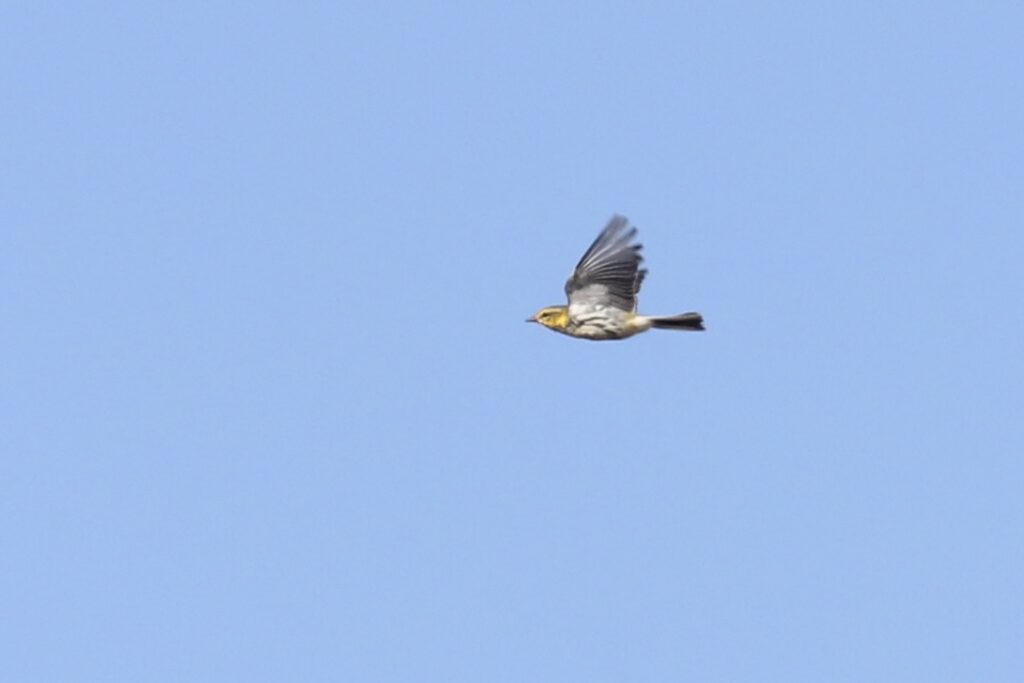
Black-throated Green Warbler. Photo by Jack McDonough
As Always, stay updated on TrekTellen.Org to see what we’re seeing live in the field. September is here and birds are migrating!
Jack McDonough, 2026 Fall Waterbird Counter
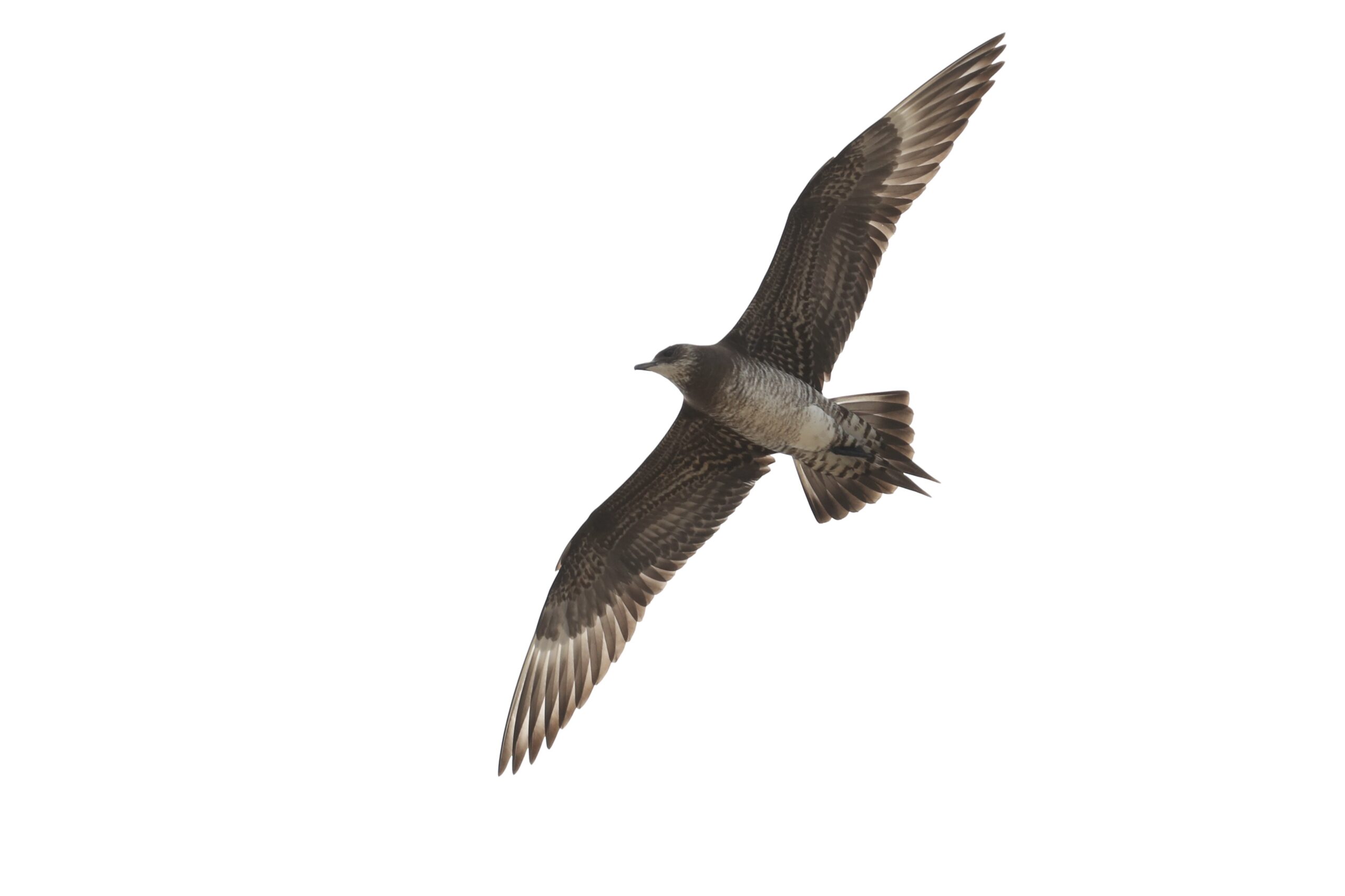
Featured Photo: Parasitic Jaeger by J. McDonough
You can now see the waterbird count data on Trektellen! Check it out at trektellen.org/count/view/5727.
You can keep up with the 2026 Fall Waterbird Count by reading Jack’s weekly blog posts and following WPBO’s social media (Facebook, Instagram, and X). The fall waterbird count runs August 15 through November 15.

Jack McDonough: 2026 Fall Waterbird Counter
Jack grew up in Cape May, New Jersey, where he developed an early passion in life for anything migrating. At New Jersey Audubon’s Cape May Bird Observatory (CMBO), Jack worked for the Monarch Monitoring Project for six years and coordinated it for the last three. Jack was a migratory bird counter for two seasons for CMBO’s Springwatch project and was a swing counter for several fall counts such as CMBO’s Morning Flight, Avalon Seawatch, and Cape May Hawkwatch. Additionally for NJ Audubon, he preformed aerial imagery annotating for seabirds with USGS. Jack worked as a biologist for NJDEP Fish & Wildlife under the Endangered and NonGame Species Program for several years doing surveys and management work for state-listed species. Owning his own business in ecological consulting and biological monitoring, Jack has worked across Nevada and California in the past year. He spends most of his free time out in nature, studying behavioral ecology through the arts.