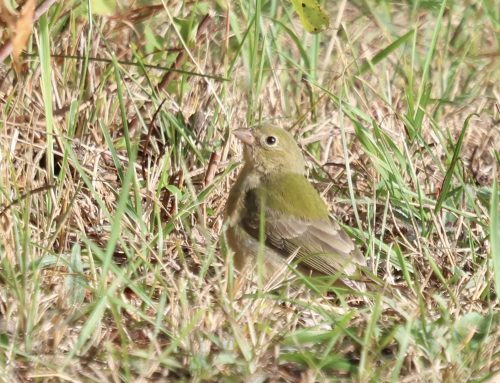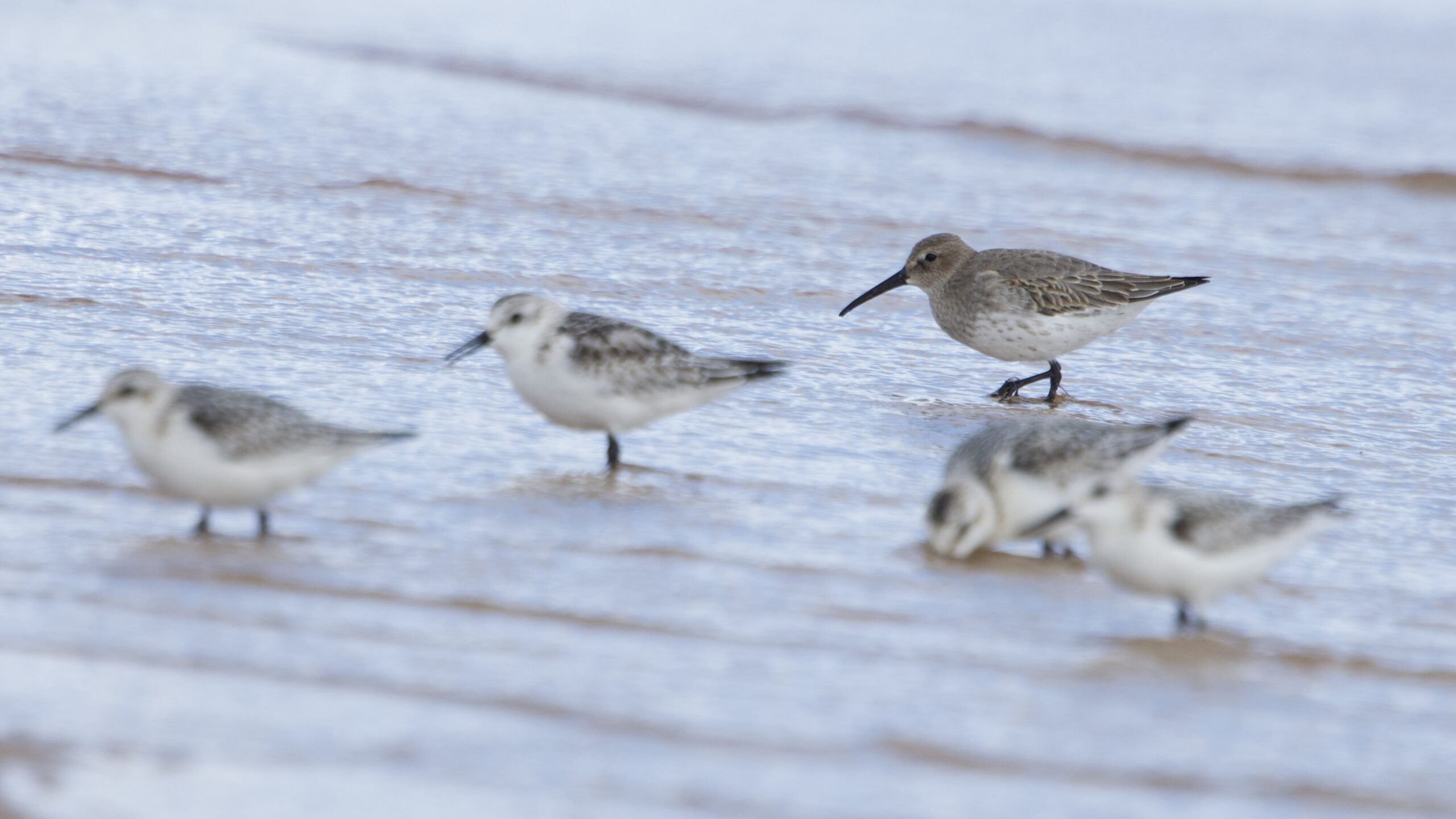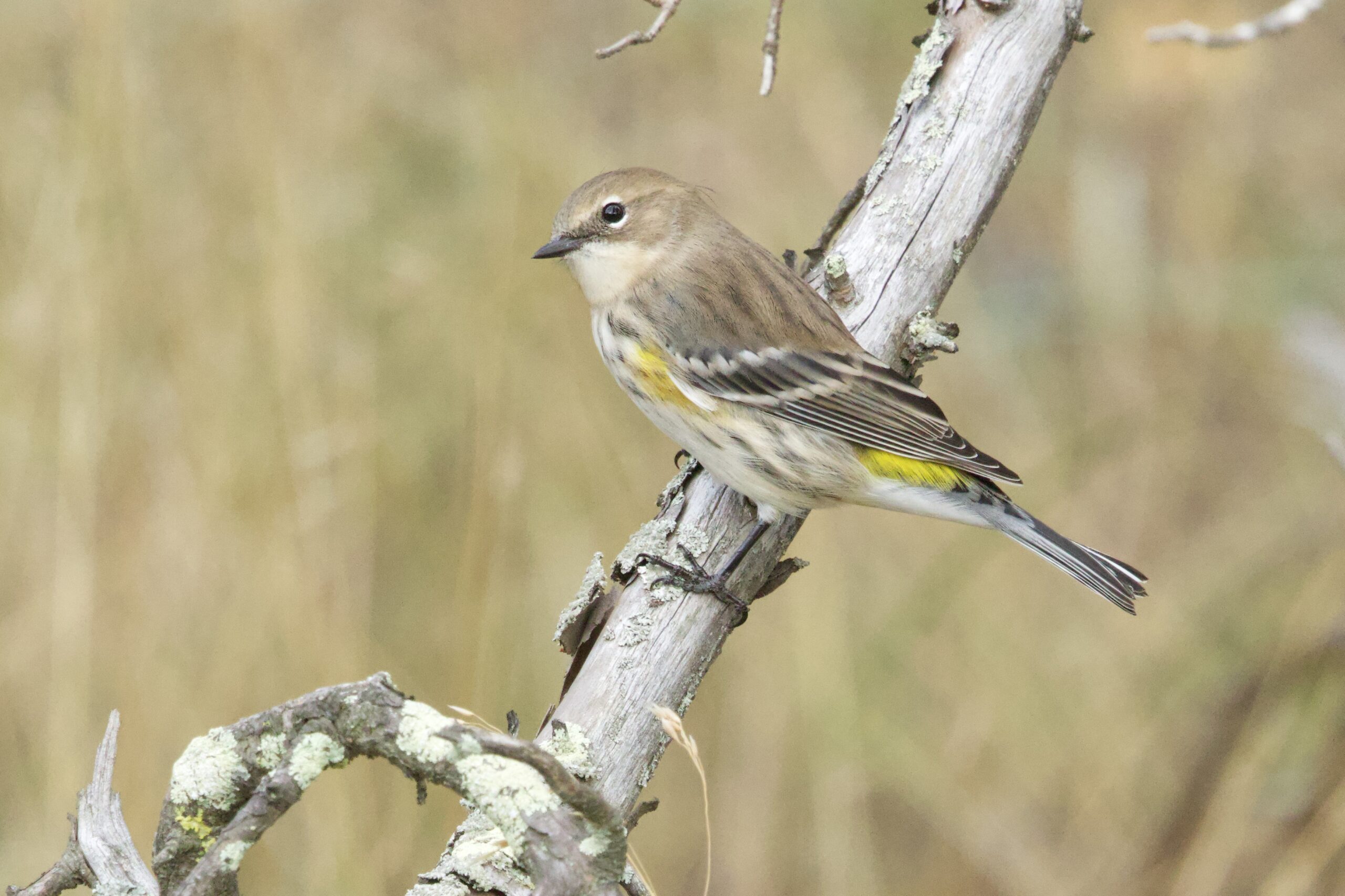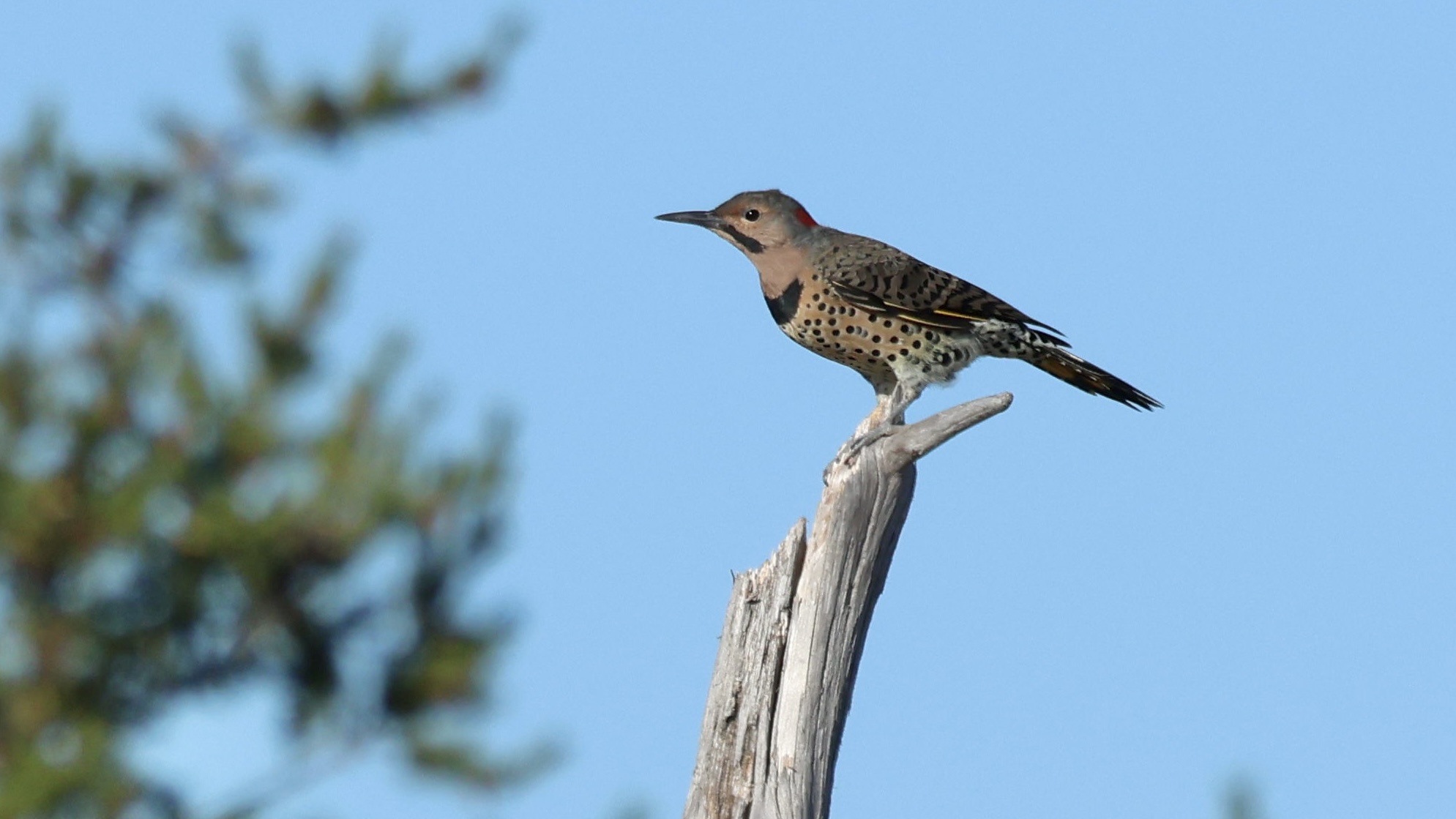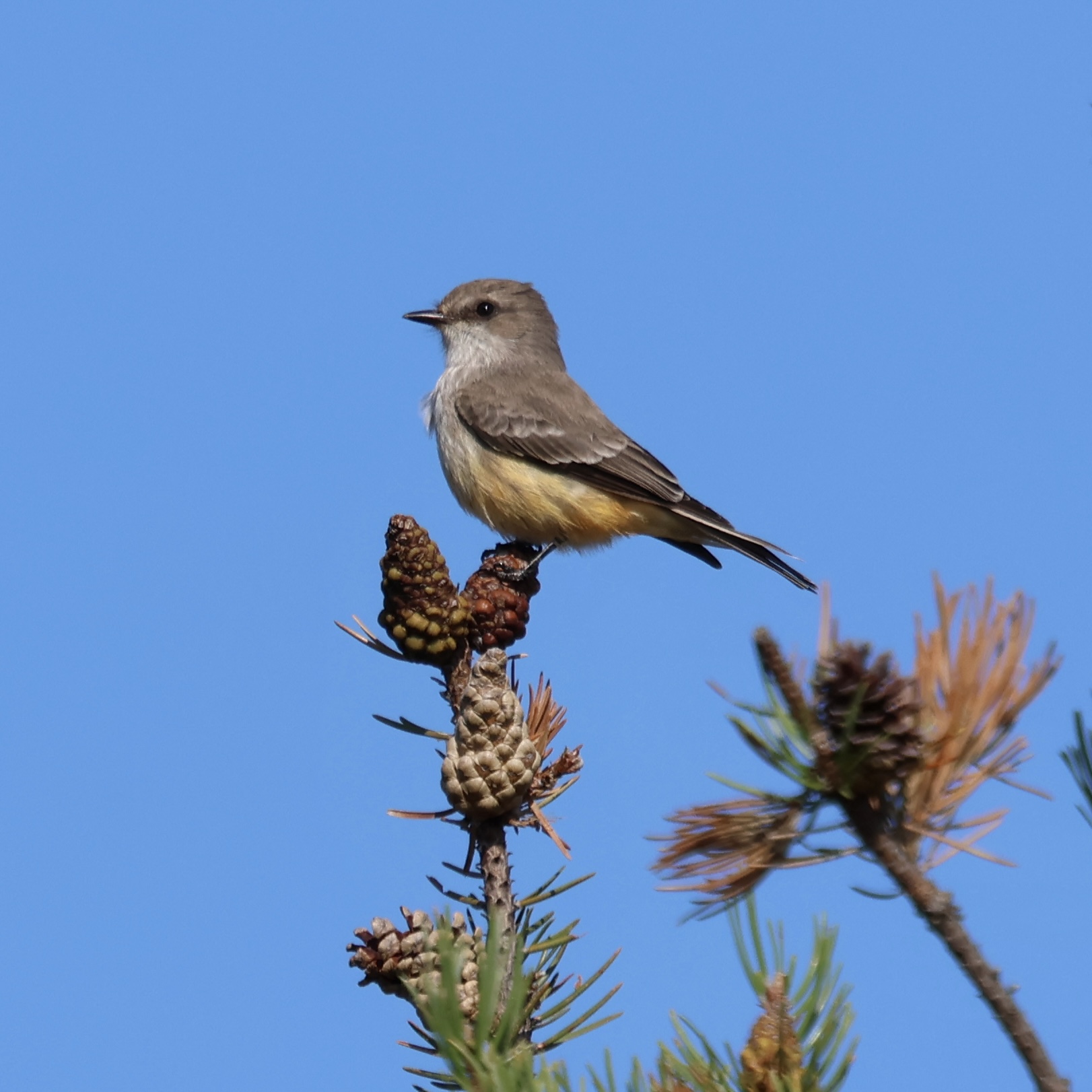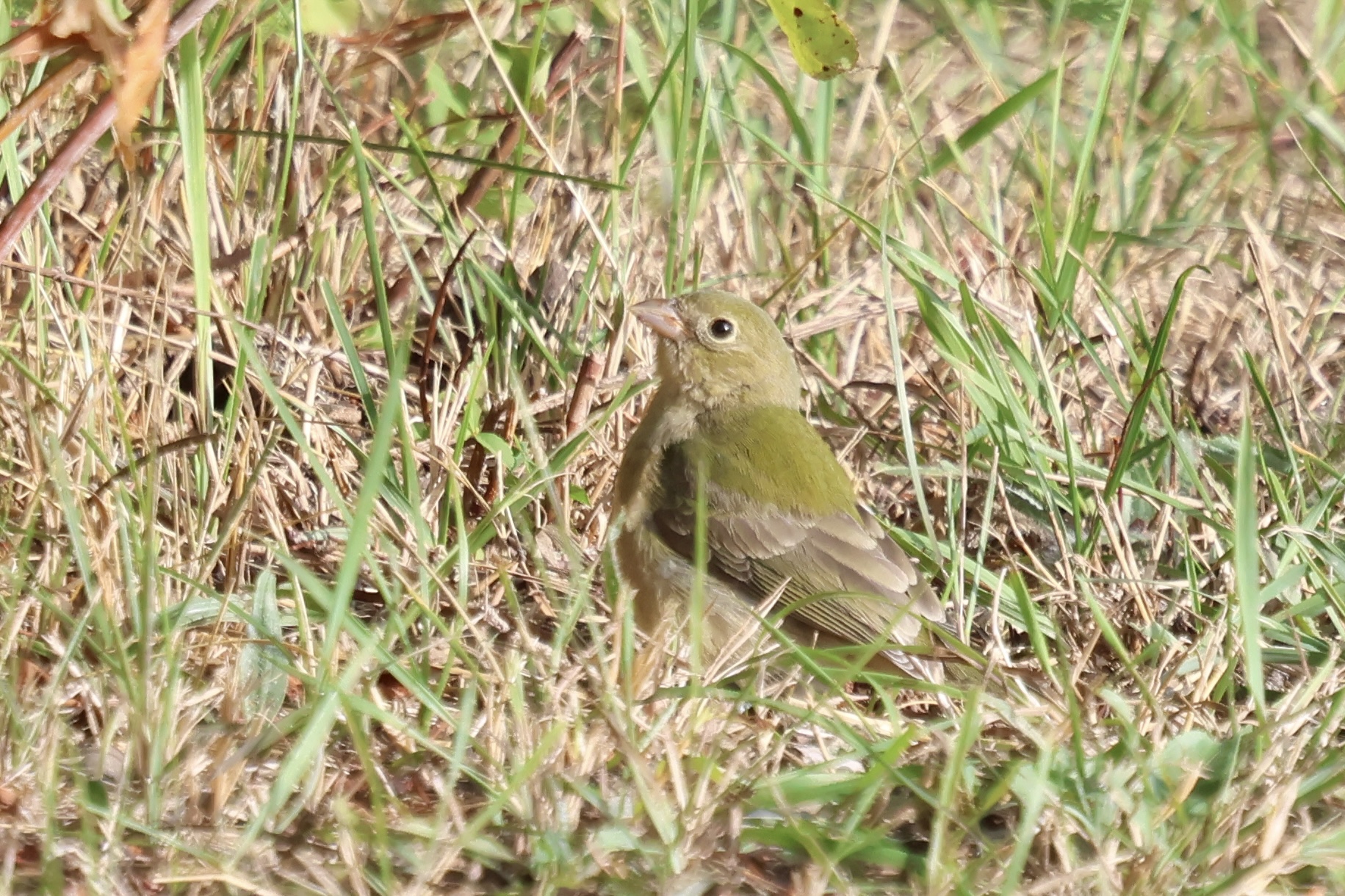
Since the last post, we’ve been experiencing some tumultuous weather here at the Point, at least for early September. There’s been a lot of cold and strong winds out of the north, with the Saturday (Sept. 6th) winds gusting up to 35+ miles per hour. Scattered storms have also coincided with much of the recent winds, resulting in some nice waterbirds and a lot of wet optics.
While the waterbirds were moving over the weekend, songbird migration at Whitefish Point went through a bit of a lull. The morning songbird count was rained/winded out entirely on Friday, and I spent a good chunk of Saturday morning either standing in the rain or watching from inside the count station. In an odd scenario, the heaviest downpour on Saturday brought the most songbird movement, as a sizable flock of Magnolia and Blackpoll Warblers darted through the trees as I watched and counted through a cracked door. The weather on Sunday was a bit milder, but ironically there were less songbirds passing by the raptor deck than Saturday. We still held the Whitefish Point bird walks over the weekend for a few brave participants, which went reasonably well, other than getting a little wet! Both days we had a decent assortment of waterbirds and songbirds on the walks, with a nice Parasitic Jaeger flyby on Saturday afternoon.
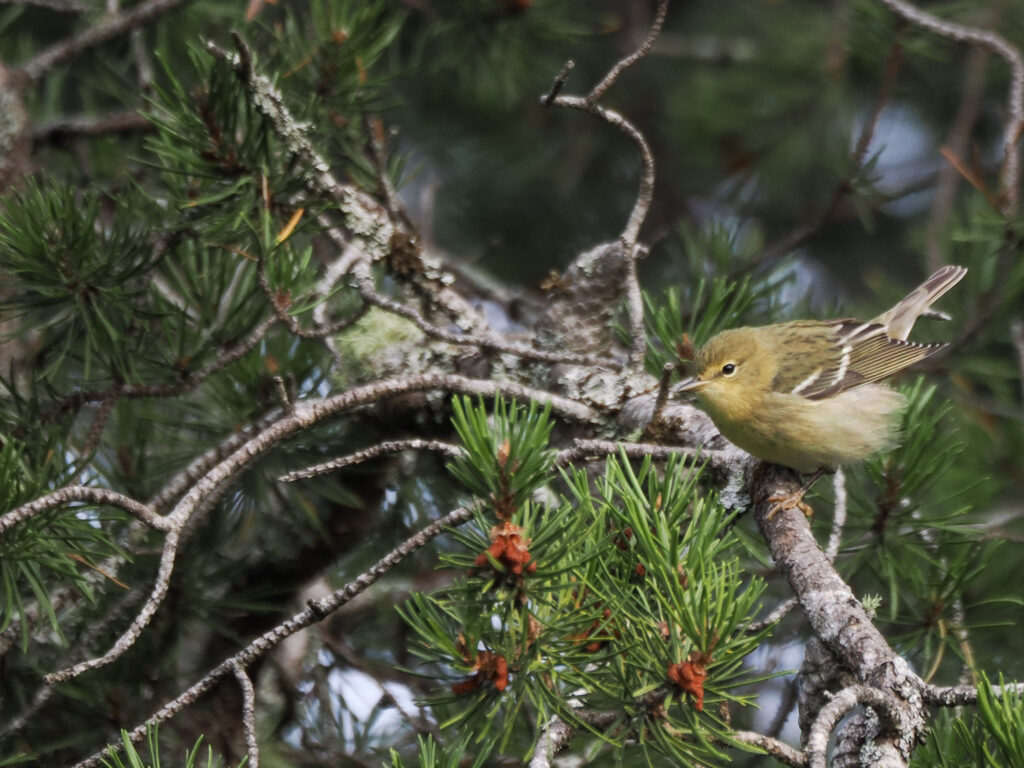
Blackpoll Warblers were one of the species we had an influx of. Photo by Clay Bliznick.
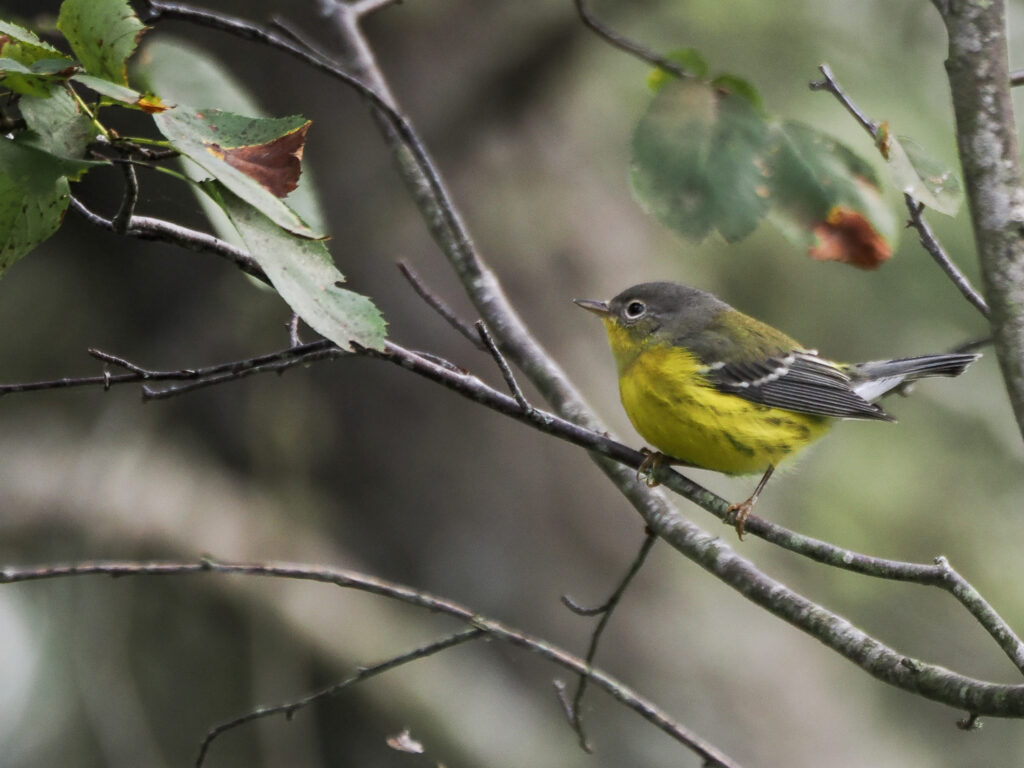
Magnolia Warbler is another species we’re getting more numbers of. Photo by Clay Bliznick.
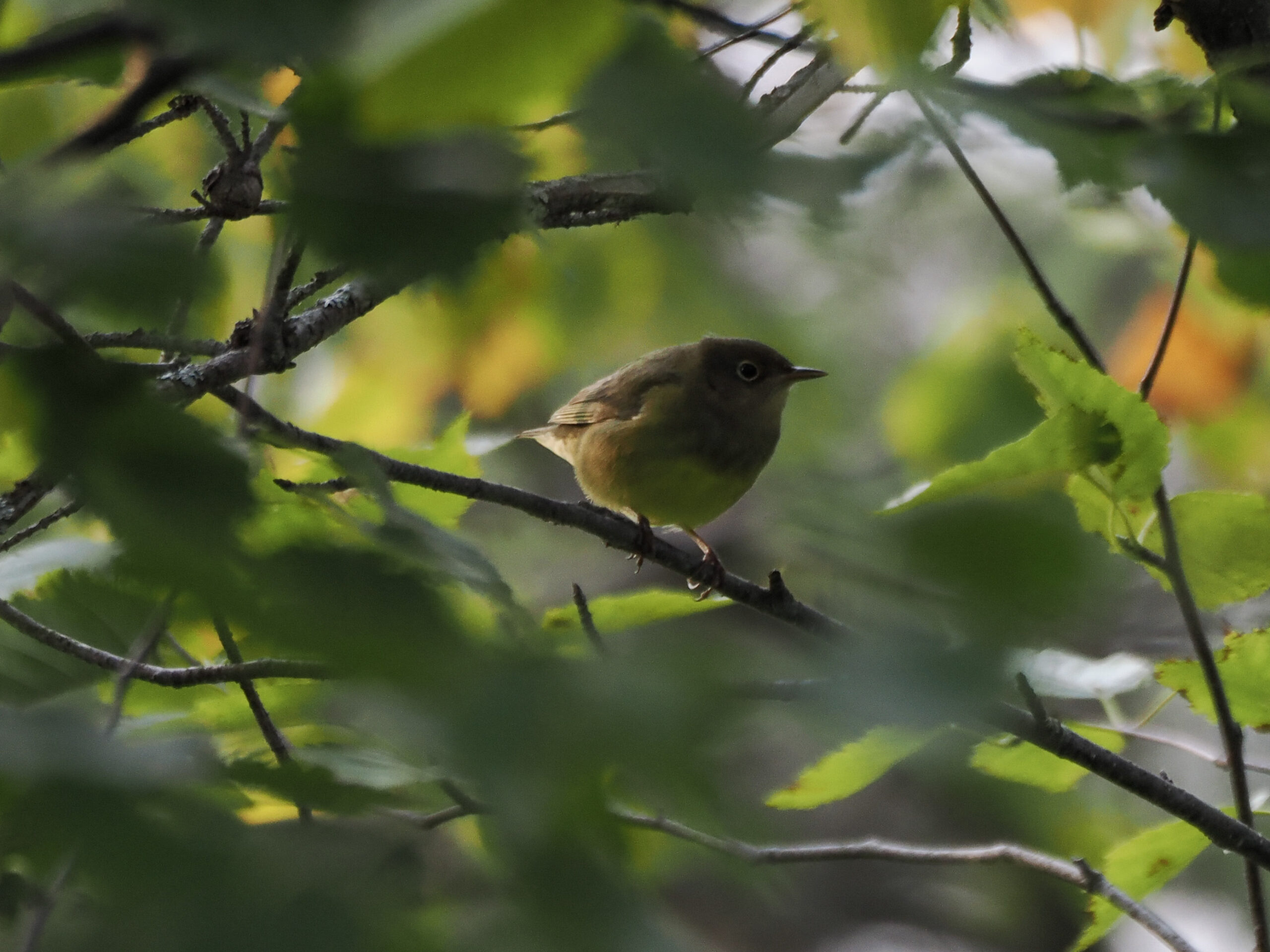
Monday (Sept. 8th) brought some changing winds and more pleasant weather, with a westerly breeze early morning that shifted to the south later in the day. The result was one of the biggest visible songbird migration events of the fall. The flight consisted mainly of warblers and thrushes, with an abundance of Palm Warblers and Swainson’s Thrushes flying across the lake from Canada. Unfortunately these birds were battling headwinds and crosswinds, which made them easy targets for both Merlins and gulls. Most birds survived the journey across, but I watched maybe a dozen songbirds fall victim to enterprising predators that intercepted the birds over water. The birds that did make it to shore often spent a while resting and refueling in the nearest jack pines before departing towards the south. It’s certainly sad to see some of these birds get picked off near the end of their perilous flight, but seeing a songbird attempt to evade sometimes several pursuing gulls in midair is a unique and perhaps a regrettably intriguing spectacle. Other highlights of the day included a combined 18 species of warbler seen by me and Frank, including some decent views of a Connecticut Warbler! The south winds are supposed to persist through tomorrow, so it will be interesting to see if any of these birds stick around.
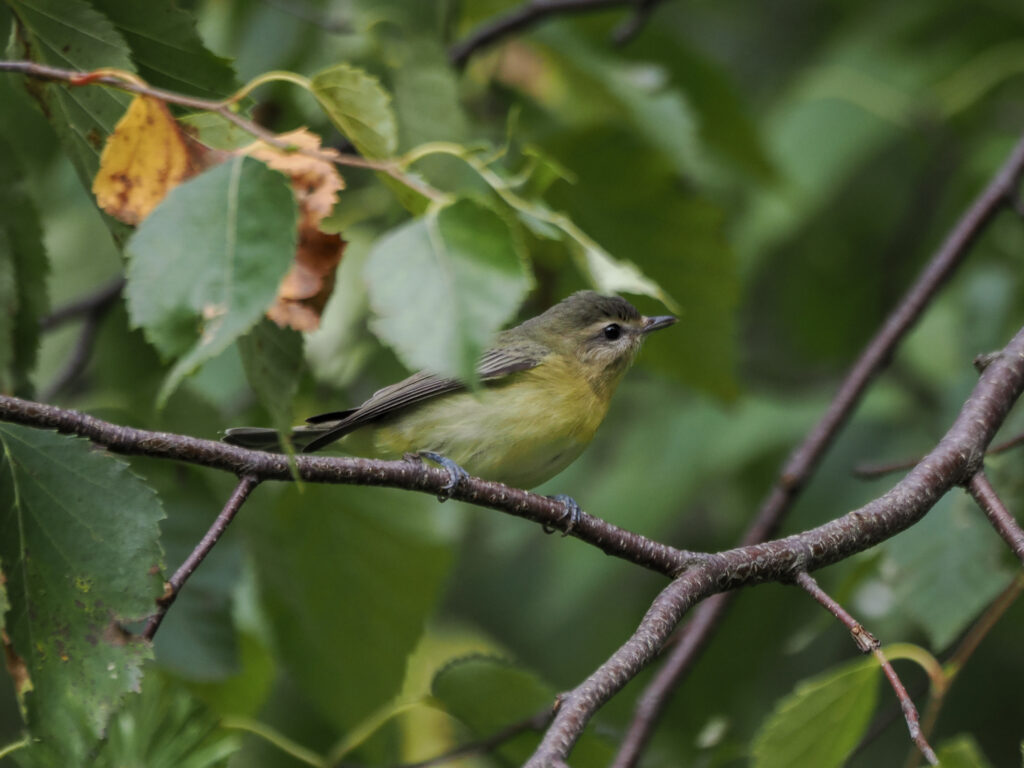
A Philadelphia Vireo in a mixed warbler flock was an exciting find! Photo by Clay Bliznick.
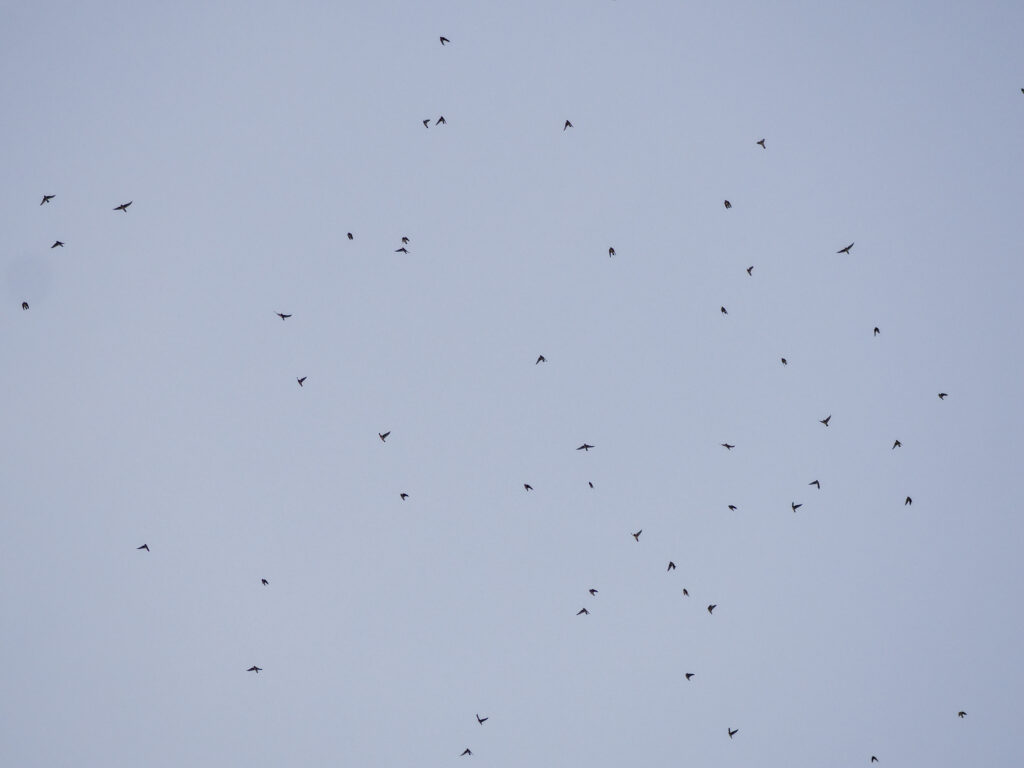
A migrant group of Cliff Swallows flying over the Point in the evening. A fun sight! Photo by Clay Bliznick.
Track the morning flight counts on Trektellen.
Keep up with the 2025 Fall Field Ornithologist’s weekly blog posts and follow WPBO’s social media (Facebook, Instagram, and X).
Join Clay for one of his WPBO Migratory Bird Walks offered every weekend through November 15.
Learn more at wpbo.org/events.
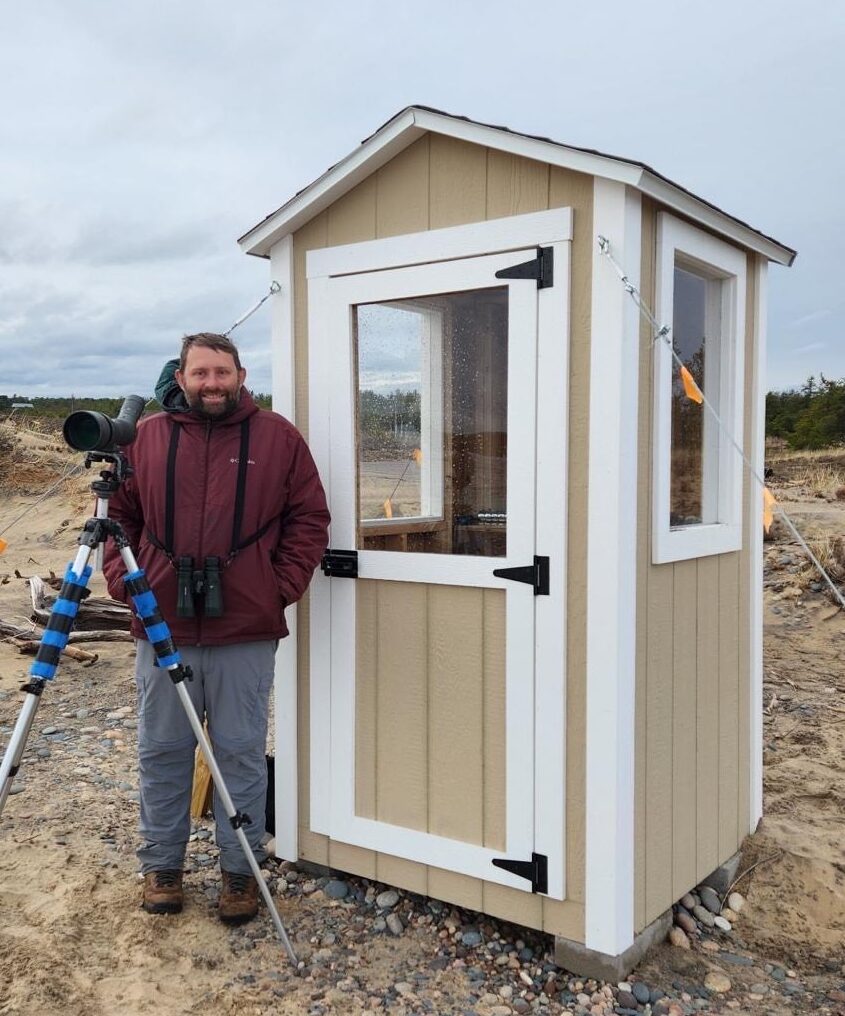
Clay Bliznick, MS: 2025 Fall Field Ornithologist
Clay worked as the WPBO fall field ornithologist in 2024 and is excited to return for the fall of 2025. He first took an interest in birds during a high school trip to Alaska, where he was struck by the flamboyance of magpies, the sleek, penguin-like appearance of alcids, and the sheer number of waterbirds residing along the coast. He dove headfirst into the world of birding while an undergraduate at the University of Kentucky, spending every free second exploring his home state for exciting new birds and places. Afterwards, he attended graduate school at Murray State University and wrote a master’s thesis examining the response of bird communities to environmental factors in Western KY bottomland hardwood forest restorations. For the last several years, Clay has traveled throughout the US working with birds in varying capacities, including nest monitoring of Florida Grasshopper Sparrows and Crested Caracaras, conducting surveys of Swallow-tailed Kite post-breeding roosts, and collecting breeding bird data in North and South Dakota for the Bird Conservancy of the Rockies.