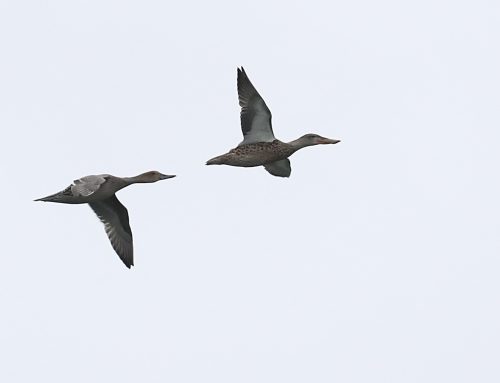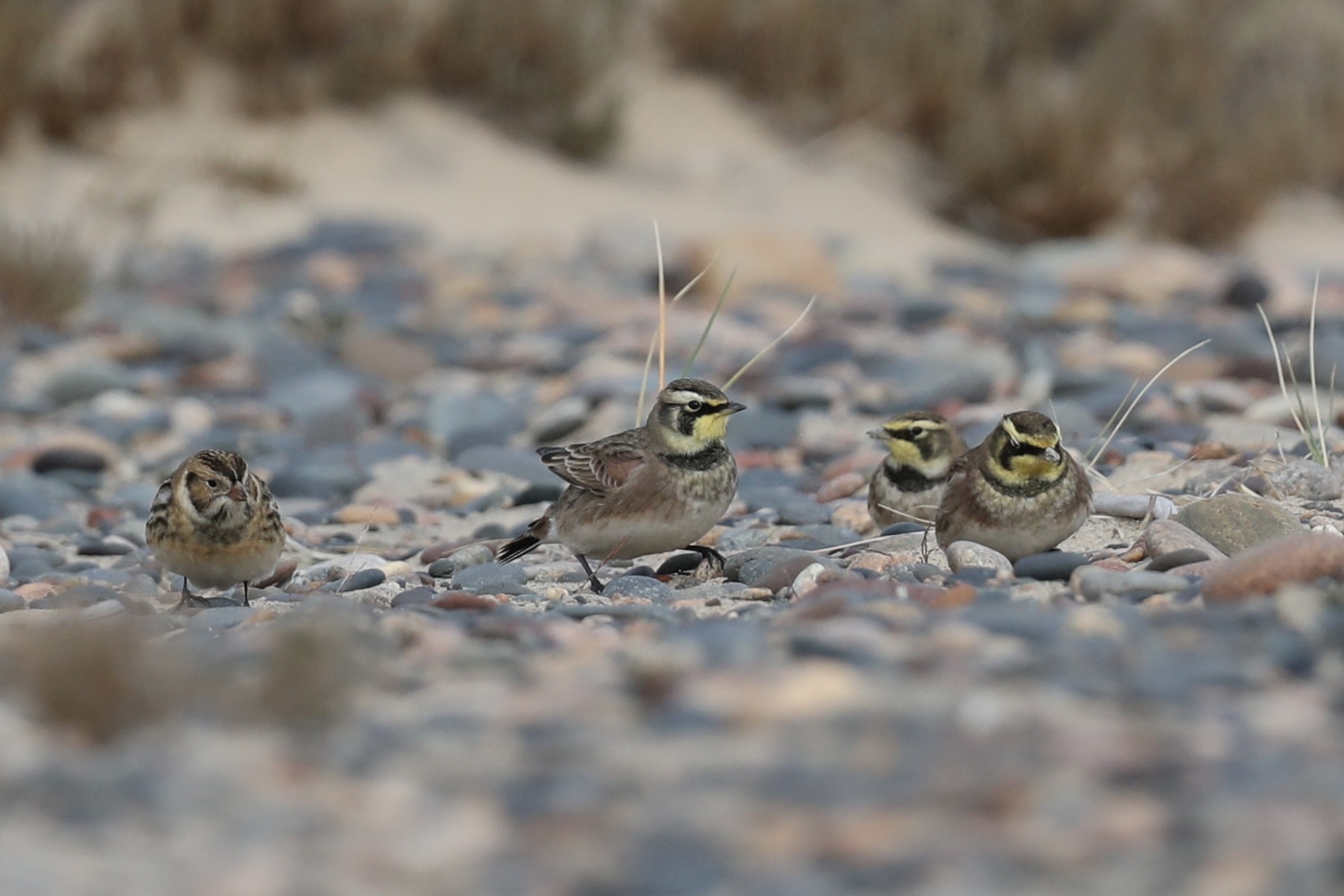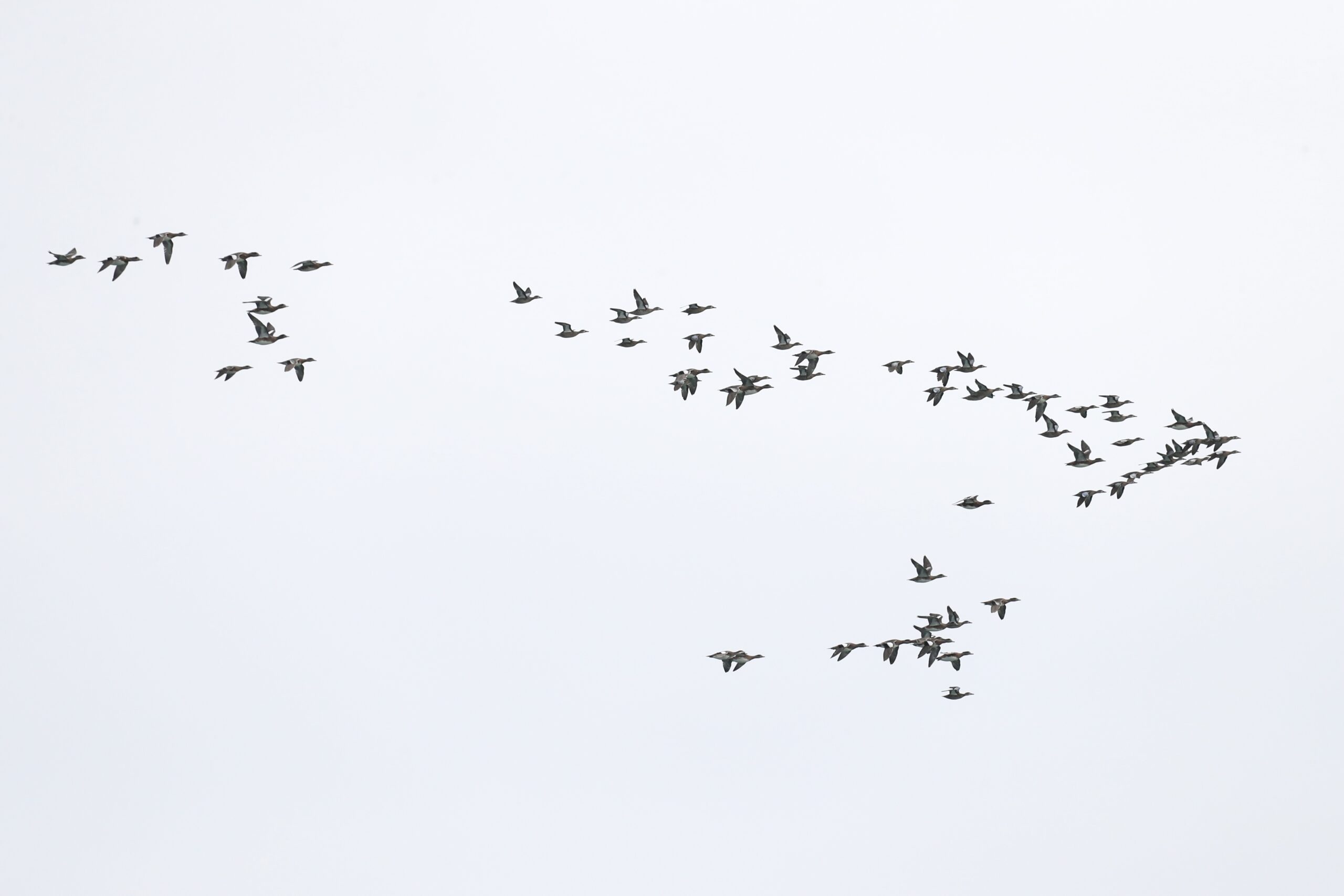
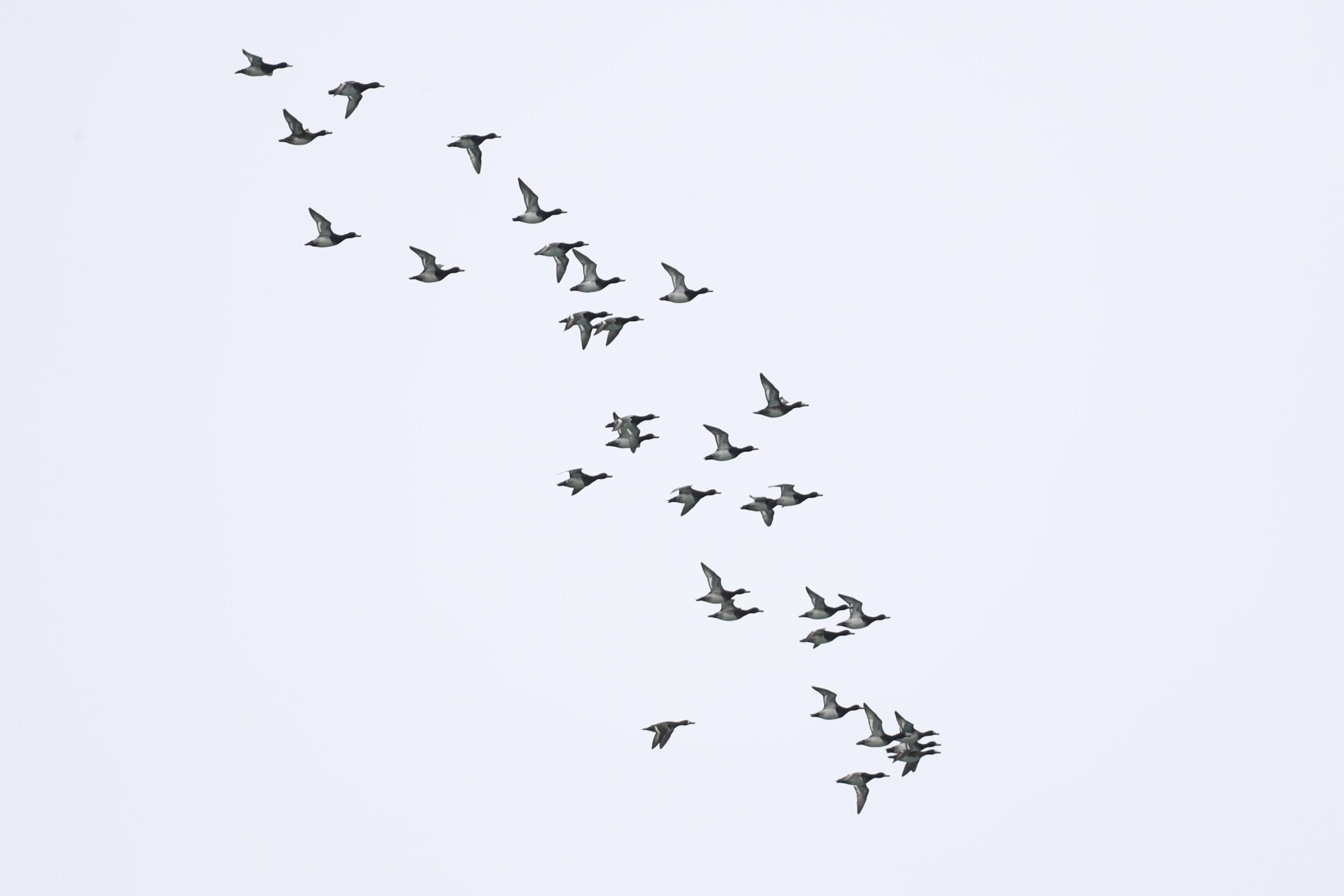
Somehow, it’s already mid-October and although it has been an odd fall with the El Nino year, we have seen some recent changes at Whitefish Point. On Thursday the 15th, a front that was developing out of the prairie provinces of Manitoba and Saskatchewan blew down over eight hundred Lesser Scaup into Lake Superior. This influx continued into the next four days, with hundreds of Lesser Scaup outnumbering all other duck species. This may end up being the biggest year for this species in Whitefish history. This front additionally brought down other northern birds for the first time, such as Rough-legged Hawks coming in off the lake and a couple Common Redpolls. Thursday also brought our third Pacific Loon of the season!
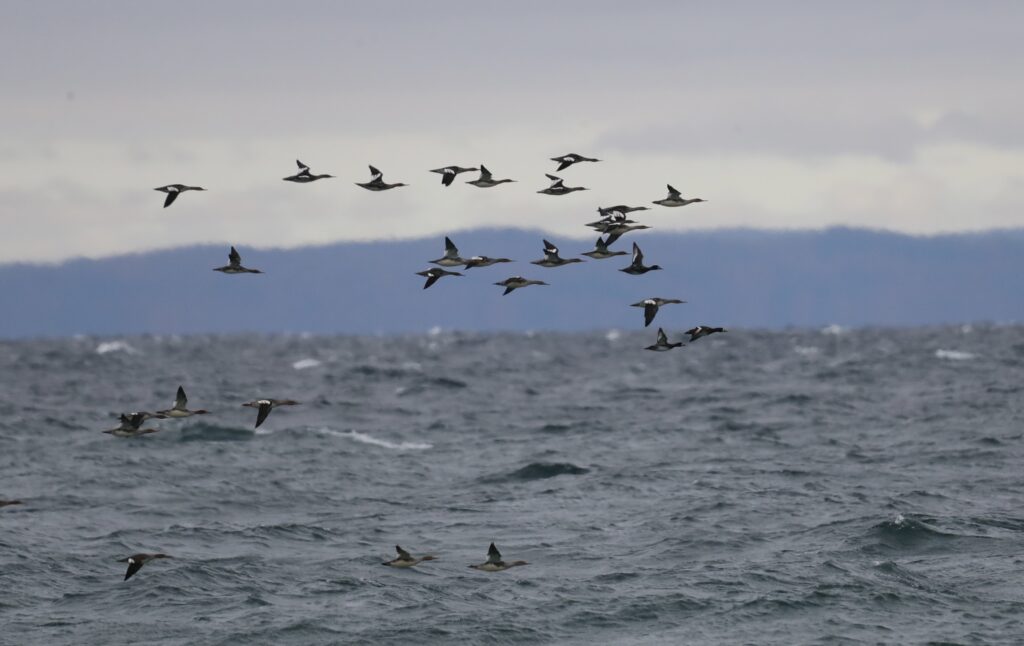
Red-Breasted Mergansers. Photo by Jack McDonough
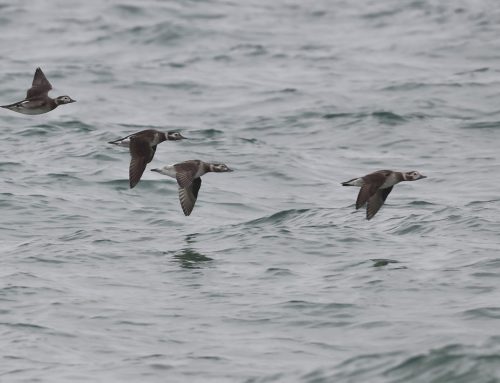
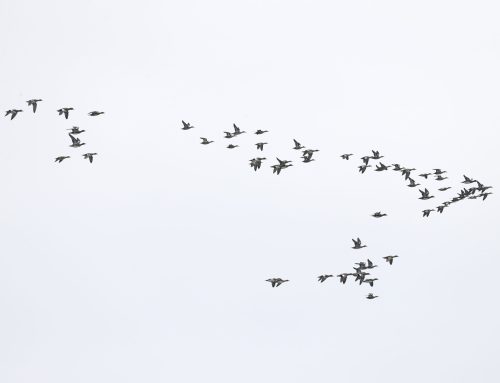
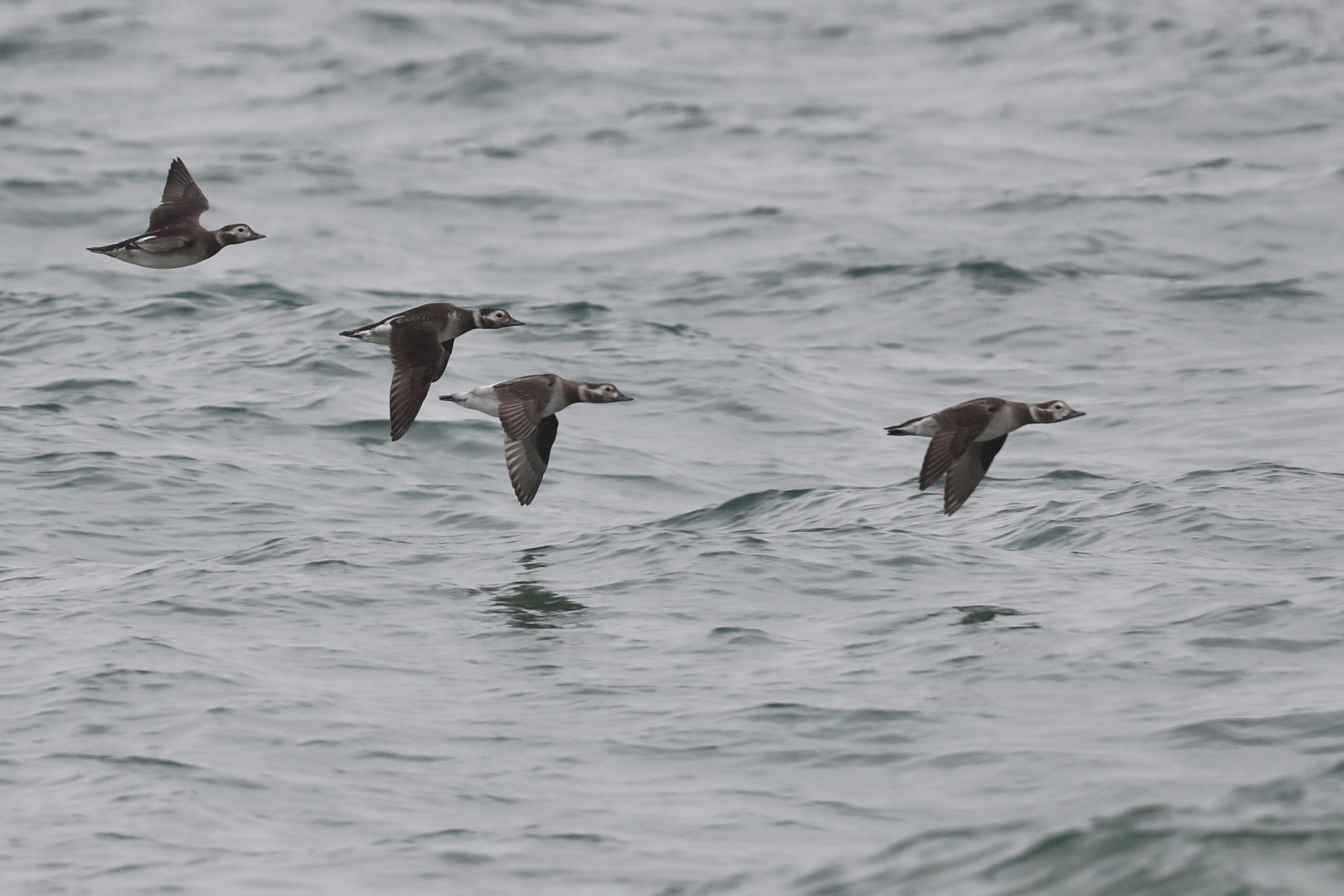
This week has also brought in a few thousand Long-tailed Ducks and Red-breasted Mergansers, as well as several hundred White-winged, Surf, and Black Scoters. Common Goldeneyes are finally starting to get consistent in the last few days with a couple everyday now. We’re still having days with over one hundred Red-necked Grebes and Common Loons. Some late Blue-winged Teal numbers have been accompanying elevated peaks of American Green-winged Teal.
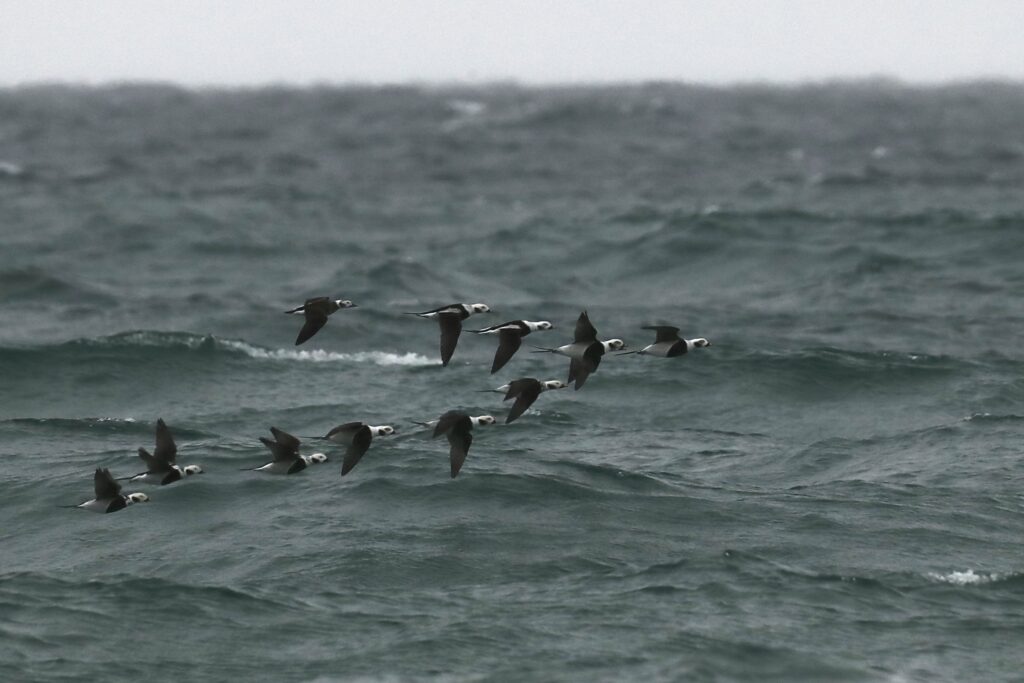
Long-tailed Ducks. Photo by Jack McDonough
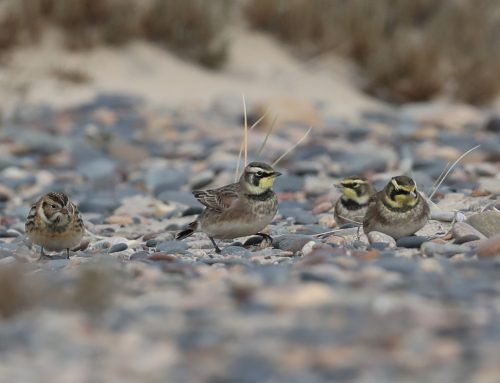
A Grasshopper Sparrow was found in the dunes by the Waterbird Station on the 18th and has been around the last few days. On the 19th, we finally had our first real flight of Bonaparte’s Gulls with 115. Pine Siskins have been building in numbers this week with a few days in the low thousands. Purple Finches have been rising with a couple hundred on our counts here and there. On the 20th, a clear surge in Red and White-winged Crossbills hit, which we haven’t had big numbers of since early September. It appears a new wave of Red Crossbills has hit Lake Superior across multiple migration sites. We could be in for more irruptive movements in the weeks to come.
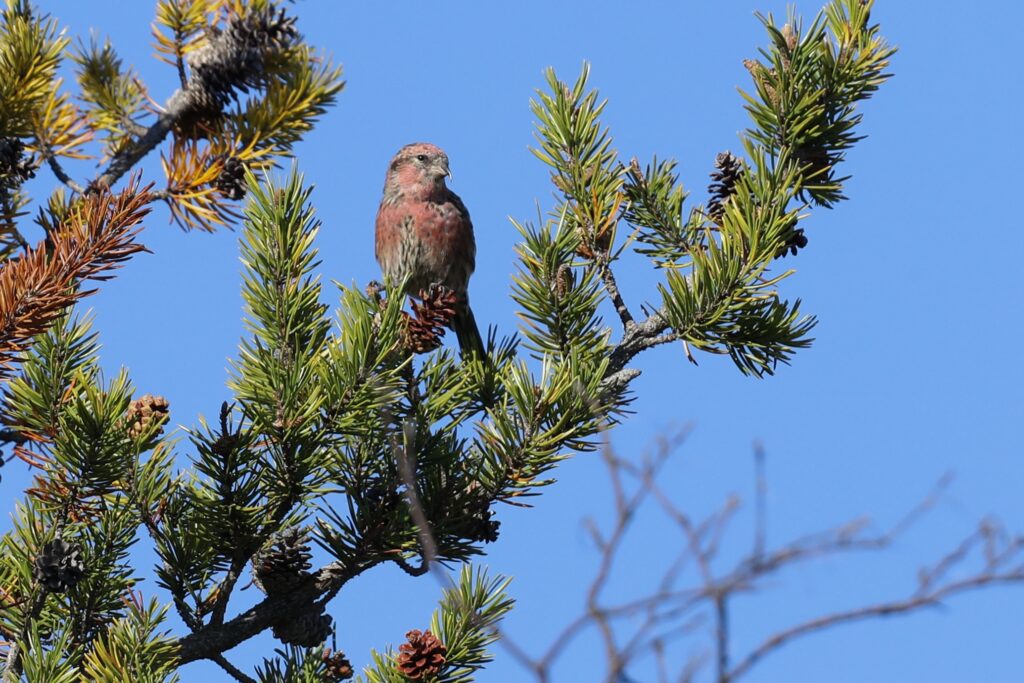
White-winged Crossbill. Photo by Jack McDonough
We expect to exceed 100k birds for this season by the end of this weekend. We’re sitting at 198 species for the waterbird count so far this year, with over 200 birds for the Point this fall. Three and a half weeks to go! Tune in next week.
Jack McDonough, Fall Waterbird Counter
Featured Photo: Lesser Scaup by J. McDonough
You can now see the waterbird count data on Trektellen! Check it out at trektellen.org/count/view/5727.
You can keep up with the 2026 Fall Waterbird Count by reading Jack’s weekly blog posts and following WPBO’s social media (Facebook, Instagram, and X). The fall waterbird count runs August 15 through November 15.

Jack McDonough: 2026 Fall Waterbird Counter
Jack grew up in Cape May, New Jersey, where he developed an early passion in life for anything migrating. At New Jersey Audubon’s Cape May Bird Observatory (CMBO), Jack worked for the Monarch Monitoring Project for six years and coordinated it for the last three. Jack was a migratory bird counter for two seasons for CMBO’s Springwatch project and was a swing counter for several fall counts such as CMBO’s Morning Flight, Avalon Seawatch, and Cape May Hawkwatch. Additionally for NJ Audubon, he preformed aerial imagery annotating for seabirds with USGS. Jack worked as a biologist for NJDEP Fish & Wildlife under the Endangered and NonGame Species Program for several years doing surveys and management work for state-listed species. Owning his own business in ecological consulting and biological monitoring, Jack has worked across Nevada and California in the past year. He spends most of his free time out in nature, studying behavioral ecology through the arts.