Whitefish Point
It’s safe to say that the 2025 Piping Plover nesting season has come to a close for Whitefish Point, as it has for many other sites in the Great Lakes. Remaining fledglings near their departure for wintering grounds, and only a few late nesters will stay until the end of August.
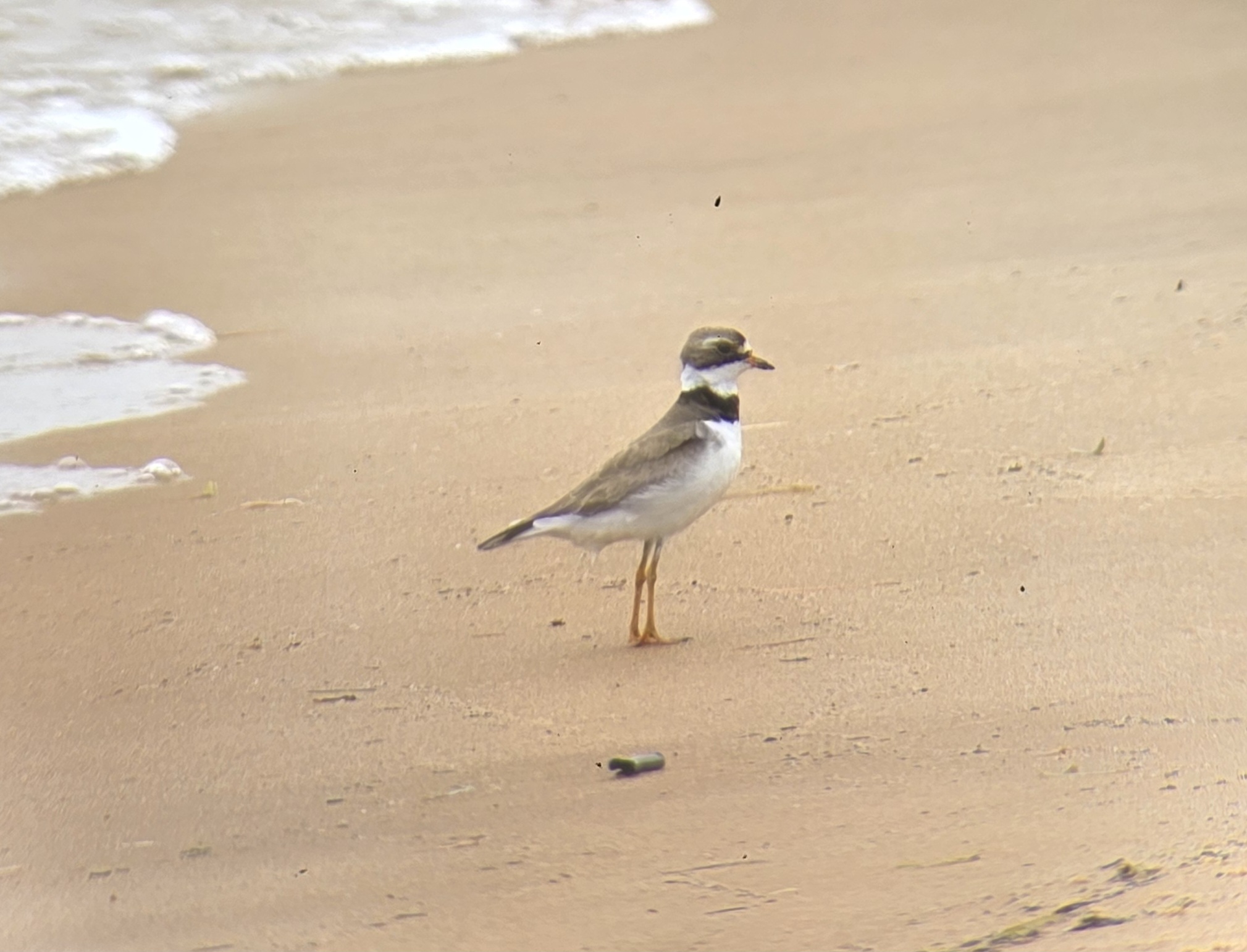
The Point has been absent of PIPL at least since August 4, according to an eBird sighting. Instead, we now have Semipalmated Plovers. Their similar nature provides me comfort as I come off of seeing the Piping Plovers every day. I love the way they skitter across the beach, tapping their feet on the sand to rouse invertebrates for consumption.
The 2025 season at the Point was quite successful, having fledged 2 more chicks than last year. It’s encouraging to see that despite the habitat loss in the fall of 2023, Piping Plovers continue to return here and nest. I eagerly wait until next May to see who wins Vie’s favor should she return. Speaking of Vie, she was reported in Harbor Island, S.C., on August 2!
I’d like to thank our incredible volunteers Cheryl Hamant and Polly Sheppard for their dedicated work this summer. They put so much care and effort into watching over the Plovers, and played an integral role in keeping them safe – thank you.
And thank you as well to the Michigan Audubon and Seney National Wildlife Refuge staff for their support and assistance.
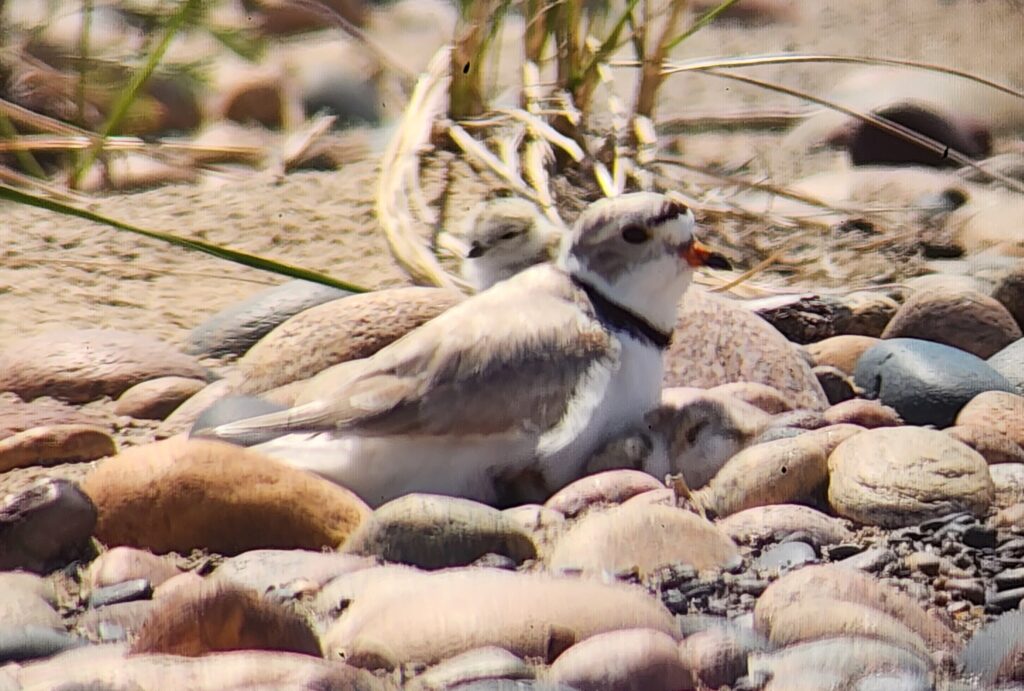
Little Bill Bob broods his 2-day old chicks. Photo by Stephanie Owens
~ Stephanie Owens, 2025 Piping Plover Monitor
Featured Photo: Semipalmated Plover by Stephanie Owens
Piping Plover monitoring is a collaborative effort between Michigan Audubon and Seney National Wildlife Refuge (USFWS).
You can keep up with the 2025 Piping Plover action at WPBO by reading Stephanie’s blog posts and following WPBO’s social media (Facebook, Instagram, and X).
Stephanie Owens: 2025 Piping Plover Monitor
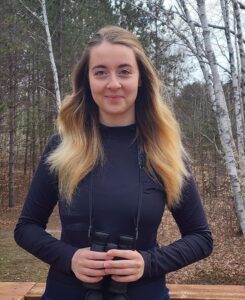 Having grown up in the Upper Peninsula of Michigan, an appreciation of the outdoors seemed inevitable for Stephanie. Walks in the woods with her father and high school science courses helped her identify this passion. In 2024, she earned a Bachelor of Science in Conservation Biology from Lake Superior State University, where she completed her senior thesis on the distribution of per- and polyfluoroalkyl substances in Eastern Upper Peninsula waterways. Now, with three seasons of PIPL monitoring under her belt, she looks forward to another summer with the U.P. plovers and returning to WPBO after a successful ’24 season. After the end of last season, Stephanie began her work at Eva Burrell Animal Shelter as a canine caretaker, fostering hope and love for all animals there.