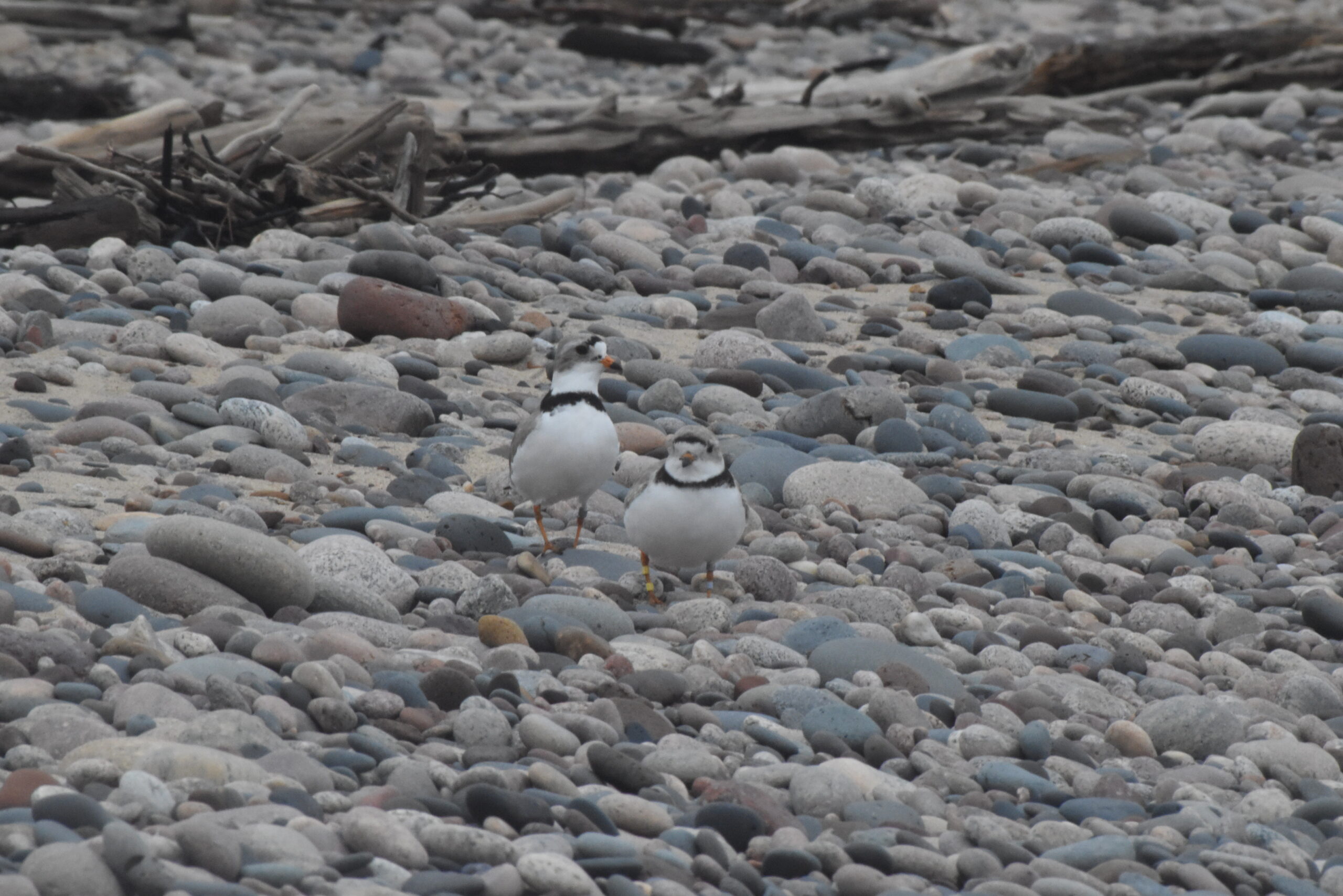
Week 2, May 21-27th, at Whitefish Point Bird Observatory brought excitement, territorial drama, strong lake winds, and the discovery of the season’s first eggs! Throughout the week, G and V continued to strengthen their bond while defending their territory from visiting Piping Plovers.
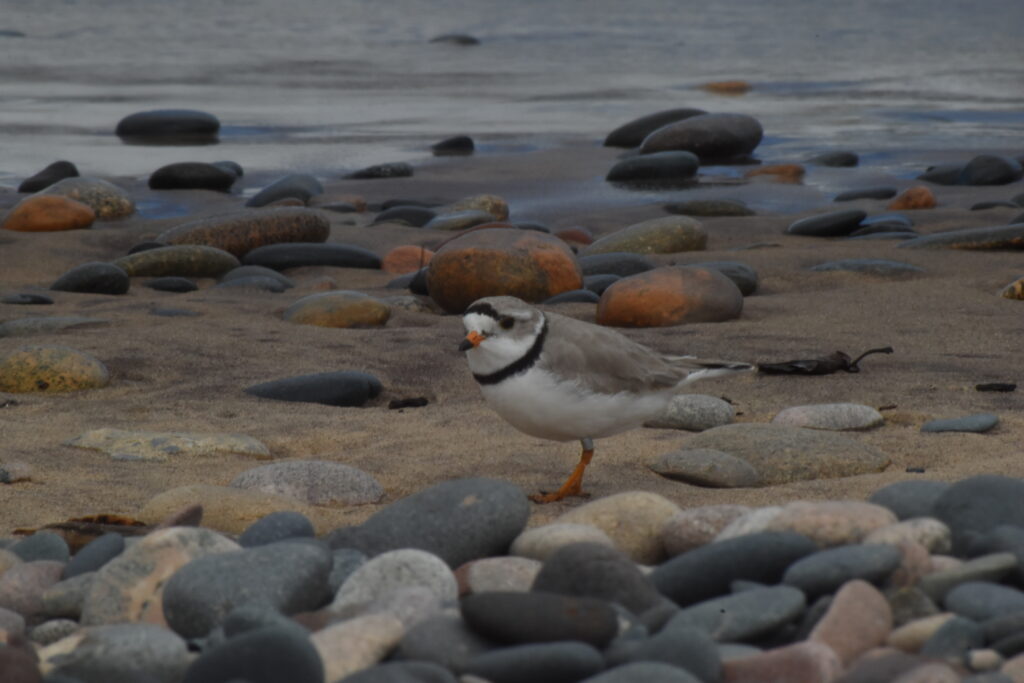
Piping Plover “G”. Photo by Morgan Ness
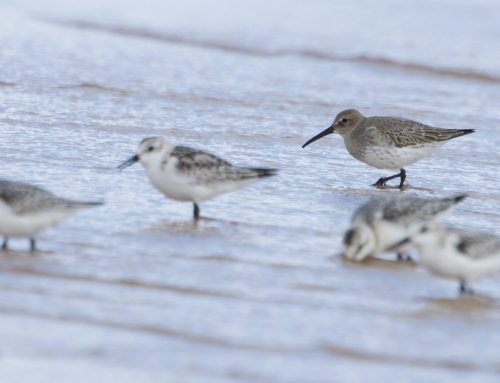
Thursday began with an exciting morning. While V was foraging along the shoreline, two Piping Plovers flew in. V promptly chased them off before the newcomers could be identified, and a long walk down the beach partially revealed the identity of one of the birds. Later in the afternoon, a fourth Piping Plover was seen near the pair. Band combinations identified the bird as X,L/O:Of,GR, a female. The two newcomers have been seen several times since then.
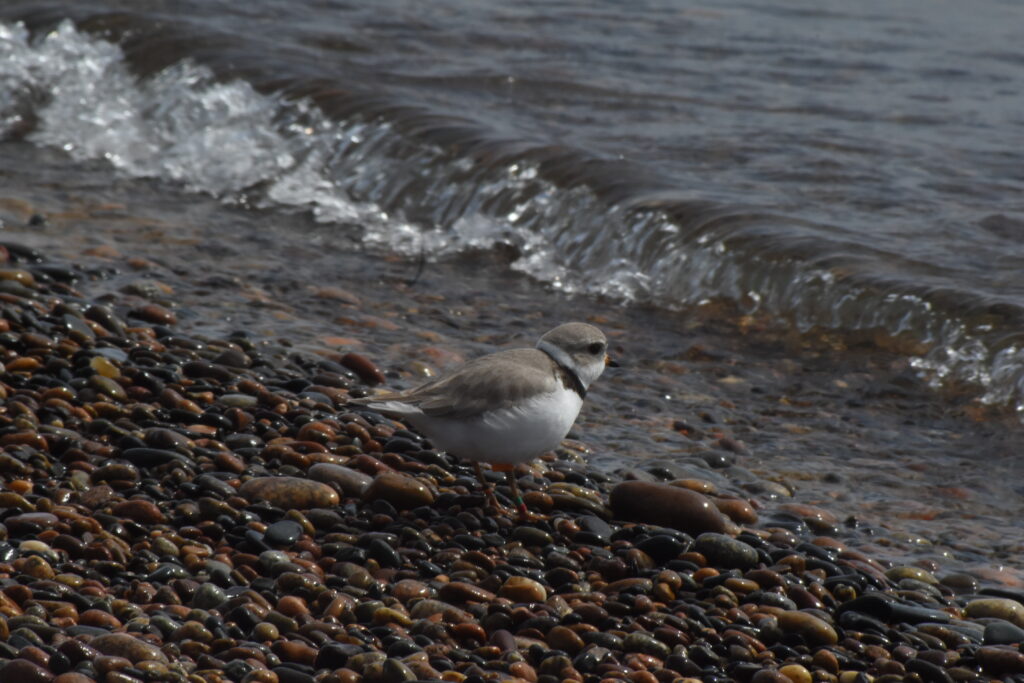
New Piping Plover. Photo by Morgan Ness
Throughout the week, G and V have performed many courtship displays, including tilt displays, goose-stepping, and creating scrapes in the sand, an encouraging sign of nesting behavior.
By Tuesday, we had strong suspicions that a nest had been established, and after two hours of searching we located an egg in a small scrape of sand! An enclosure was placed around the nest site, and the pair seem to be settling into it well. By Wednesday, two eggs had officially been laid.
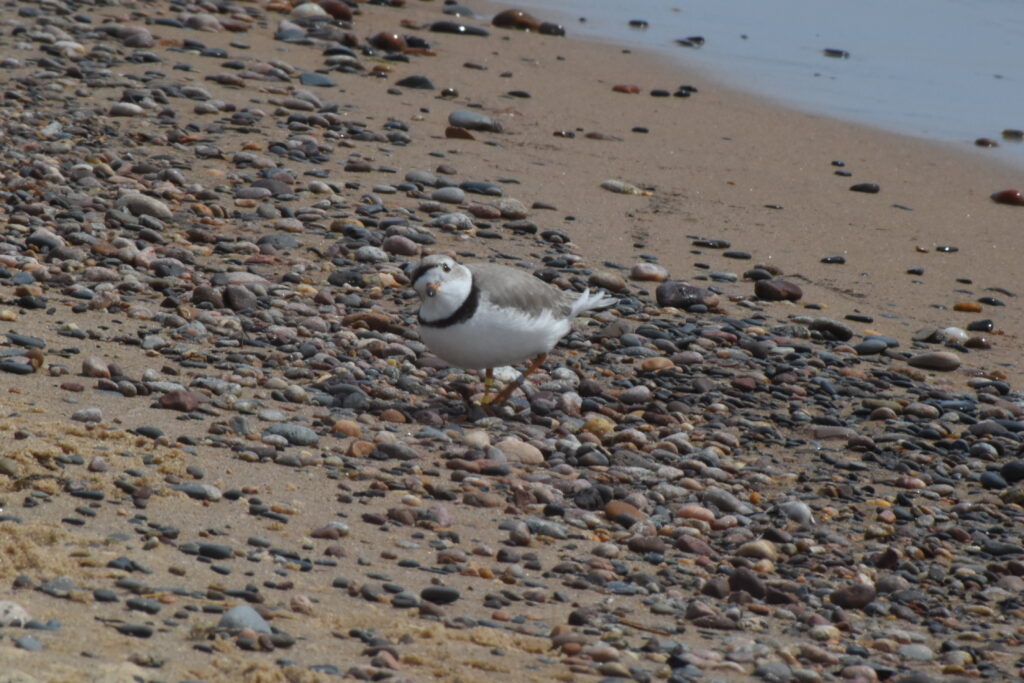
PIPL “V”. Photo by Morgan Ness
Week two brought major progress for the Whitefish Point Piping Plovers. What began as a week filled with territorial disputes and courtship displays ended with a developing nest and two eggs. As incubation continues, the coming weeks will be critical for the success of the pair and the future brood!
-Morgan Ness, 2026 Piping Plover Monitor
Feature Photo: PIPL Pair “G and V” by M. Ness
Piping Plover monitoring is a collaborative effort between Michigan Audubon and Seney National Wildlife Refuge (USFWS).
You can keep up with the 2026 Piping Plover action at WPBO by reading Morgan’s blog posts and following WPBO’s social media (Facebook, Instagram, and X).
Morgan Ness: 2026 Piping Plover Monitor
 Having studied Environmental Science, Policy, and Management at the University of Minnesota Twin Cities, Morgan developed a passion for protecting migratory birds and forest ecology. After spending time in Montana conducting avian monitoring, Morgan is excited to experience Michigan’s species during migration season and to take in the change in scenery. Whether she’s identifying leg bands or chatting with beachgoers about the importance of plover conservation, Morgan’s enthusiasm for the outdoors is contagious. She is thrilled to call the Michigan shoreline her office this summer and contribute to the recovery of such an iconic species. When she isn’t bird-watching, Morgan is often crocheting, hiking, or watching Bravo.