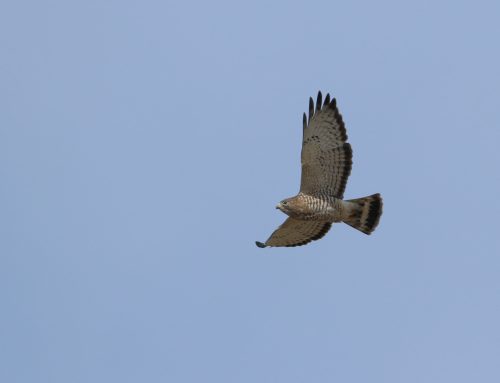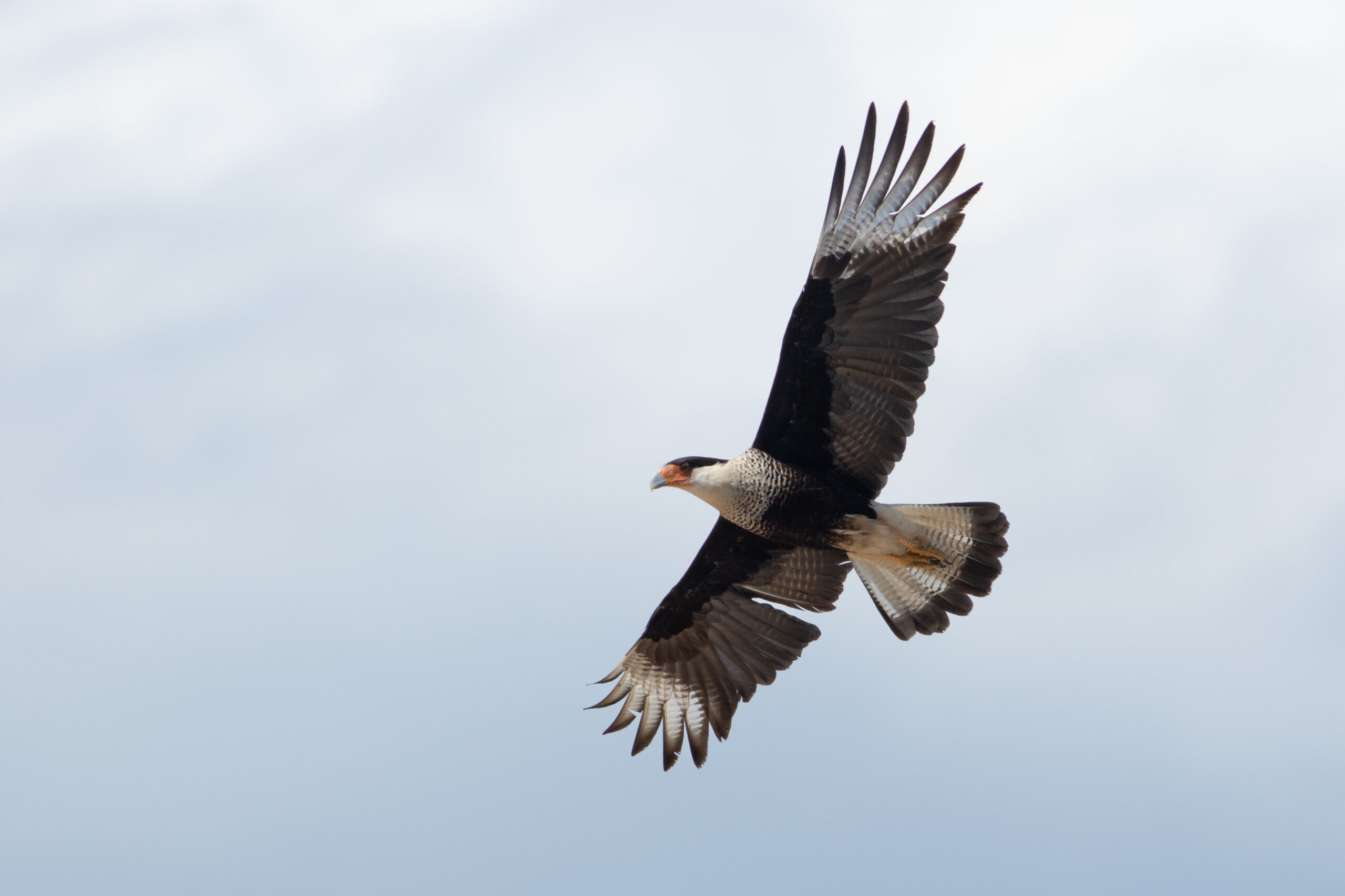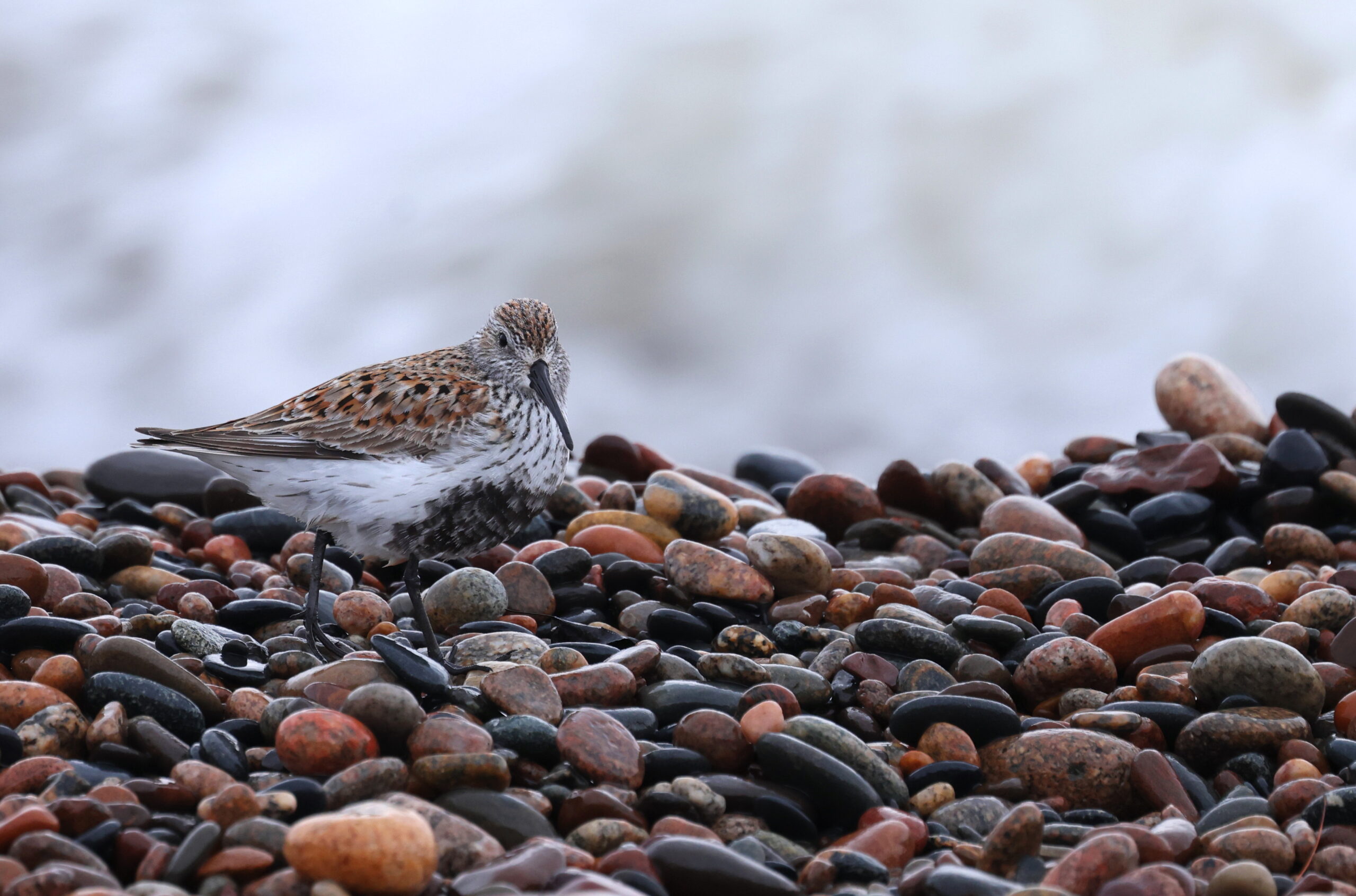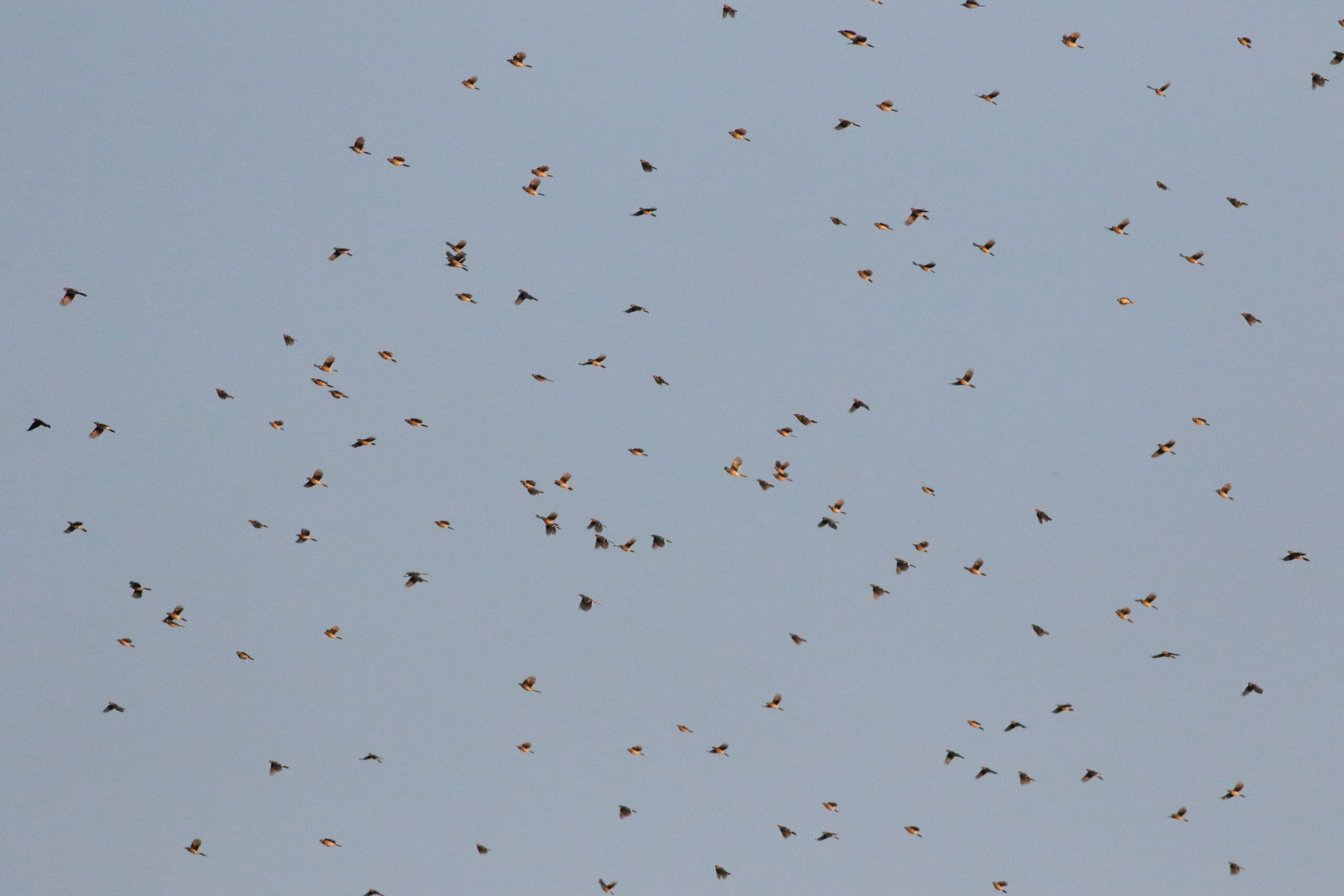

The end of the count may be right around the corner, yet some of the best action was only beginning during this observation period. Starting on May 20, we were met with moderate northwest winds which overall led to reduced numbers for this time of the year. However, with this high pressure overhead, it seemed that large shorebirds were still moving into the headwind. While the day’s total was not especially high, small flocks and singles of Whimbrel were observed, with some putting down temporarily along the beach, staying around a minute. The highlight of the day certainly were the other large shorebirds observed, including two Western Willets sitting on the beach upon my arrival. About an hour later, I heard the distinct calls of a Marbled Godwit, which flew in and spent the morning on the beach with the two Willets. The high pressure continued to sit overhead the following morning, leading to the highest air pressure I had seen all season.

Marbled Godwit resting on the beach. Photo by Aaron Graham
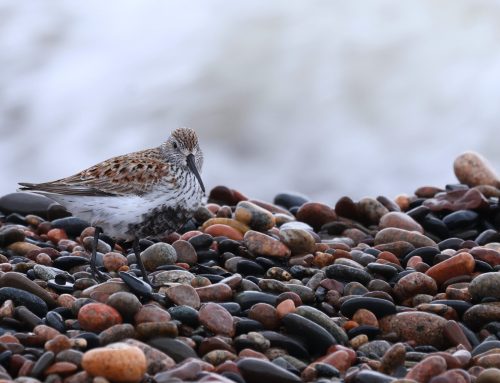
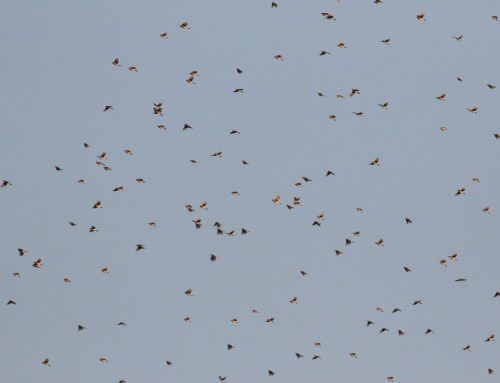
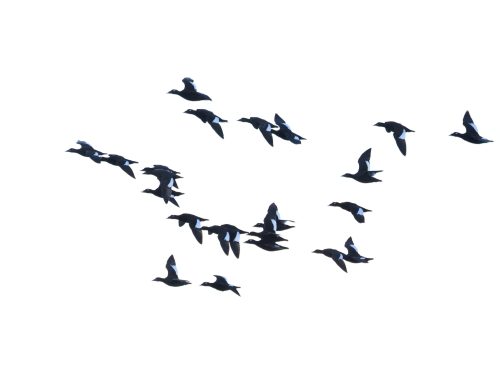
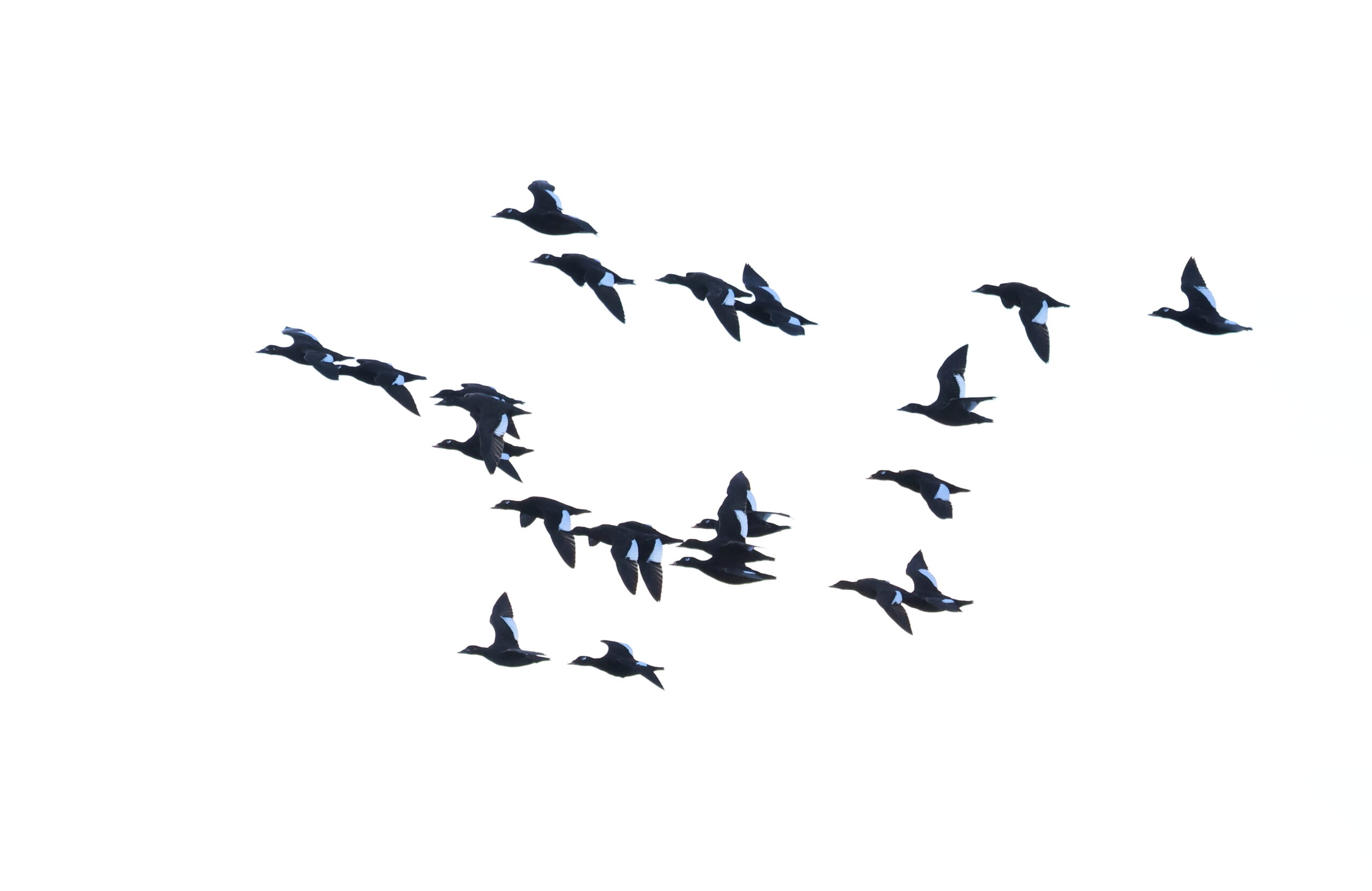
Hawk Counter Sean McLaughlin joined me for what was a sunny day at the beach on May 21. However, we did not just kick back and relax, as a decent flight of 226 White-winged Scoters moved through. Shorebirds were on the move again as well, this time in an overall lighter headwind. A total of 61 individual Whimbrel and Dunlin respectively were tallied, with flocks of Dunlin noted moving north out over the lake. One larger flock of Dunlin even swirled over in the skies over the station! While a single first-cycle Iceland Gull was noted during the afternoon, the likely overall highlight for the count was the continuing Green Heron that Sean observed the day prior. This time, it was seen flying up over the point.

A flock of Whimbrel with a single Dunlin passing by the point right after sunrise. Photo by Aaron Graham

One of the Dunlin flocks that passed by the shack that day, this one being the one that circled over the shack. Photo of Aaron Graham
The ever-so-appreciated alternate counter, Jack Kew, was back for his Friday watch on May 22. Jack had a great day with notable movements, including 208 White-winged Scoters, 146 Long-tailed Ducks, and 96 Whimbrel. Jack also had a great morning when it came to the more rarely observed species on the count, with an adult Franklin’s Gull in the early morning and a Pacific Loon near the end of the count. These detections fall nicely within the expected range date for these rare species based on previous years’ count data.
Southeasterly winds prevailed on the morning of May 23, and their influence was apparent in the species detected. The highlights of the morning came in the form of a single adult Red-headed Woodpecker and a single Purple Martin observed in a flock of other swallows. Overall waterbird numbers were fairly low that morning, topped by the 82 Long-tailed Ducks observed. This species is often seen in distant flocks with around 20 to 30 individuals exiting the bay and out onto the lake. Winds continued into the next morning, May 24, this time with a lower pressure moving in resulting in drizzly conditions. These conditions led to multiple shorebird detections, such as Ruddy Turnstones and Pectoral Sandpiper, as well as multiple larger flocks of Whimbrel, total of 91 individuals. A single flock of 56 was observed! I myself was able to get in on the Pacific Loon action, with an individual originally being noted from the hawk platform by Sean passing my location out on the lake alongside a single Red-throated Loon. These birds continued on their path out on the lake, heading east out of sight. Fog rolled in as the day marched on, with limited visibility in the afternoon.
The fog sat out on the water overnight, leading to very limited visibility offshore the following morning, May 25. While reduced waterbird detections during the morning hours, conditions gradually cleared as the day progressed. Ring-billed Gulls continued to migrate following the Bayshore around the point, with more than half looping back and heading south along the shore. Afternoon hours can sometimes produce good flights of this species. The waterbird highlight for the day was actually picked up by the hawk counter as they came down the lakeshore and out over the point. This was a flock of 16 American White Pelicans, a species we thought we would see at some point this season on a warm clear day. They continued off the point before landing in the middle of the lake. Their size always puts an individual in awe. A single Eurasian Tree Sparrow was heard behind the station, with two more making a pass behind me the following day and rounding the point. The species is really becoming a regular vagrant at the point.

Eurasian Tree Sparrow that made its way into the feeders at the point. Photo by Aaron Graham
The next morning, May 26, different air masses converged, making for a warm start to the day before conditions instantly turned cold once the wind shifted out of the west. This morning would prove to be the most diverse observation period covered by this post, with 85 different species recorded. Amongst the waterbirds, there was a fair amount of Red-breasted Mergansers on the move, contrary to the previous days where they seemed to be staging in the bay waters right off the point. It was also a good day for shorebird movement, with several single and multi-species flocks noted following the shoreline out and around the point. A total of 46 Sanderlings, 23 Semipalmated Sandpipers, and 15 each of Ruddy Turnstone and Semipalmated Sandpiper made up the bulk of this flight. It was a neat experience to see a flock, composed of 13 Ruddy Turnstones making their way past my position at first light that morning, not previously realizing the amount of migrants that took this interior route. Passerine-wise, I also recorded my first Red-bellied Woodpecker for the point making a lap around behind me in morning flight. Several bats were noted coming in/off the lake after the west winds intensified, and while not all could be identified, a Silver-haired and a Big Brown Bat were among those observed. Other non-avian migrant highlights that day included an increased number of American Lady butterflies.

Big Brown Bat coming in/off the water. Photo by Aaron Graham
While I’m used to the end of May often signaling the end of migration in the mid-Atlantic region, it seems like the action is only intensify at these more northern latitudes on the Upper Peninsula. I’m excited to see what the final week of the count brings and I hope you are too!
Aaron Graham, 2026 Spring Waterbird Counter
Featured Photo: Whimbrel by A. Graham
You can now see the waterbird count data on Trektellen! Check it out at trektellen.nl/count/view/4209.
You can keep up with the 2026 Spring Waterbird Count by reading Aaron’s weekly blog posts and following WPBO’s social media (Facebook, Instagram, and X). The spring waterbird count runs April 15 through May 31.

Aaron Graham: 2026 Spring Waterbird Counter
Aaron is a migration monitor from West Virginia with a love for birds starting in his early elementary years. Calling the central Appalachian ridgelines home, he ventured throughout this region from a young age trying to better understand the local avifauna. This pursuit has taken him all over the United States as his focus has dialed into migration counts, with particular focus on morning flight and sea/lake watch counts. Being able to witness active migration all from a stationary point is what awes him, and better understanding these phenomena is what drives him. Aaron is looking forward to a season at Whitefish Point and wonders what all he will see migrating past the point from the waterbird count! When not birding, Aaron coaches college soccer, takes to the snow with freestyle and cross-country skiing, and can be found far afield searching out new butterflies, dragon and damselflies, and tiger beetles.