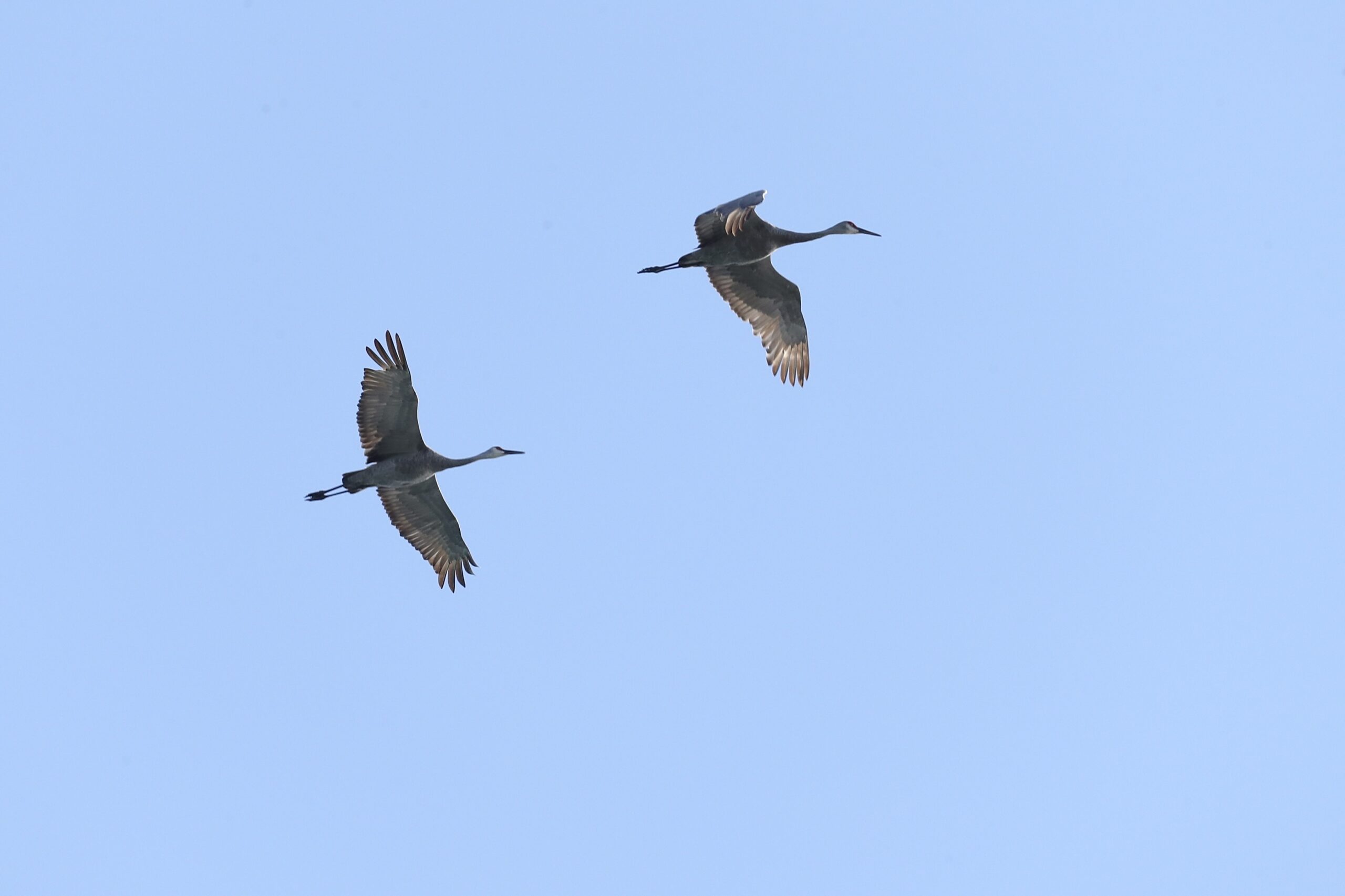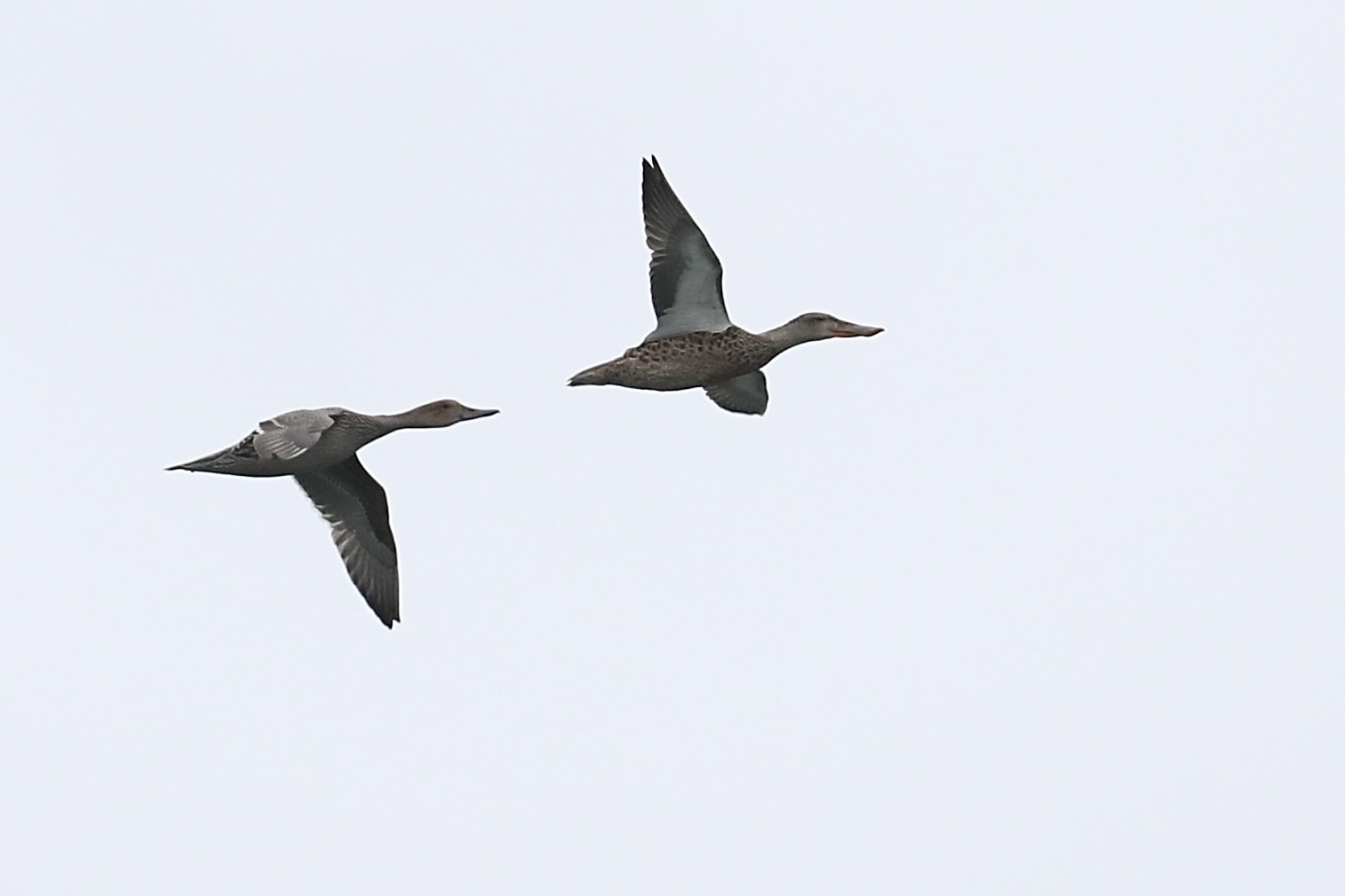
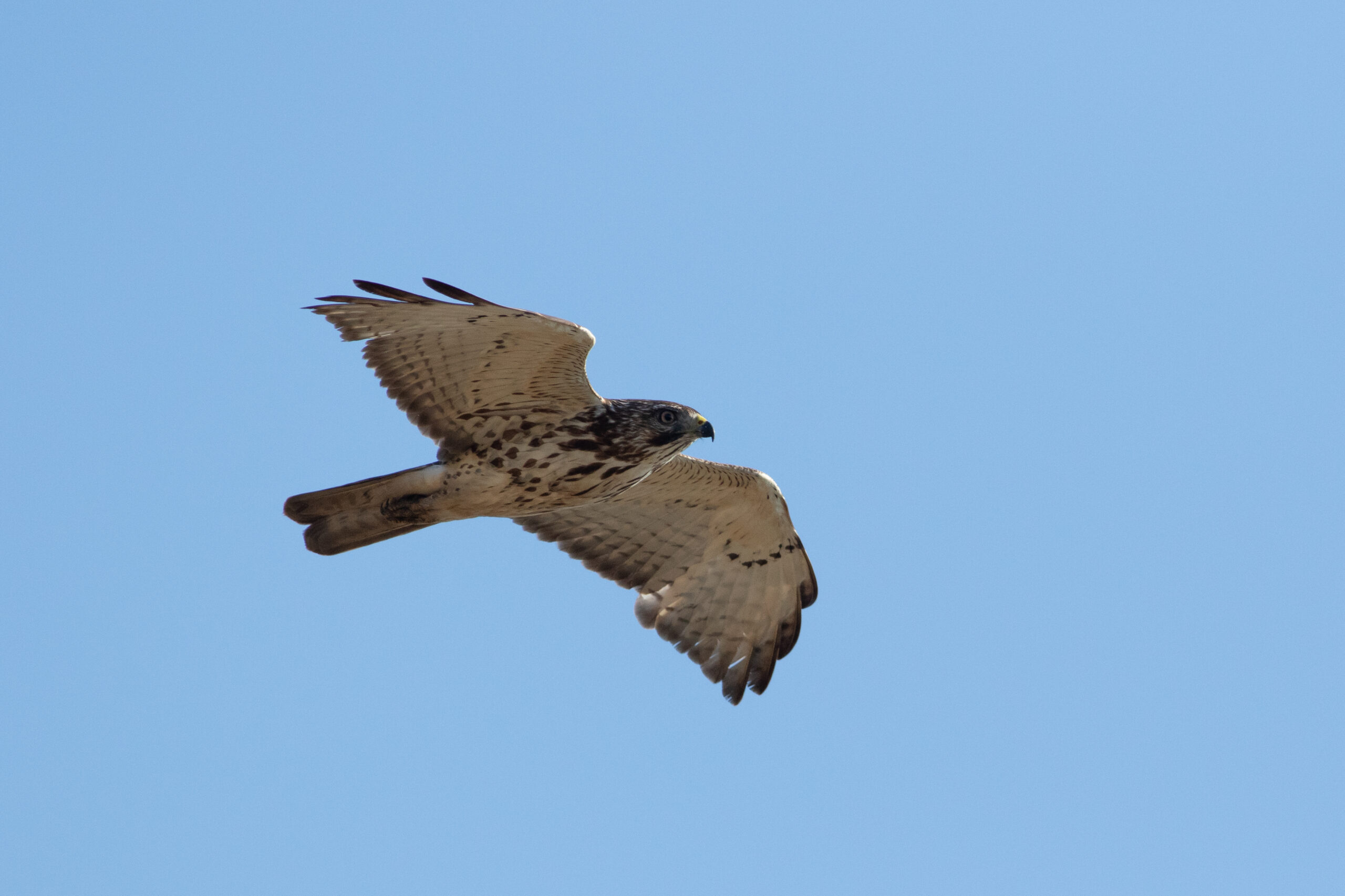
And just like that, it’s the end of another spring season on the eastern end of Lake Superior. The raptor count this year has been a smashing success, with a total of 19,594 raptors counted. An additional 34,297 migrants were counted across 175 species! The final week of the count was highlighted by several excellent flights of young Broad-winged Hawks, and the star of the week was a Black Vulture spotted on May 29th! This was our 19th species of diurnal raptor counted this spring, and only the fifth spring record for the Point.
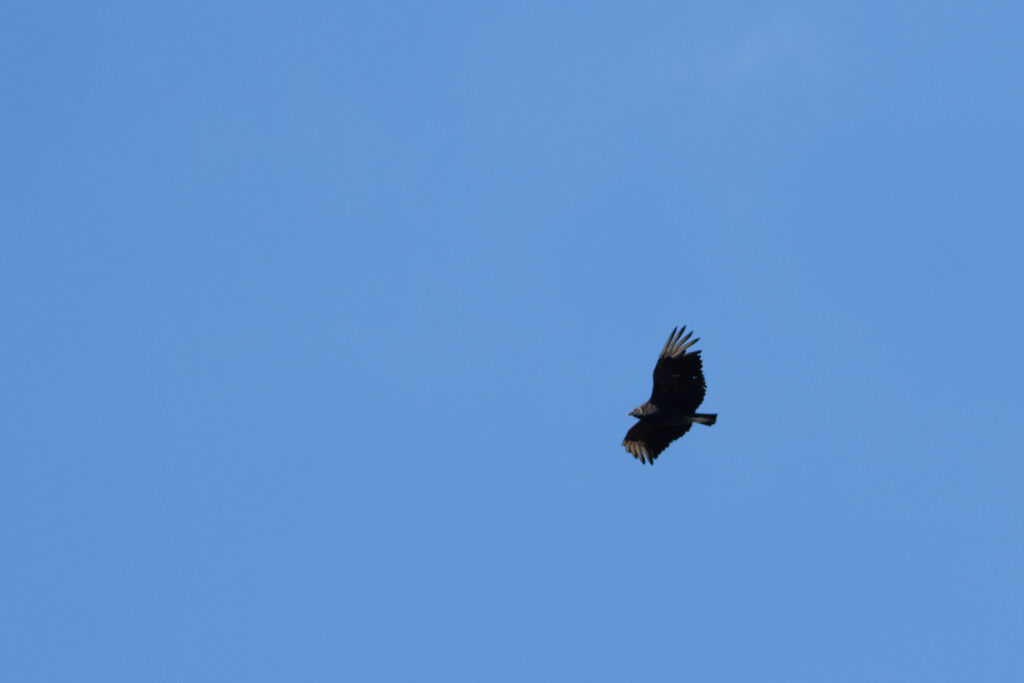
Black Vulture. Photo by Sean McLaughlin
Across the board, raptor counts were near average with a few exceptions. Bald Eagles continue to increase in the north woods, and the total of 985 was the second highest season count on record. In contrast, Osprey remain fairly scarce as migrants, with 74 counted this spring. Golden Eagles also performed well, and the tally of 118 was the second highest count as well. Sharp-shinned Hawks are a species of concern in many eastern states, as hawk count tallies have steadily declined over the last 50 years. However, Whitefish Point is one of the few sites where counts appear to be stable, and the 10,905 Sharpies counted this spring was above the long-term average for the site. Merlin also have been steadily increasing. This was the third consecutive season with more than 100 counted!
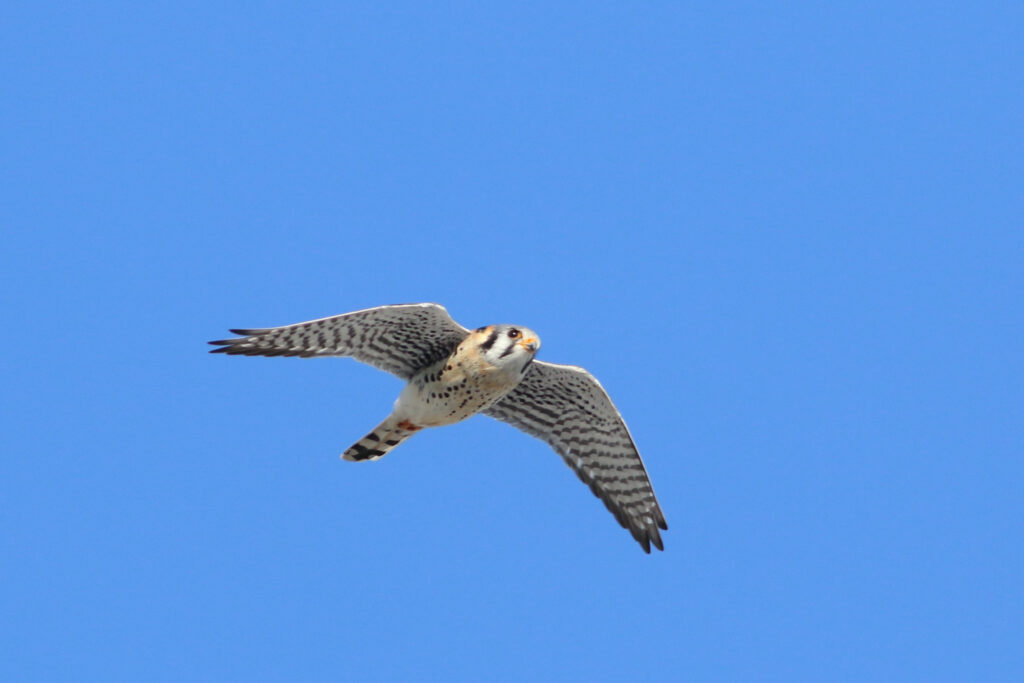
American Kestrel. Photo by Sean McLaughlin
One of this season’s most impressive spectacles, and my personal favorite from the spring, was the American Kestrel flight. This year’s total of 874 is the second-highest ever! A bit of a pattern, with several #2 high counts in the raptor world this season. Kestrels have a lovely tendency to move late in the afternoon and into early evening, and those evenings are stamped firmly in my memory.
The rare raptors this spring also deserve a special shoutout. Two individual Crested Caracara take the cake for the most unbelievable record! I had been dreaming of a Caracara in the north country for a long time, and I smile ear to ear when I think about the day the first one popped up. The season total for Swainson’s Hawk came in at 9, well above our expected 1-2. Lastly, and certainly not least, is the aforementioned Black Vulture in the last week of May. This place sure is an unpredictable and exciting site to watch raptor migration.
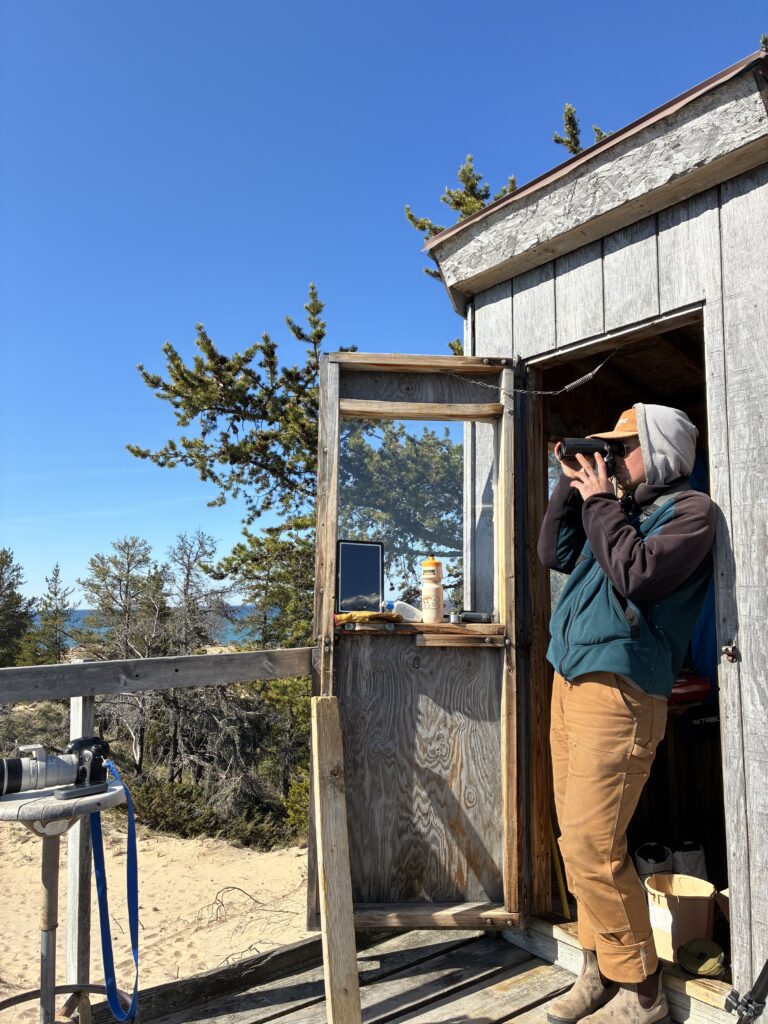
Last day at the Count. Photo by Sean McLaughlin
A huge thank you to the visitors and regulars who made this season possible. While the many kind gifts of coffee and cookies certainly kept me warm, it has been your smiles and enthusiasm for migration that really fills my cup. Thanks to Michael and Susan Kielb, Curt and Jan Vogel, Lynn Miller, Jim Leitch, Darlynn, Lunch Louise, Jack Kew, Russ Edmonds, Michigan Audubon staff, and anyone who came to the Point to enjoy migration. It has been an honor and a joy to get to experience watching birds at the Point for a second spring. Thank you!
Sean McLaughlin, Spring Hawk Counter
Featured Photo: Juvenile Broad-winged Hawk by S. McLaughlin
You can now see the raptor count data on Trektellen! Check it out at trektellen.nl/count/view/4562.
You can keep up with the 2026 Raptor Count by reading Sean’s weekly blog posts and following WPBO’s social media (Facebook, Instagram, and X). The raptor count runs March 15 through May 31.

Sean is a hawk watcher from Pennsylvania who has enjoyed watching birds migrate for over 15 years. A lifelong birder and naturalist, Sean has counted raptors at Stone Mountain and Tussey Mountain hawk watches in PA, before moving to the shore of Lake Superior. He has led the count team for four seasons at Hawk Ridge and three at the West Skyline Hawk Count in Duluth, Minnesota, instilling a deep love for the Great Lakes. In Duluth, Sean also conducts morning flight counts of passerines and other migrants. Outside of the world of watching migration, Sean has studied American Goshawks in the mountains of Oregon, breeding birds in northern Minnesota, and instructed courses at Hog Island Audubon Camp. He is excited to return to eastern Lake Superior for a second spring at Whitefish Point, particularly for the epic Sharp-shinned Hawk and Common Loon flights.