Week 4, June 4-10, at Whitefish Point was relatively quite for our resident Piping Plovers, but that doesn’t mean there wasn’t plenty to see. G and V have continued their incubation process, and hatch day is approaching in just over two weeks.
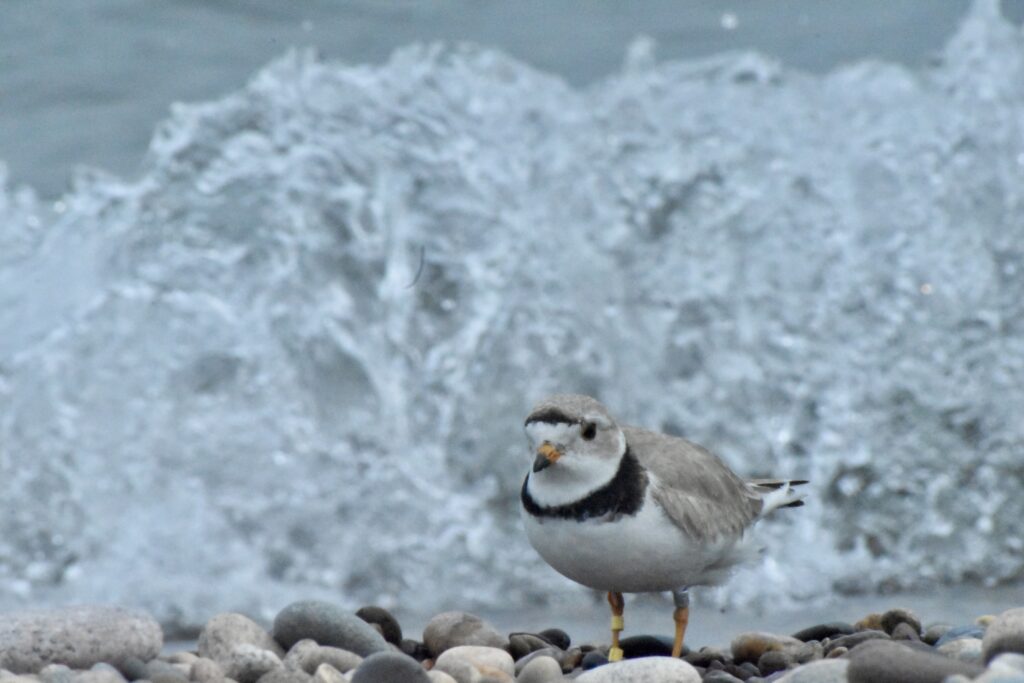
V Against the Waves. Photo by Morgan Ness
The pair spent a majority of the week taking turns incubating their eggs, typically switching off about once every hour. One bird remains on the nest while the other heads to the shoreline to forage, preen, and patrol their territory before returning for the next shift change. While incubation may not as dramatic as courtship or territorial disputes, every day brings the pair one step closer to hatching.
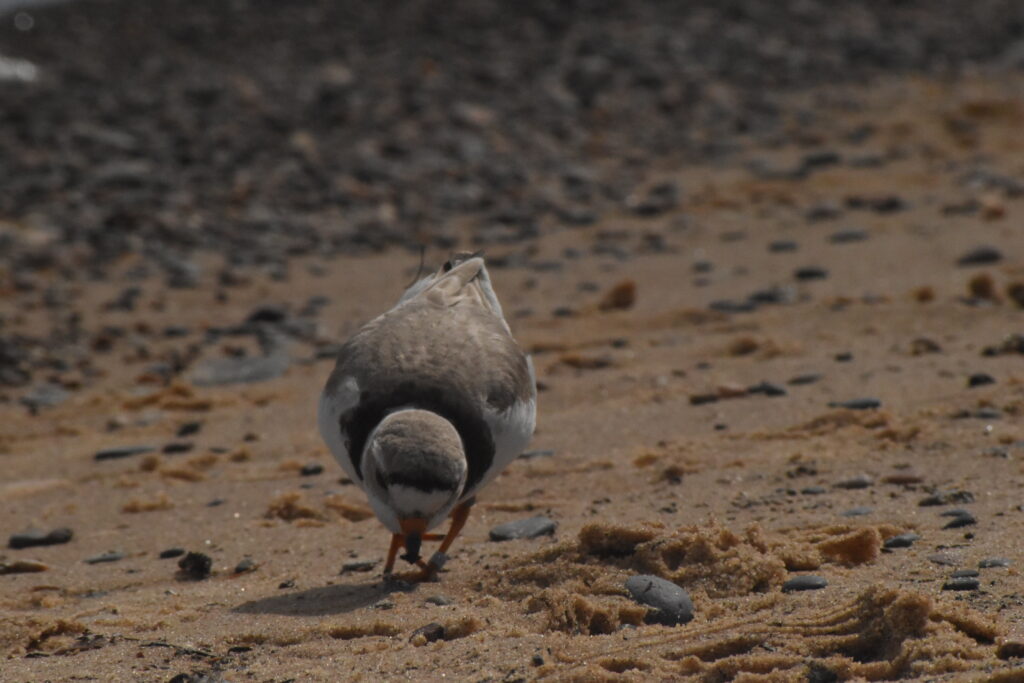
PIPL Foraging the Beach. Photo by Morgan Ness
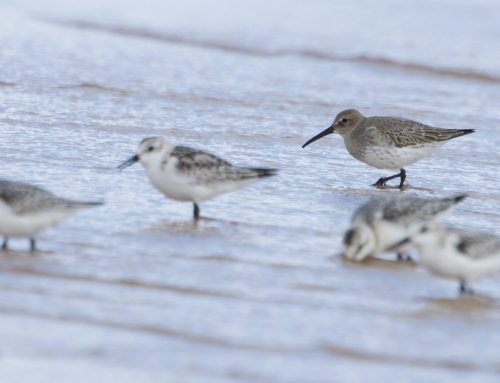
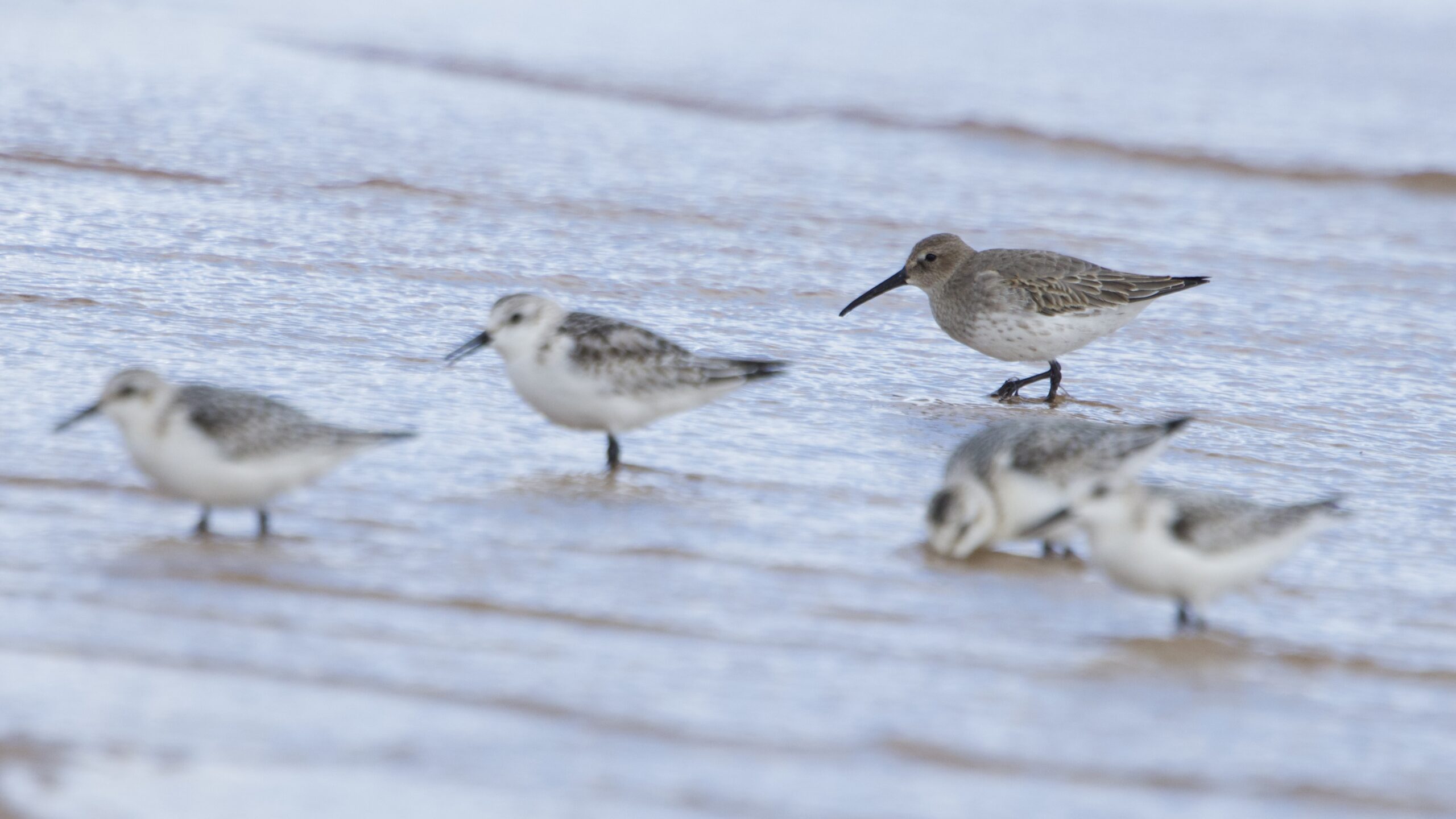
While G and V remain focused on their nesting duties, they are far from the only shorebirds enjoying the beach at Whitefish Point. Throughout the week, I observed a variety of species sharing the shoreline, including Ruddy Turnstones, Dunlin, Spotted Sandpipers, and Sanderlings. Even a curious fox made an appearance on the beach (thankfully far from the plover’s nesting site). Whitefish Point serves as an important stopover site for many migratory birds, and it’s always exciting to see such a diverse collection of species utilizing the same stretch of shoreline.
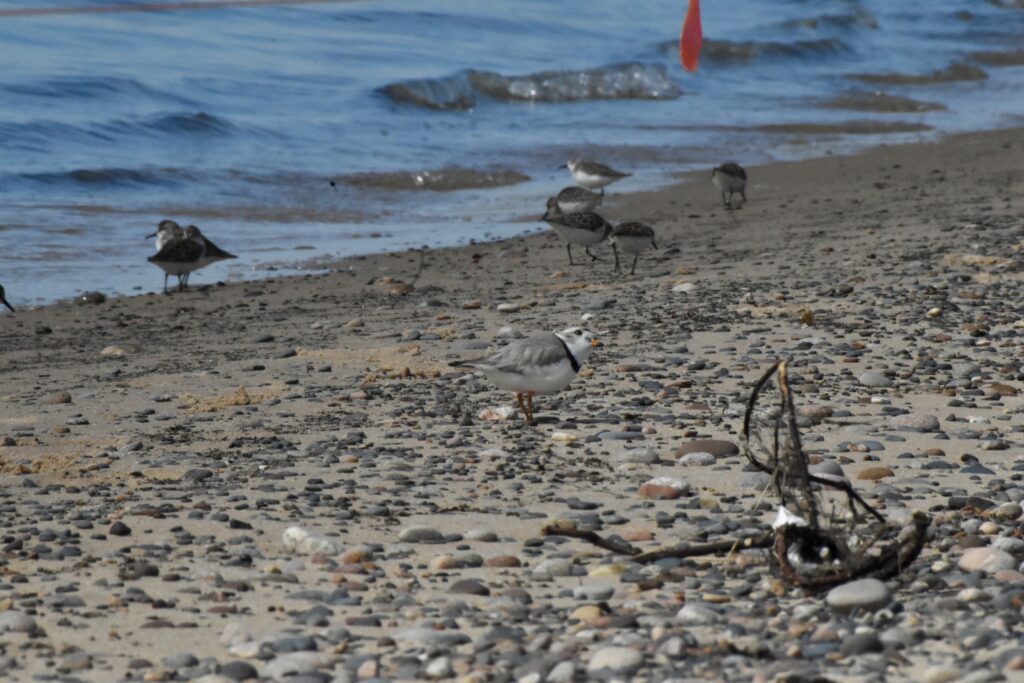
G Sharing the Beach with Shorebirds. Photo by Morgan Ness
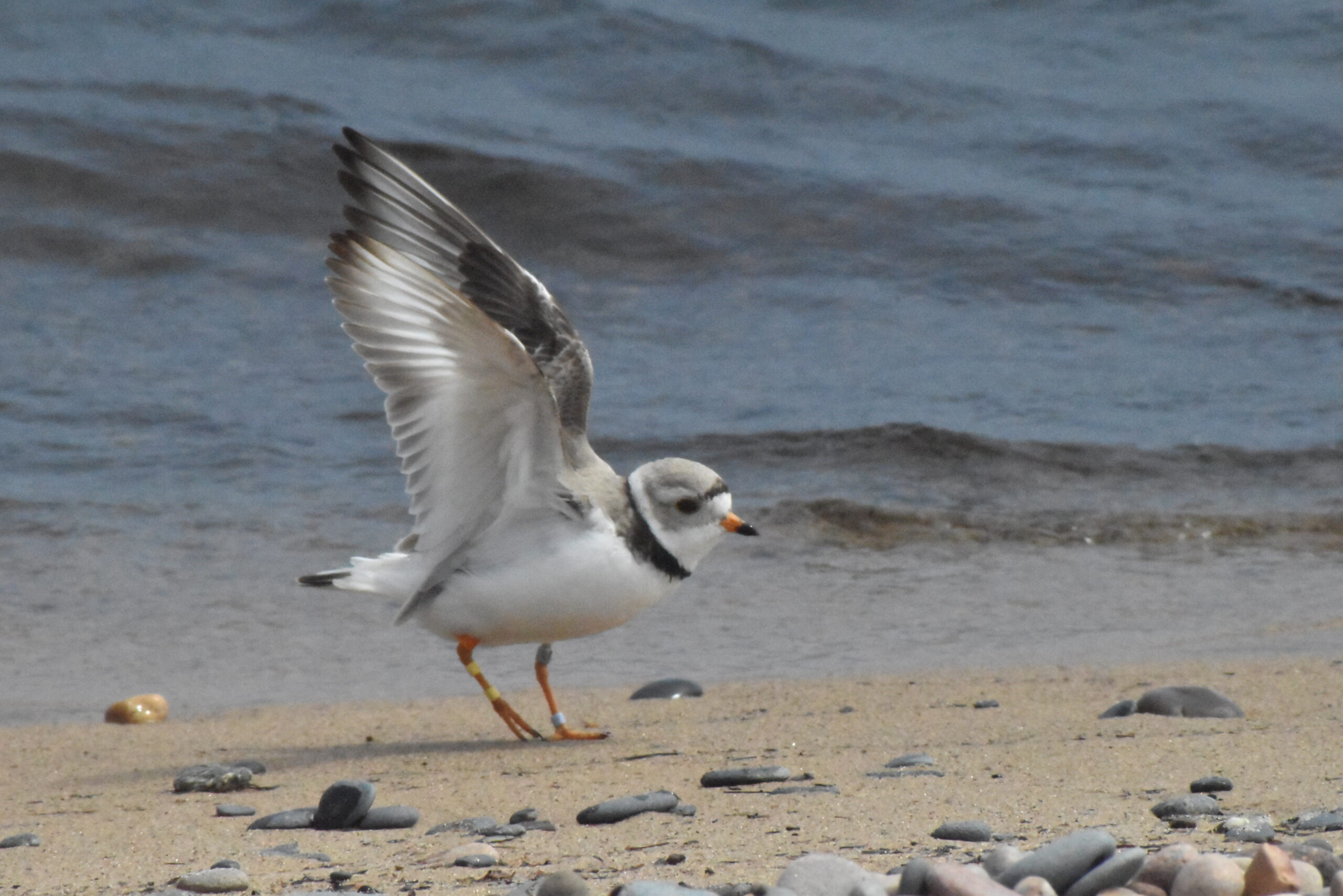
One of this week’s most noticeable changes involved G’s bands. He was missing a yellow band, making him harder to identify at a distance. Luckily, members of the Piping Plover Great Lakes Conservation Team were able to stop and give him some new bling, making his new band combination X,Y:Of,LG.
Banding plays a critical role in Piping Plover conservation. Each unique combination of colored bands allows us to identify individual birds without recapturing them. Throughout banding, biologists are able to monitor nesting success, track migration routes, and estimate survival rates.
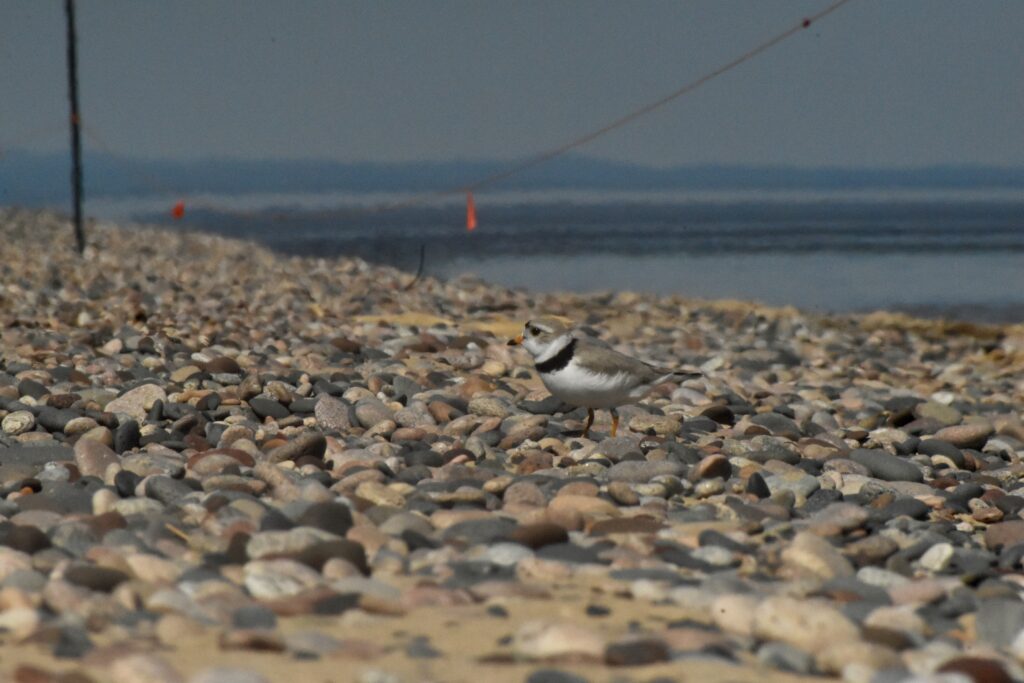
PIPL G. Photo by Morgan Ness
For now, V and G’s focus remains on keeping their eggs warm and safe. With hatch day drawing closer, the countdown to tiny fluff-balls running around beach is officially underway.
-Morgan Ness, 2026 Piping Plover Monitor
Feature Photo: V Spreading Her Wings By Morgan Ness
Piping Plover monitoring is a collaborative effort between Michigan Audubon and Seney National Wildlife Refuge (USFWS).
You can keep up with the 2026 Piping Plover action at WPBO by reading Morgan’s blog posts and following WPBO’s social media (Facebook, Instagram, and X).
Morgan Ness: 2026 Piping Plover Monitor
 Having studied Environmental Science, Policy, and Management at the University of Minnesota Twin Cities, Morgan developed a passion for protecting migratory birds and forest ecology. After spending time in Montana conducting avian monitoring, Morgan is excited to experience Michigan’s species during migration season and to take in the change in scenery. Whether she’s identifying leg bands or chatting with beachgoers about the importance of plover conservation, Morgan’s enthusiasm for the outdoors is contagious. She is thrilled to call the Michigan shoreline her office this summer and contribute to the recovery of such an iconic species. When she isn’t bird-watching, Morgan is often crocheting, hiking, or watching Bravo.