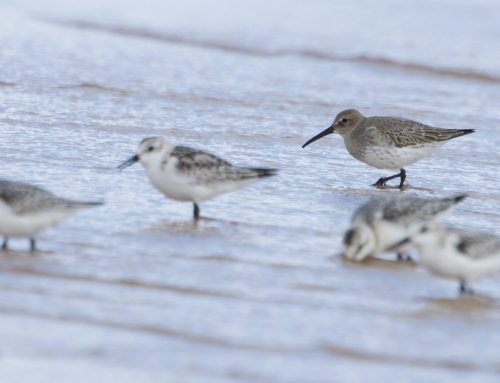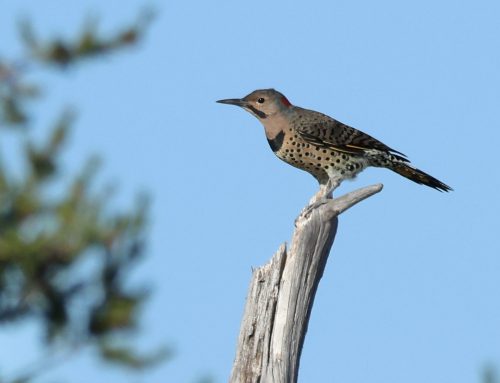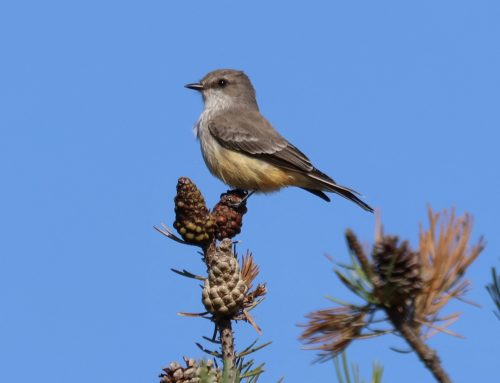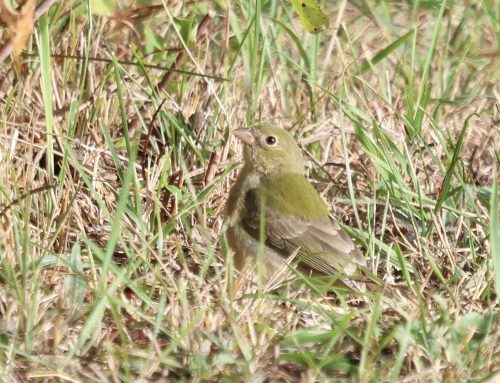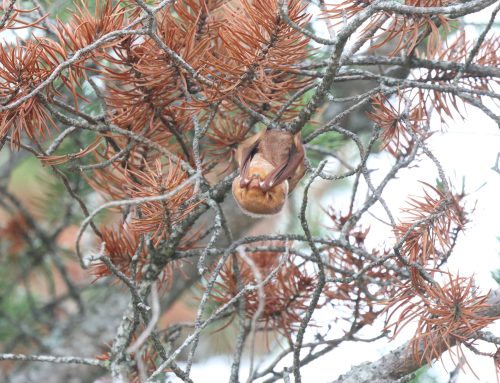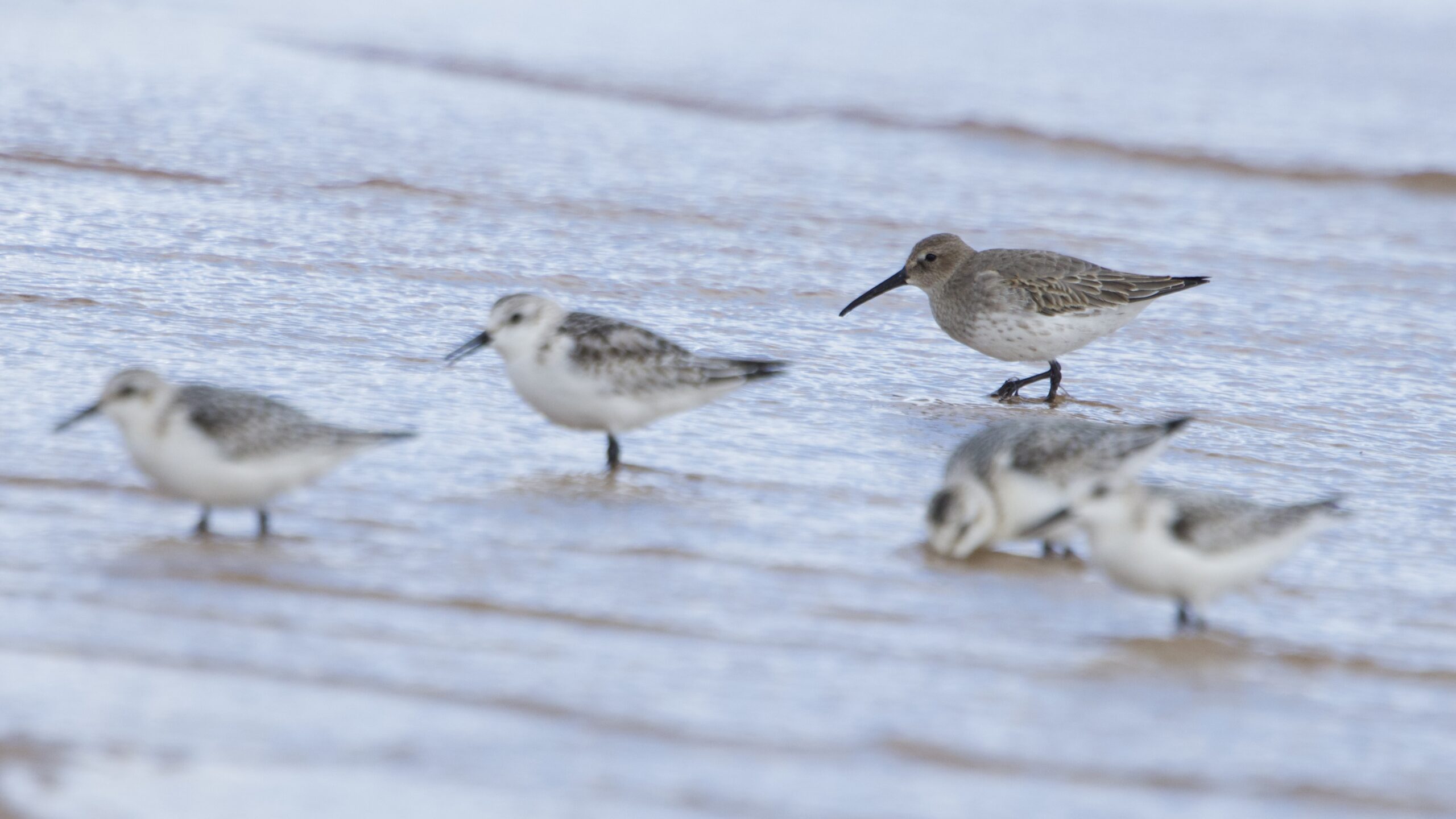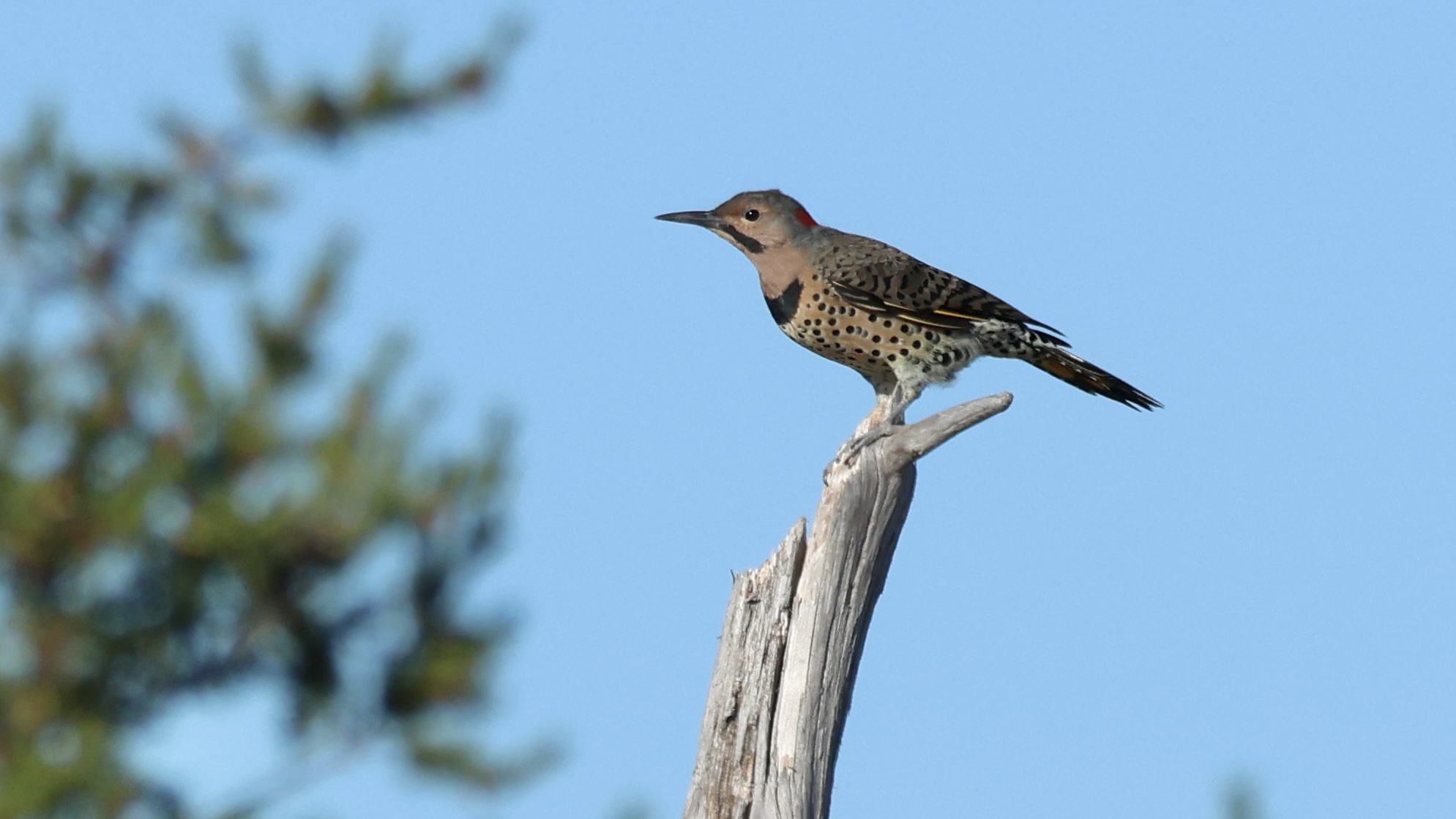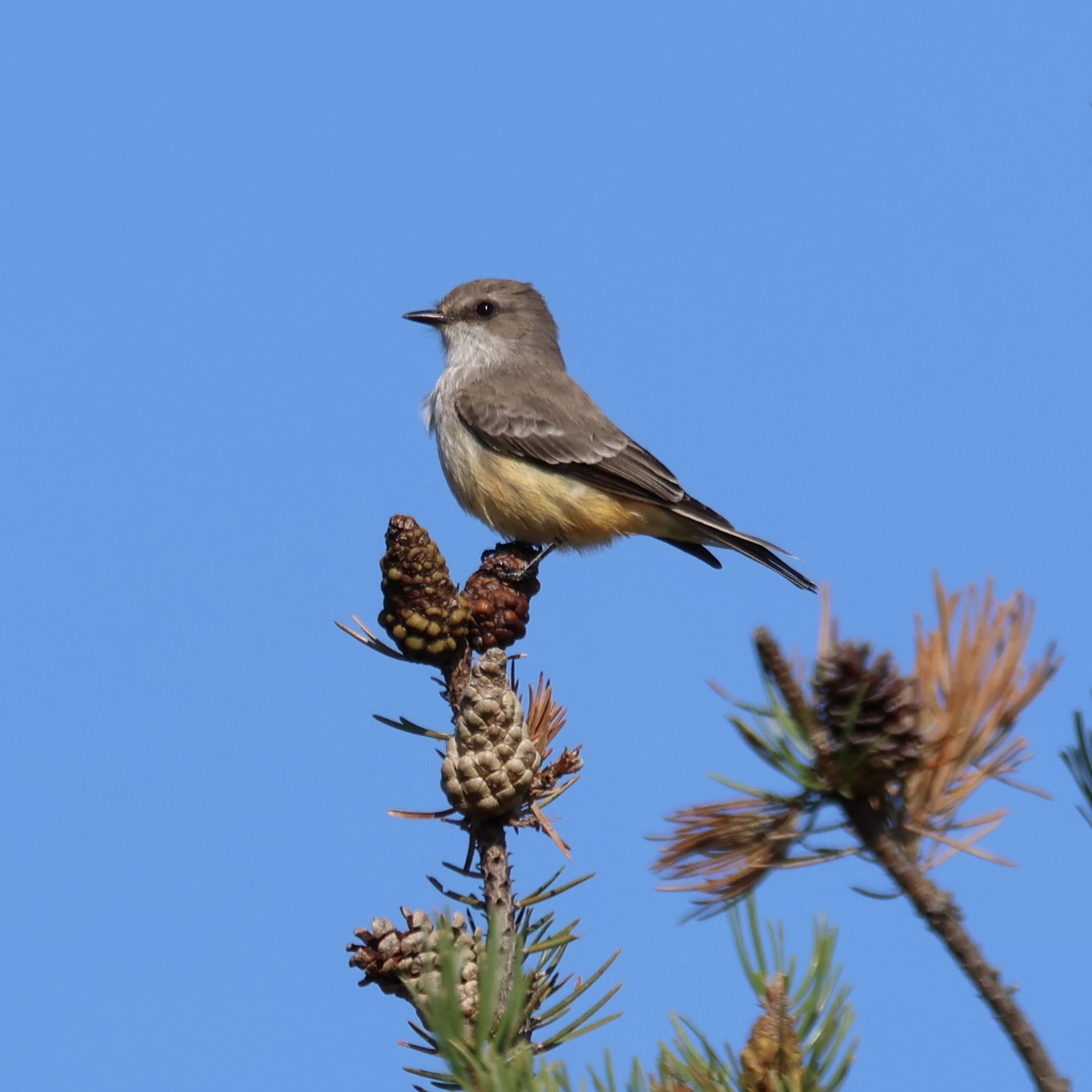
This week was incredible for both songbird and waterbird movement! Winds finally shifted from calm southerlies to a prolonged west/northwest, alongside a strong cold front. Favorable conditions have a dramatic effect on productivity during migratory counts.
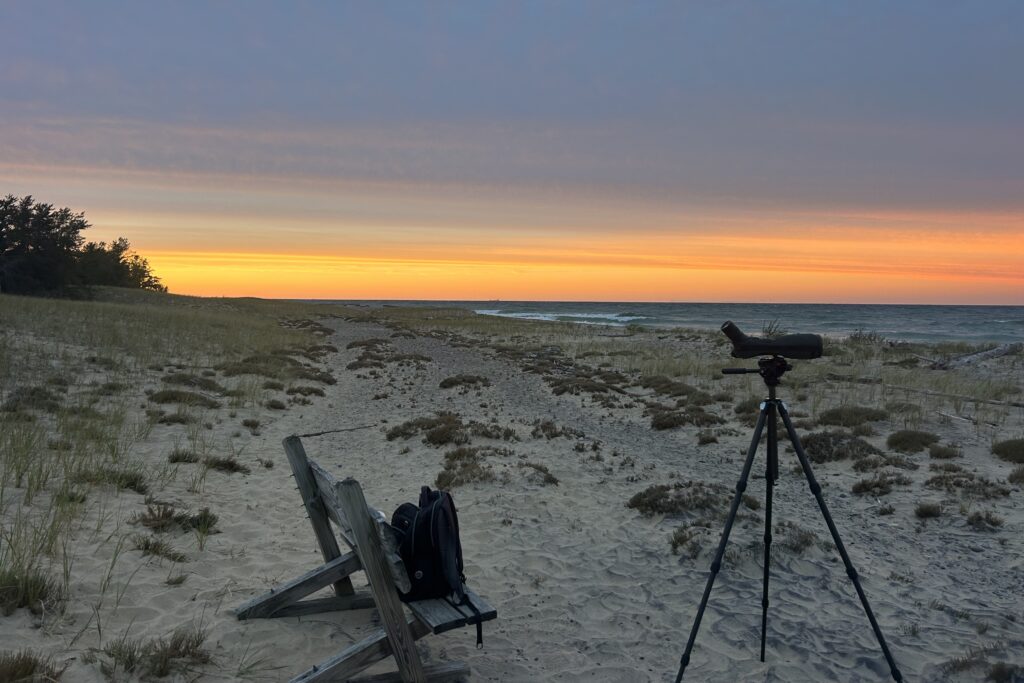
View from Waterbird Station. Photo by Oliver Kew
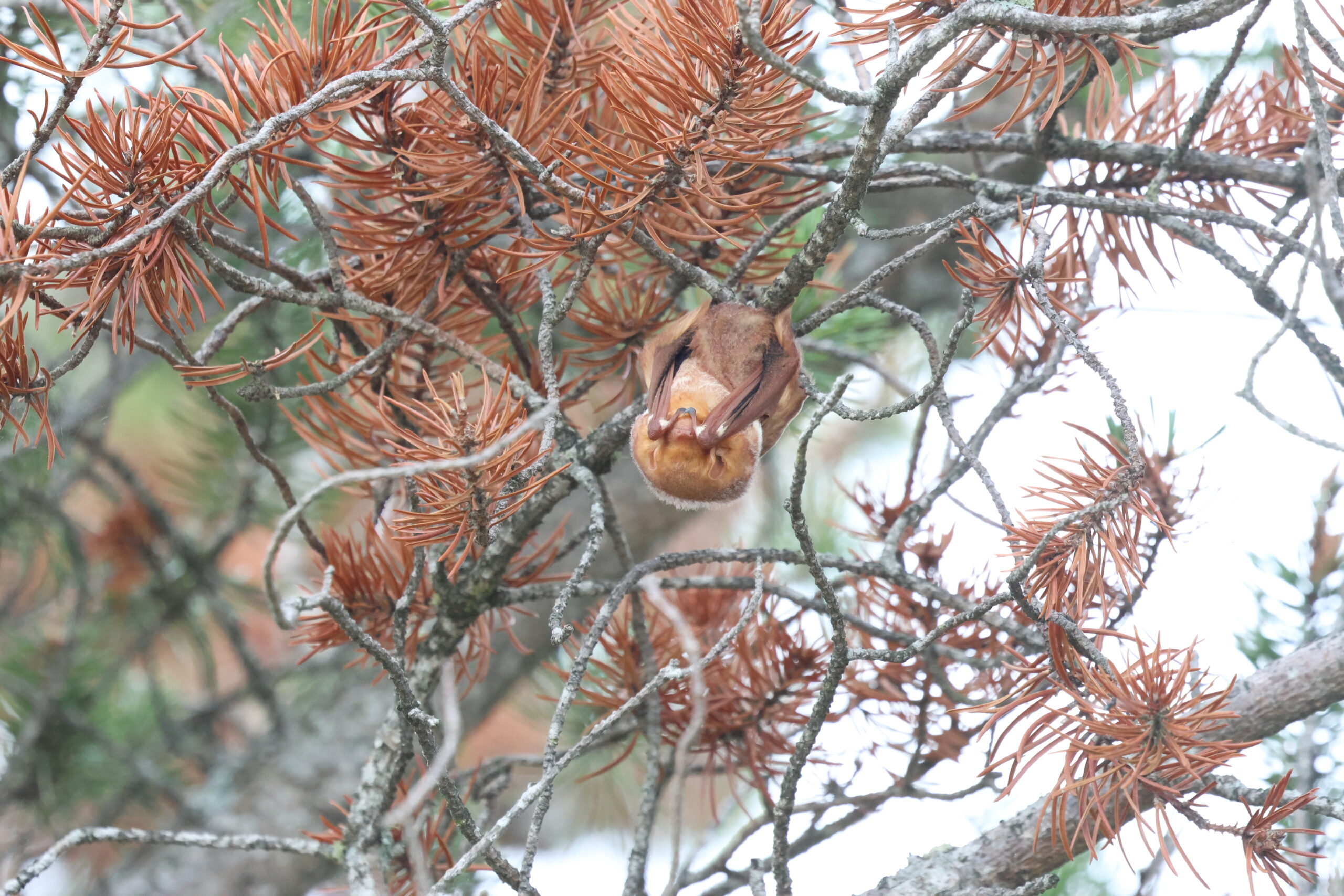
The pinnacle event for passerines took place during the waterbird count on the morning of 10/1. A northwest wind was already producing an impressive duck movement. Not long after sunrise, thousands of songbirds began streaming into the woods off Lake Superior from 8:30-11am. The bulk of final totals included over 2,600 Yellow-rumped Warbler and 2,000 Dark-eyed Junco. The flight also consisted of sparrows, kinglets, warblers, thrushes, winter wrens, brown creepers, and bats.
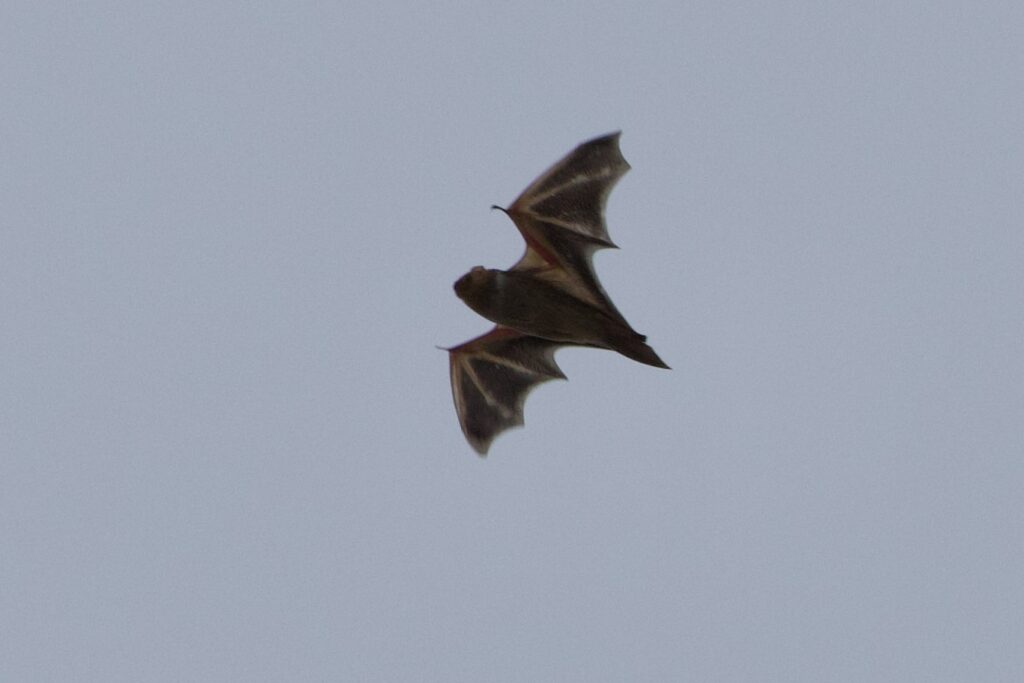
Eastern Red Bat. Photo by Oliver Kew
A perfect cocktail of weather conditions was required to produce this strange phenomenon. Nearby gulls quickly took notice and a feeding frenzy of songbirds over the water ensued. This day was not for the faint of heart. Ring-billed and Herring Gulls relentlessly pursued exhausted passerines flying in over the water.
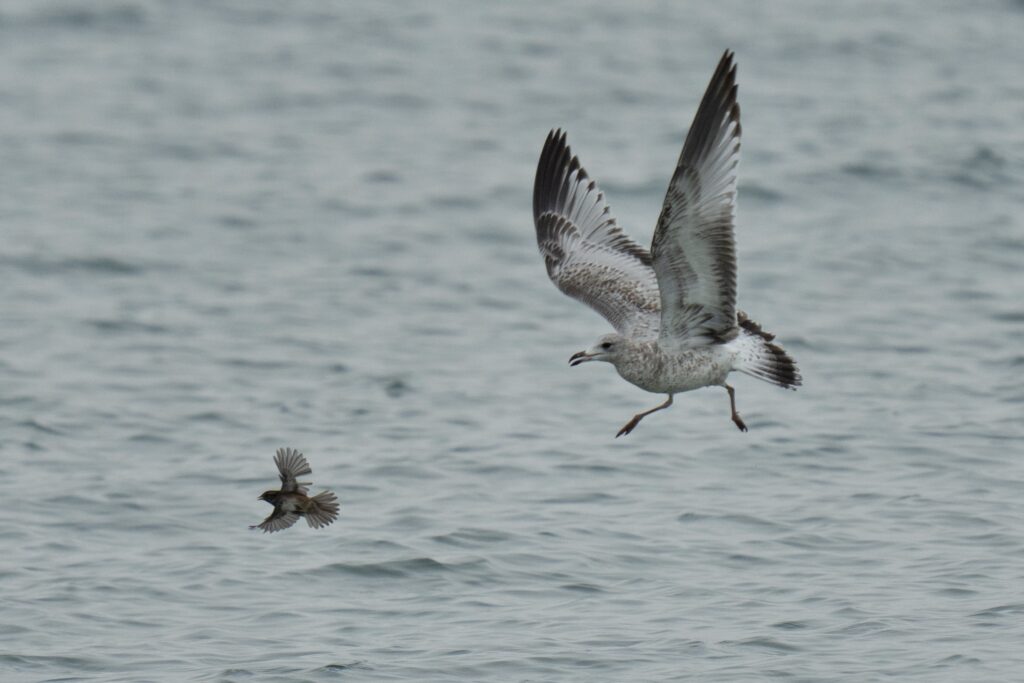
Ring-billed Gull chases a White-throated Sparrow. Photo by Justin Labadie
During the chaos, a Golden-crowned Kinglet decided to land in the waterbird shack for a moment to catch its breath.
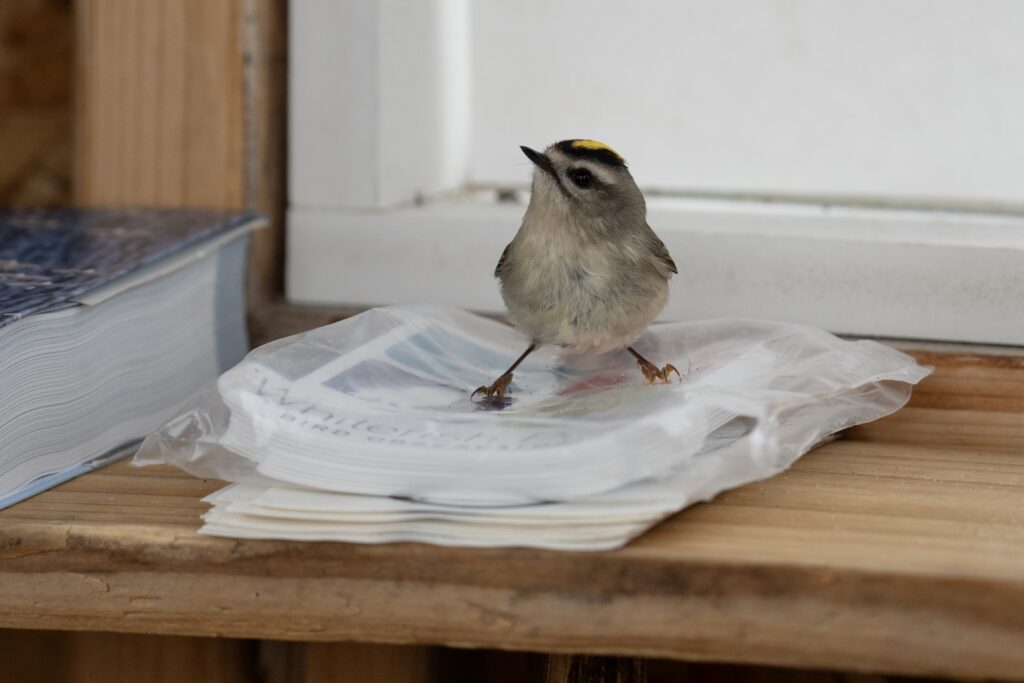
Golden-crowned Kinglet in the Waterbird Station. Photo by Justin Labadie
Sparrow activity has been nothing short of fantastic. The first American Tree Sparrows of the season were observed on 10/2. White-crowned Sparrows have been abundant at the feeders, including a flock of 37 on 10/3. Migrant Savannah Sparrows can be found staging along lakeside dunes.
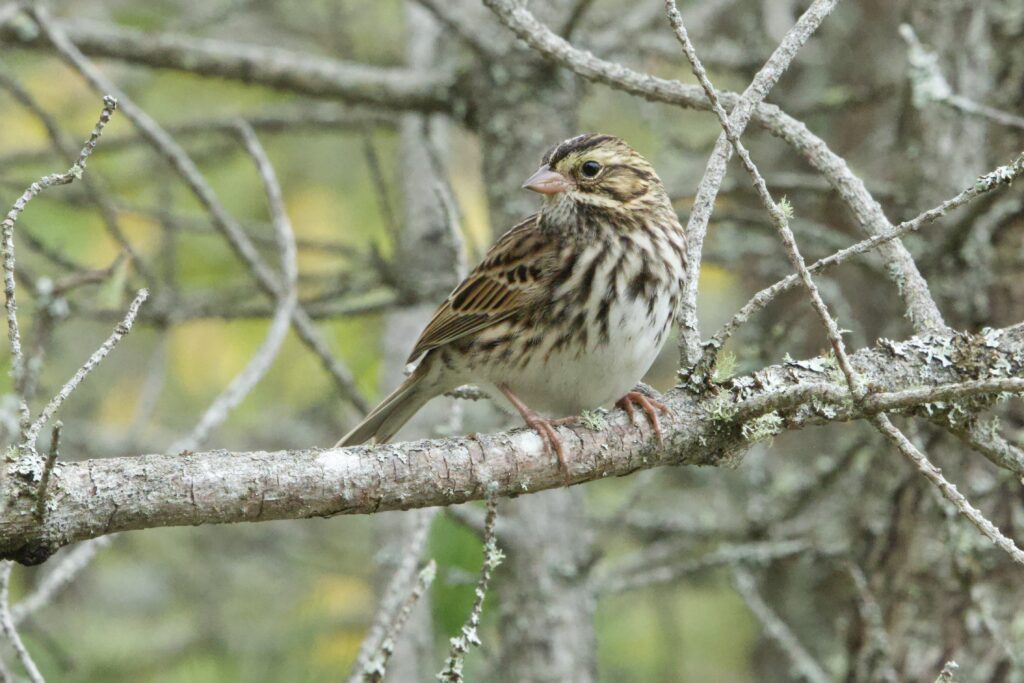
Savannah Sparrow. Photo by Oliver Kew
A Clay-colored Sparrow spent the past few days (10/3-10/5) foraging on memory lane and within the new restoration area.
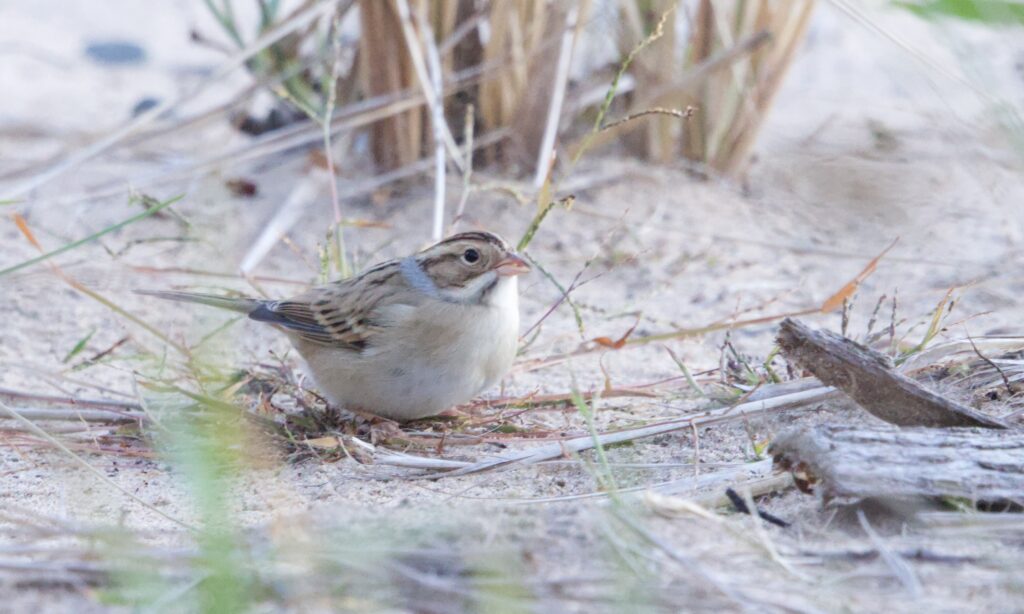
Clay-colored Sparrow. Photo by Oliver Kew
Our second LeConte’s Sparrow of the fall was found by Linda Ar and Justin Labadie on 10/1. This species forages on the ground in short grassy vegetation and is easily hidden.
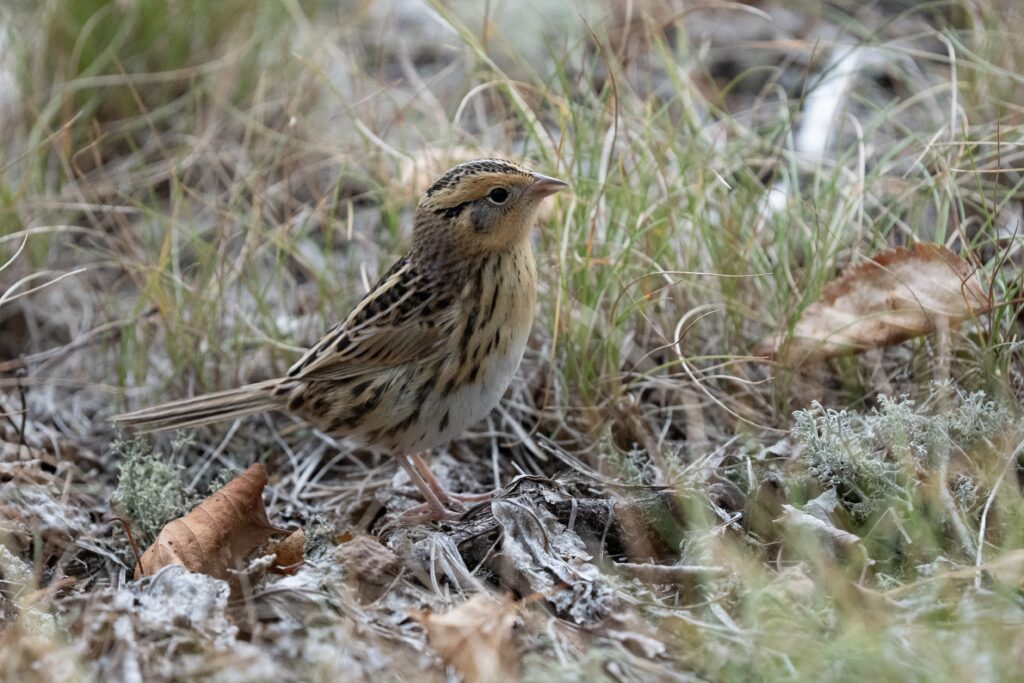
LeConte’s Sparrow. Photo by Justin Labadie
Harris’s Sparrows primarily migrate through the Great Plains. Some routinely stray eastward in the fall into Michigan’s Upper Peninsula. A notable influx of Harris’s Sparrows into the state took place on 10/2. At least two were present at Whitefish Point. Twelve individuals were recorded in Marquette on the same day. Harris’s Sparrows are typically found in the company of closely related White-crowned Sparrows.
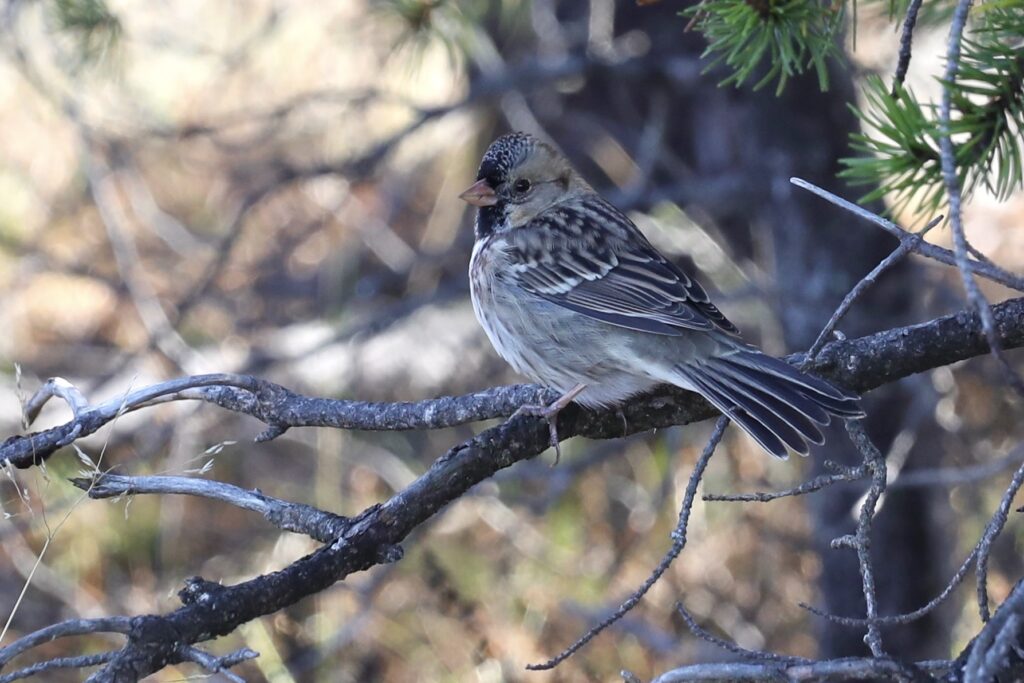
Harris’s Sparrow. Photo by Jack McDonough
Flocks of Golden-crowned Kinglets have been a constant presence along walking trails. Sightings of Ruby-crowned Kinglets also increased in frequency. Rubys have a slightly earlier migration window. Most push through by late October. In the fall, the bright red crown patch stays hidden beneath feathers. Kinglets are small and tough to locate high up in conifers. Strong winds help to keep passerines low to the ground for cover. Apparently, one needed to visit the water feature at the feeders for better looks!
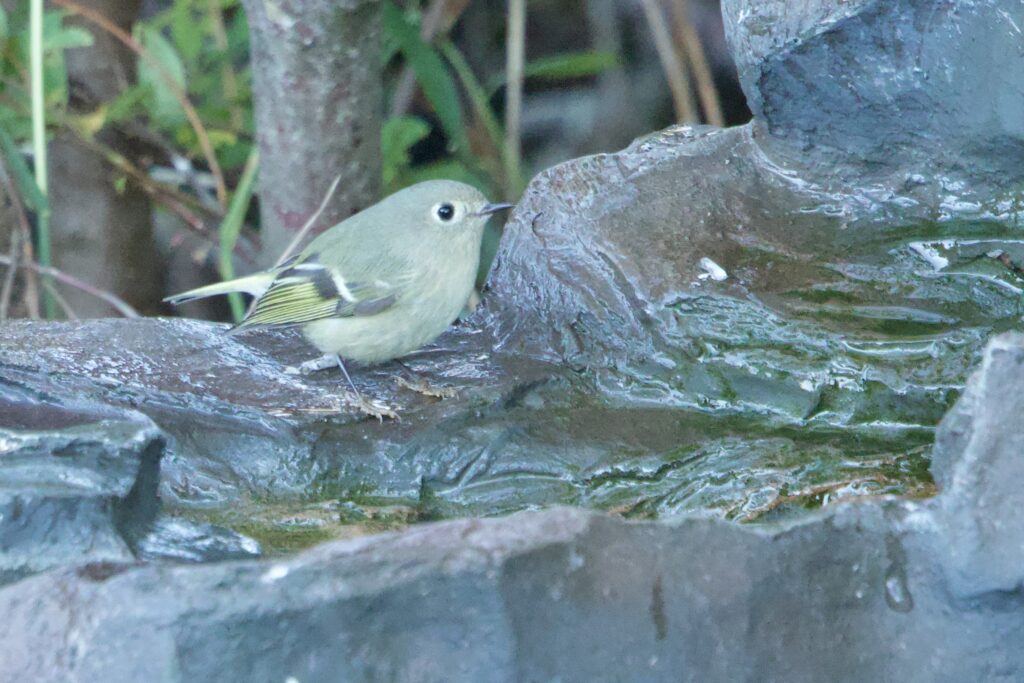
Ruby-crowned Kinglet. Photo by Oliver Kew
While walking out on the beach, make sure to carefully look and listen for staging Horned Lark and Lapland Longspur! These species, along with American Pipit, prefer to stay on the ground in open areas with sparse vegetation. Large flocks regularly flew in off Lake Superior this week. A season high of 45 Lapland Longspur was tallied on 10/2.
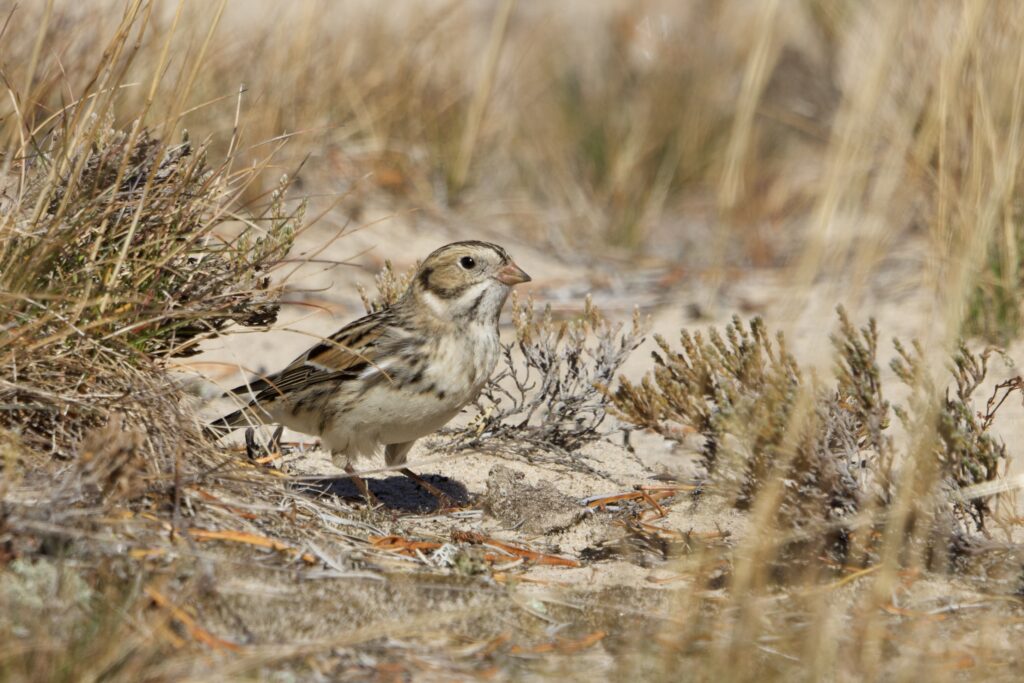
Lapland Longspur. Photo by Oliver Kew
Thrush diversity is a highlight in late September. Since then, counts of Swainson’s and Gray Cheeked Thrush have notably dropped off. American Robins are still present in small numbers while Hermit Thrush sightings have increased dramatically. A brick red tail and plain face help to easily separate Hermits from other thrushes.
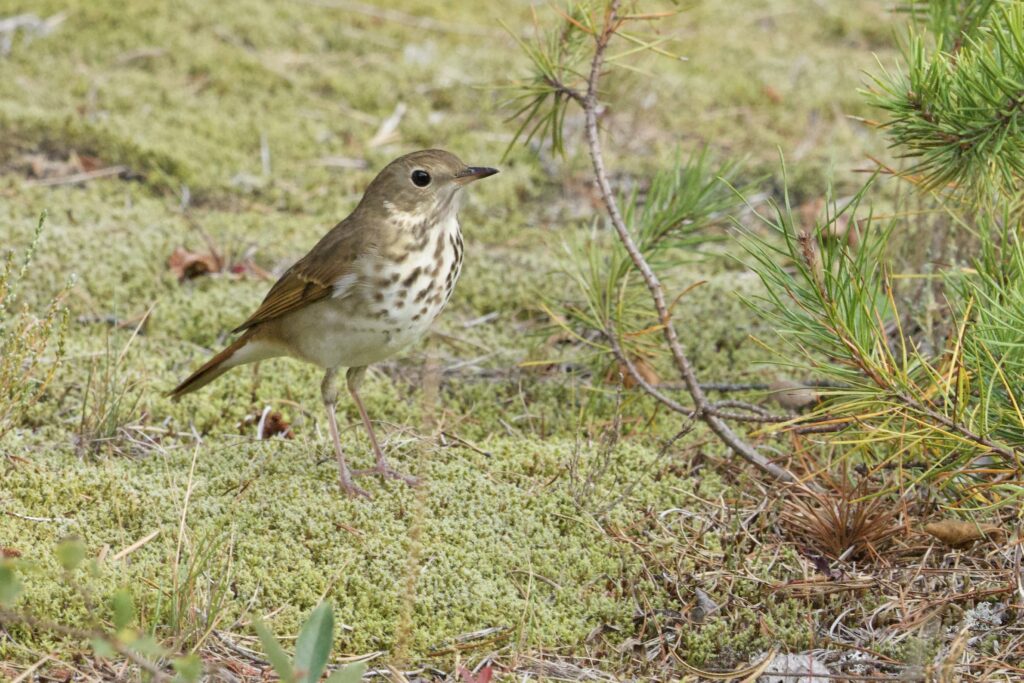
Hermit Thrush. Photo by Oliver Kew
Although Yellow-rumped and Palm Warblers now dominate, small pockets of songbirds have occasional diversity. Magnolia and Orange-crowed Warblers have been observed daily this week.
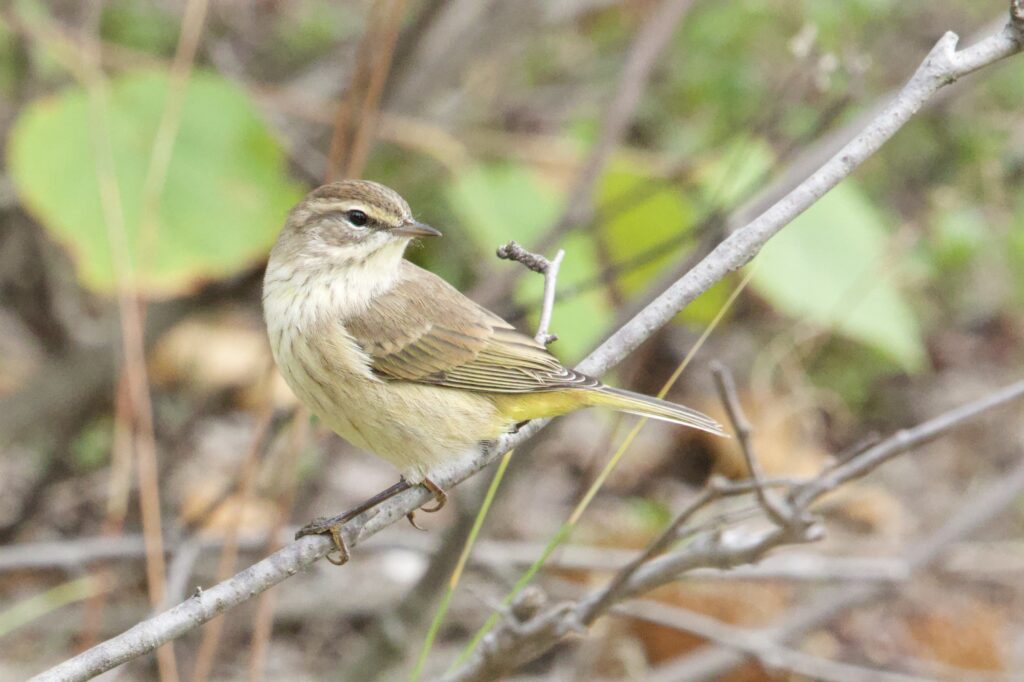
Palm Warbler. Photo by Oliver Kew
A late Ovenbird popped up briefly to say hello along walking trails on 9/29.
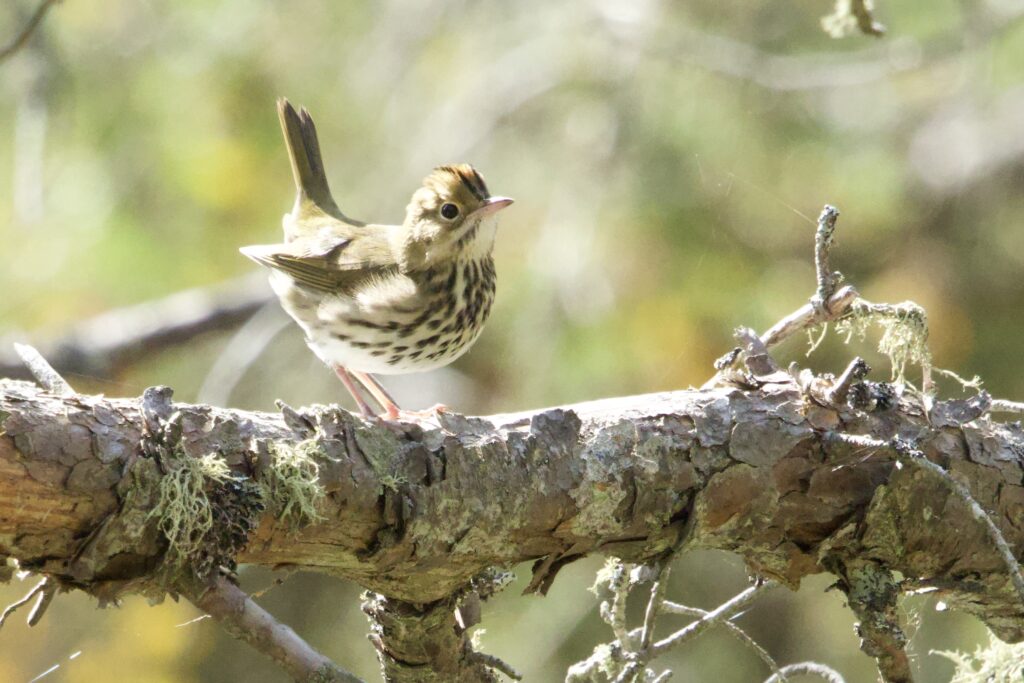
Ovenbird. Photo by Oliver Kew
A notable highlight from this week was consistent sightings of Yellow-billed Cuckoos! Up to three have been observed together in shrubs around the parking lot. Luckily, a pair was quite cooperative for the Michigan Audubon WPBO Fall Tour on 10/4.
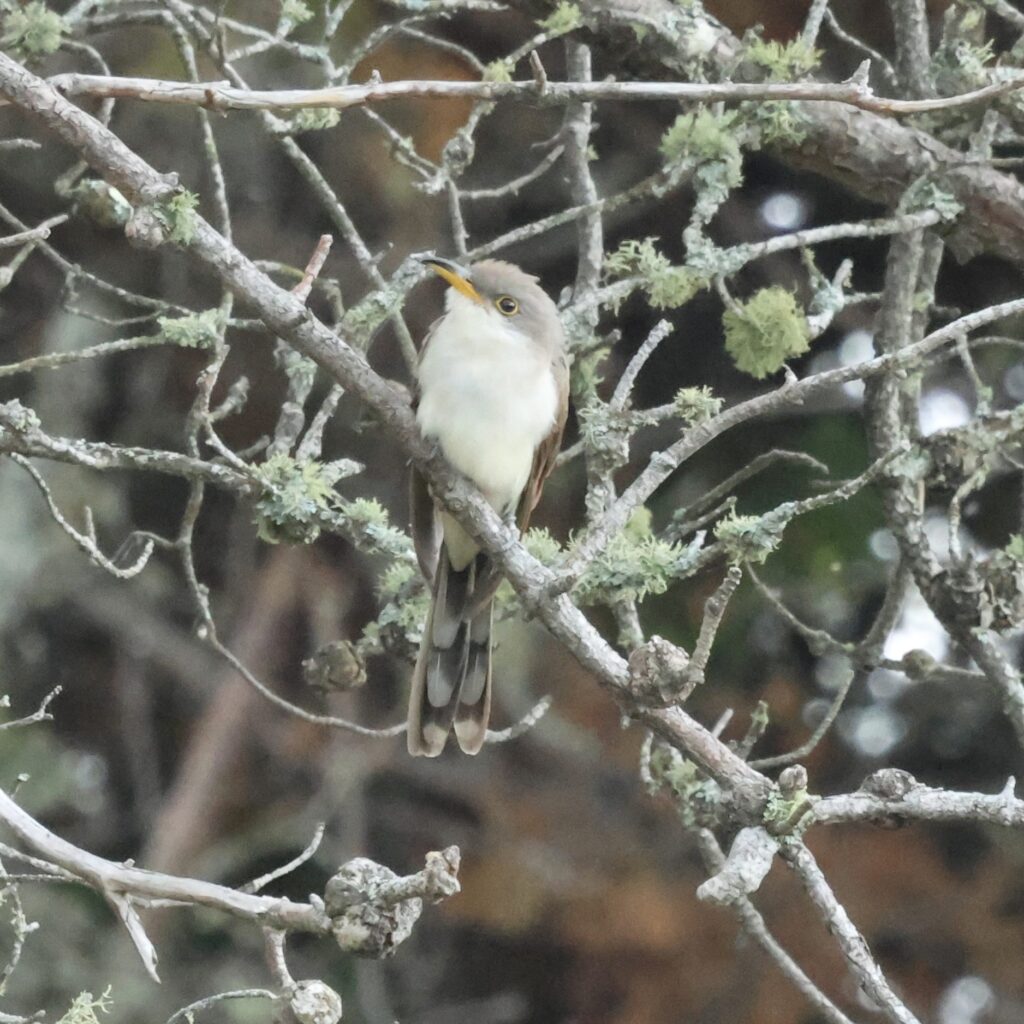
Yellow-billed Cuckoo. Photo by Oliver Kew
The water fountain continues to impress. A variety of birds utilize it to bathe and drink in the afternoon, particularly on 10/5. Check out these two Hermit Thrushes and a White-throated Sparrow using the running water, only to be quickly replaced by a trio of White-crowned Sparrows.
Water feature action with Hermit Thrush, White-throated, and White-crowned Sparrows. Video by Oliver Kew
Whitefish Point is home to many small mammals that take advantage of the feeder area. Red Squirrels and Eastern Chipmunks are observed daily, often making territorial and alarm calls. A Northern Flying Squirrel visits the platform feeders at night. A Short-tailed Shrew was found hiding near the bird feeders on 10/3.
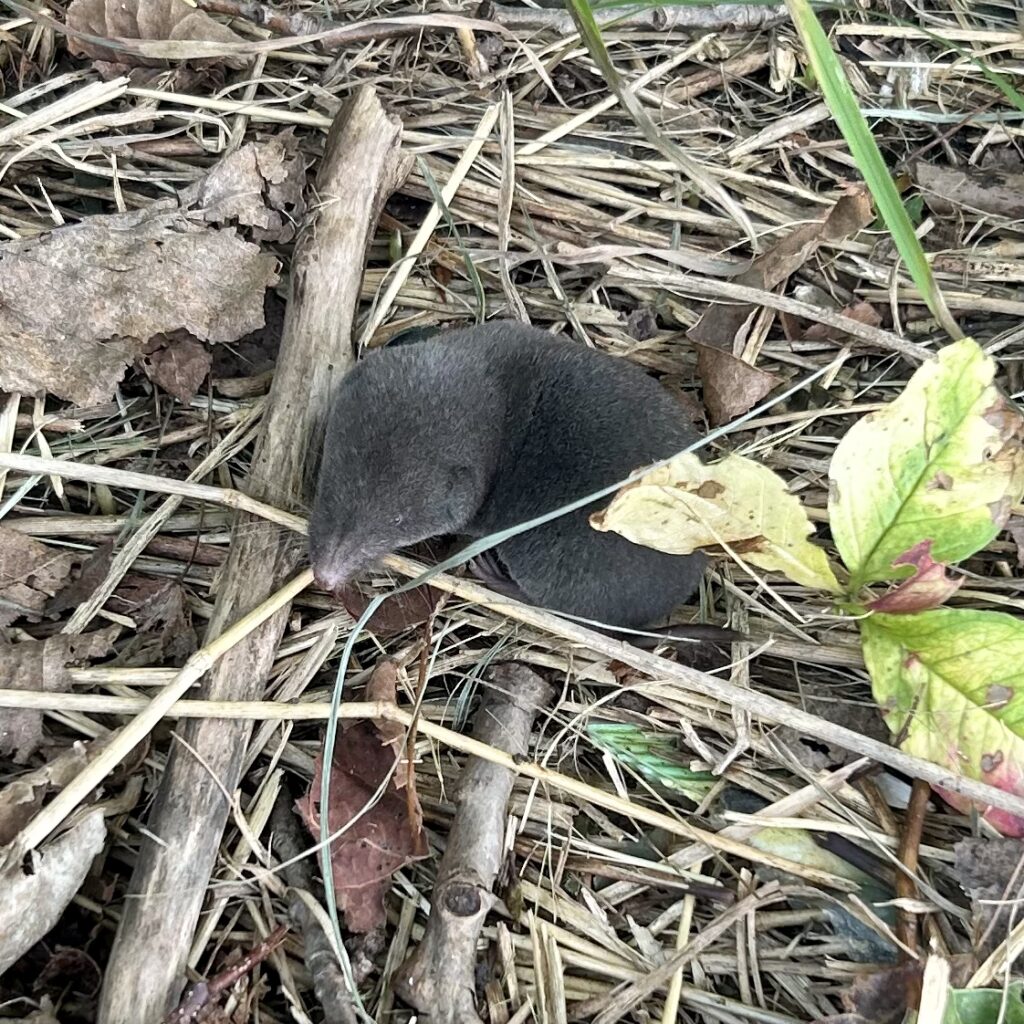
Short-tailed Shrew. Photo by Oliver Kew
The fall count has officially crossed the halfway point for the season (ending on November 15th). As we say farewell to September, take a look at our updated whiteboard to catch up on some great sightings!
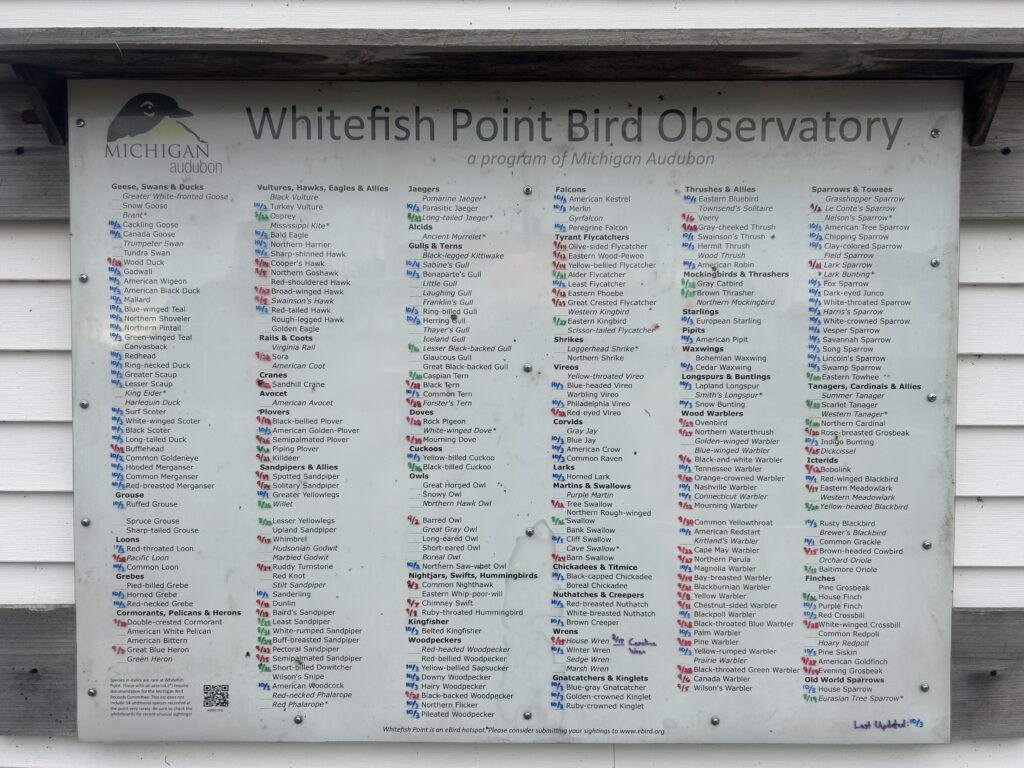
Checklist Board. Photo by Oliver Kew
Oliver Kew, Fall Field Ornithologist
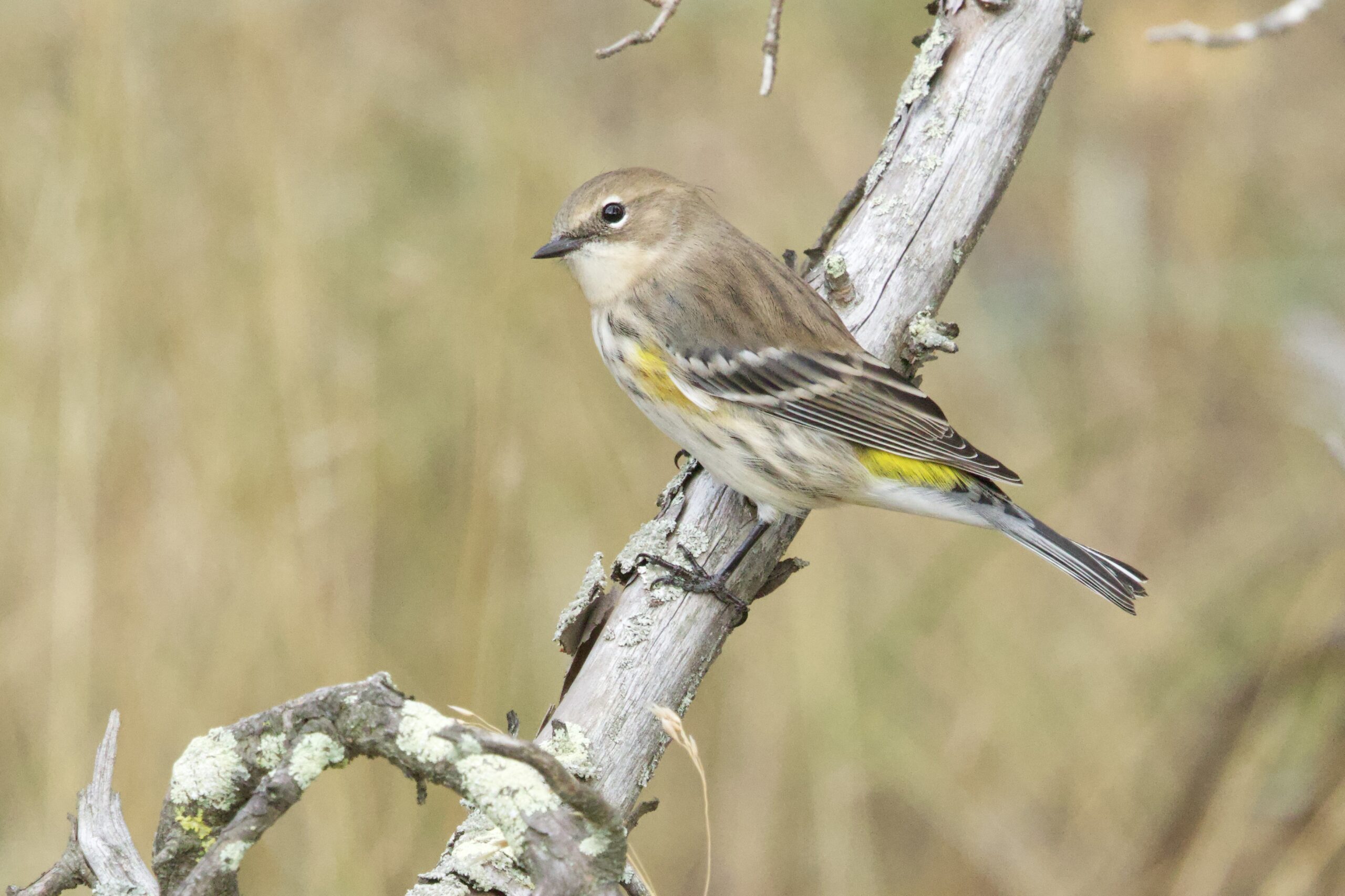
Featured Photo: Yellow-rumped Warbler by O. Kew
Track the morning flight counts on Trektellen.
Keep up with the 2026 Fall Field Ornithologist’s weekly blog posts and follow WPBO’s social media (Facebook, Instagram, and X).
Join Oliver for one of his WPBO Migratory Bird Walks offered every weekend through November 15. Learn more: wpbo.org/wpbobirdwalks/

Oliver Kew: 2026 Fall Field Ornithologist
Oliver is a passionate naturalist from Petoskey, Michigan. He worked for Mackinac Straits Raptor Watch as a waterbird counter for seven seasons. Oliver graduated from Michigan State University in 2017 with a B.S. in Zoo & Aquarium Science. His previous roles include working as an Animal Husbandry Technician and Zookeeper Aide, where he helped maintain large collections of exotic birds and reptiles. Originally from Coventry, England, Oliver developed an immense appreciation for the natural world through his family of foresters. He loves exploring the shorelines of northern Michigan in pursuit of exciting and unexpected birding experiences and is honored to help convey the importance of Whitefish Point as a migration pathway. When he is not birdwatching, Oliver enjoys playing disc golf, looking for insects and plants, and spending time with his two cats.