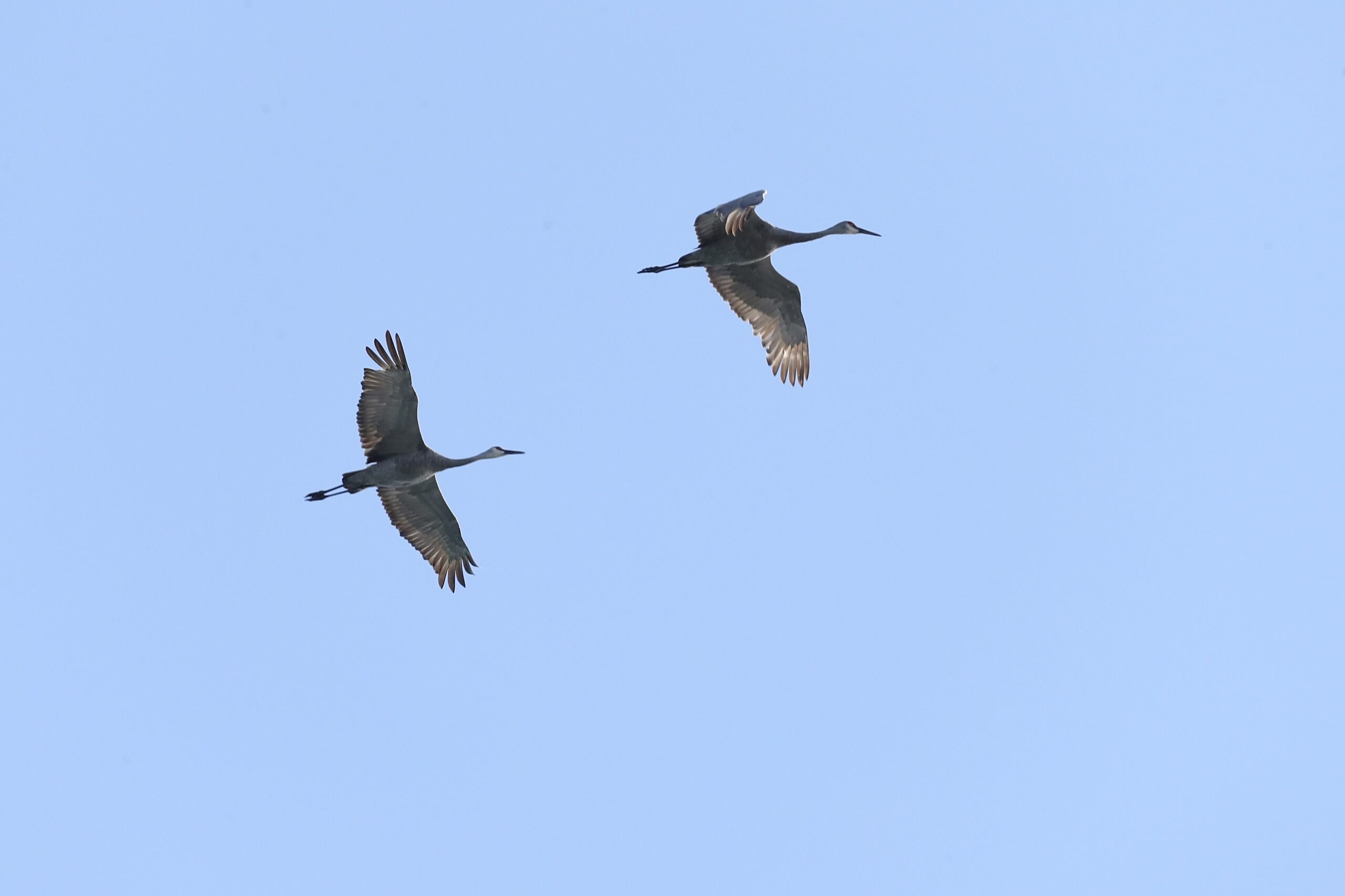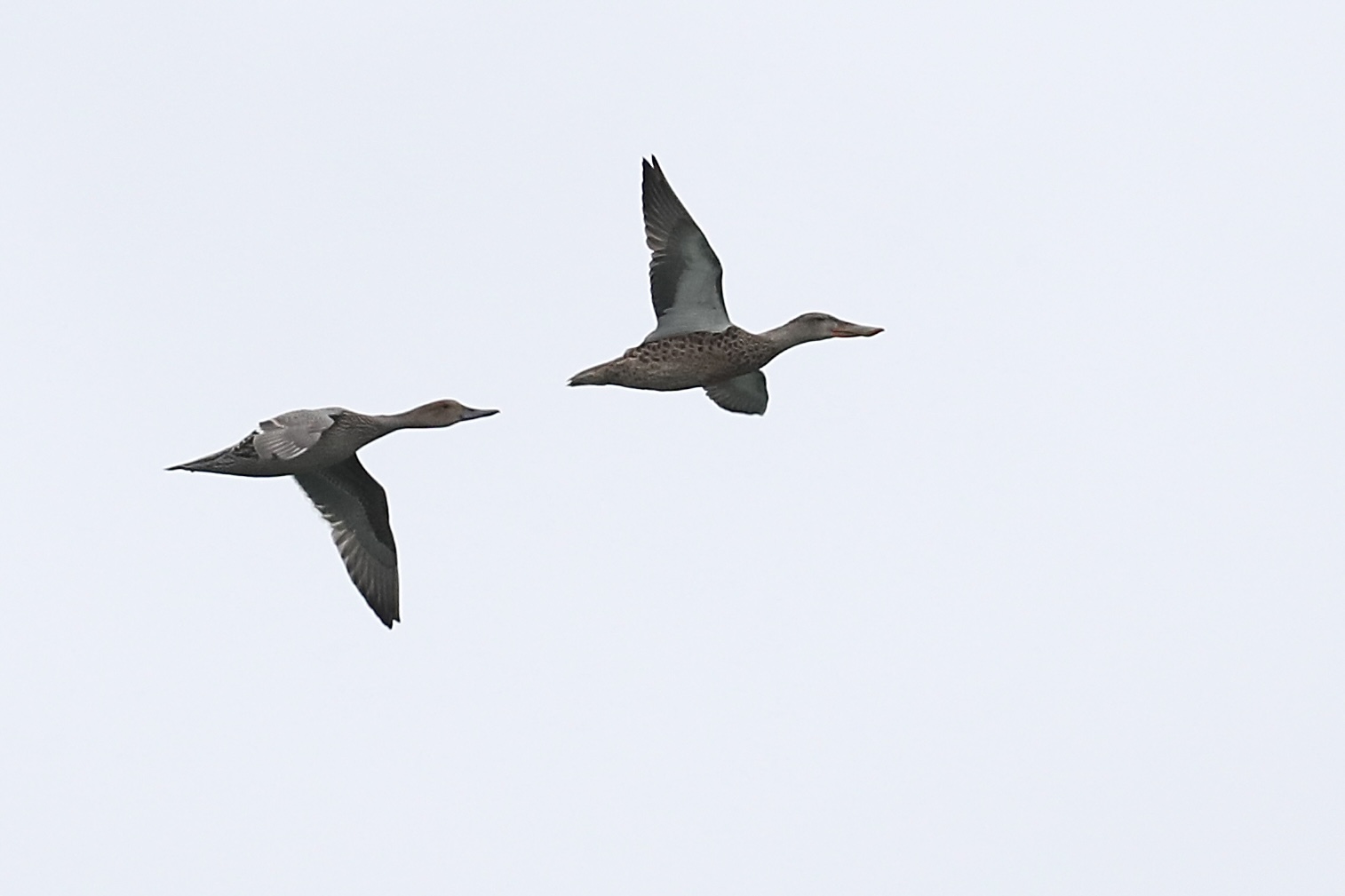
April turned into May during this observation period, with the birds continuing to tell the tale of seasons changing, despite the weather not. April 29 is the first day this post will cover, another day dominated by westerly winds. Moderate numbers of waterfowl were detected, and this was the first day of noticeable loon movement, with 75 Common and 2 Red-throated Loons being observed. A white winged gull was also observed, this time in the form of a first-cycle Iceland Gull, making for the highlight of the day. The trend of white winged gulls would continue into the following day under similar conditions on April 30. That morning, I was joined by hawk counter Sean McLaughlin before his count started. We noted a second cycle Thayer’s Gull heading back down the bayshore in the early morning. This would also be the first day of sizable loon numbers, with 181 Common and 36 Red-throated Loons being observed, as well as 92 Red-necked Grebes. Another highlight from this morning was a Caspian Tern that made a few passes in front of the Waterbird station before continuing north around the point. We were all pretty elated to see this guy back! This would just be a sign of days to come.
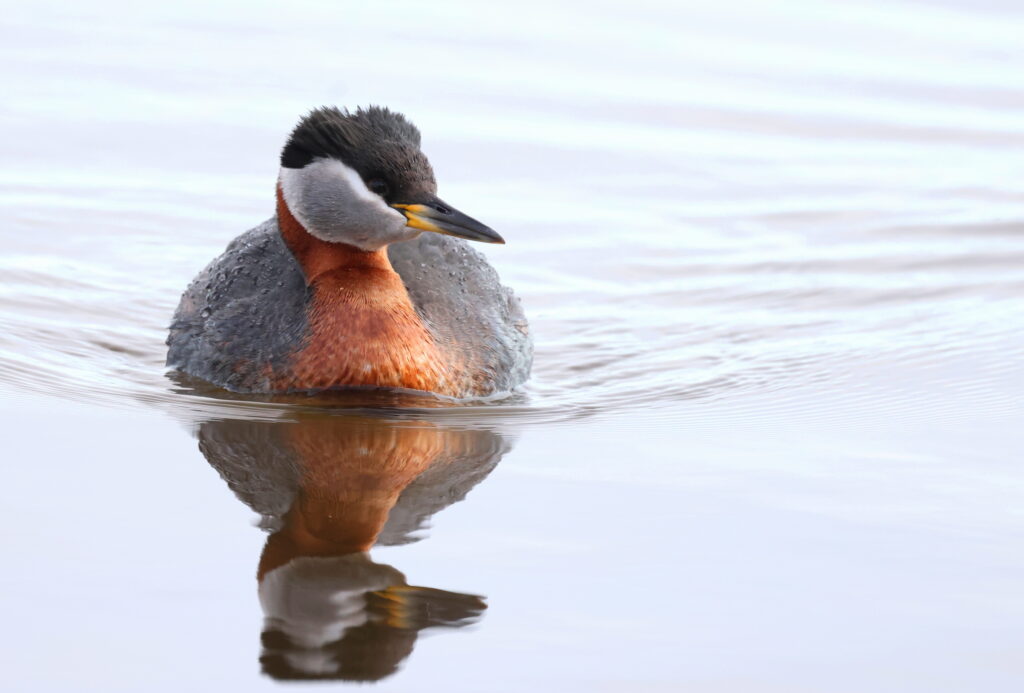
Red-necked Grebe. Photo by Aaron Graham
Alternate counter Jack Kew was at the helm again on the morning of May 1, where he noted an echo flight of loons proceeding the previous morning. An echo flight is when a smaller, but still noteworthy flight occurs the day after a noticeable movement. Jack also observed the first Solitary Sandpiper of the season that morning. After enjoying my day off, I was back out there for the morning of May 2 where I made a few interesting observations. Waterbirds made the occasional pass by in smaller numbers throughout the morning, this time highlighted by the 75 Common Mergansers. Several larger flocks were noticed moving north, with several cutting back over the point itself. These individuals were making sure I was scanning all around the station! Several large flocks of Black-capped Chickadees also pushed out in the line of trees behind the shack, with several attempting to lift off before settling back down into the last tree of the row. A total of 256 individuals would be tallied, the count ended up being conservative to make sure the same flock wasn’t being counted multiple times. Some flocks appeared to work around the point, while others continued south along the outer treeline until they were totally out of sight. This was also the day of a big influx of Broad-winged Hawks, with 389 noted kettle in back over the point from the waterbird station.
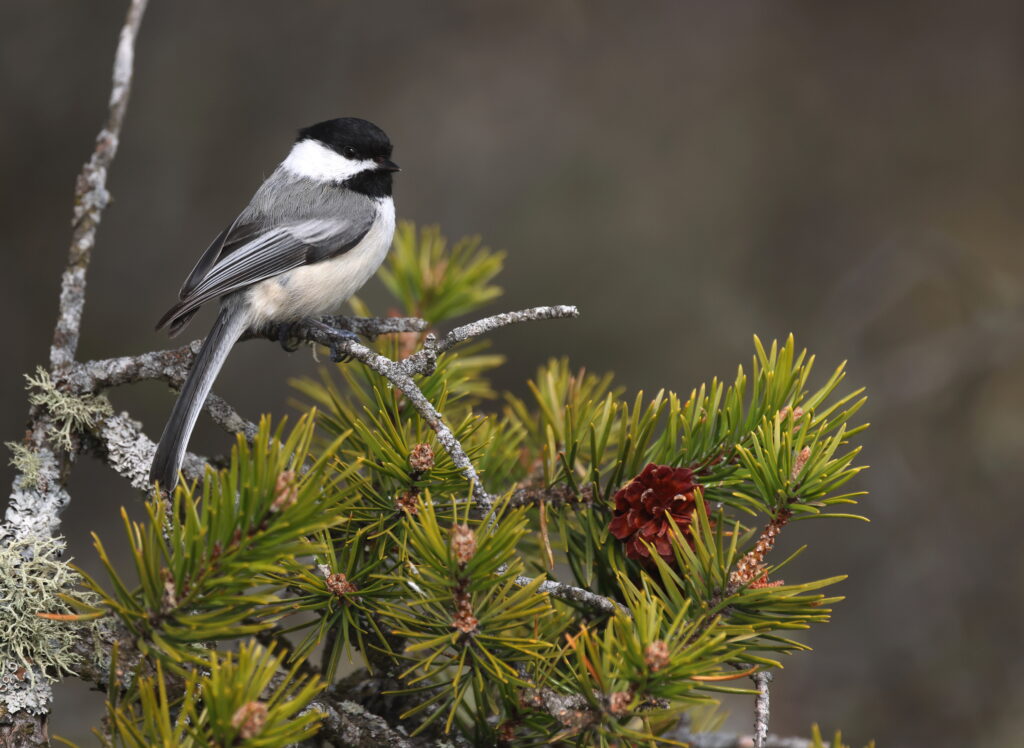
Black-capped Chickadee briefly pausing from moving through the trees at Whitefish Point. Photo by Aaron Graham
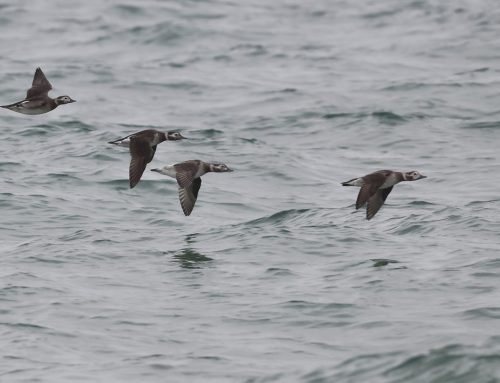
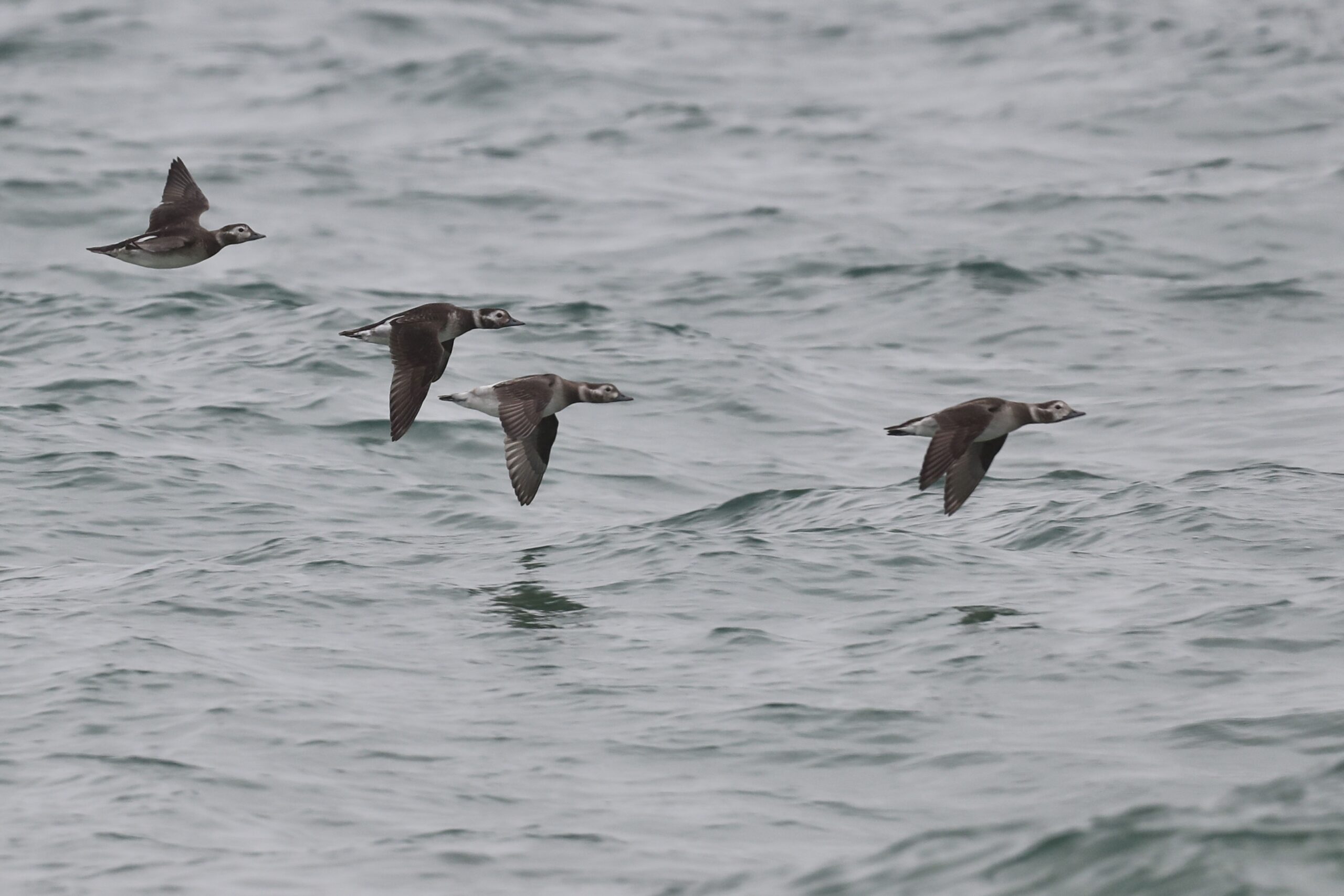
The highlight for this observation period, at least for me, was the pair of Harlequin Ducks observed on the morning of May 3. I originally spotted them moving north right off the shoreline, I thought I had totally whiffed on getting any form of documentation on these guys as they swiftly moved around the point. Luckily, they returned shortly after and landed right off the point, briefly feeding in the water. Not staying put more than a minute, they continued south, presumably into the harbor given the rough conditions on the bay. About an hour later, they passed back north and were not seen again. Though expected in the fall, this represented the eighth count record for the spring and additionally was a species I have really been wanting to see on the Great Lakes! In terms of numbers, the highlight of the morning once again featured the two regularly occurring loon species we get at the point. A total of 435 Common and 47 Red-throated Loons were tallied. Spotting Red-throated Loons is always a great time as they are often in smaller flocks as they move past.
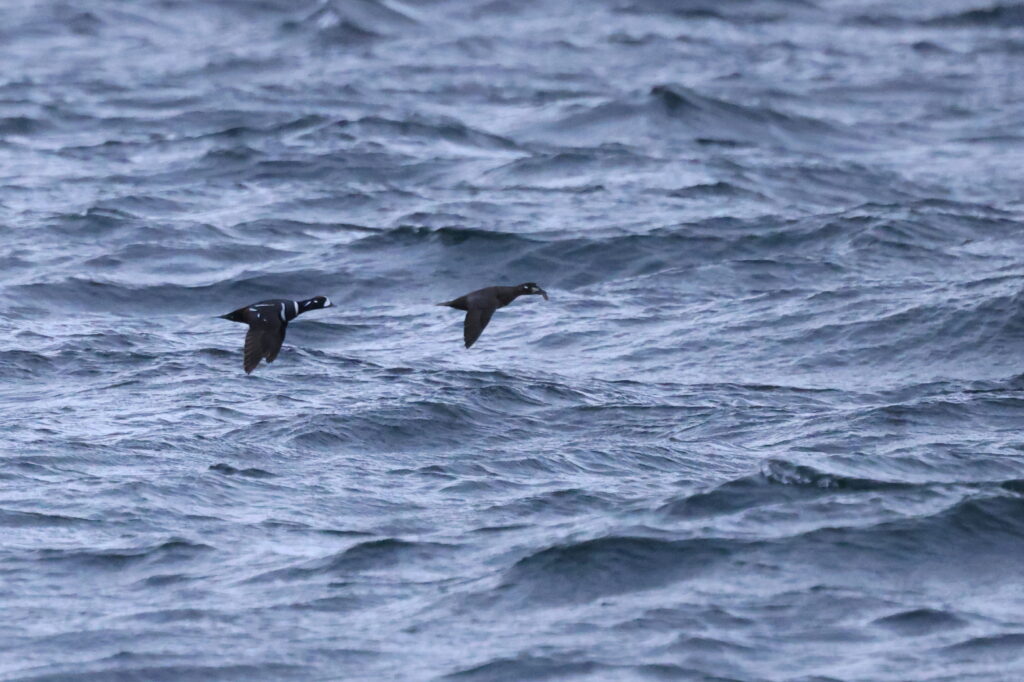
The pair of Harlequin Ducks head passed by on May 3. Photo by Aaron Graham
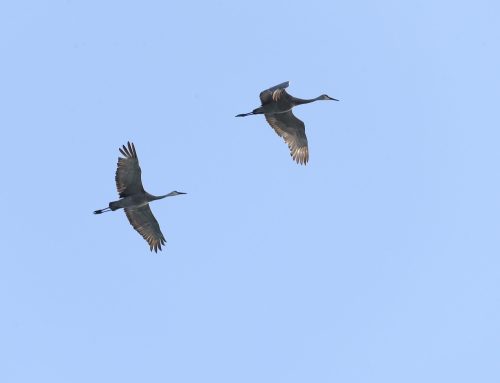
Starting the week fresh on Monday, May 4, waterbirds were around in regular numbers, dominated as per late by 73 Common Loons and highlighted by a pair of Black Scoters headed southeast past my observation point. While several new passerine arrivals appeared after a night of lower air pressure and favorable winds, such as Bank and Cliff Swallows and a Black-and-white Warbler, the raptor flight that clouded the air back over the point was ultimately the highlight of the day. 1512 Sharp-shinned Hawks were tallied from my position and the recent star of the show, the first Point record of Crested Caracara that was found the day prior, made a few laps around the point visible from the station. While there was a definite drop off in total individuals the following morning, May 5, it wasn’t totally unexpected given the shift back to colder westerly winds with a new high pressure system starting to invade the region. It is still important to remain vigilant, even on a slow day, as a location like Whitefish Point is just too much of a rarity magnet. Highlights for the day were shared by a single intermediate morph Snow Goose that had also been seen the day prior mixed amongst a flock of Sandhill Cranes and an adult Lesser Black-backed Gull. Both records represented season first’s for the count.
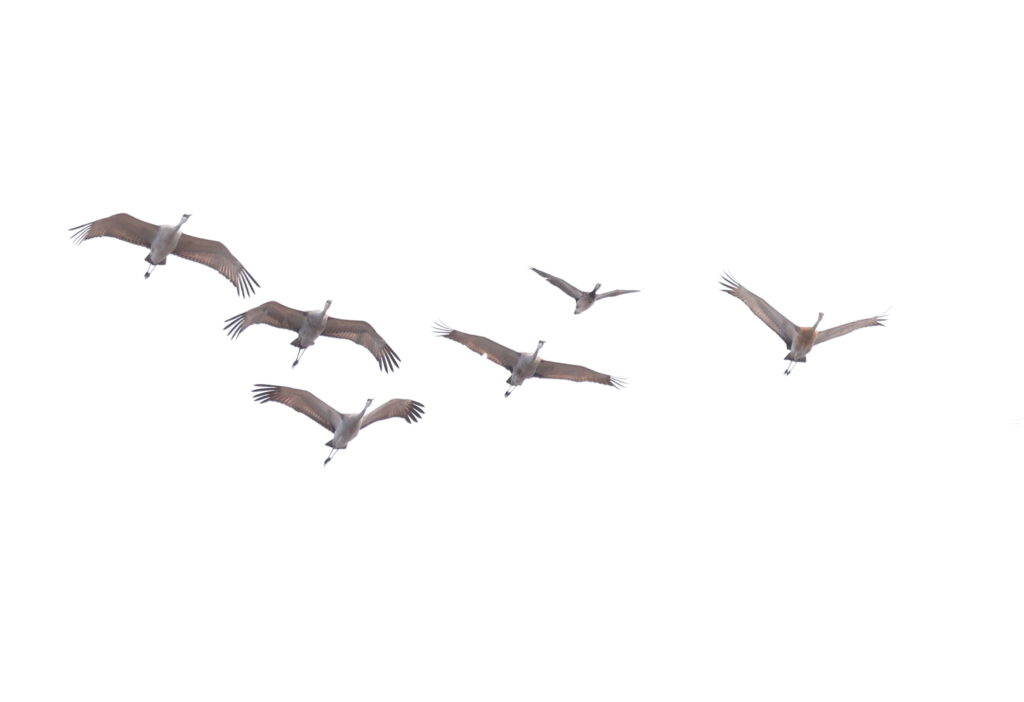
The intermediate morph Snow Goose amongst a flock of Sandhill Cranes. Photo by Aaron Graham
As May keeps rolling forward, I hope readers are excited as I am to see what turns up around the Point and passing by the Waterbird shack.
Aaron Graham, 2026 Spring Waterbird Counter
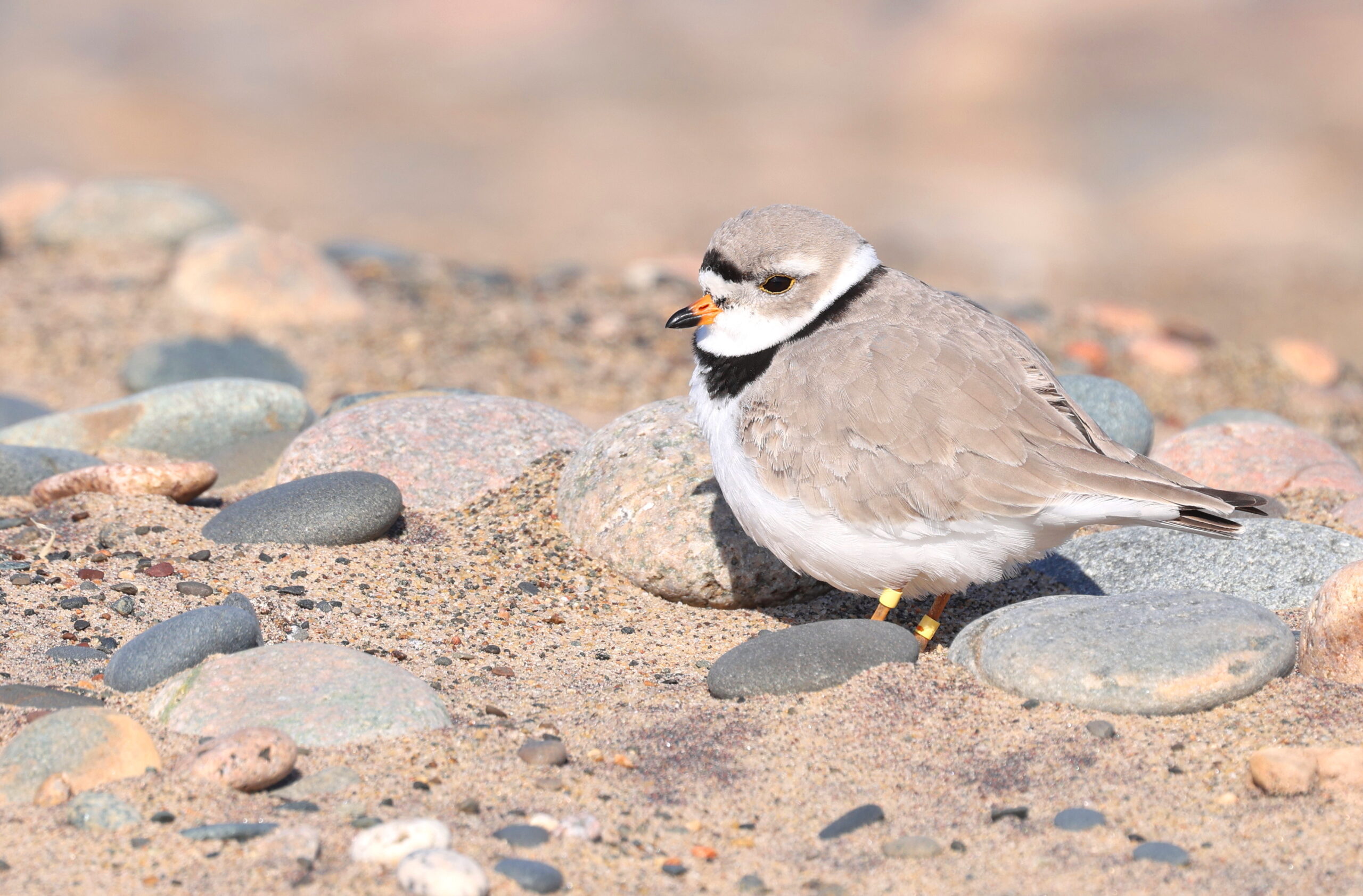
Featured Photo: “Welcome back to Whitefish Point to this Piping Plover” by A. Graham
You can now see the waterbird count data on Trektellen! Check it out at trektellen.nl/count/view/4209.
You can keep up with the 2026 Spring Waterbird Count by reading Aaron’s weekly blog posts and following WPBO’s social media (Facebook, Instagram, and X). The spring waterbird count runs April 15 through May 31.

Aaron Graham: 2026 Spring Waterbird Counter
Aaron is a migration monitor from West Virginia with a love for birds starting in his early elementary years. Calling the central Appalachian ridgelines home, he ventured throughout this region from a young age trying to better understand the local avifauna. This pursuit has taken him all over the United States as his focus has dialed into migration counts, with particular focus on morning flight and sea/lake watch counts. Being able to witness active migration all from a stationary point is what awes him, and better understanding these phenomena is what drives him. Aaron is looking forward to a season at Whitefish Point and wonders what all he will see migrating past the point from the waterbird count! When not birding, Aaron coaches college soccer, takes to the snow with freestyle and cross-country skiing, and can be found far afield searching out new butterflies, dragon and damselflies, and tiger beetles.