We have reached the heart of May, bringing warmer temperatures and even more new birds! May 13 started slow though as steady winds out of the northwest essentially halted most bird movement. However, I was still treated to the striking white wings of both of our white-winged gulls! A very clean looking adult Iceland Gull made a close pass in front of the station before returning later and heading down to the harbor, where I saw it again spending the rest of the day. After this, a first-cycle Glaucous Gull cut across the point heading southeast.
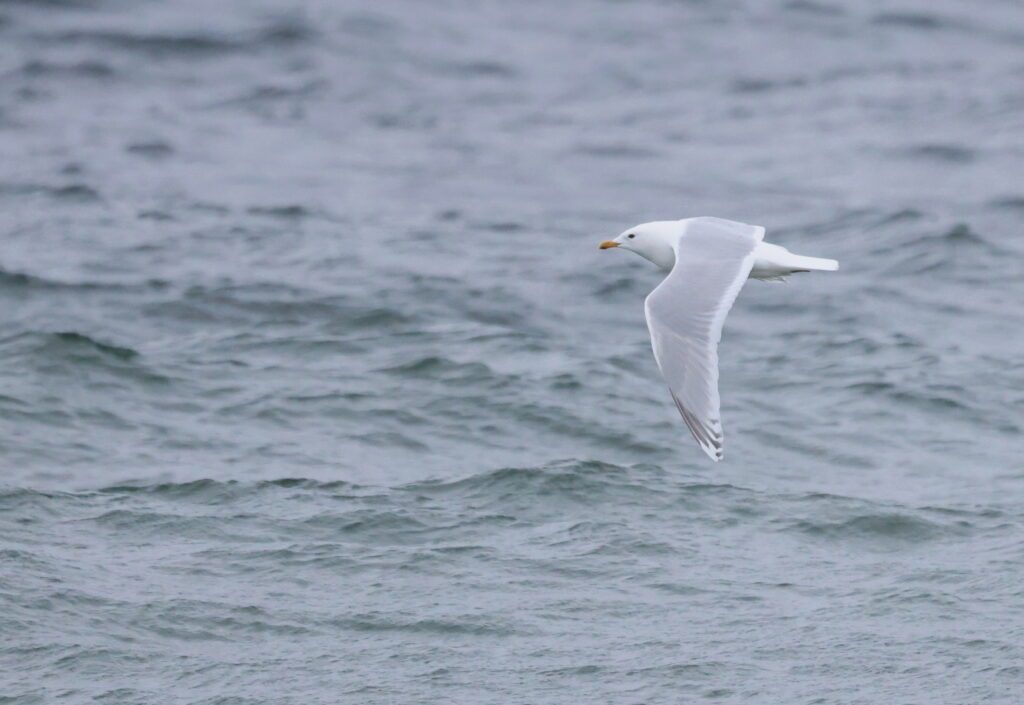
Adult Iceland Gull heading right offshore past the waterbird shack. Photo by Aaron Graham
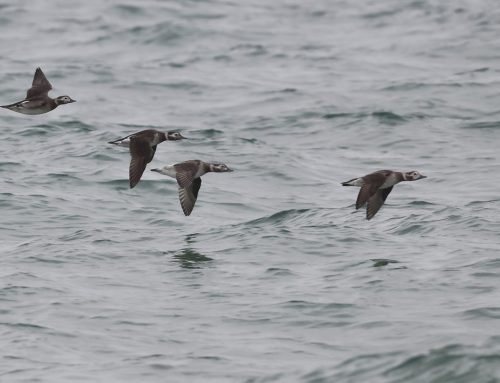
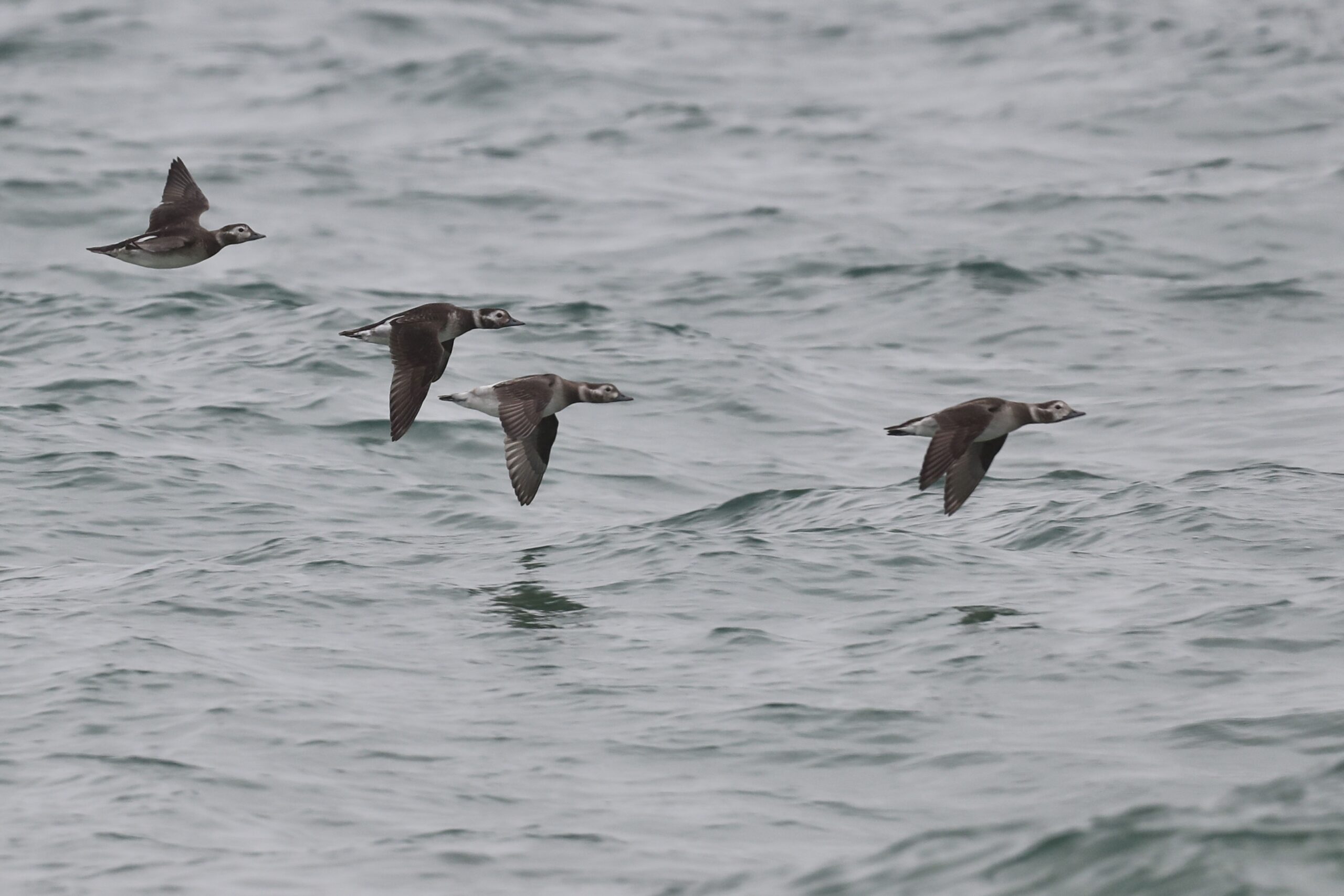
Activity picked up on May 14 with more new shorebirds, including 2 Lesser Yellowlegs and a Solitary Sandpiper. Waterbird activity was generally slow that day, but there was still enough going on back over the point to keep me occupied. What appeared to be the same dark-morph adult Swainson’s Hawk was seen again, and a Brewer’s Blackbird landed in a Jack Pine directly behind the station mid-morning. The blackbird stayed there for several hours and was presumably tired, as it appeared to have just come in/off the bay. This was a delight for many visitors that day. Alternate counter Jack Kew manned the count yet again on May 15 while I had a favorable morning for waterbirds, highlighted by the 96 White-winged Scoters, 98 Long-tailed Ducks, and 80 Bonaparte’s Gulls during a morning with light southerly winds.
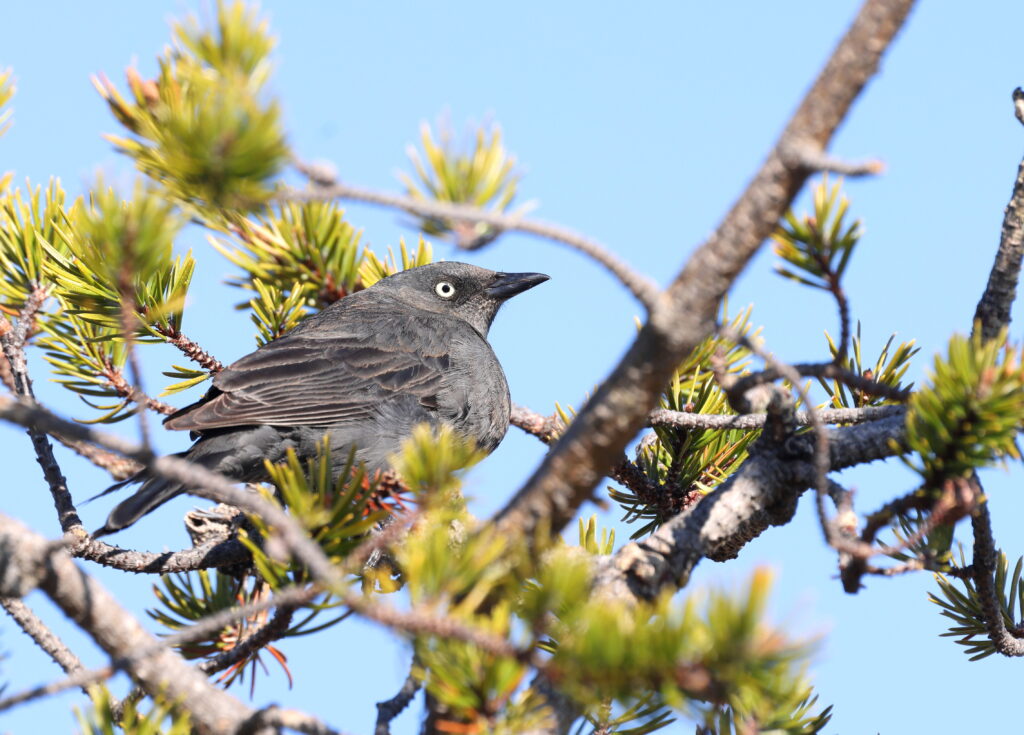
Brewer’s Blackbird in the a Jack Pine behind the waterbird shack. Photo by Aaron Graham
Favorable migration conditions continued from Friday evening into Saturday morning, with dropping air pressure and stronger winds out of the southwest. On what was certainly the most diverse morning of the season, May 16 yielded 117 species. Wherever you looked, birds were migrating in bountiful amounts, whether out over the water or across the skies over the point. Waterbird highlights included a drake Redhead mixed in with a flock of White-winged Scoters, 421 Red-breasted Mergansers, and first-of-the-season shorebirds such as single Black-bellied Plover and Whimbrel. The continued arrival of so many different shorebirds has made keeping an eye on the beach such a delight! While a Golden Eagle and Rough-legged Hawk were both noted back over the point, the first sightings of these species in several days, the undeniable raptor highlight was what appears to be a another Crested Caracara making its way out the point during the first half of the morning. I originally spotted ths bird from my position, and it hung around for the morning before eventually landing within view of the hawkwatch platform. The upper-level winds leading into this morning certainly could’ve aided in the arrival of the species from somewhere such as Texas. Another Brewer’s Blackbird was observed that morning, along with a flyover Dickcissel to round out the species highlights. With winds shifting and blowing birds out over the water in the afternoon, several interesting observations were made of birds coming in/off the water, as well as two different species of bat. Super neat to witness bat migration here as well!
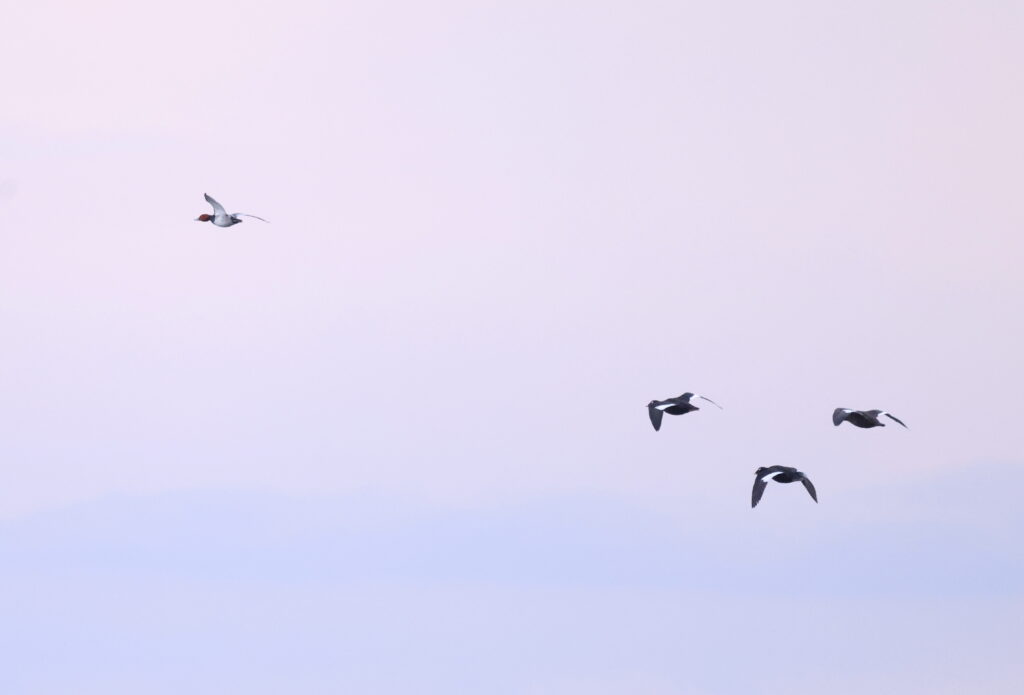
Drake Redhead leading a flock of White-winged Scoters. Photo by Aaron Graham
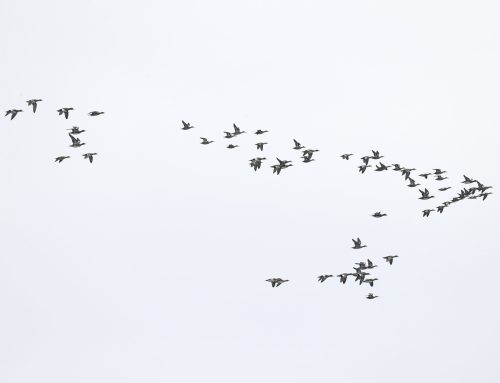
The following morning, May 17, brought an echo flight from the day before. A total of 121 Long-tailed Ducks passed by, along with 108 Bonaparte’s Gulls. In the afternoon, gulls flocked up and sat on the water in front of the station, attracting the same Great Black-backed Gull that’s been around, as well as a first-cycle Iceland Gull. It continues to be a good season out here for white-winged gulls!
The morning of May 18 was met with stronger southeast winds and a heavy fog layer. Overnight thunderstorms paired with this foggy landscape made for a productive morning for shorebirding on the point, with several flocks mainly consisting of Short-billed Dowitchers, Spotted Sandpipers, Dunlin, and Black-bellied Plovers. The flocks would often stop briefly around a puddle formed at the actual point from the waves before moving on, sometimes seeming to work in either direction. After the fog almost instantly broke out over the water, there was a pulse of waterfowl during what was essentially a 20 minute spell. 187 White-winged Scoters and 257 Long-tailed Ducks were the main component of this flight, with one flock appearing right after another making for fun counting.
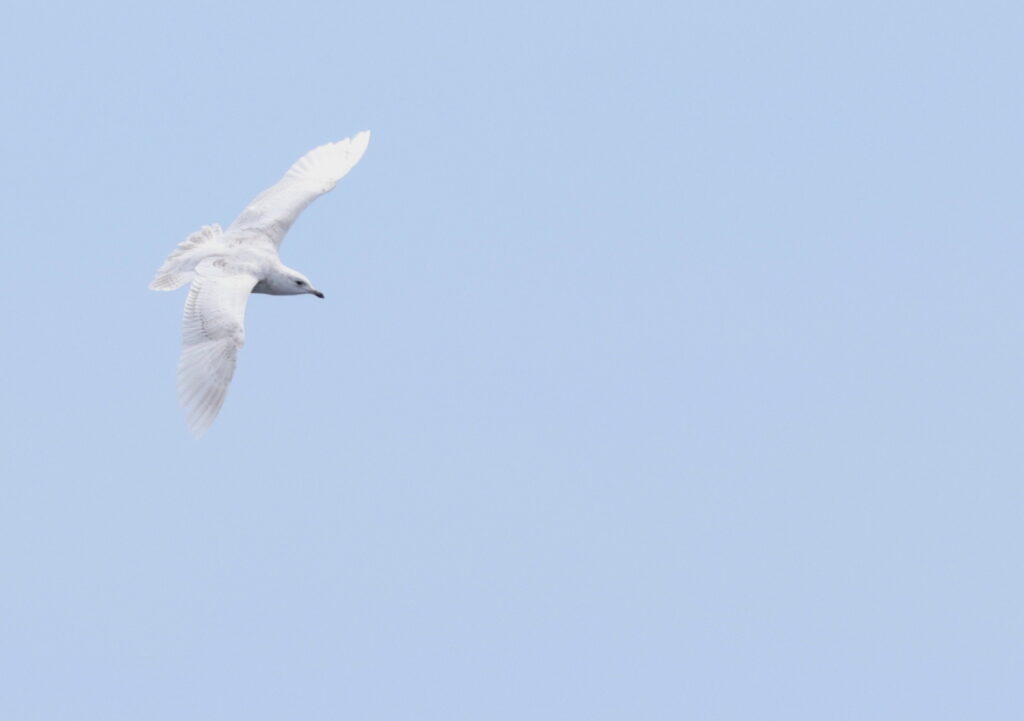
First-cycle Iceland Gull. Photo by Aaron Graham
The final day of the observation period, May 19, was just one those days. It began with conditions similar to the previous morning, heavy fog and stronger southeast winds. But as soon as I arrived, the warblers were already flying head-on into the wind as a sort of reversal flight, presumably trying to regain their bearings after becomng disoriented by the fog and surrounding water. Flocks of warblers, dominated in part by American Redstarts and Northern Parulas, shot out of the treeline behind the waterbird station and into the wind, often passing close and low, below waist height for us big strong counters. Highlights, apart from the fantastic close looks at breeding-plumaged warblers in flight, included a Golden-winged Warbler and a Mourning Warbler, the latter being a sweet bird to pick up in morning flight. The flight eventually petered out, but with it came sunshine over the point, and soon raptors and a variety of passerines were taking to the skies. Among them was what we presume to be a different Crested Caracara than the individual we observed on Saturday, as this bird is not missing an inner primary. It has certainly been an exciting spring for that species here, to say the least.
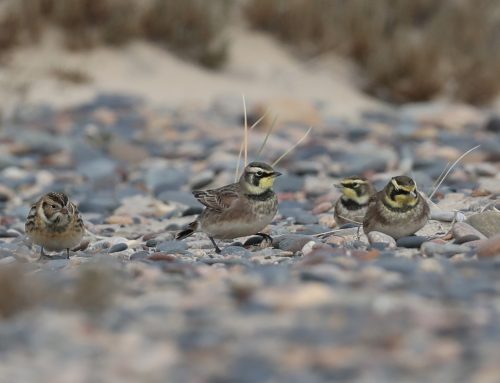
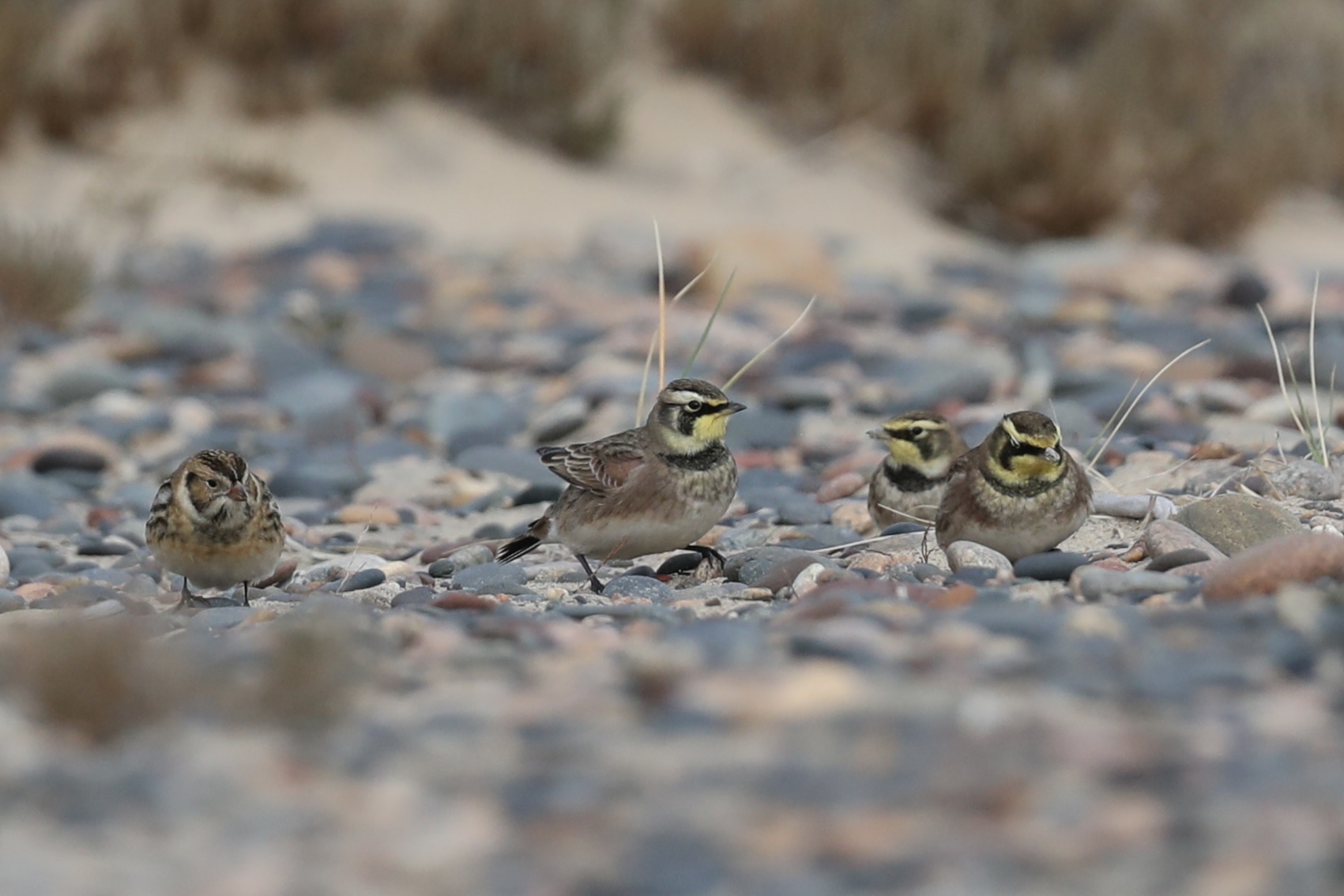
Not too long after reviewing this, a very intriguing bird flew by very close to me and landed out on the beach. I thought I recognized the flight call it uttered, so I quickly rushed down to the beach where it flew up onto a nearby dune. My suspicions were correct, and upon approaching the dune I was elated to get close views of a skulking alternate-plumaged Thick-billed Longspur, only the second record for the point! While watching, this bird became used to my presence and walked down right to the base of my feet while forging. Several birders who were currently at the point were able to enjoy the sighting.
But the interesting phenomena just kept coming. The lead end of a cold front moved through rather rapidly, quickly shifting the winds around from a light southern breeze to instant strong westerly gusts. The winds seemed to blow many of the passerines that were up in the air over the water. Over the next couple hours, I watched a wide variety of warblers, as well as Least Flycatchers, Swainson’s Thrush, sparrows, and more try to fight the winds and work their way back onto the beach. This seemed to exhaust the birds, as several dropped right on the beachfront or nearby dunes, creating some fantastic viewing opportunities. During this period an Upland Sandpiper flew in off the bay and over the station, a super exciting migrant to have anywhere! I decided to keep counting for an additional two hours after the mandatory count period, and when I finally closed up the station for the day, I found the woods along the boardwalk littered with exhausted warblers. They were now trying to find a meal in the much colder temperatures brought on by the cold front. It was certainly a pleasant way, at least for the observer, to end a fantastic day at the point.
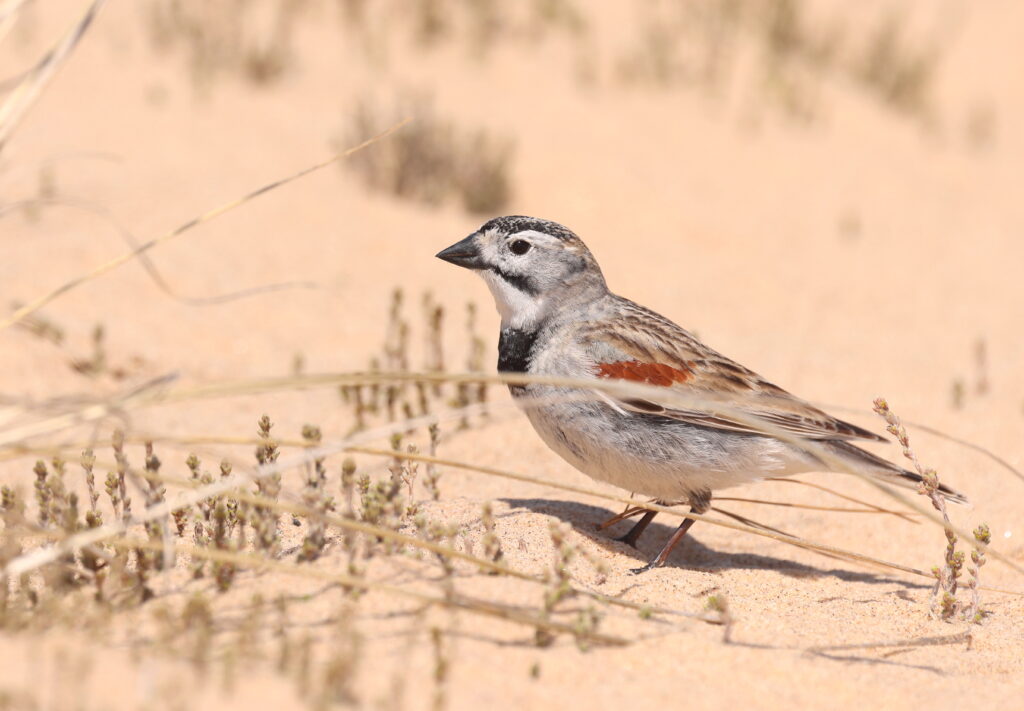
Thick-billed Longspur. Photo by Aaron Graham
Having several days where I recorded more than 100 species just sitting stationary at the Waterbird Count made the hype around this place fully realized in my eyes. I hope the good luck continues in the mornings to come.
Aaron Graham, 2026 Spring Waterbird Counter
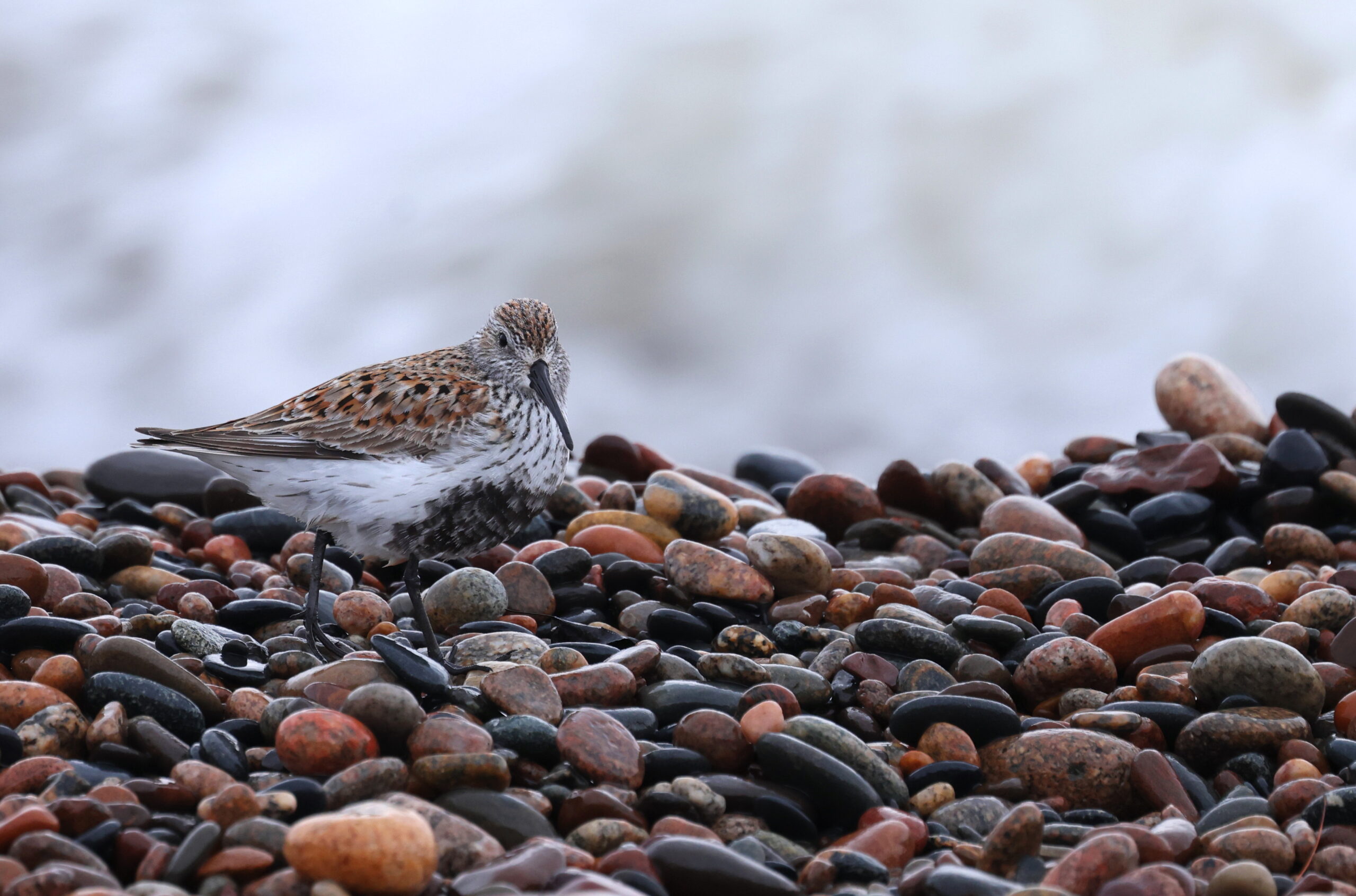
Featured Photo: Dunlin by A. Graham
You can now see the waterbird count data on Trektellen! Check it out at trektellen.nl/count/view/4209.
You can keep up with the 2026 Spring Waterbird Count by reading Aaron’s weekly blog posts and following WPBO’s social media (Facebook, Instagram, and X). The spring waterbird count runs April 15 through May 31.

Aaron Graham: 2026 Spring Waterbird Counter
Aaron is a migration monitor from West Virginia with a love for birds starting in his early elementary years. Calling the central Appalachian ridgelines home, he ventured throughout this region from a young age trying to better understand the local avifauna. This pursuit has taken him all over the United States as his focus has dialed into migration counts, with particular focus on morning flight and sea/lake watch counts. Being able to witness active migration all from a stationary point is what awes him, and better understanding these phenomena is what drives him. Aaron is looking forward to a season at Whitefish Point and wonders what all he will see migrating past the point from the waterbird count! When not birding, Aaron coaches college soccer, takes to the snow with freestyle and cross-country skiing, and can be found far afield searching out new butterflies, dragon and damselflies, and tiger beetles.