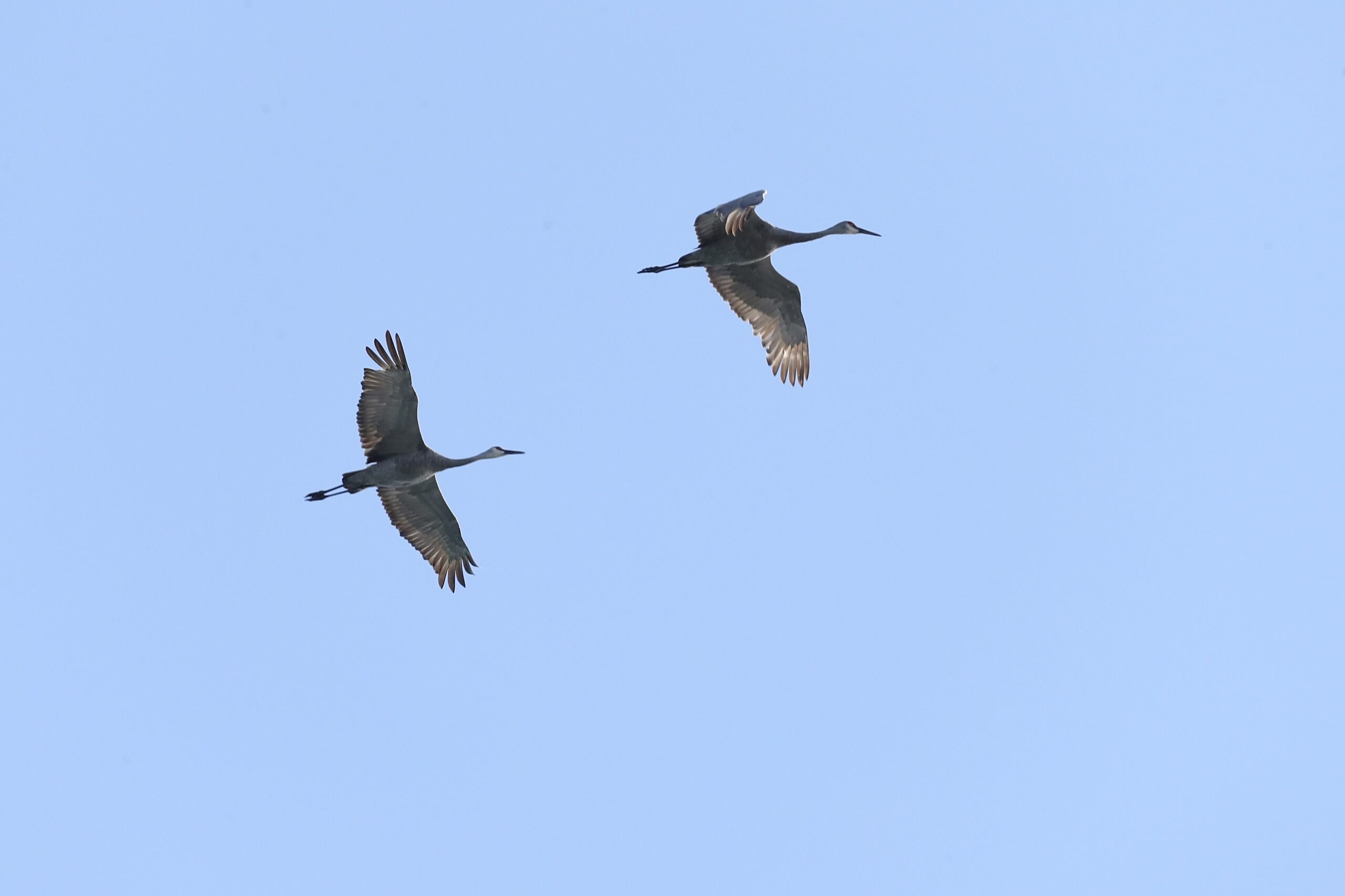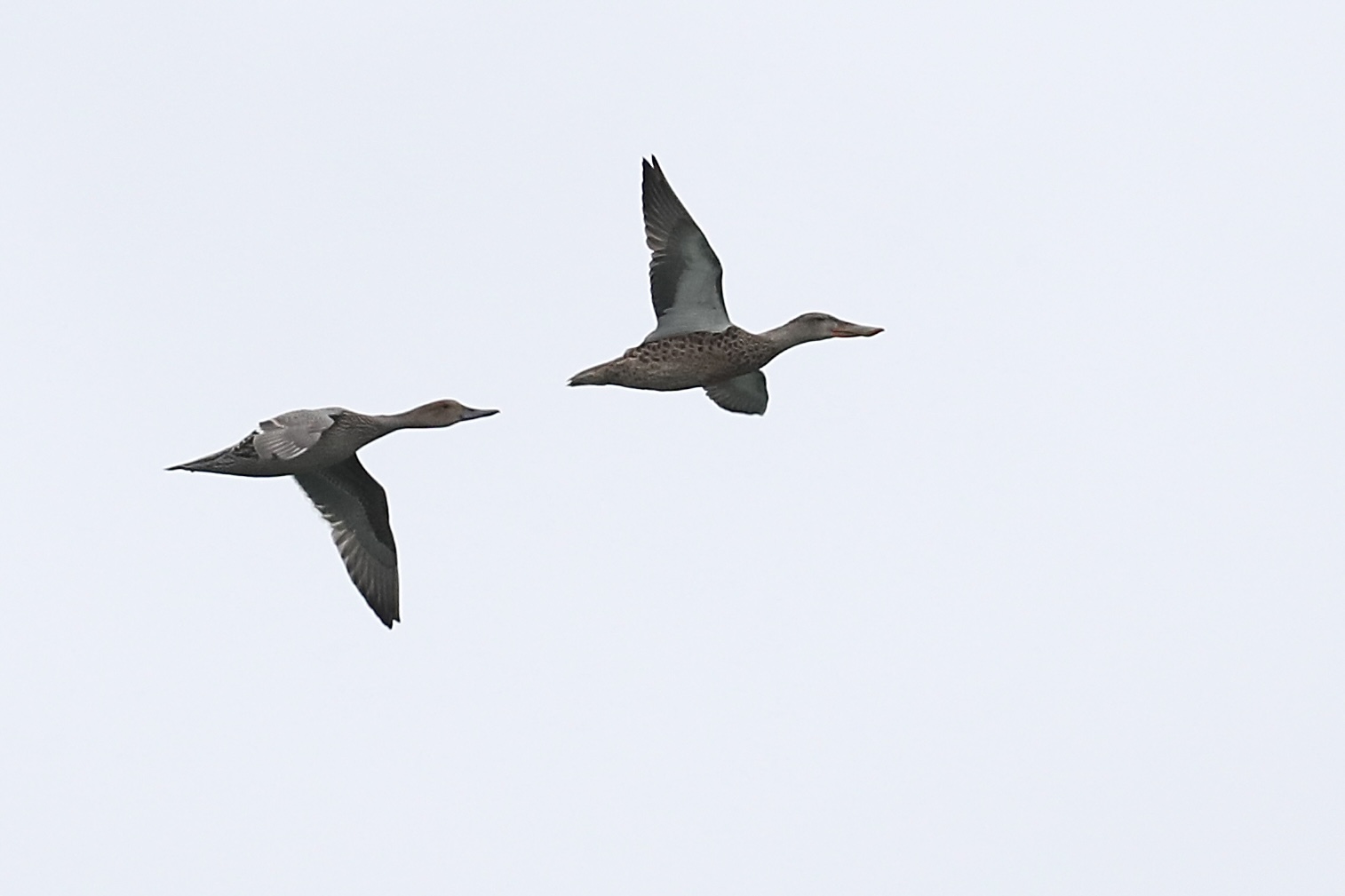
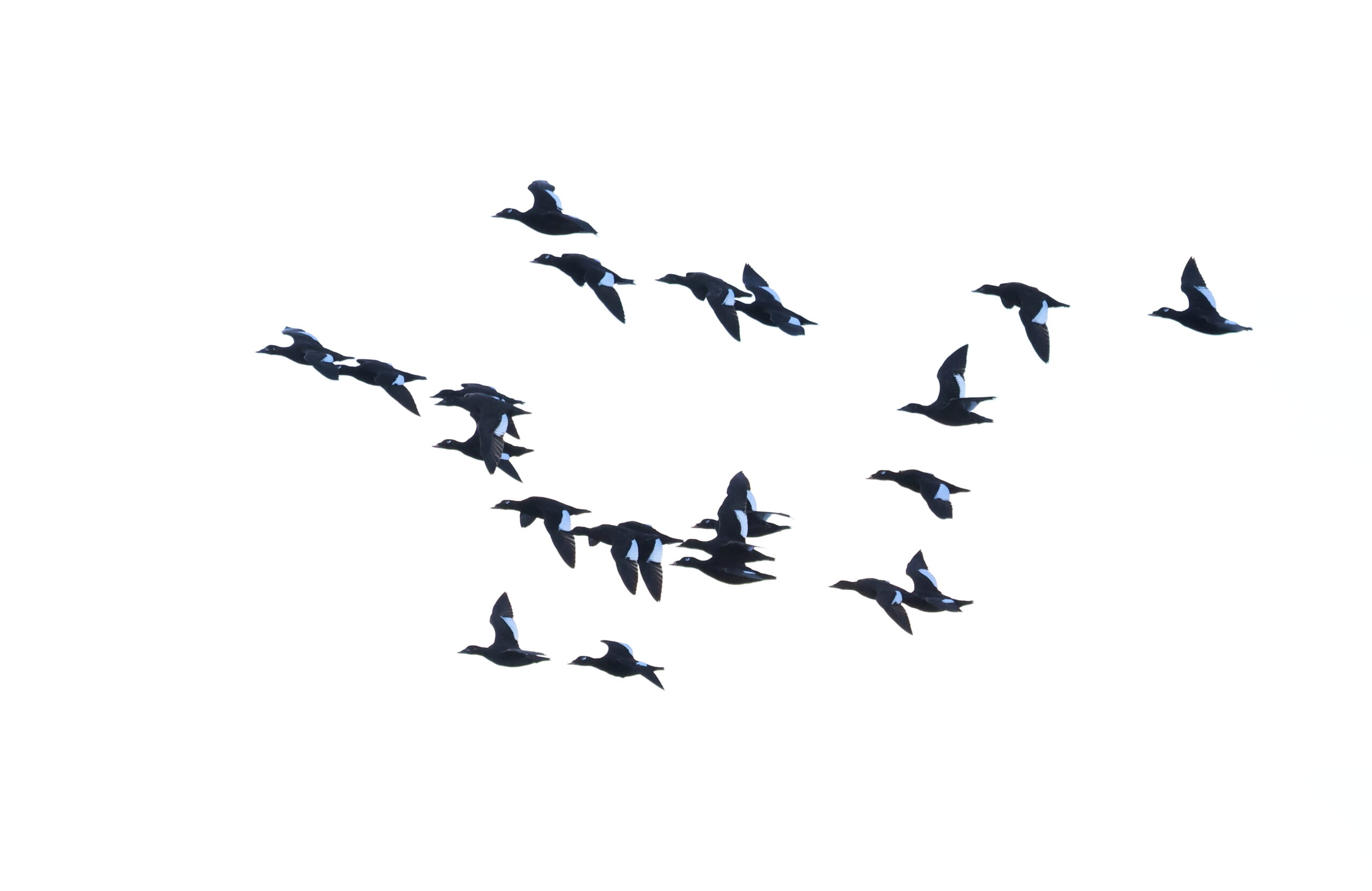
This observation period continued to bring new arrivals both over the water and back over land, as well as some exciting counts. This post kicks off on the overcast morning of May 6, where upon arriving at the station, I was greeted by a first-cycle Glaucous Gull amongst a few other gulls sitting along the shoreline directly out front. This bird got up and flew around a few times before departing to the southeast.
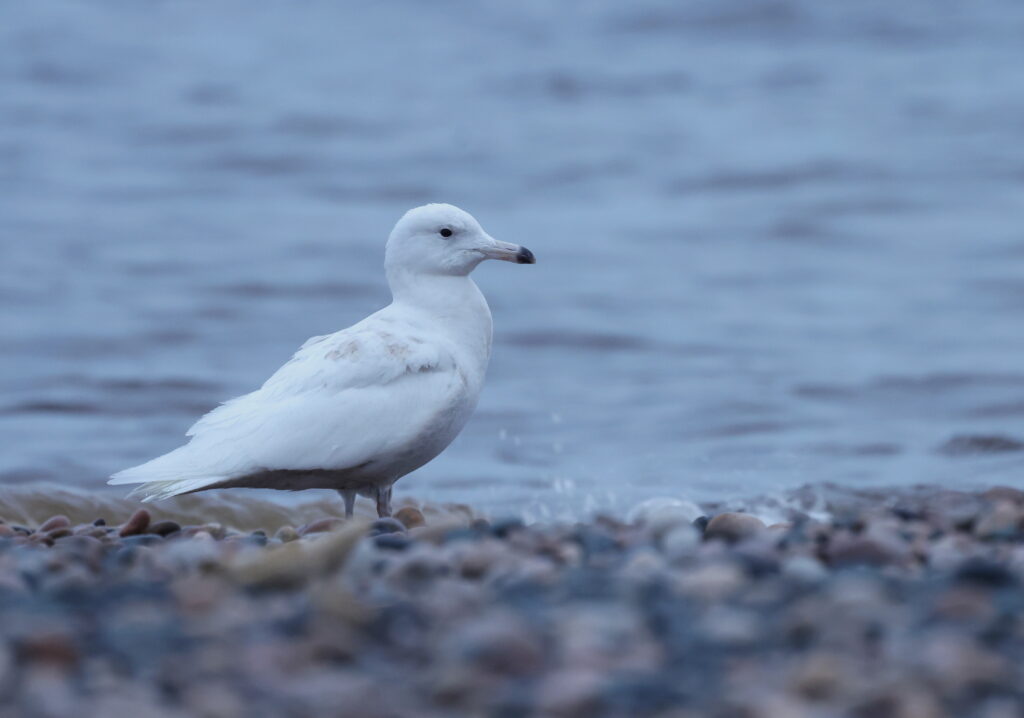
First-cycle Glaucous Gull on the beach in front of the waterbird shack. Photo by Aaron Graham
Another highlight of the morning was the first Sharp-tailed Grouse making a direct flight over the treetops out the point, the first I have seen out here in a while. Waterfowl wise, Greater Scaup was the main duck, with 57 individuals observed, while loons once again dominated the sky, with what has become a fairly typical count of 219 Common Loons. A presumed migrant Piping Plover also flew by just offshore of the point. This would be a prelude to the following morning, May 7, when a presumed pair of the species showed up on the beach. The male plover was already quite aggressive about defending territory, pursuing any passerby Herring Gulls and Red-breasted Mergansers while preforming flight displays. It was also seen making several scrapes with the presumed female nearby. Although this was another overcast morning, overall waterfowl counts decreased. However, loons remained strong, with 266 Common and 50 Red-throated Loons observed. The Red-throats are often in more tightly packed flocks averaging around six individuals. This morning also saw the first Black-and-White Warbler of the season working through the tree line behind the station.
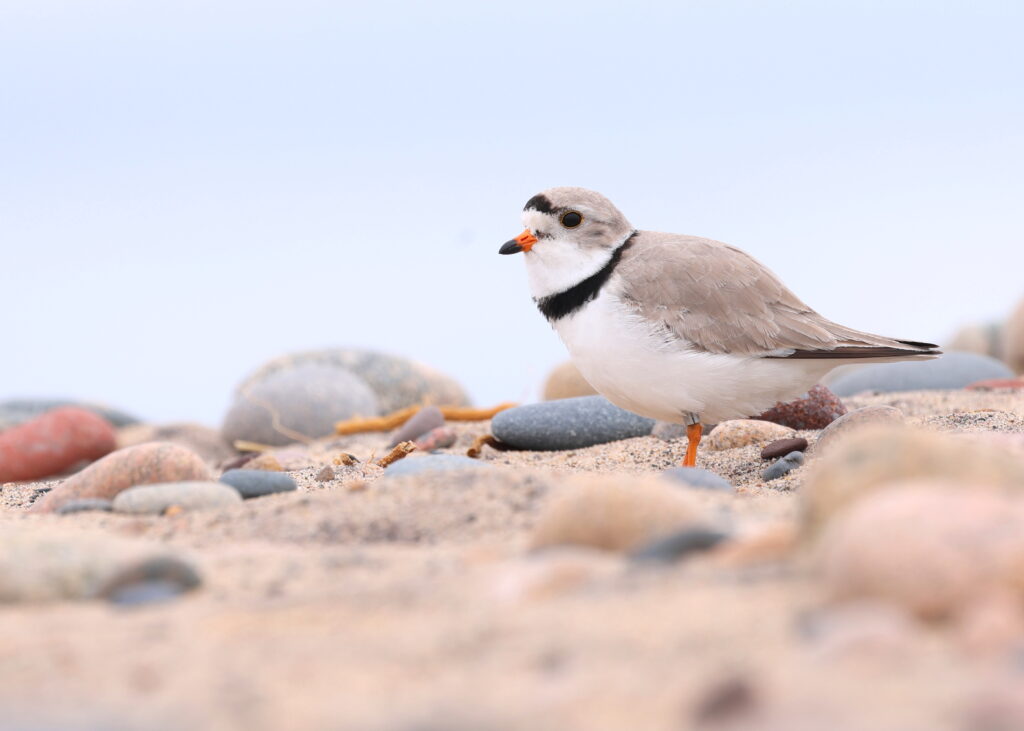
A male Piping Plover standing guard over his territory. Photo by Aaron Graham
Alternate counter, Jack Kew, took the reins again on the morning of May 8. Waterfowl were present in typical numbers, with Jack noting the season’s first Dunlin and Blue-gray Gnatcatcher, as well as an unidentified white-winged gull. With air pressure dropping and winds shifting around to a light south by the following morning, May 9 proved to be the single most diverse day of the season to date. A total of 69 species and 2,782 individuals were observed. A strong waterbird flight ensued, made up predominantly of 334 White-winged Scoters, 290 Red-breasted Mergansers, 259 Common Loons, 211 Greater Scaup, and 146 Bonaparte’s Gulls. While obviously a lot of our attention was focused out over the water, the skies above the point were teaming with plenty of birds as well. A moderate raptor flight occurred, and several newly arriving species of warbler appreared, including Magnolia Warbler, Orange-crowned Warbler and Northern Parula. The passerine flight was largely dominated by the 234 American Pipits working along the shoreline and often out over the water from the tip of the point. The largest flock consisted of 84 individual pipits!
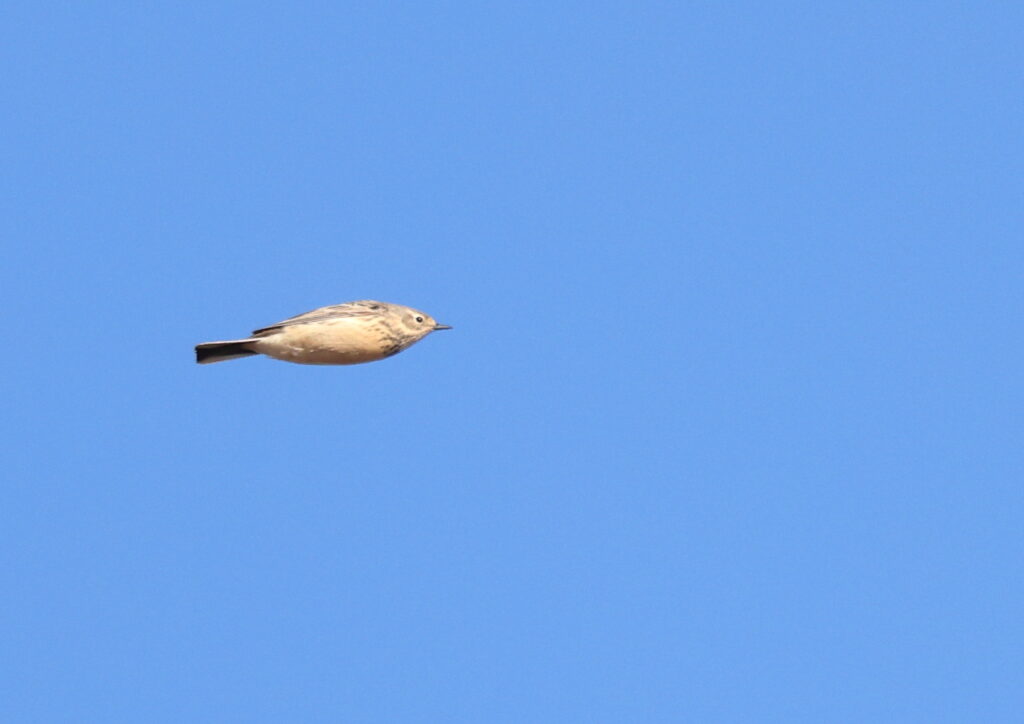
Flyby American Pipit. Photo by Aaron Graham
The following morning, May 10, produced a few interesting flights as winds shifted back to westerlies. A fair number of waterbirds were observed moving back to the southeast, highlighted by the 178 Bonaparte’s Gulls, including one tightly-knit flock of around 90 individuals. Instead of fighting the wind and heading into less than favorable conditions, it was obvious these birds were just riding the tailwind back out of the area. With several Blue Jay flocks spiraling over the point and some getting blown out over the water, a Peregrine Falcon took advantage of this opportunity, snagging one of the Jays straight out of the air!
Westerly winds continued into the morning of May 11. With winds not as strong, it did not appear that as many birds were moving back to the southeast. The majority of the waterbird flight occurred right around sunrise, consisting primarily of 134 Greater Scaup. Blue jay flocks continued to spiral over the point, while chickadees followed their usual flight line out to the stand of Jack Pines behind the station. Knowing that Sean had recorded a Boreal Chickadee the previous two days, I was checking the chickadee flocks aggressively, and that effort paid off in the afternoon when the Boreal Chickadee appeared as part of one of my flocks, much to my joy!
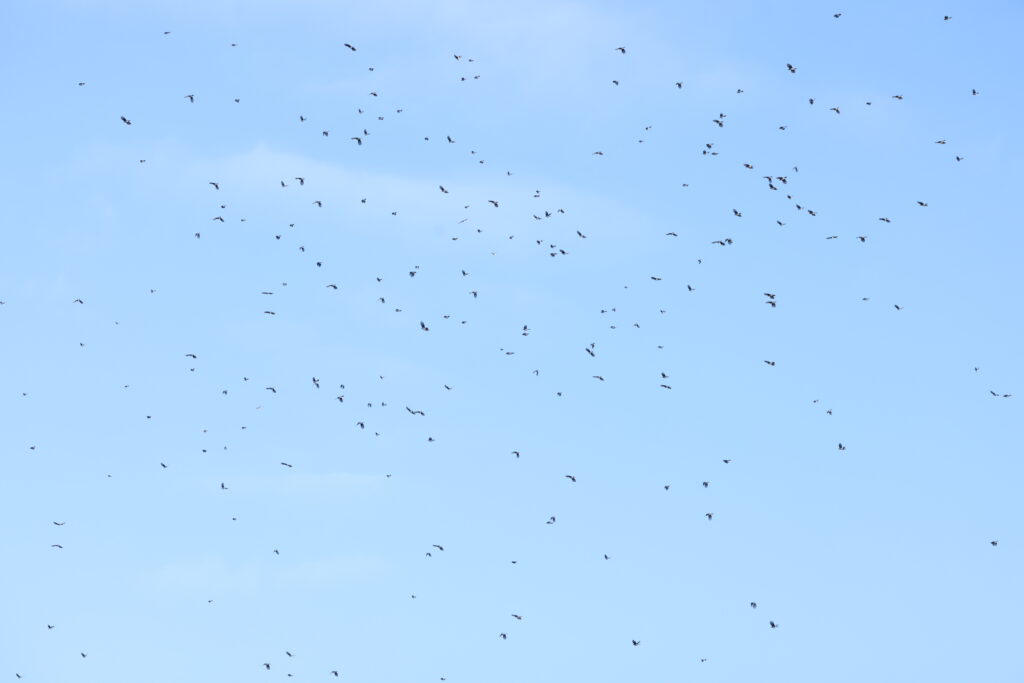
Part of the Blue Jay flock spectacle back over the point. Photo by Aaron Graham
Promising conditions arose on the final morning of this post, May 12, with stronger southeast winds that had been pushing throughout the night. Another nice waterbird flight occurred, again dominated by 422 White-winged Scoters. As a storm system moved in on this low pressure system from the south, many of the scoter flocks began moving back over land, cutting across the point along a flight line that many of the loons also use. Mid-day a flock of 4 Trumpeter Swan made their way northwest past the point as well. New arrivals continued to show up this morning with Chimney Swift, Least Sandpiper, Bobolink, and Baltimore Oriole observed. The passerine highlight of the morning was a single Dickcissel that joined a flock of 18 Pine Siskins and eventually departed out over the water after spiraling above the station.
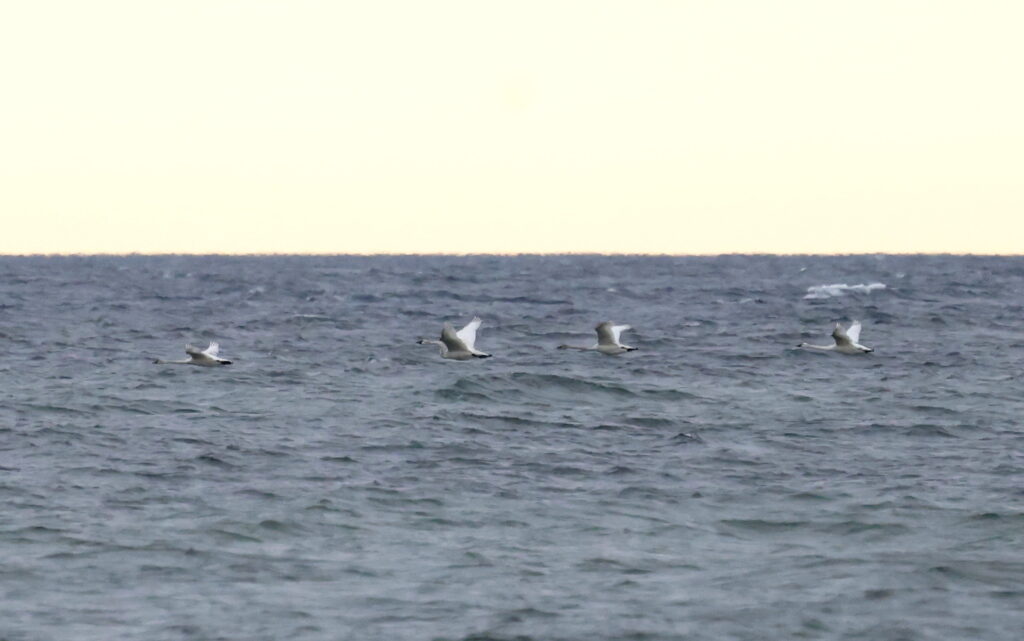
Flock of four Trumpeter Swans passing out in front of the point. Photo by Aaron Graham
Upon looking at the upcoming forecast, promising conditions remain, adding to what is already an exciting time of the year at Whitefish Point. Make sure to continue to follow along on our Trektellen page, or better yet join us out in the field!
Aaron Graham, 2026 Spring Waterbird Counter
Featured Photo: White-winged Scoter flock by A. Graham
You can now see the waterbird count data on Trektellen! Check it out at trektellen.nl/count/view/4209.
You can keep up with the 2026 Spring Waterbird Count by reading Aaron’s weekly blog posts and following WPBO’s social media (Facebook, Instagram, and X). The spring waterbird count runs April 15 through May 31.

Aaron Graham: 2026 Spring Waterbird Counter
Aaron is a migration monitor from West Virginia with a love for birds starting in his early elementary years. Calling the central Appalachian ridgelines home, he ventured throughout this region from a young age trying to better understand the local avifauna. This pursuit has taken him all over the United States as his focus has dialed into migration counts, with particular focus on morning flight and sea/lake watch counts. Being able to witness active migration all from a stationary point is what awes him, and better understanding these phenomena is what drives him. Aaron is looking forward to a season at Whitefish Point and wonders what all he will see migrating past the point from the waterbird count! When not birding, Aaron coaches college soccer, takes to the snow with freestyle and cross-country skiing, and can be found far afield searching out new butterflies, dragon and damselflies, and tiger beetles.