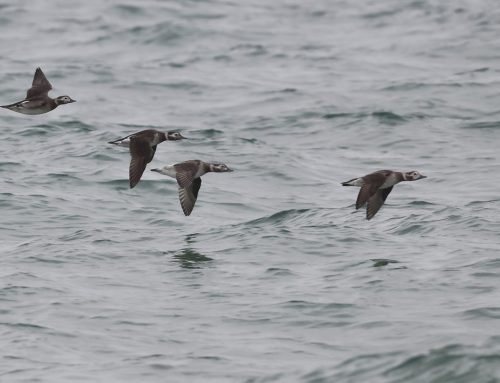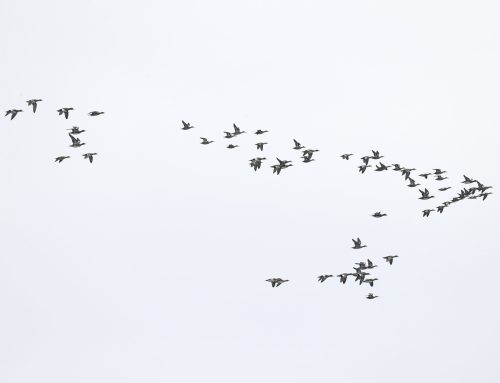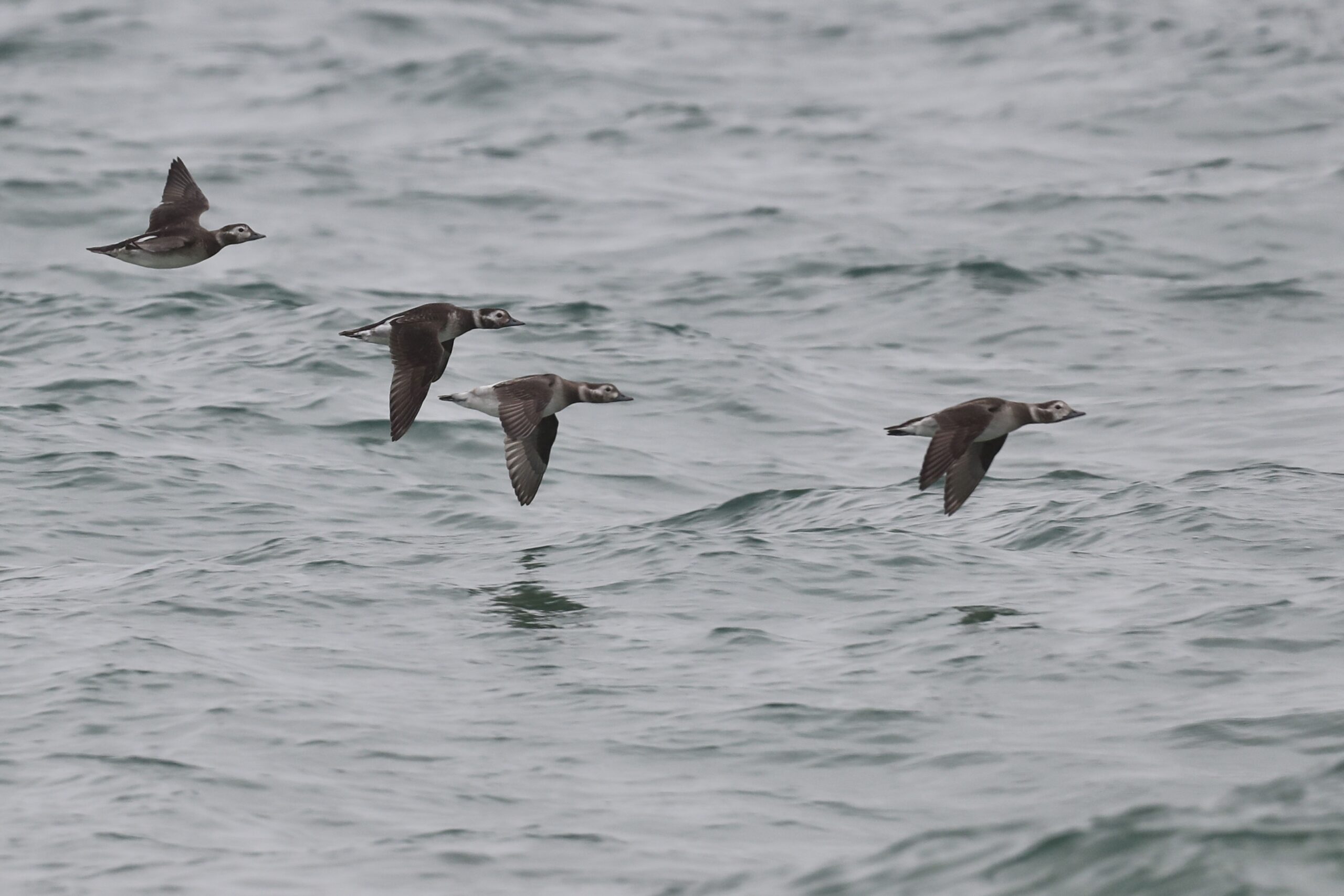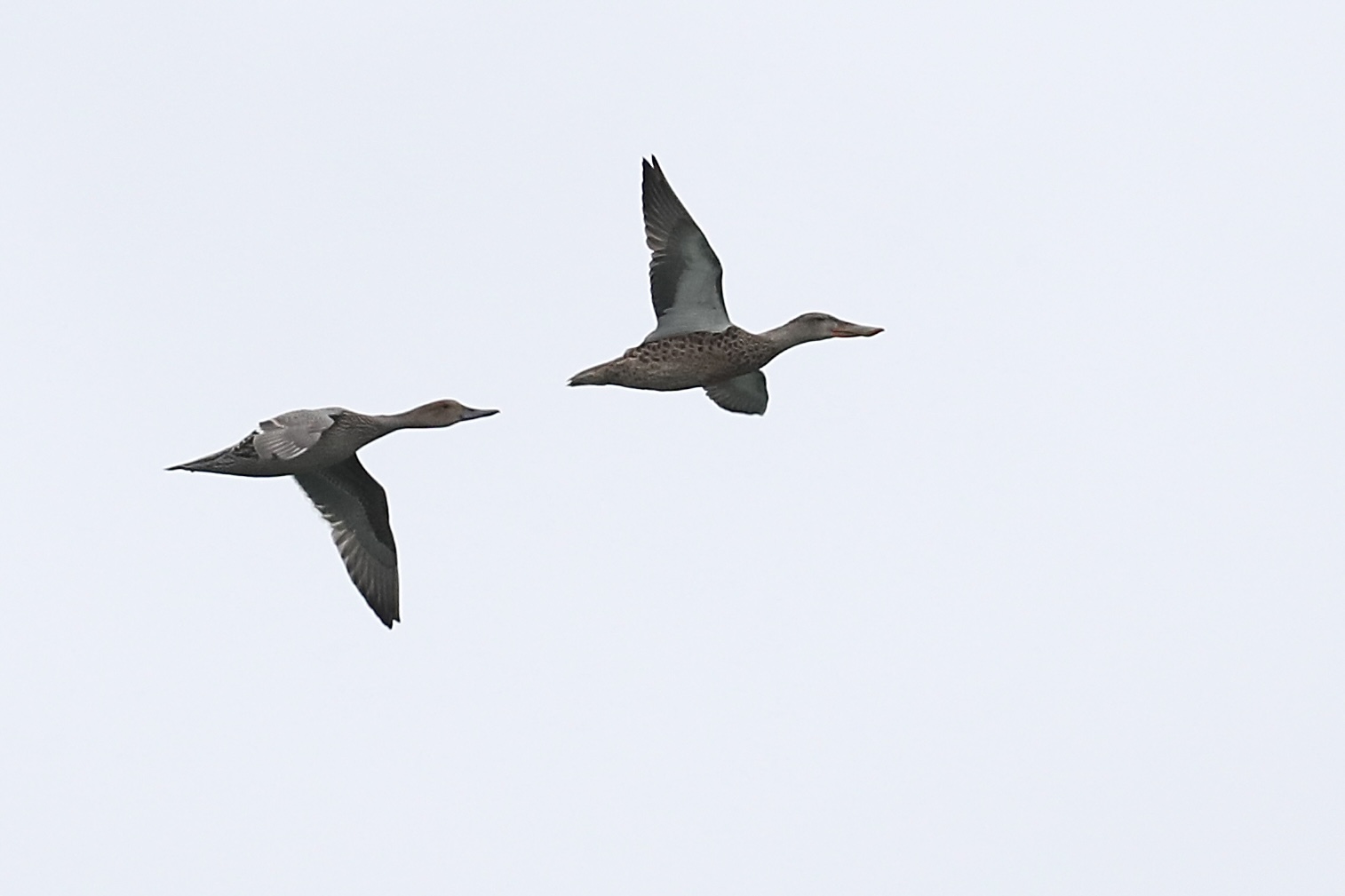
As we rounded the second official week of the spring waterbird count, the signs of spring continue to show themselves. This is indicated by the disappearance of much of the ice along the shoreline and the influx of waterbirds taking advantage of these open waters. This was noticeable on April 22 when a Long-tailed Duck and a Red-necked Grebe, as well as several Red-breasted Mergansers, Horned Grebes, and Common Loons were sitting out on the water that morning. However, while a noticeable morning flight and raptor flight occurred overland, a flight over the water was muted in comparison. More easterly winds the following morning, April 23, would produce better conditions, highlighted by 48 Northern Pintail and 32 Greater Scaup counted in a moderate waterbird flight.
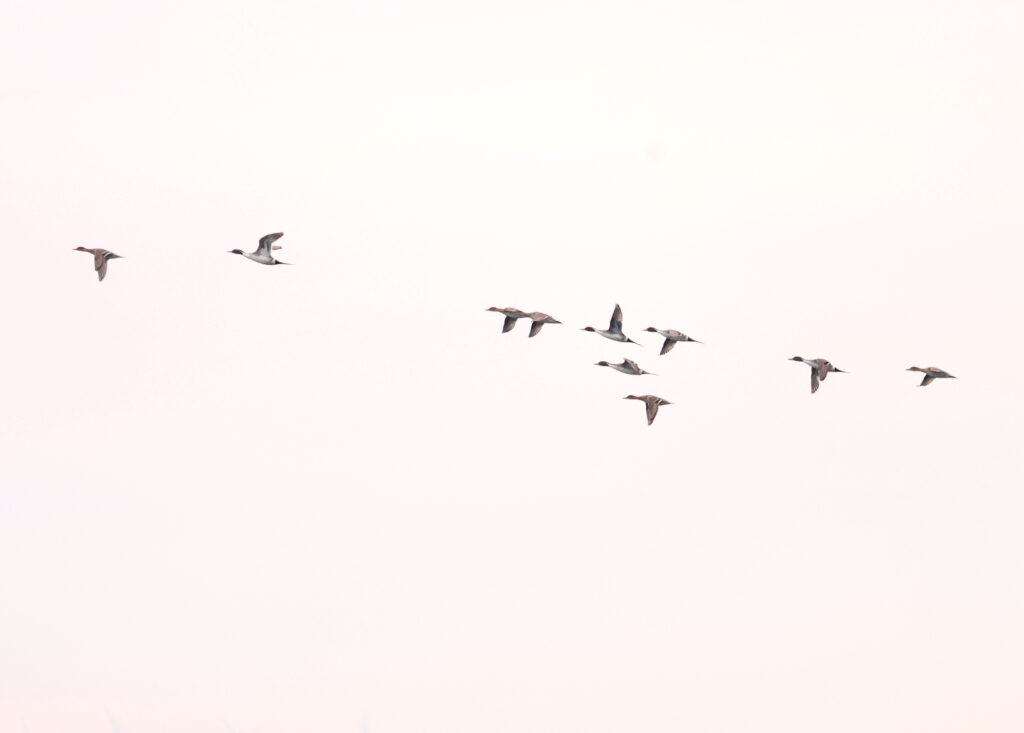
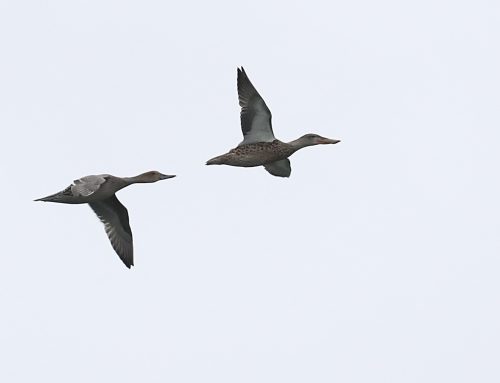
Northern Pintail flock. Photo by Aaron Graham
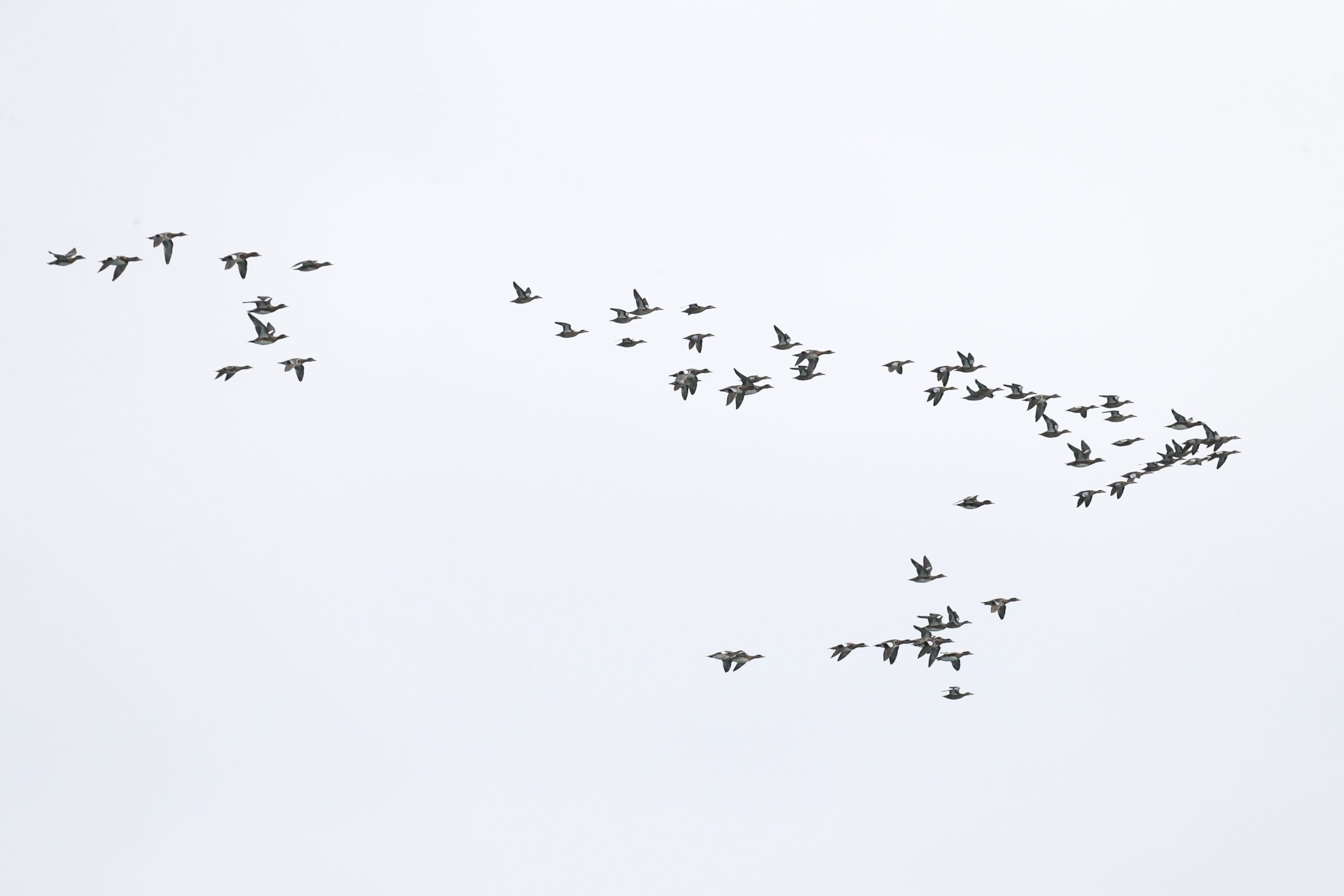
This would just be a teaser what would come the following morning of April 24, when a diverse flight of waterbirds occurred. Most individuals were recorded heading back to the southeast past the point. The most abundant species in this flight was the 320 Green-winged Teal. One flock of 82 individuals was observed, which included several other species, including both Scaup, American Wigeon, Blue-winged Teal, and a drake Wood Duck. A pair of Canvasback also passed by the point heading southeast, a scarcely observed species on the spring waterbird count. Another highlight of the morning was a Wilson’s Snipe following the same flightline as the ducks out over the lake!
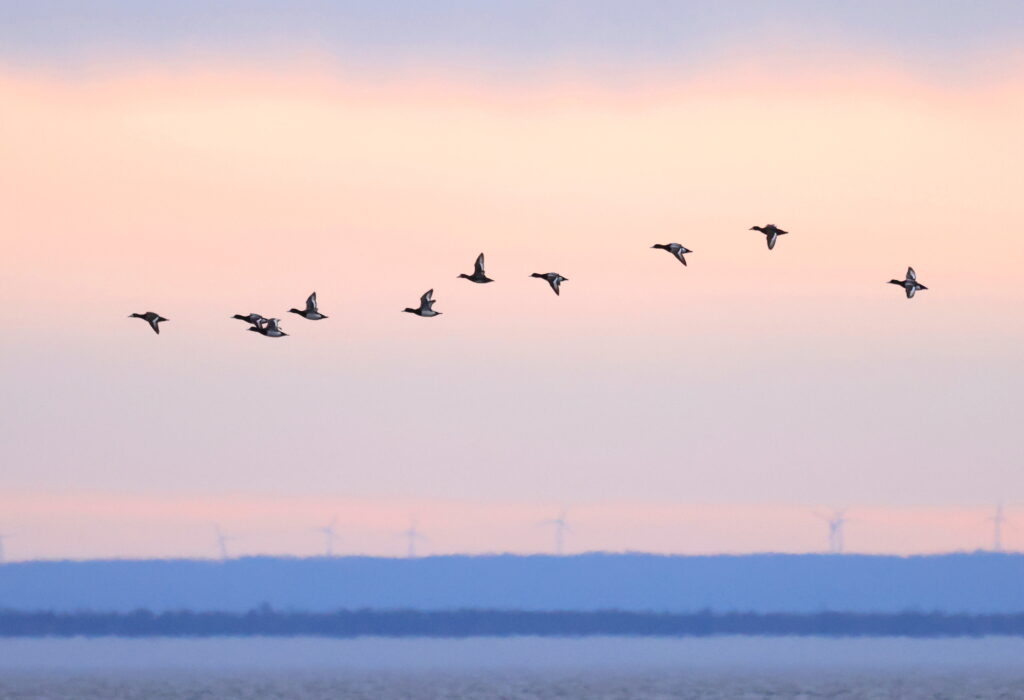
A flock of Greater Scaup. Photo by Aaron Graham
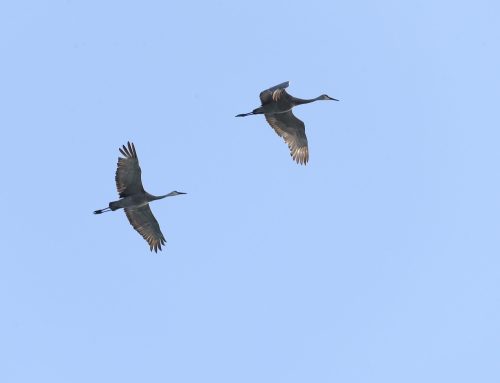
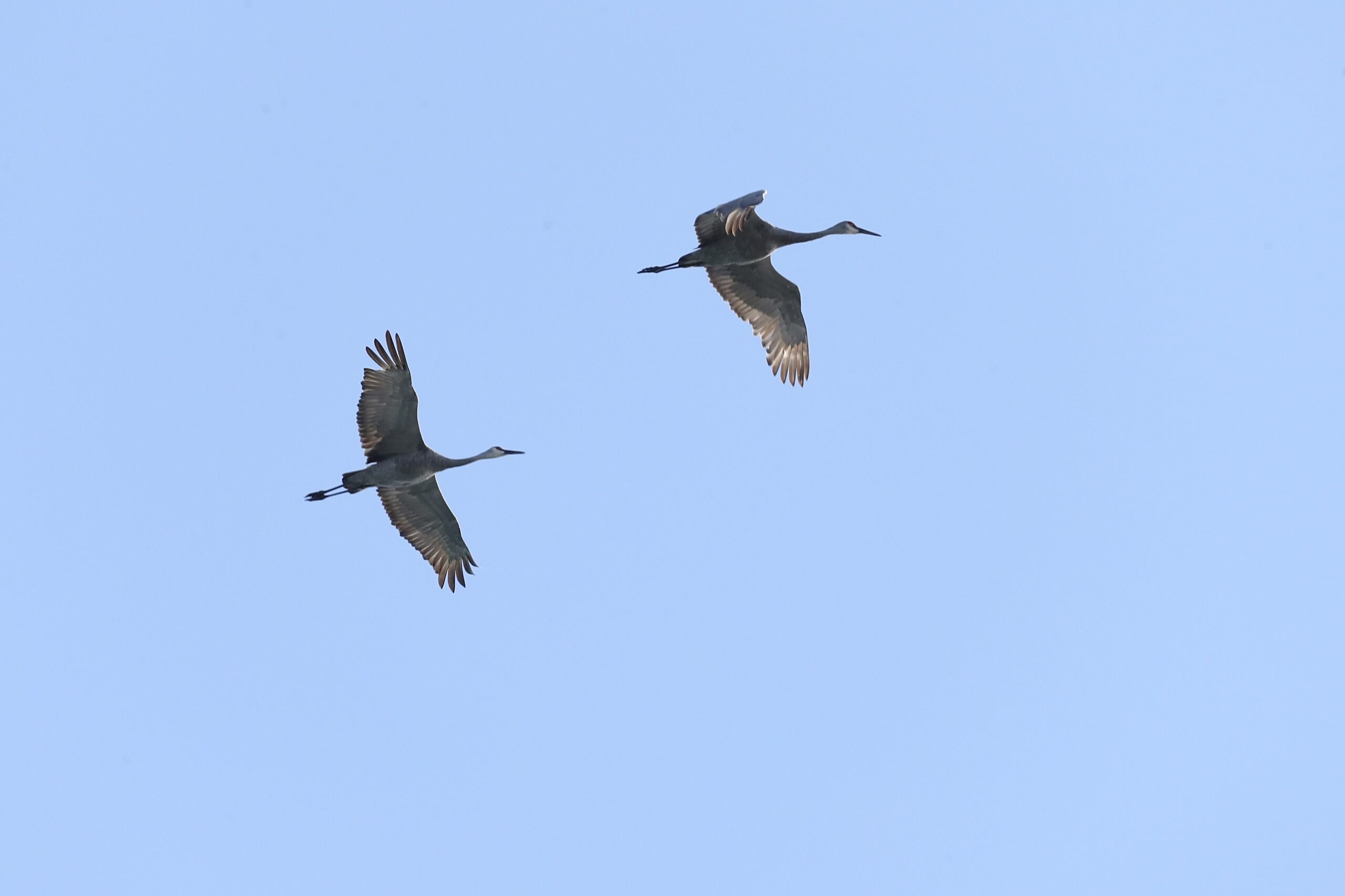
While overall numbers were down from the previous morning on April 25, alternate counter Jack Kew still made what started out as a foggy day quite productive. Jack nearly broke 100 Northern Pintail with the 98 he observed, as well as detecting the first Peregrine Falcon and Palm Warbler of the season for the count. We have almost as much fun counting other species as we do waterbirds here! Fog was once again present on the morning of April 26, and overall waterbird numbers did take a hit as a result. However, Sandhill Cranes made their biggest push in a few days, with 350 individuals observed. The same adult dark morph Swainson’s Hawk that had been observed earlier in the week was observed once again once the fog lifted and raptors lifted off over the point.
While waterbird numbers were moderate, overall diversity was decent on April 27, with species ranging from Northern Shoveler to White-winged Scoter being observed. However, it was the flight over the point that garnered my attention at times. Sharp-shinned Hawks were moving before sunrise, and from the Waterbird shack alone I tallied 1,053 individuals during the duration of the waterbird count. Also of note was a female of the Prairie subspecies of Merlin, first spotted by Sean before seen from my position making the jump off the tip of the point. The passerine morning flight was intriguing as well with good numbers present of many species, such as the 124 Black-capped Chickadees, 131 Purple Finches, and 440 Common Grackles observed. Purple Finches are another species that often will circle high above the point during morning flight.
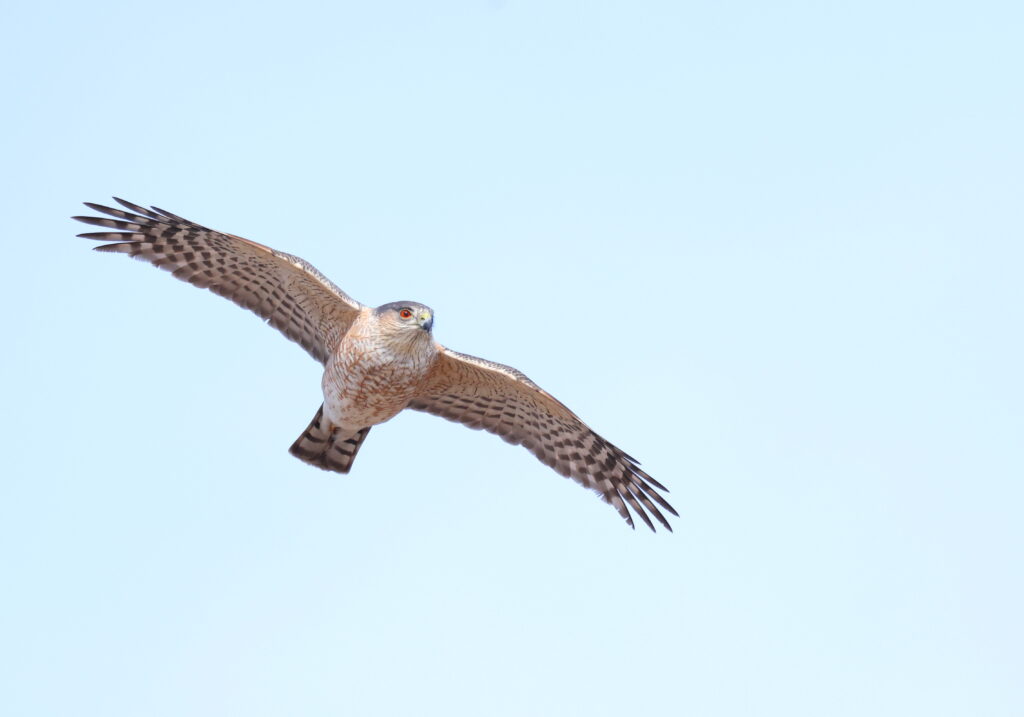
Sharp-shinned Hawk making a close pass behind the waterbird shack. Photo by Aaron Graham
Another good water bird flight ensued on the final morning that this blog post covers, April 28. A low-pressure system moving through overnight paired with southeast winds at the start of the count, produced good conditions at the site. The highlight of the morning 231 Greater Scaup, the highest count for a single day so far this season. Several other species of dabblers and divers passed by as well, with the most interesting being two separate pairs of Gadwall mixed in. Despite the rain overnight, it was apparent that passerines still moved with several species coming in off the water throughout the morning. It seems shifts to lower pressures are the change that induces bird migration in the spring.
There wasn’t a dull day over this recent count period. As we head into the coming days, we hope this continued northwest wind doesn’t completely halt bird migration for the time being. But maybe it will just be the catalyst to back up enough birds to lead to some impressive flights once the winds do finally shift. Only time will tell.
Aaron Graham, 2026 Spring Waterbird Counter
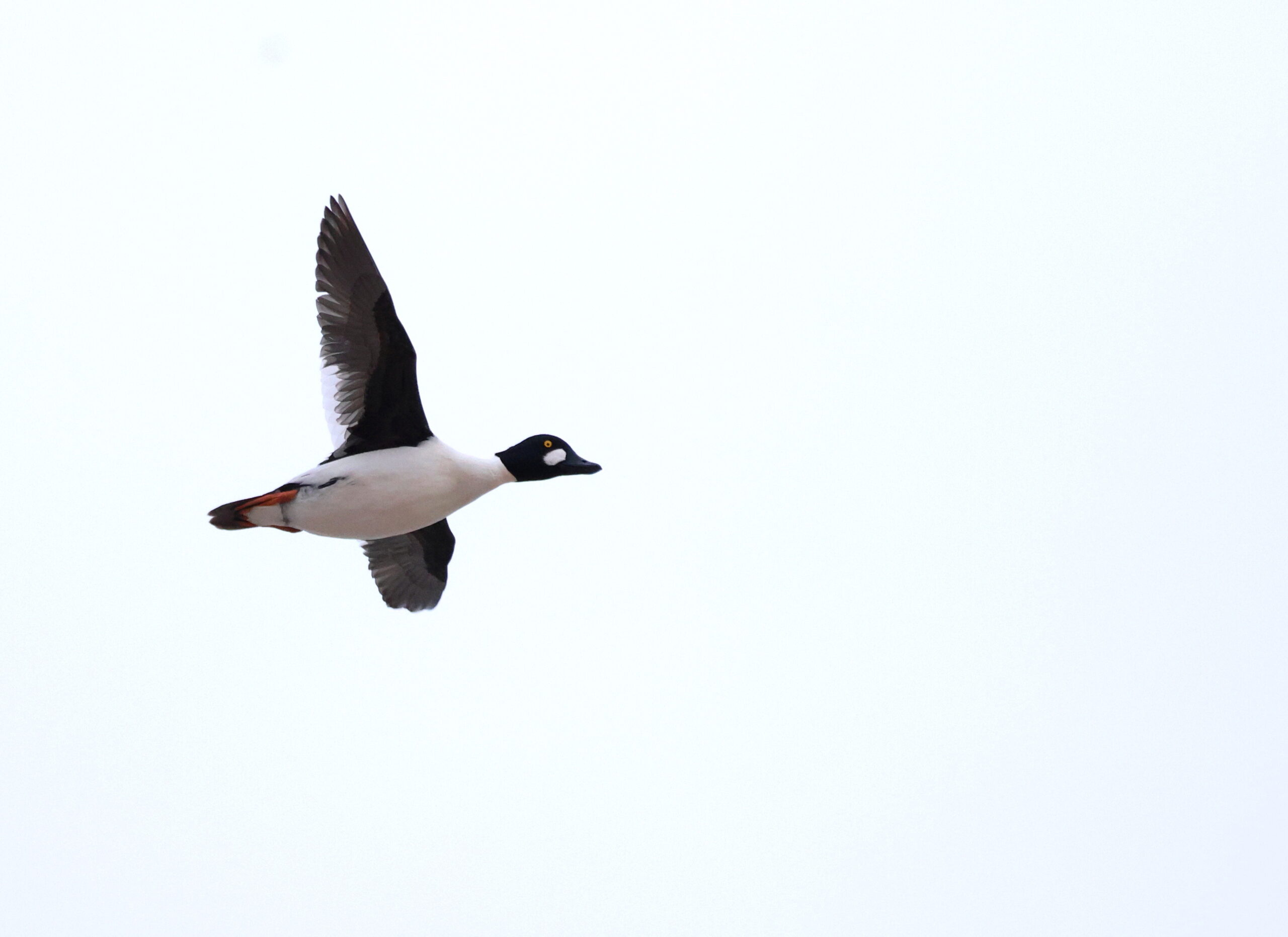
Featured Photo: Common Goldeneye by A. Graham
You can now see the waterbird count data on Trektellen! Check it out at trektellen.nl/count/view/4209.
You can keep up with the 2026 Spring Waterbird Count by reading Aaron’s weekly blog posts and following WPBO’s social media (Facebook, Instagram, and X). The spring waterbird count runs April 15 through May 31.

Aaron Graham: 2026 Spring Waterbird Counter
Aaron is a migration monitor from West Virginia with a love for birds starting in his early elementary years. Calling the central Appalachian ridgelines home, he ventured throughout this region from a young age trying to better understand the local avifauna. This pursuit has taken him all over the United States as his focus has dialed into migration counts, with particular focus on morning flight and sea/lake watch counts. Being able to witness active migration all from a stationary point is what awes him, and better understanding these phenomena is what drives him. Aaron is looking forward to a season at Whitefish Point and wonders what all he will see migrating past the point from the waterbird count! When not birding, Aaron coaches college soccer, takes to the snow with freestyle and cross-country skiing, and can be found far afield searching out new butterflies, dragon and damselflies, and tiger beetles.