It has been quite the eventful and exciting week at Whitefish Point!
On the morning of June 26th, I raced down the beach and was greeted with the best surprise: three of the Piping Plover eggs had hatched! They were tucked tightly beneath V on the nest, peeking out now and then from under her feathers. After watching for a few moments, I realized that while she was keeping the newly hatched chicks warm and cozy, she was also still incubating the fourth and final egg. Nearby, G stood watch, keeping a close eye out for any unwanted visitors. Throughout the day, V and G took turns incubating the last egg while carefully watching over their growing family. Every so often, the chicks would dart out from beneath one of the adults to forage for tiny insects before quickly returning to the safety of a parent’s feathers.
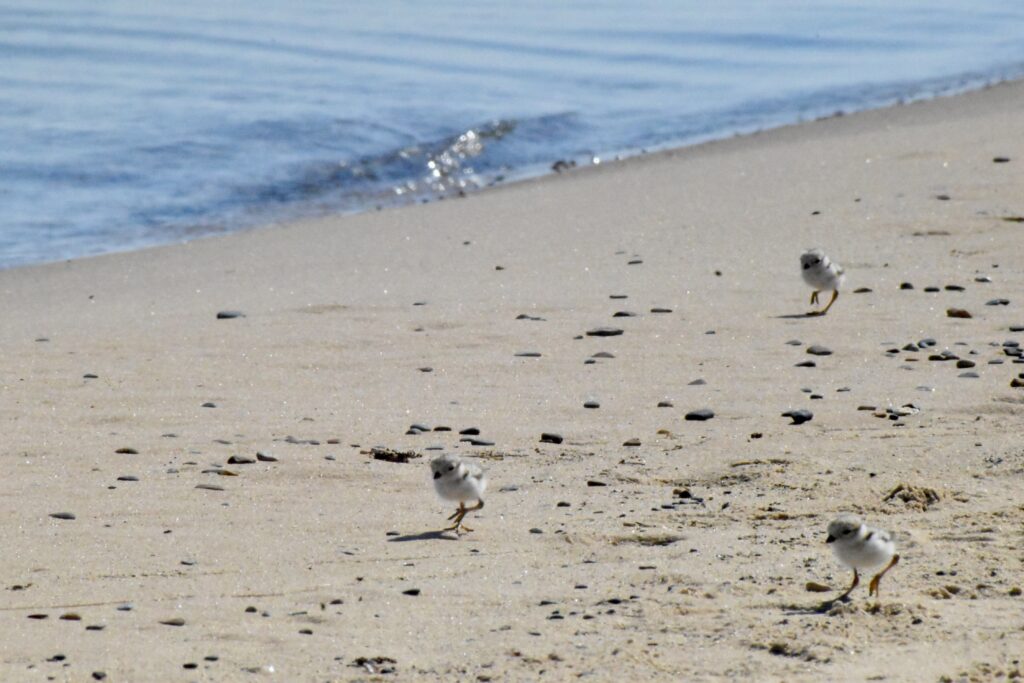
Piping Plover Chicks Storm the Beach. Photo by Morgan Ness
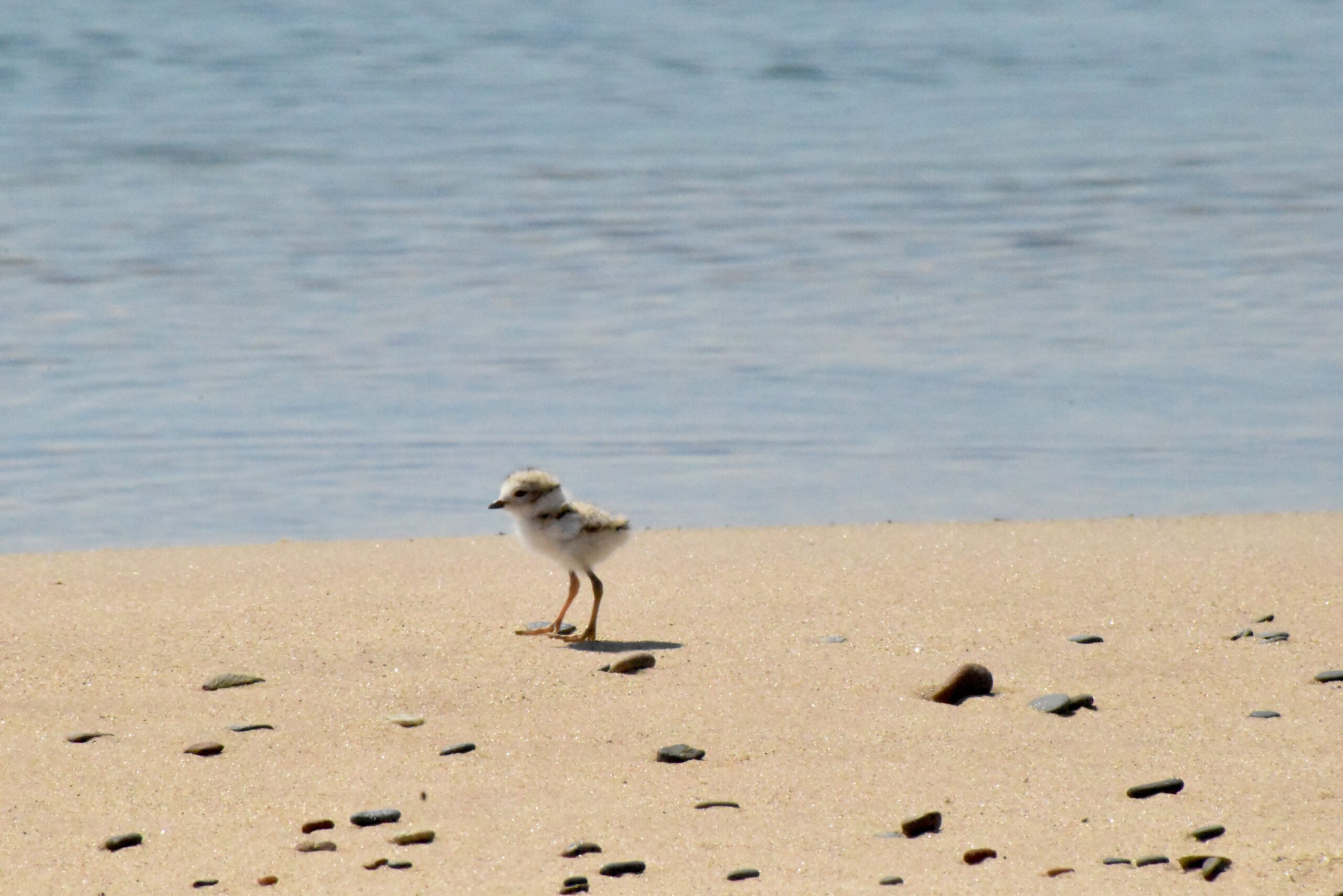
Learning how to be a Piping Plover clearly takes practice! I watched the little ones take plenty of tumbles that first day, tripping over pebbles, stumbling across the uneven shoreline, and occasionally toppling over as they bent down to grab a snack. Their determination, despite their clumsiness, was both hilarious and heartwarming.
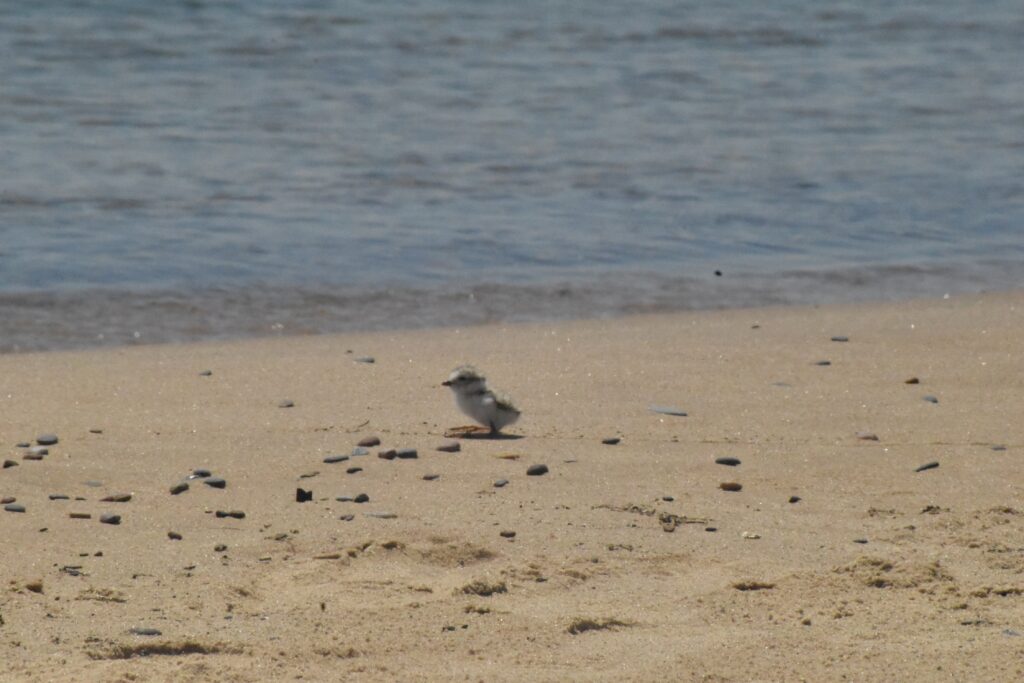
Plover Chick. Photo by Morgan Ness
By Saturday morning, the last chick had officially hatched! V and G settled into a new routine, taking turns caring for all four chicks. While one parent stayed with the sleepy newest arrival at the nest, the other escorted the three older siblings along the shoreline as they learned to forage.
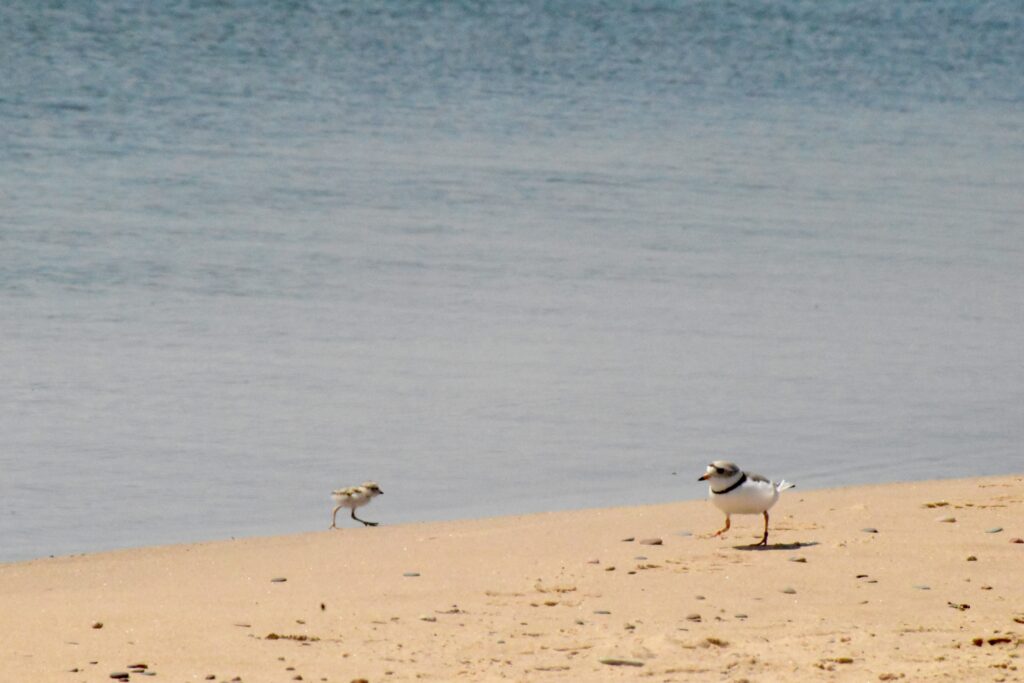
V and Chick. Photo by Morgan Ness
On Sunday, the chicks became noticeably more adventurous. Instead of spending most of their time tucked beneath a parent (making the adults look as though they have 8 legs), they eagerly explored the shoreline in search of food. It was incredible to see how quickly they gained confidence. Although only two-three days old, they were already sprinting fast across the beach.
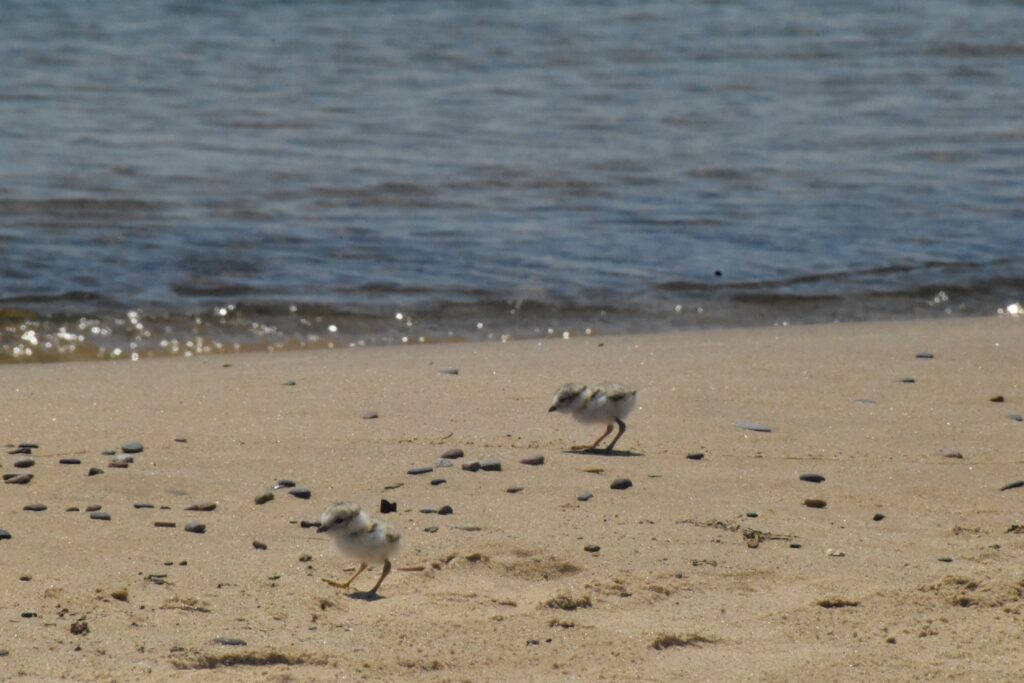
PIPL Chicks. Photo by Morgan Ness
As exciting as hatch week was, it also brought some difficult moments. On Monday, only three chicks were seen. By Tuesday, that number had dropped to two. On Wednesday, the two chicks were observed foraging the shoreline with both adults.
Although we don’t know what caused the loss, it serves as an important reminder of how challenging life can be for these tiny shorebirds. If you’re visiting Whitefish Point, please help give the Piping Plovers the best chance at success by staying off the shoreline and following all posted signs. These chicks are incredibly small, and every time the adults have to defend them from people or other potential threats, they use valuable energy that would be much better spent caring for the chicks.
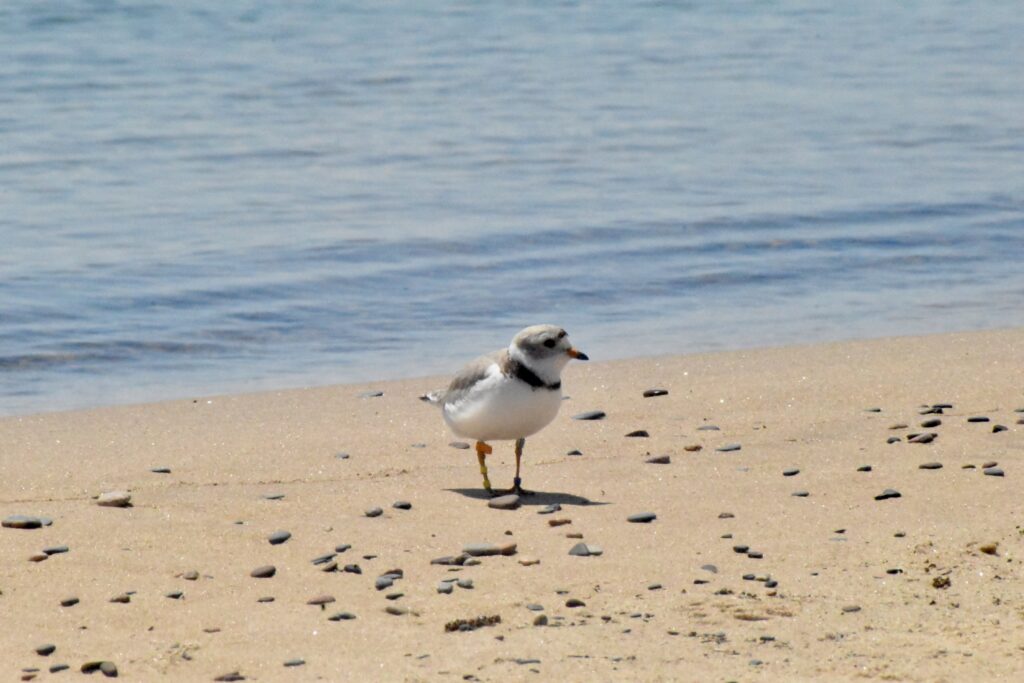
V Along Shore. Photo by Morgan Ness
Watching these chicks hatch has been one of the highlights of my summer, and I can’t wait to continue following the adventures of the two little survivors as they grow over the coming weeks.
-Morgan Ness, 2026 Piping Plover Monitor
Feature Photo: PIPL Chick by Morgan Ness
Piping Plover monitoring is a collaborative effort between Michigan Audubon and Seney National Wildlife Refuge (USFWS).
You can keep up with the 2026 Piping Plover action at WPBO by reading Morgan’s blog posts and following WPBO’s social media (Facebook, Instagram, and X).
Morgan Ness: 2026 Piping Plover Monitor
 Having studied Environmental Science, Policy, and Management at the University of Minnesota Twin Cities, Morgan developed a passion for protecting migratory birds and forest ecology. After spending time in Montana conducting avian monitoring, Morgan is excited to experience Michigan’s species during migration season and to take in the change in scenery. Whether she’s identifying leg bands or chatting with beachgoers about the importance of plover conservation, Morgan’s enthusiasm for the outdoors is contagious. She is thrilled to call the Michigan shoreline her office this summer and contribute to the recovery of such an iconic species. When she isn’t bird-watching, Morgan is often crocheting, hiking, or watching Bravo.