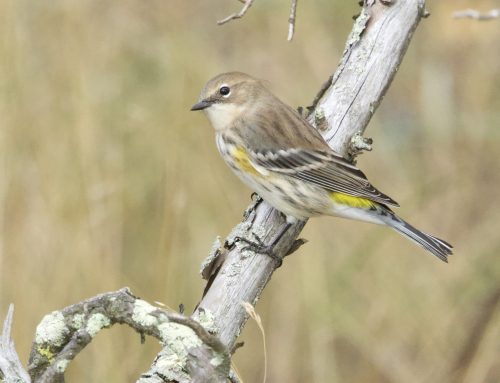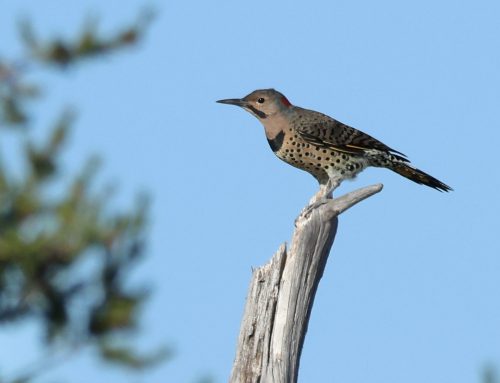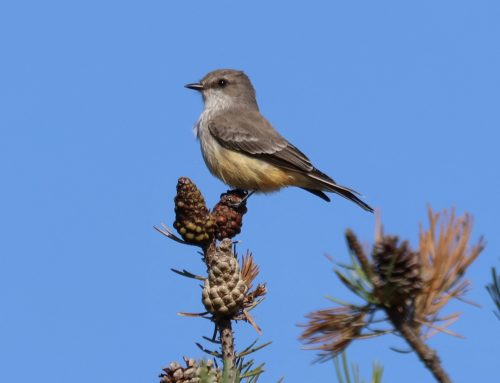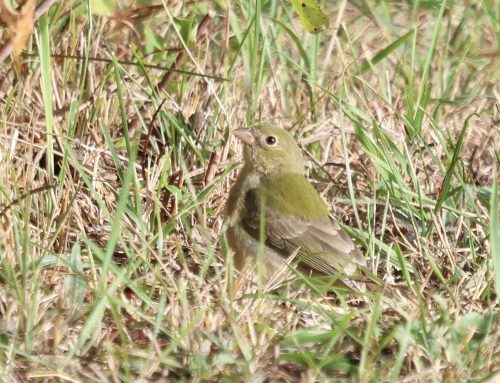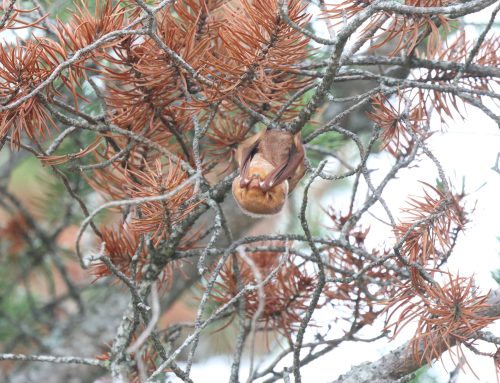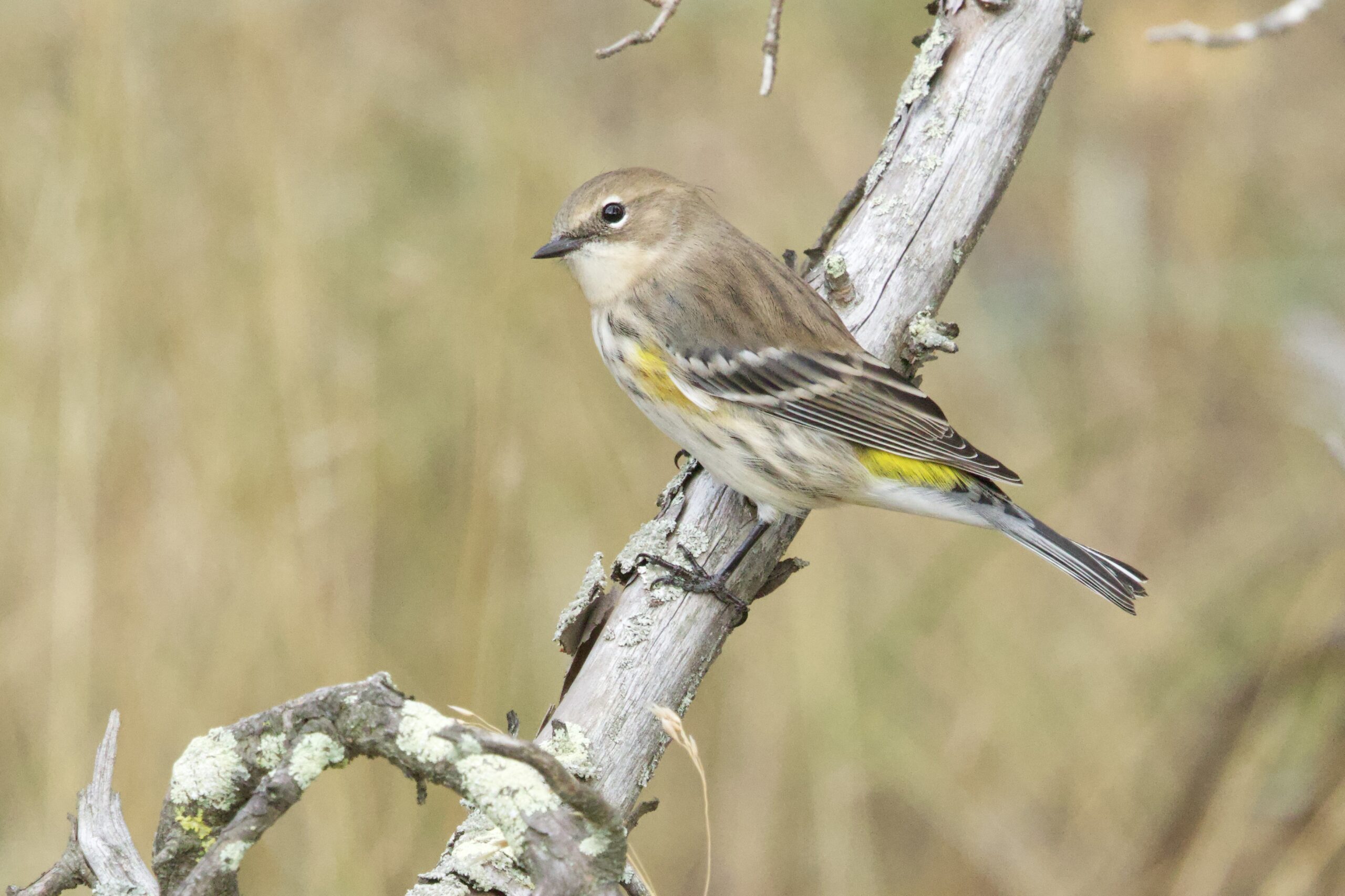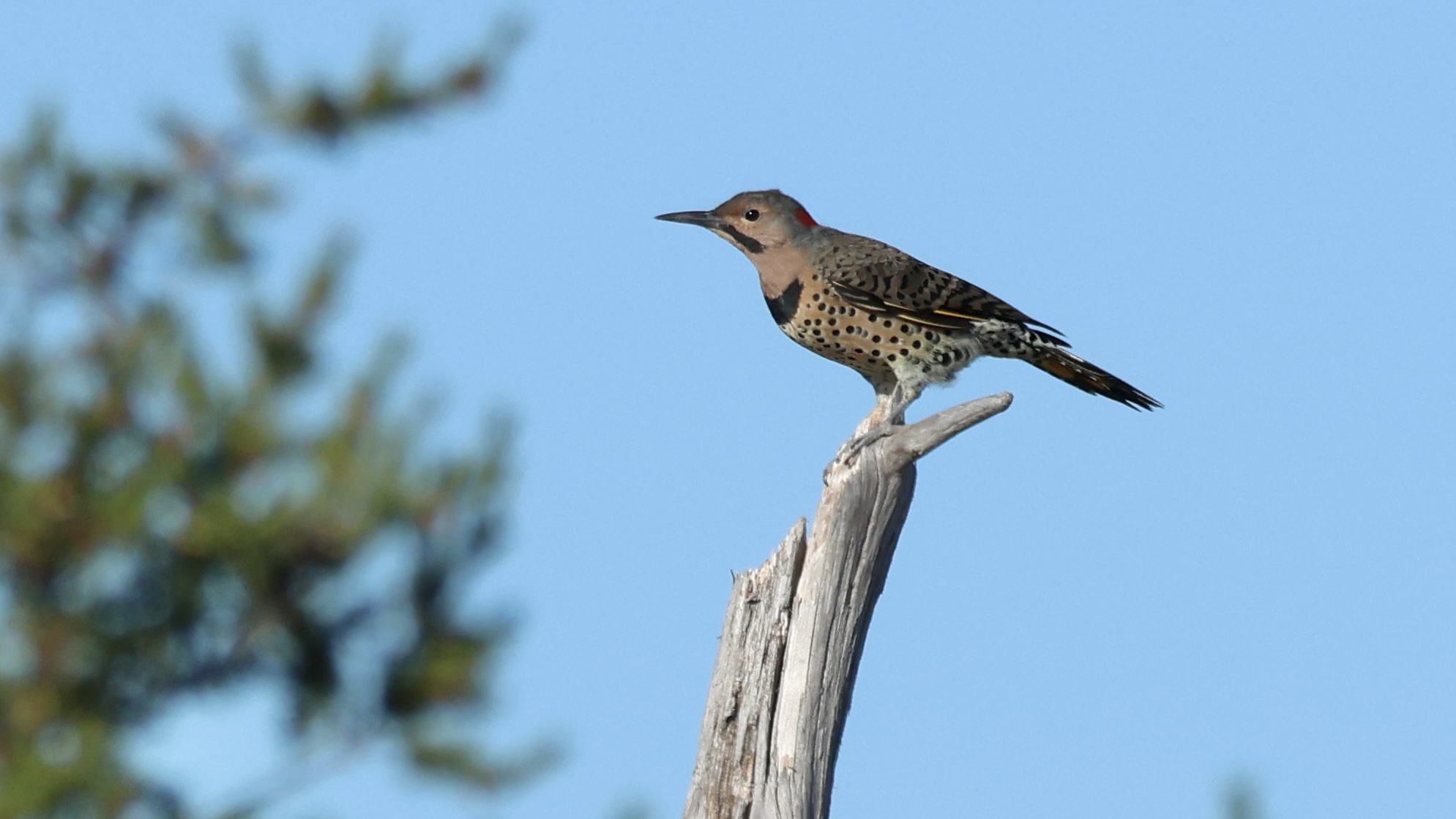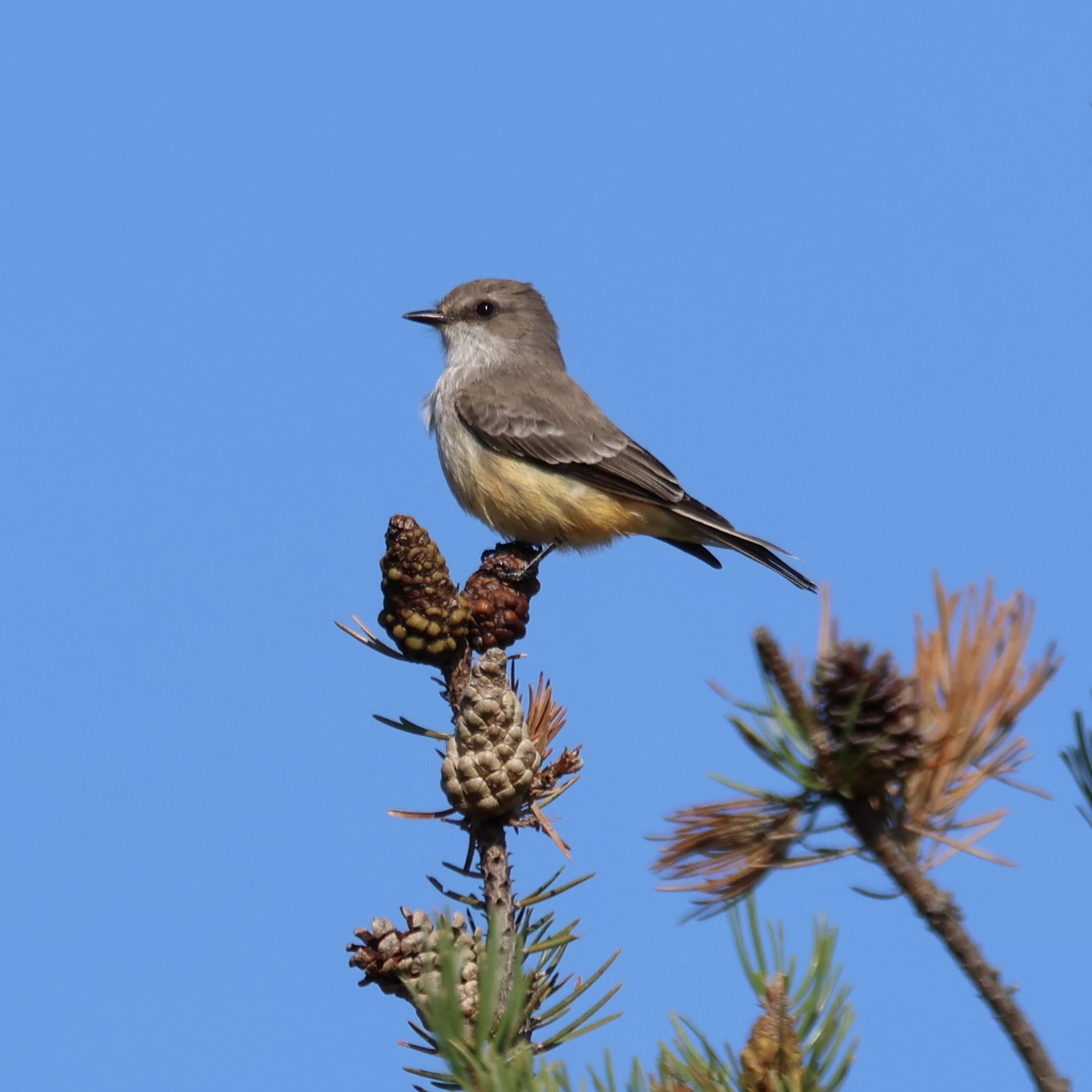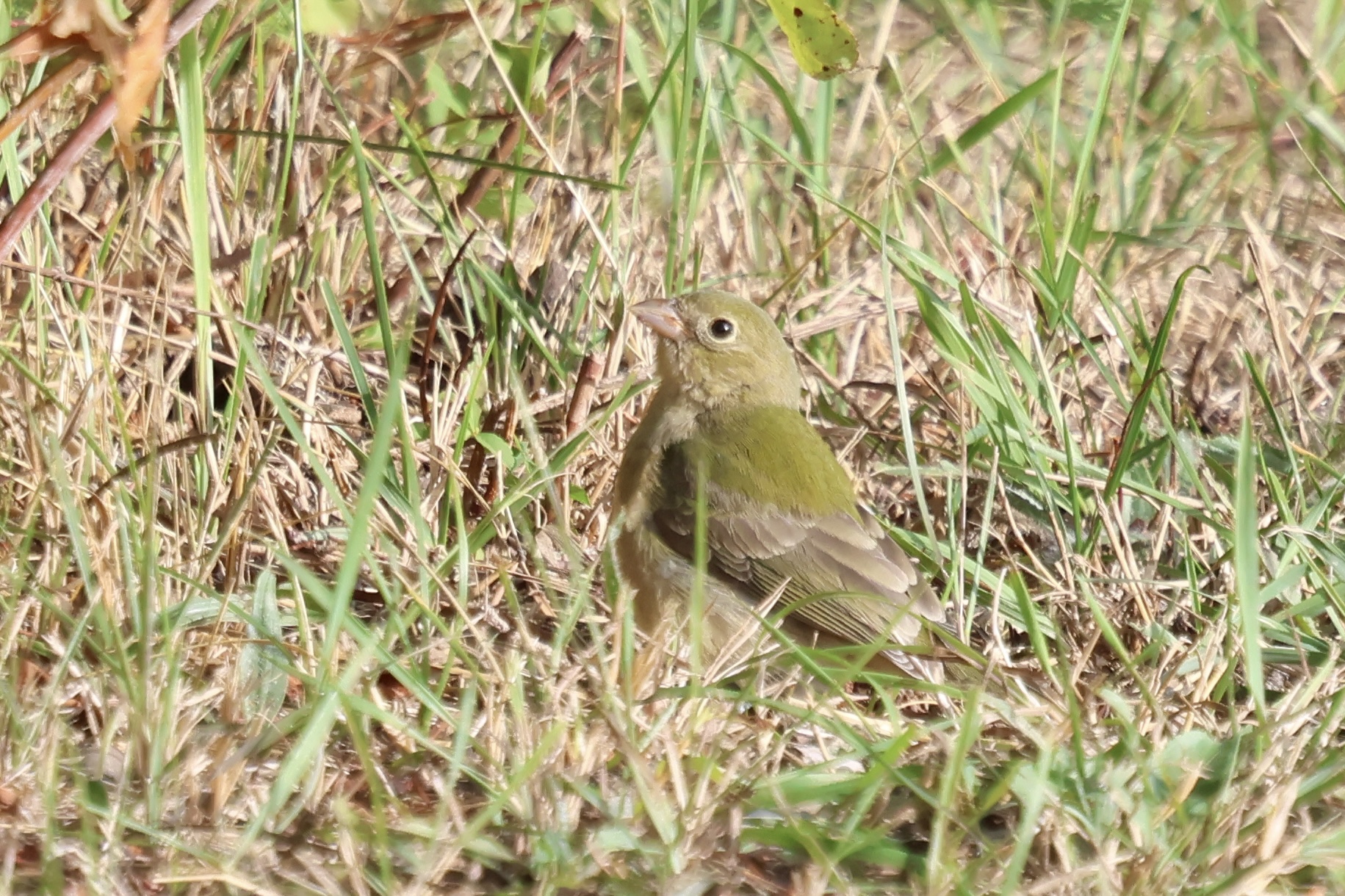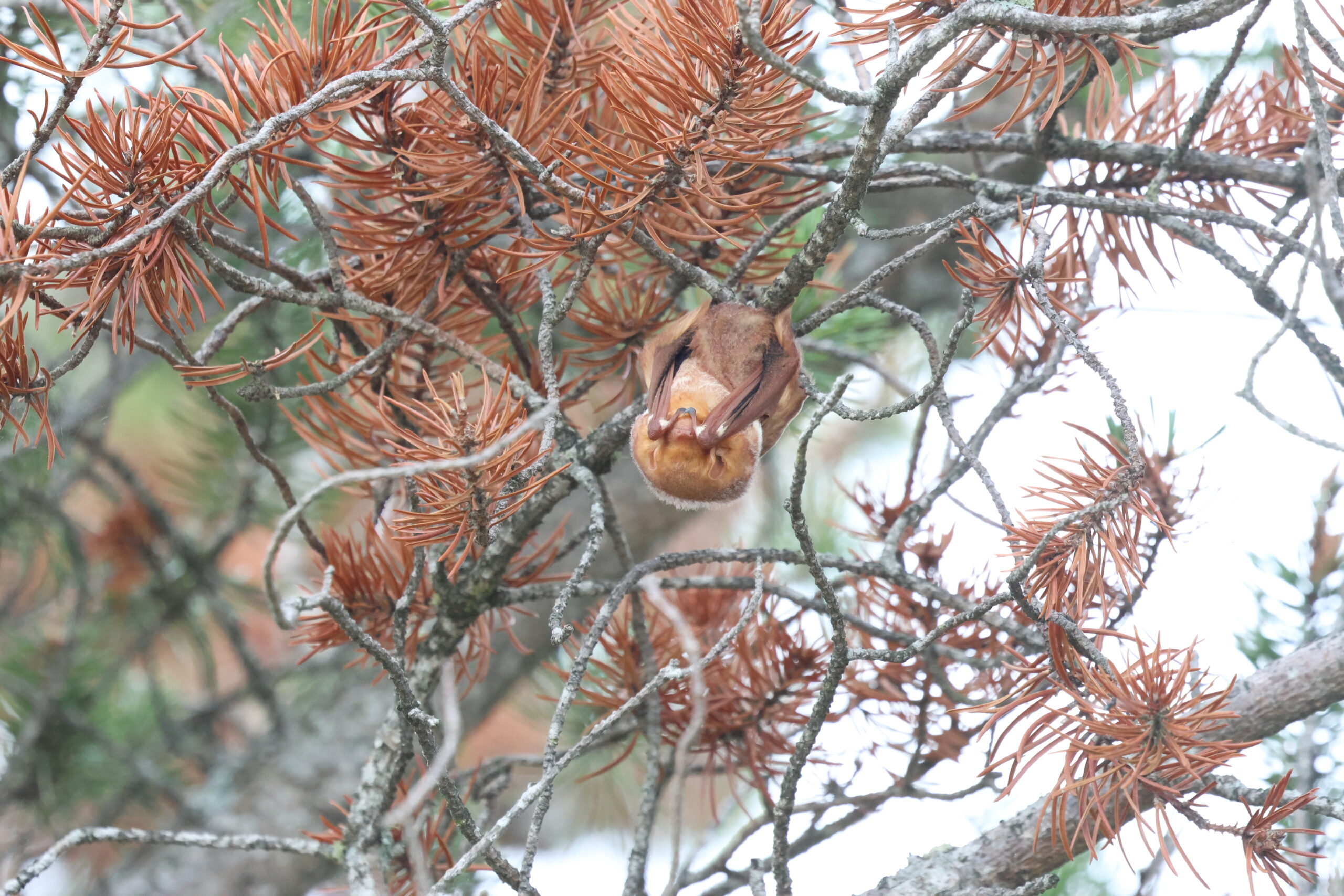
The birding was tough going this week! Strong, gusty winds of late fall have officially arrived. Windspeeds did not drop below 15mph for the entire week, often exceeding 25mph. Thankfully, it is difficult to have a bad day at Whitefish Point during migration.
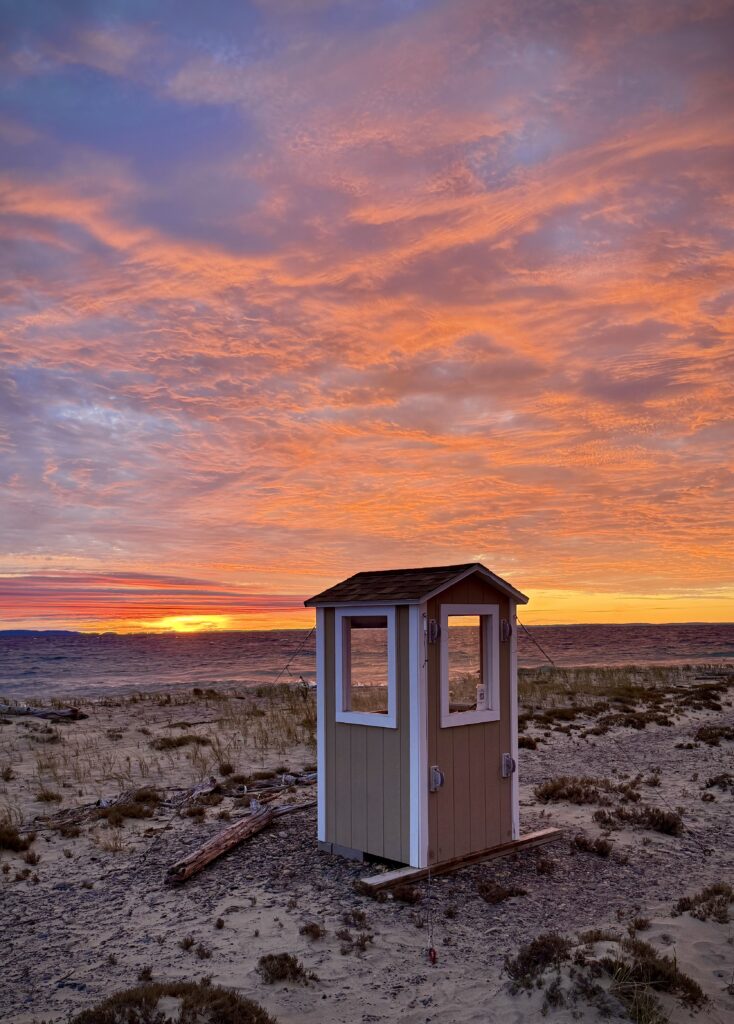
Waterbird Station. Photo by John Droskopf
Pine Siskin regularly disperse south beyond normal range every few years when food availability is low. This species is currently moving on a massive scale compared to other songbirds. A notable morning flight on 10/11 tallied over 2k, including impressive flocks of over 300. It appears safe to say that this will be an irruption year for Pine Siskin.
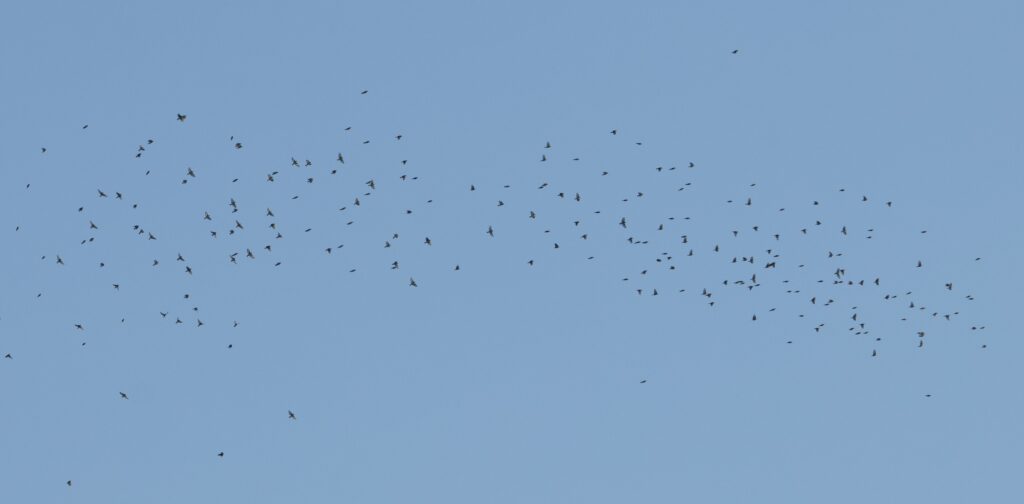
Pine Siskin. Photo by Oliver Kew
Purple Finches have finally arrived! The morning flight recorded triple digits (102) on 10/11. Similar to other finches, Purple Finch migration is highly erratic each year. The 2026/27 winter finch forecast has predicted good numbers. Sadly, the feeders have had zero finch activity. Local cone crops are still plentiful. Hopefully this changes in the next couple weeks as temperatures drop and winter quickly approaches.
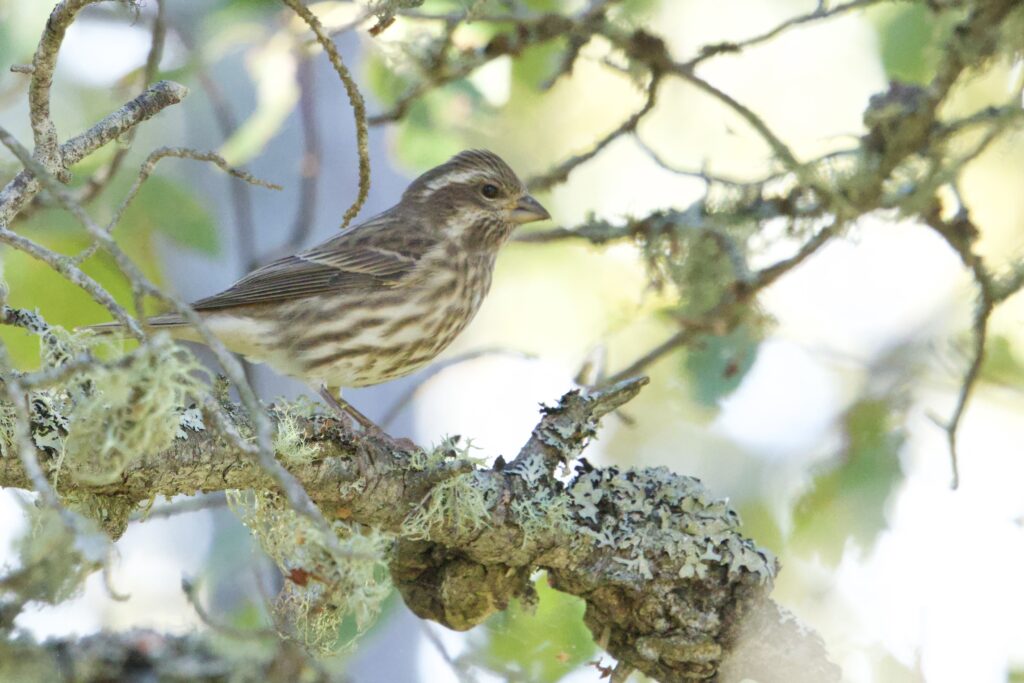
Purple Finch. Photo by Oliver Kew
Ruffed Grouse breed at the point and have been present since mid August. This week brought the first Sharp-tailed Grouse of the season on 10/7! Sharp-tailed Grouse are annual late fall migrants. Groups move short distances from open grasslands to lowland brush in search of food and appropriate wintering habitat. Additional Sharp-tailed Grouse sightings are expected here by late October. Fingers crossed Spruce Grouse will return this fall as they have the past three seasons.
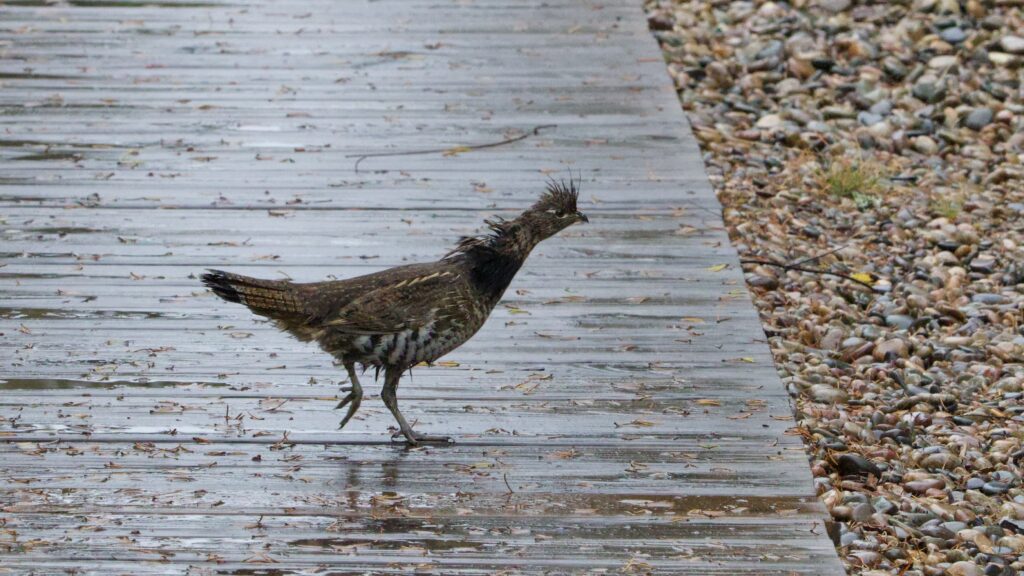
Ruffed Grouse in the rain. Photo by Oliver Kew
Large movements of Ravens are recorded during active raptor migration. For this reason, the spring count at Whitefish Point records far greater totals. Ravens are less social compared to American Crows. Northern populations disperse south in small, loose groups. Wintering birds become concentrated near abundant food sources. A group of four has been lingering in the area this week.
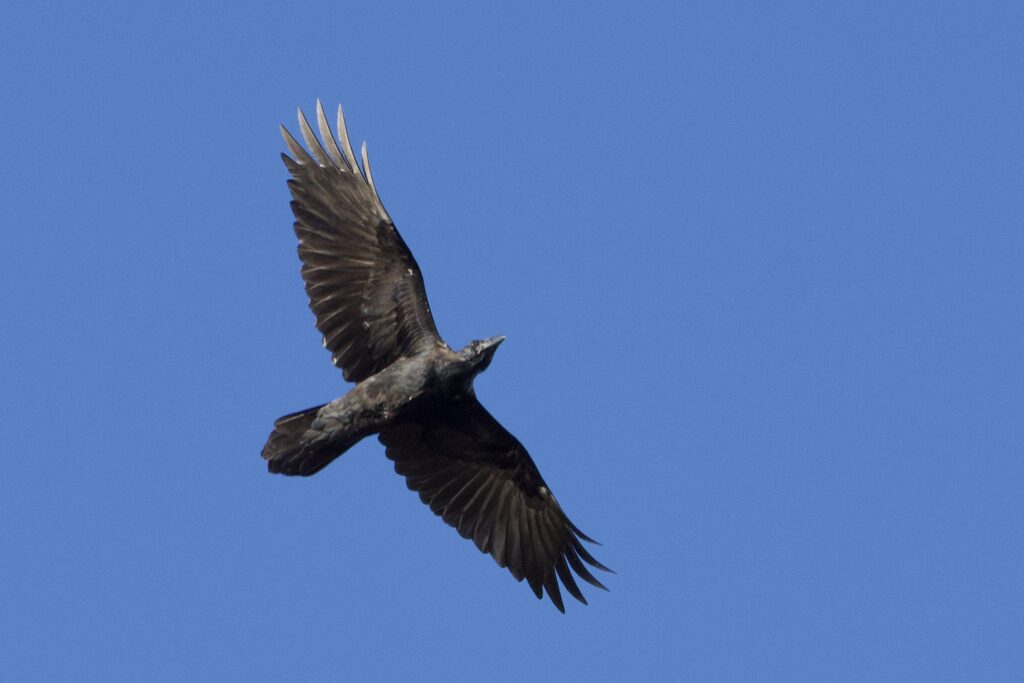
Common Raven. Photo by Oliver Kew
Other notable sightings include continued sporadic reports of Black-backed Woodpeckers. The first lone Bohemian Waxwing of the season was recorded on 10/7. A total of 102 Lapland Longspurs was tallied flying in off the lake in small groups on 10/6, representing an eBird high count for the point.
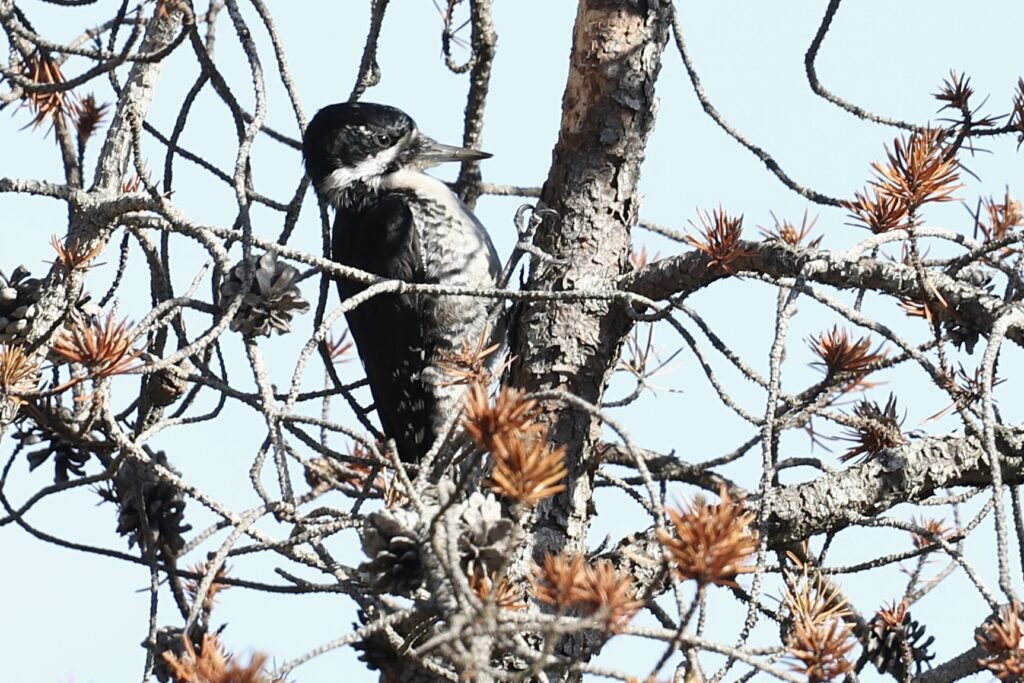
Black-backed Woodpecker. Photo by Jack McDonough
Yellow-billed Cuckoos are still offering great looks. At least two birds were present in shrubs at the south end of the parking lot on 10/12. The pair seem used to pedestrian traffic and more concerned with catching dragonflies.
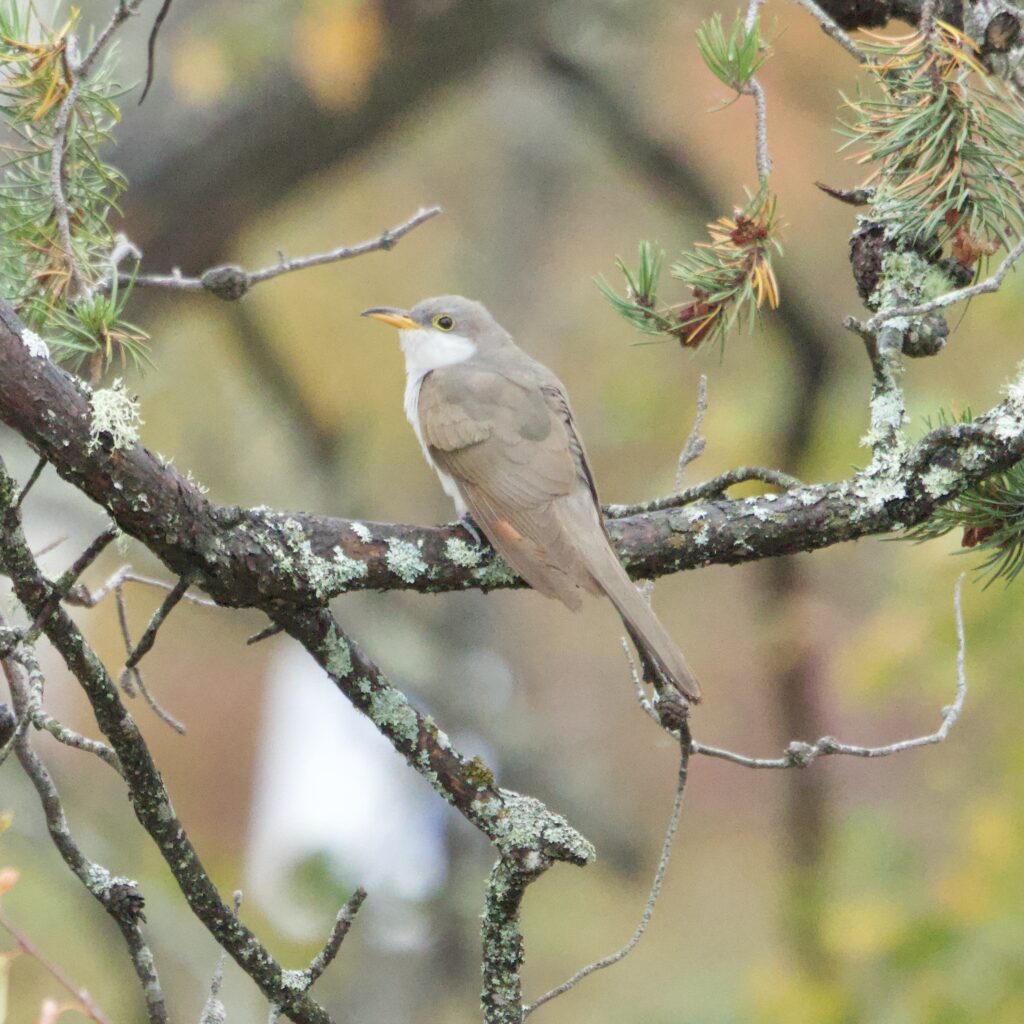
Yellow-billed Cuckoo. Photo by Oliver Kew
A friendly Townsend’s Solitaire, found by Lynn Miller on 8/11, provided some extra excitement! This western species is a regular fall vagrant to the Great Lakes. Townsend’s Solitaire switch to eating juniper berries to survive high elevation winters. Luckily, Whitefish Point has no shortage of wild blueberries, which this individual enjoyed as an alternative snack. Keep a close watch on areas with heavy berry concentrations in fall to find these elusive, solitary thrushes.
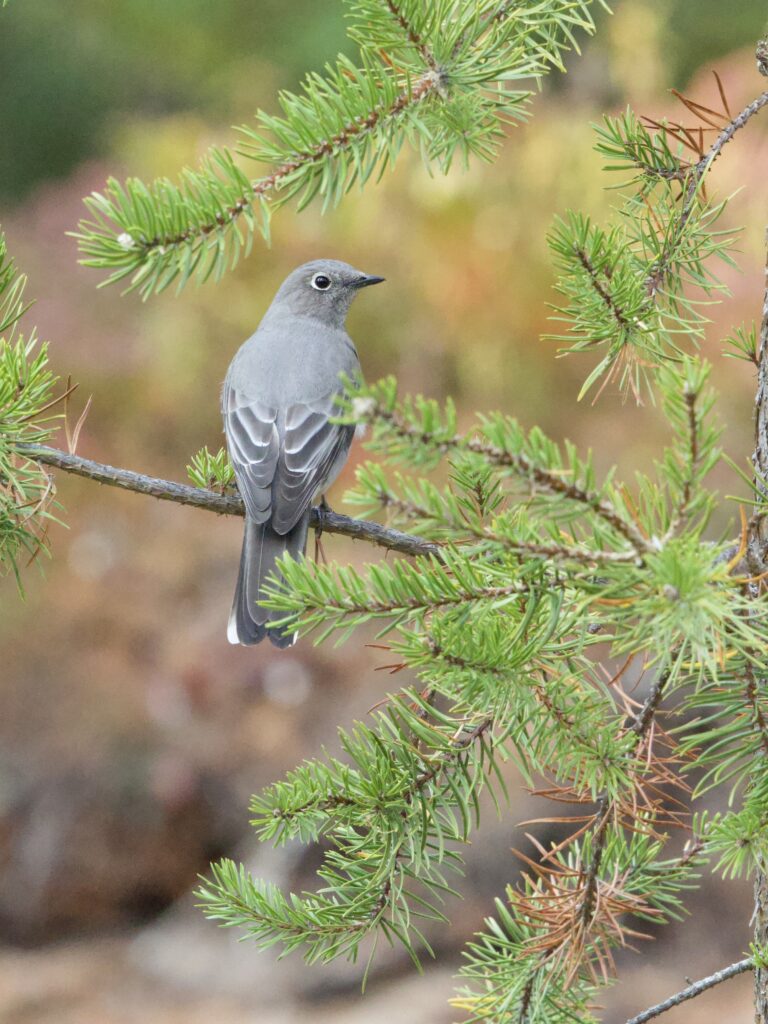
Townsend’s Solitaire. Photo by Oliver Kew
Oliver Kew, Fall Field Ornithologist
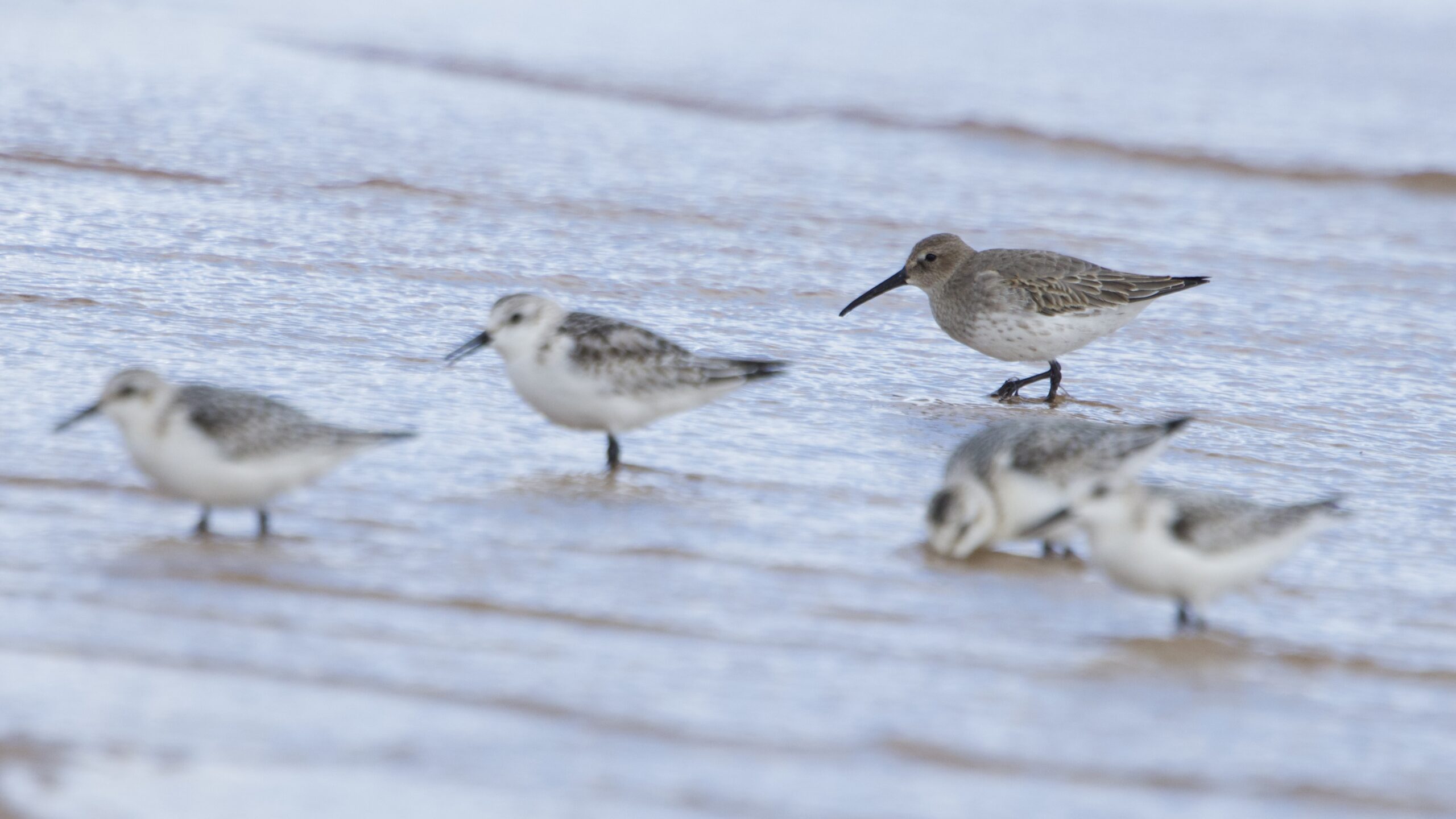
Featured Photo: Dunlin by O. Kew
Track the morning flight counts on Trektellen.
Keep up with the 2026 Fall Field Ornithologist’s weekly blog posts and follow WPBO’s social media (Facebook, Instagram, and X).
Join Oliver for one of his WPBO Migratory Bird Walks offered every weekend through November 15. Learn more: wpbo.org/wpbobirdwalks/

Oliver Kew: 2026 Fall Field Ornithologist
Oliver is a passionate naturalist from Petoskey, Michigan. He worked for Mackinac Straits Raptor Watch as a waterbird counter for seven seasons. Oliver graduated from Michigan State University in 2017 with a B.S. in Zoo & Aquarium Science. His previous roles include working as an Animal Husbandry Technician and Zookeeper Aide, where he helped maintain large collections of exotic birds and reptiles. Originally from Coventry, England, Oliver developed an immense appreciation for the natural world through his family of foresters. He loves exploring the shorelines of northern Michigan in pursuit of exciting and unexpected birding experiences and is honored to help convey the importance of Whitefish Point as a migration pathway. When he is not birdwatching, Oliver enjoys playing disc golf, looking for insects and plants, and spending time with his two cats.