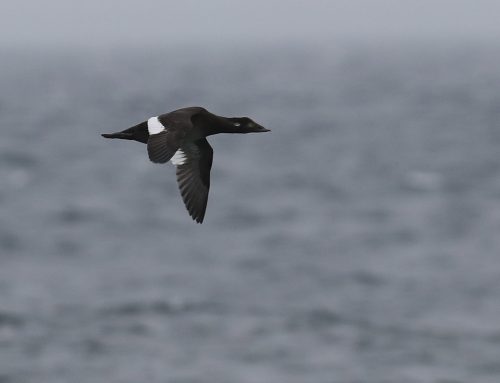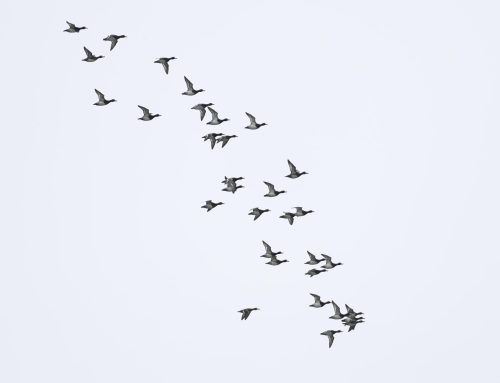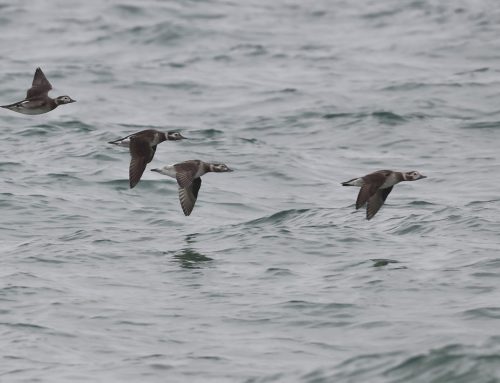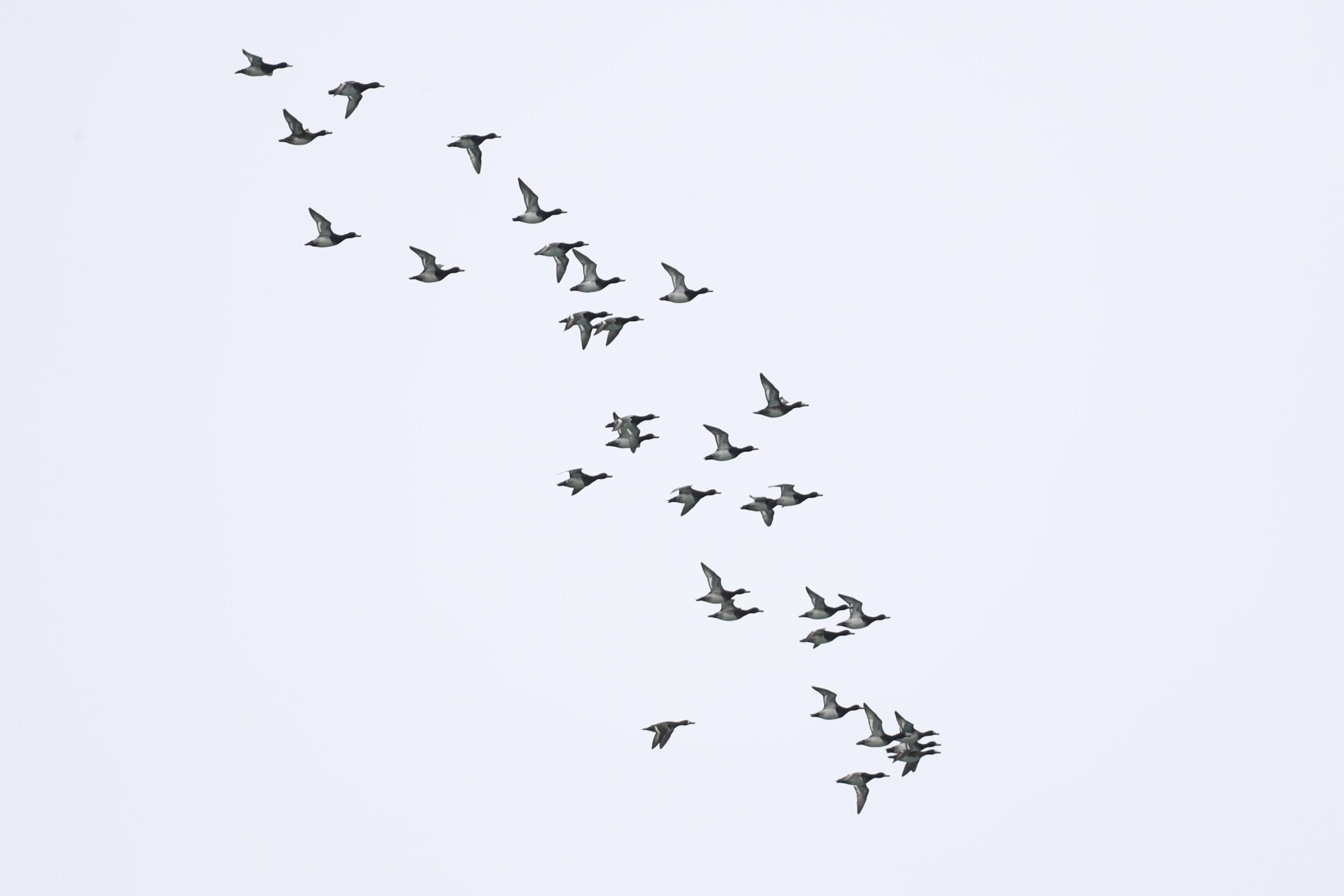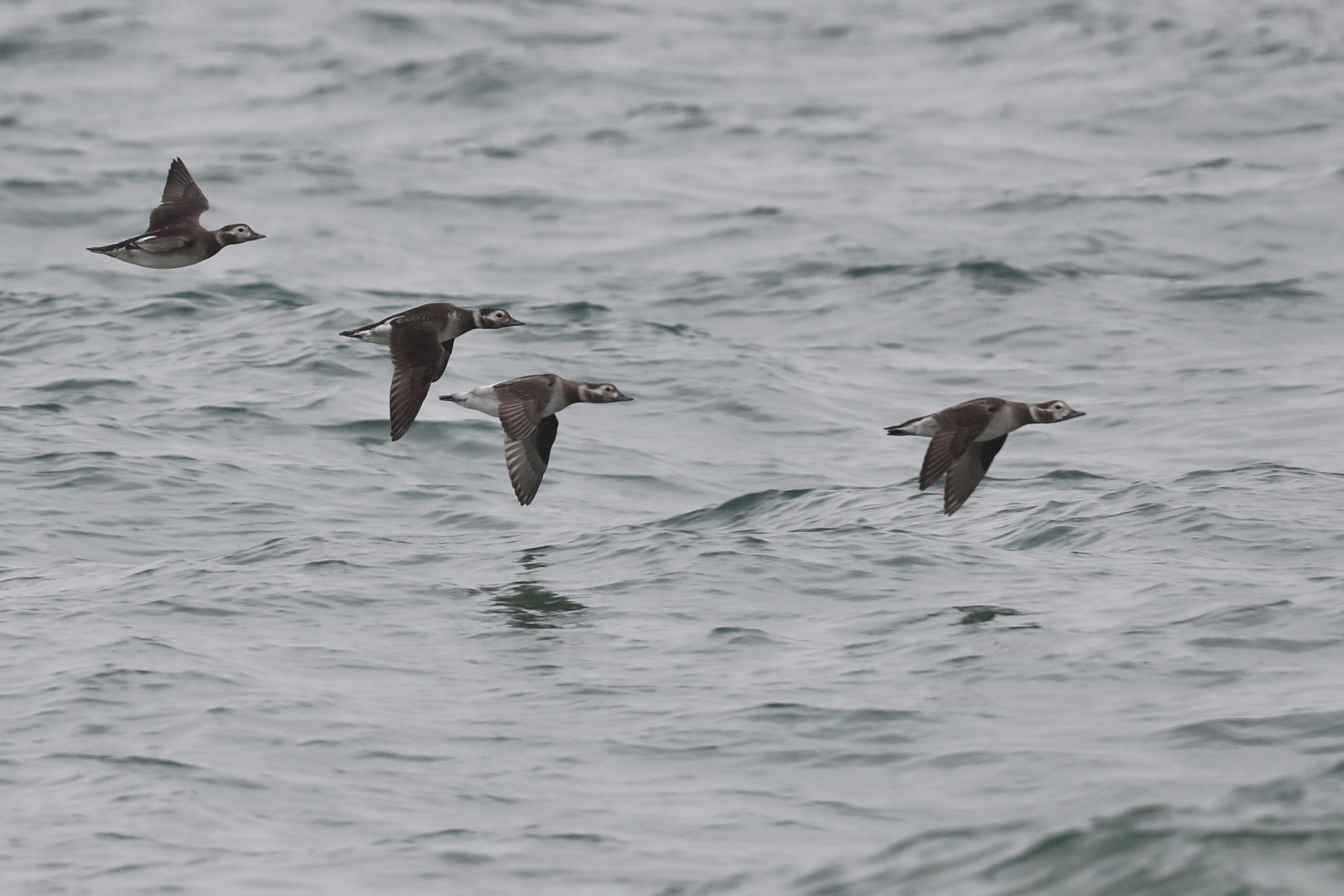
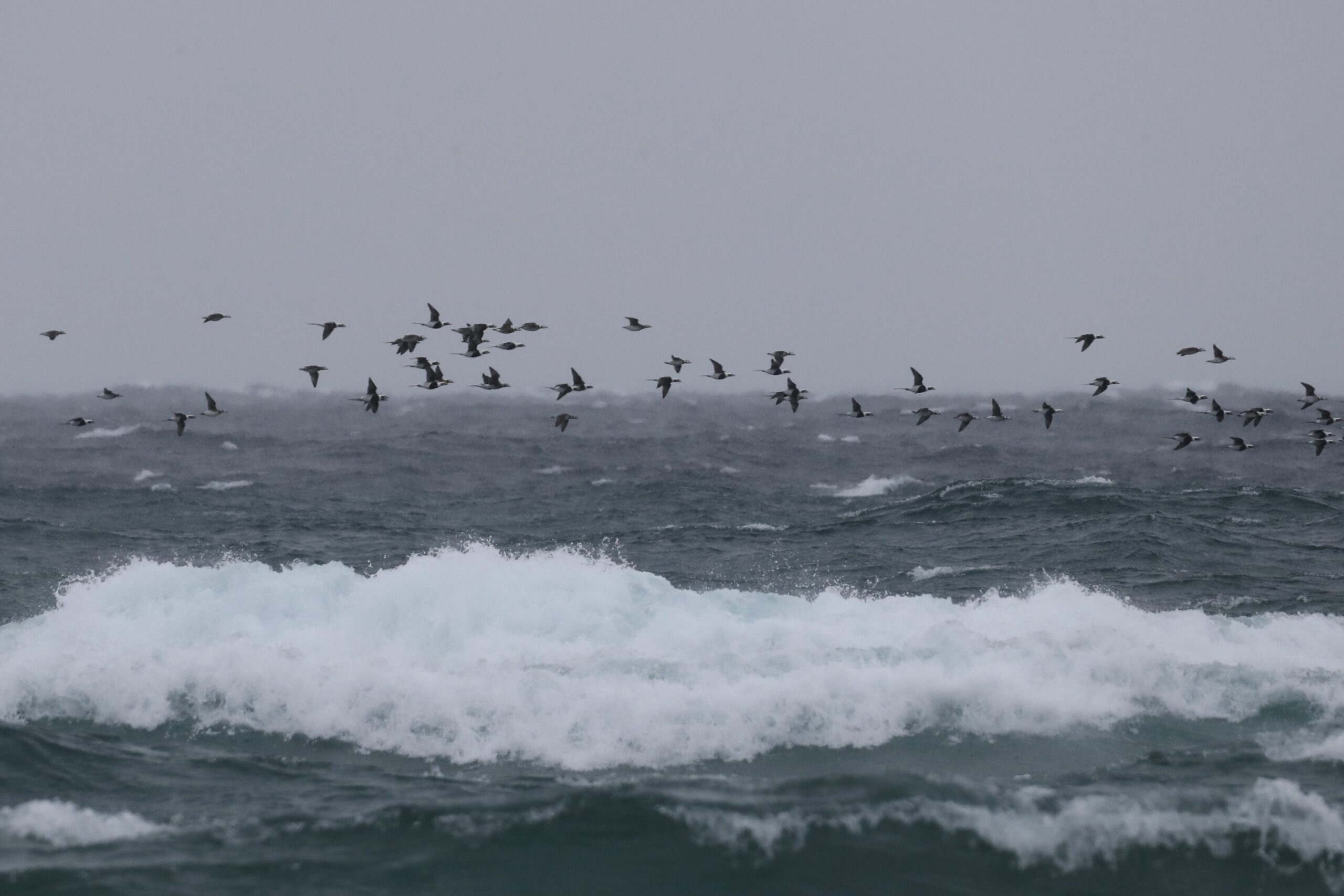
Right when we were losing hope of meeting our quota for our season total of Long-tailed Ducks, November 6th happened. We set a new all time day record with 23,569! A strong northerly wind straight off the James Bay brought across lots of snow. On this rainy, sleet day at Whitefish, the Long-tail flocks started ripping Southeast starting predawn. These birds were surely staging on James Bay before getting blasted south when the front and bad weather came, trying to stay ahead of it. Somewhat surprisingly, a few other ducks moved during the flight, but over 400 Red-breasted Mergansers and over 200 Common Goldeneye were the next most abundant. The waterfowl excitement also continued with a flock of two and a flock of eleven Tundra Swans. Our first two adult Great Black-backed Gulls of the season sailed by, as well as some Kumlien’s Iceland Gulls. Tailing the James Bay push of waterfowl, we got our first Purple Sandpiper of the season as a nice rarity for the Point.
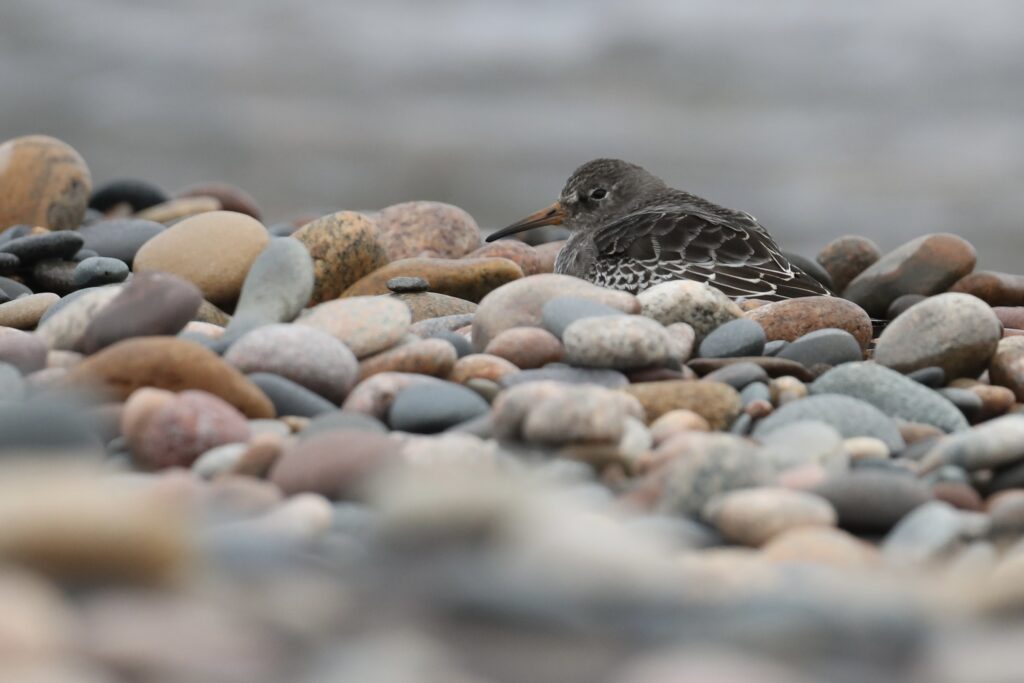
Purple Sandpiper. Photo by Jack McDonough
Even through the wind and rain, three Rough-legged Hawks were observed. A stunning dark morph came in off the lake during some of the thickest parts of the sleet. Bohemian Waxwings and Pine Grosbeaks have picked up in the last week. We have also had our first flocks of Common Redpolls in the last few days. Many have been seeing flying over with others feeding on birch catkins with goldfinches. Red Crossbill and American Goldfinch numbers have remained consistently high this week.
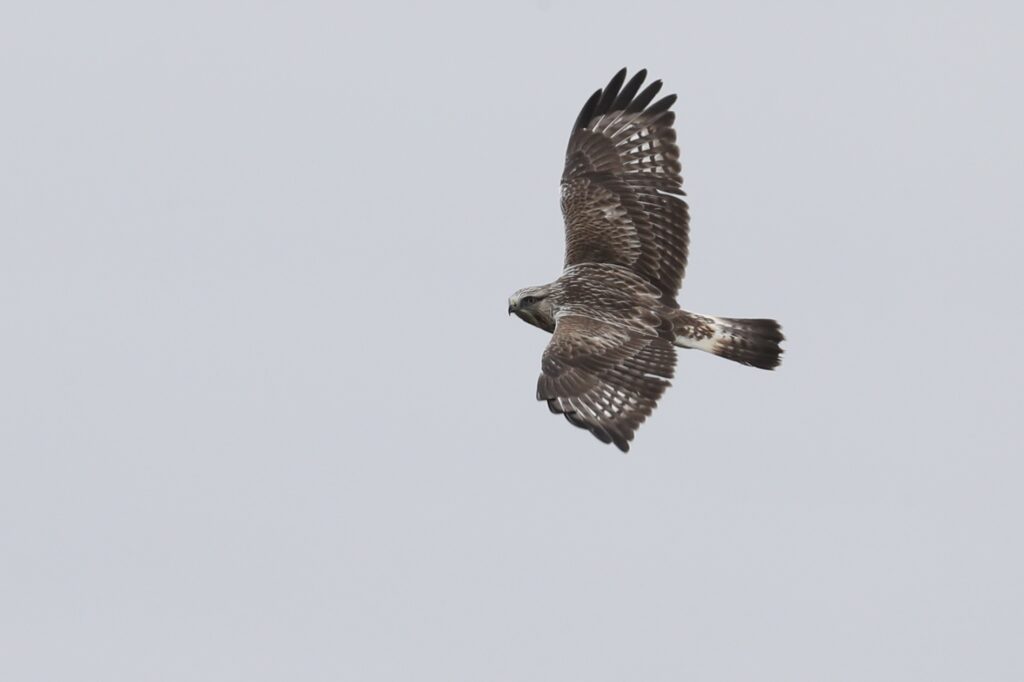
Rough-legged Hawk. Photo by Jack McDonough
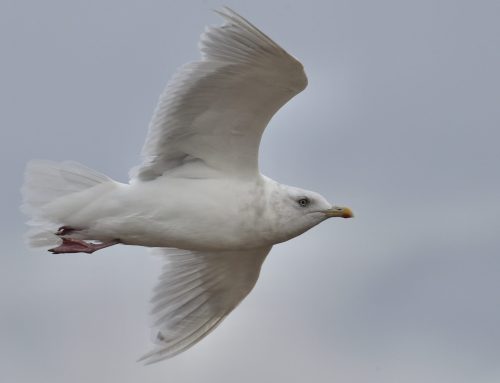
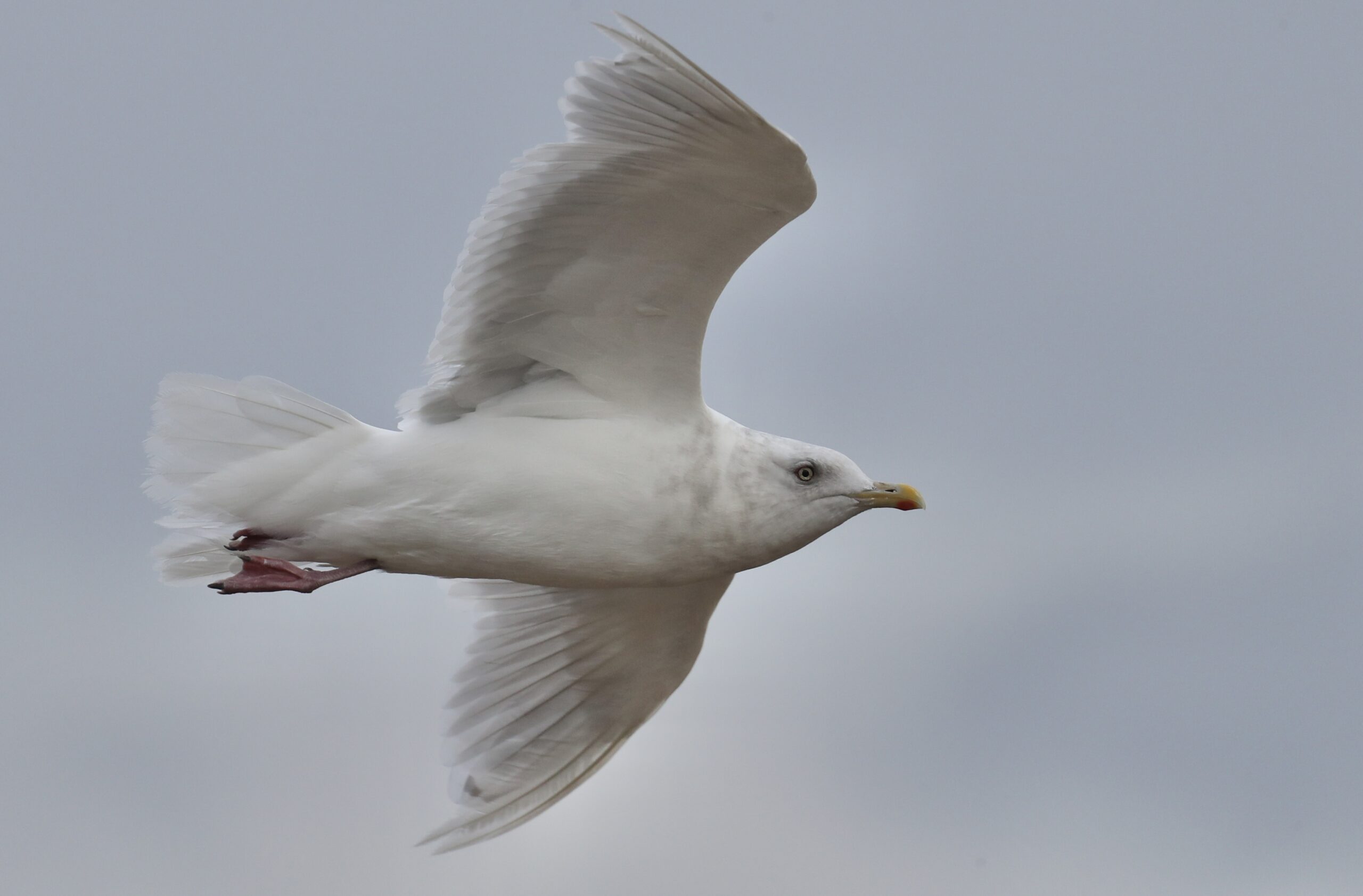
Our gull success has been increasing with our first Glaucous Gulls on the 8th. We had one 1st winter bird lazily flying around the shore in the morning that had a little throat collar and a second 1st winter bird in the last 15 minutes of the count that ripped out of the NW over the lake. On the 10th, we had our second day of Great Black-backed Gulls with a really fresh looking 1st calendar year bird that flew up the shoreline and was later seen flying over the lake to the northwest. Also on the 10th, not one, but two immature Pacific Loons flew by. We have now had six for the season, which is pretty cool.
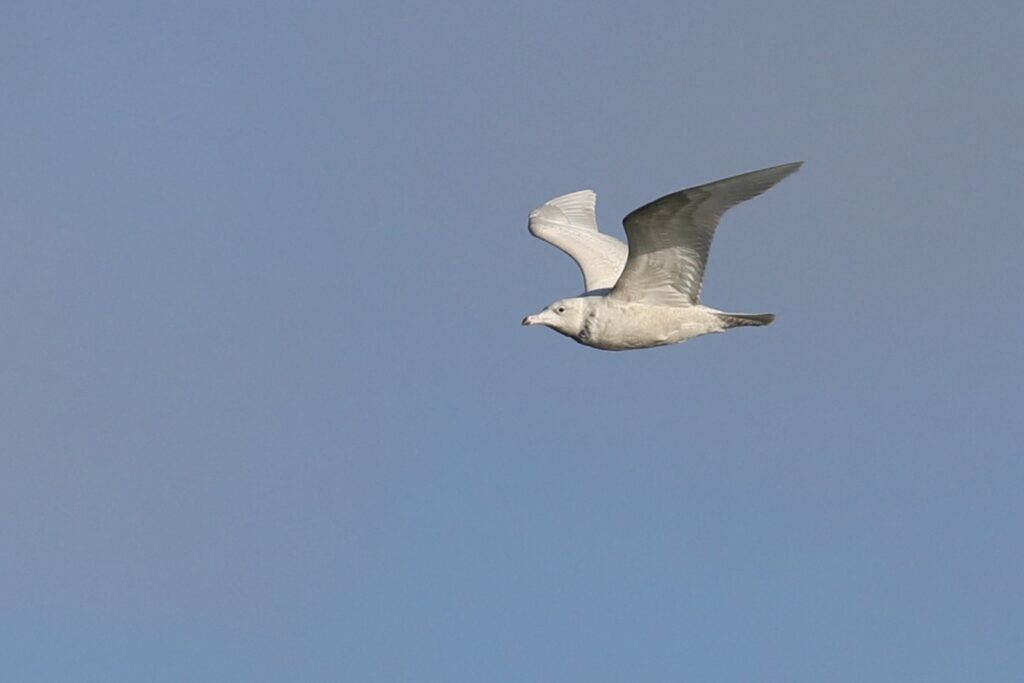
Glaucous Gull. Photo by Jack McDonough
Over the last week, we have been seeing a lot of late Red-necked Grebe numbers. So far this November we have already recorded about 250 grebes, with a high count of 77 on the 8th and a few days in the 30s or 40s. The remainder of our last week looks like a lot of northerly and northeasterly winds, which will hopefully bring some more ducks down from the James Bay. Tune in on TrekTellen to see what’s happening!
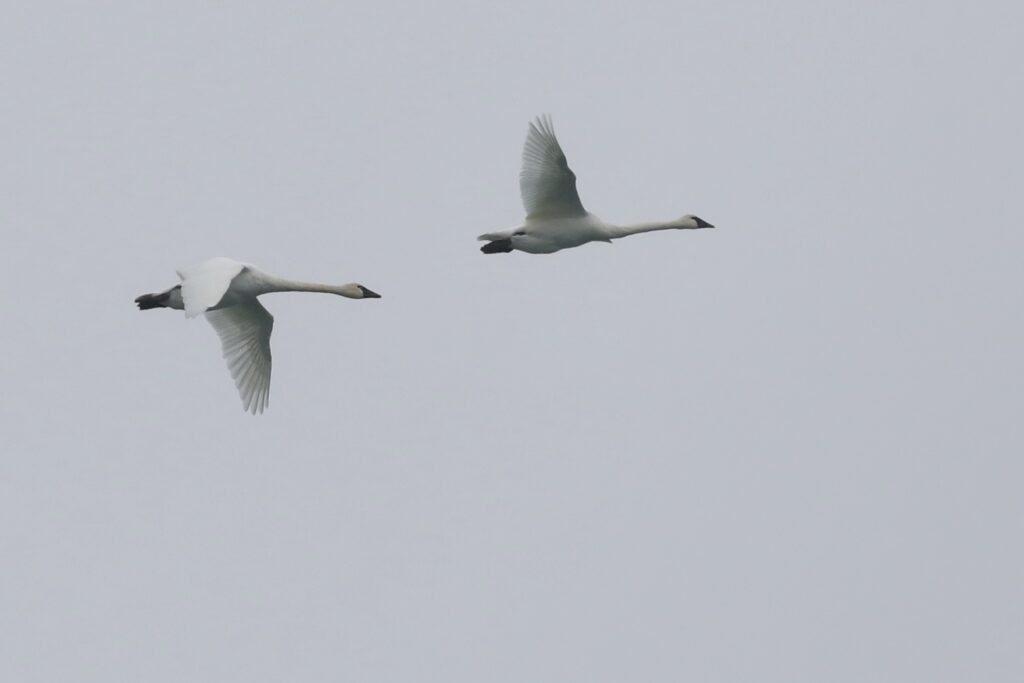
Tundra Swans. Photo by Jack McDonough
Jack McDonough, Fall Waterbird Counter
Featured Photo: Long-tailed Ducks by J. McDonough
You can now see the waterbird count data on Trektellen! Check it out at trektellen.org/count/view/5727.
You can keep up with the 2026 Fall Waterbird Count by reading Jack’s weekly blog posts and following WPBO’s social media (Facebook, Instagram, and X). The fall waterbird count runs August 15 through November 15.

Jack McDonough: 2026 Fall Waterbird Counter
Jack grew up in Cape May, New Jersey, where he developed an early passion in life for anything migrating. At New Jersey Audubon’s Cape May Bird Observatory (CMBO), Jack worked for the Monarch Monitoring Project for six years and coordinated it for the last three. Jack was a migratory bird counter for two seasons for CMBO’s Springwatch project and was a swing counter for several fall counts such as CMBO’s Morning Flight, Avalon Seawatch, and Cape May Hawkwatch. Additionally for NJ Audubon, he preformed aerial imagery annotating for seabirds with USGS. Jack worked as a biologist for NJDEP Fish & Wildlife under the Endangered and NonGame Species Program for several years doing surveys and management work for state-listed species. Owning his own business in ecological consulting and biological monitoring, Jack has worked across Nevada and California in the past year. He spends most of his free time out in nature, studying behavioral ecology through the arts.