Late April is always an exciting time at the Hawk Count, for this is the time that raptor diversity increases to the maximum and flights really build some steam. This week lived up to the call! We started off with a bang on the 14th with the first triple-digit Sharp-shinned Hawk flight of the year, 113. The morning of the 15th was plagued by a pesky pea soup fog that enveloped the point in a damp embrace. As soon as the fog lifted however, birds erupted from the skies and we tallied an impressive 45 Rough-legged Hawk, 40 Northern Harriers and 249 Sharp-shinned Hawks! Sharpie flights here always amaze me, as they swirl and dash, filling the sky with life.
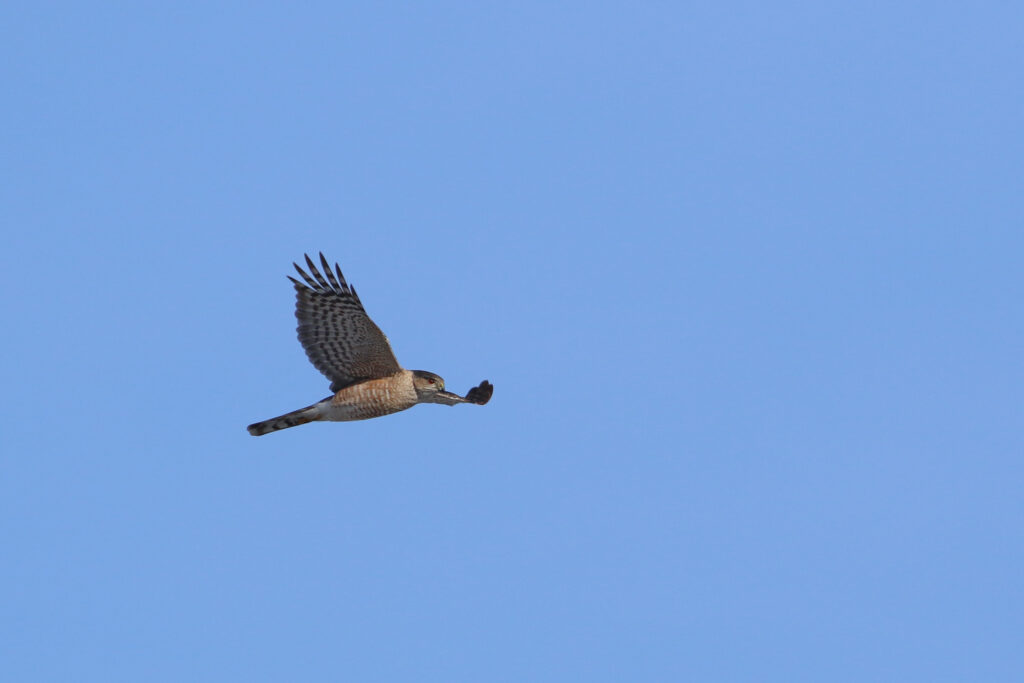
Sharp-shinned Hawk. Photo by Sean McLaughlin
The 16th was similarly foggy throughout the day, leading to a decent but slightly reduced raptor flight. April 17th was the best day of the week, with nearly 1,000 Sharp-shinned Hawks, hundreds of Northern Flickers, 56 Rough-legged Hawk and a classic late day flight of 153 American Kestrel. On warm days with southerly winds in late April, you can bet on a steady line of kestrels zipping down the dunes. I sometimes refer to this event as the kestrel conveyor belt! Amongst the Red-tailed Hawks on the 17th was a nearly all white “leucistic” bird, and a bird carrying a transmitter! “Melon,” an adult Northern Red-tailed Hawk, was banded and affixed with a transmitter on March 3, 2026, as a part of the Red-tailed Hawk Project. Keep an eye on their socials for more to come on this bird!
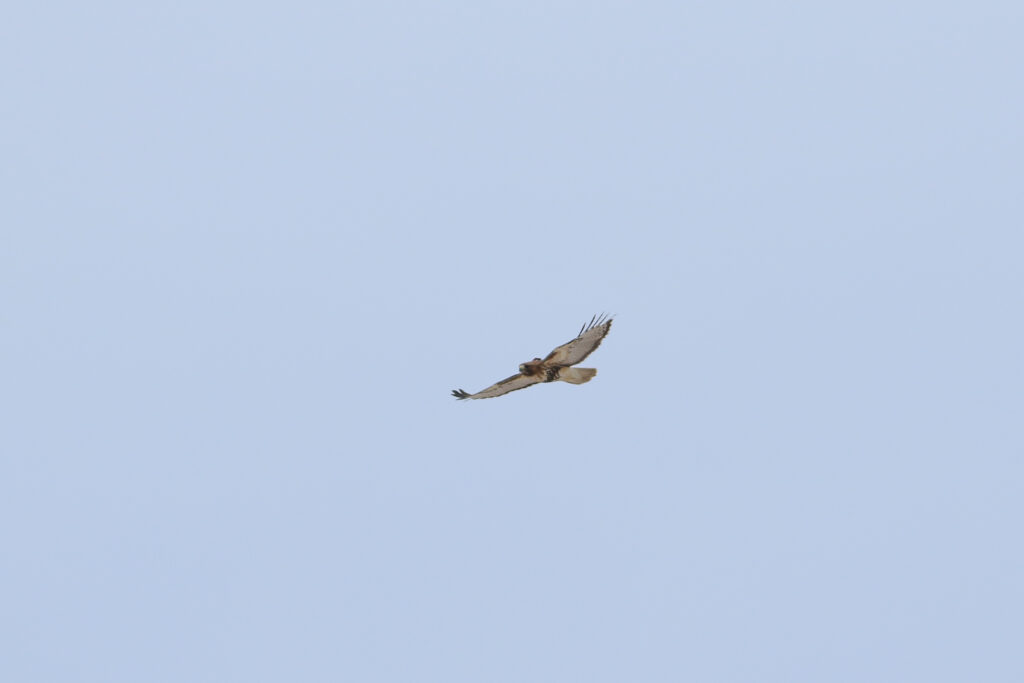
Red-tailed Hawk “Melon” with transmitter. Photo by Sean McLaughlin
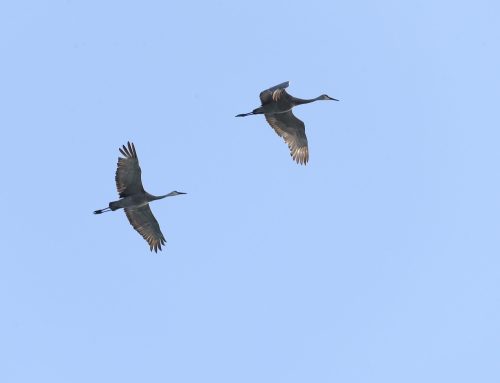
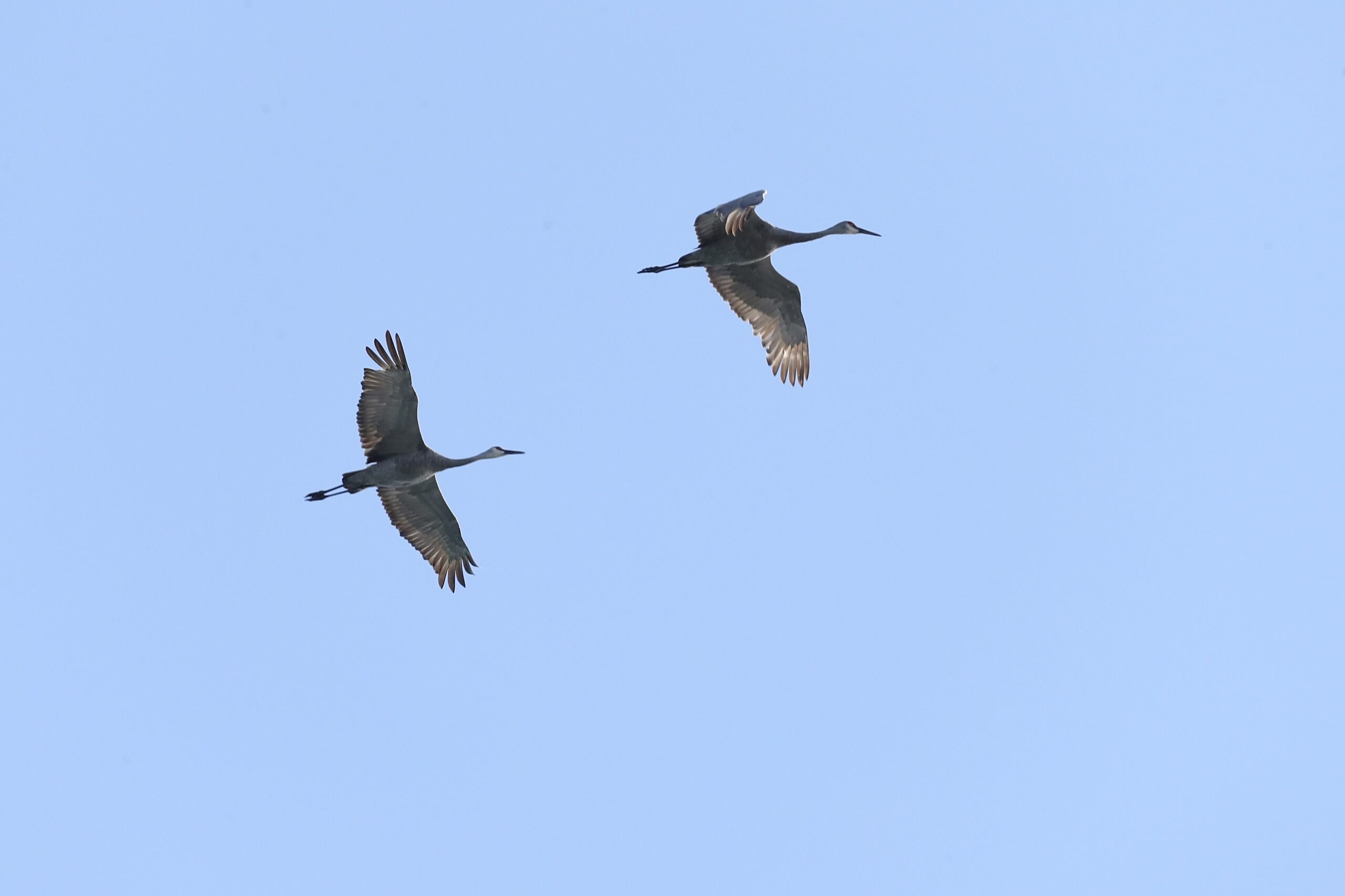
The weekend delivered a strong cold front, stiff NW winds and dropping temperatures. We even had a few snow flurries! These conditions were not favorable for raptor movement. The one weekend highlight was a flight of 515 Dark-eyed Juncos on Saturday. Thankfully, migration was back on by the 20th, with bright sunny skies and light winds. Conditions were decent, but the flight was a little slower than anticipated in the morning. Once thermals perked up in the afternoon, a pleasant overhead line of buteos and cranes materialized. This was the biggest crane flight yet this season, 301!
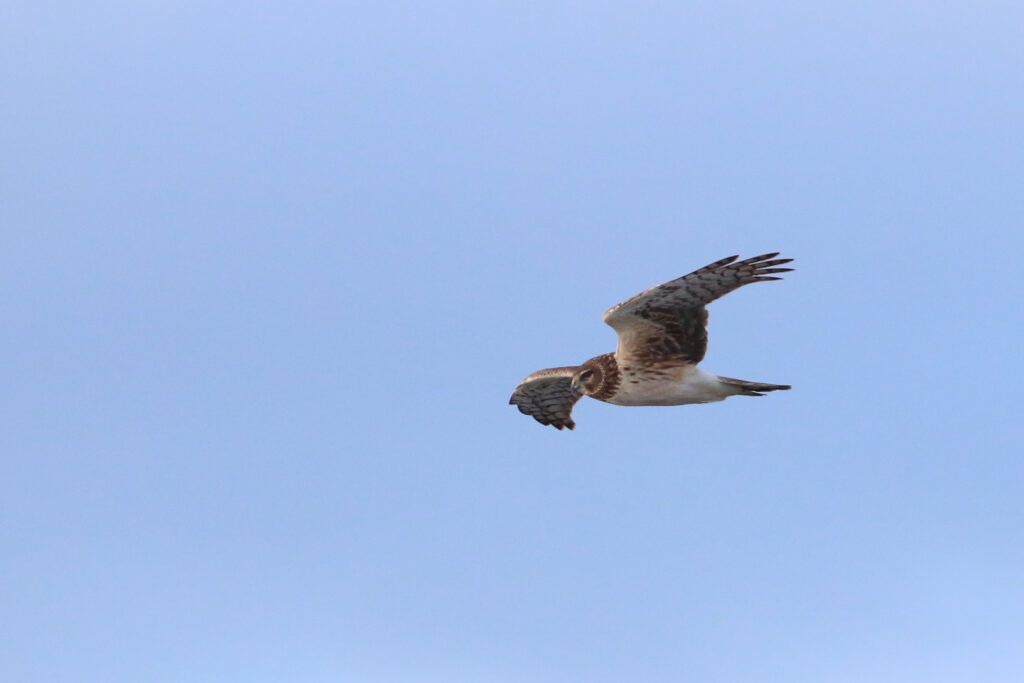
Northern Harrier. Photo by Sean McLaughlin
The weekend delivered a strong cold front, stiff NW winds and dropping temperatures. We even had a few snow flurries! These conditions were not favorable for raptor movement. The one weekend highlight was a flight of 515 Dark-eyed Juncos on Saturday. Thankfully, migration was back on by the 20th, with bright sunny skies and light winds. Conditions were decent, but the flight was a little slower than anticipated in the morning. Once thermals perked up in the afternoon, a pleasant overhead line of buteos and cranes materialized. This was the biggest crane flight yet this season, 301! Plenty of good flights to come, and passerine diversity is definitely increasing. Hope to see you at the Point!
Sean McLaughlin, 2026 Spring Raptor Counter
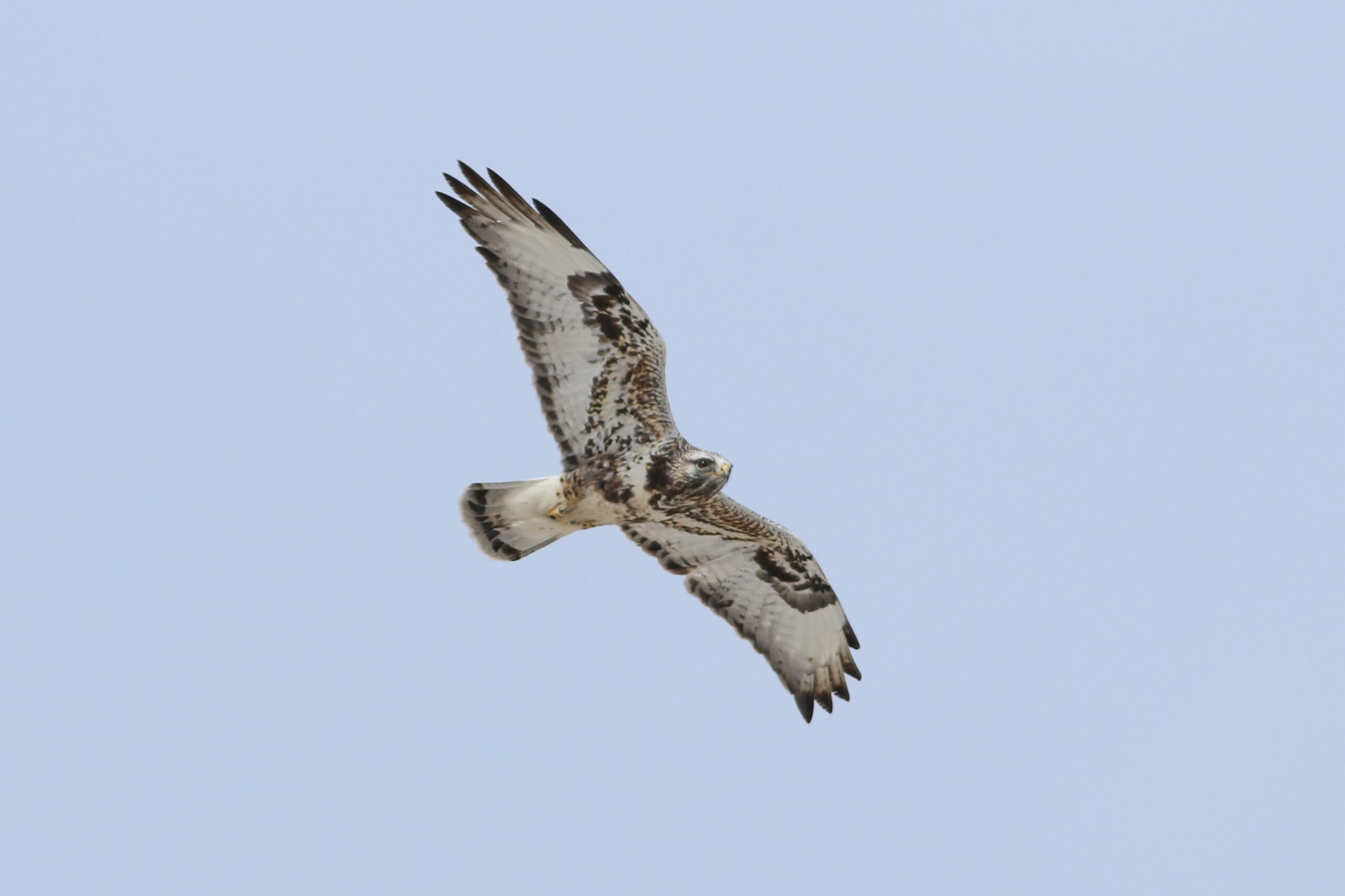
Featured Photo: Rough-legged Hawk by Sean McLaughlin
You can now see the raptor count data on Trektellen! Check it out at trektellen.nl/count/view/4562.
You can keep up with the 2026 Raptor Count by reading Sean’s weekly blog posts and following WPBO’s social media (Facebook, Instagram, and X). The raptor count runs March 15 through May 31.

Sean is a hawk watcher from Pennsylvania who has enjoyed watching birds migrate for over 15 years. A lifelong birder and naturalist, Sean has counted raptors at Stone Mountain and Tussey Mountain hawk watches in PA, before moving to the shore of Lake Superior. He has led the count team for four seasons at Hawk Ridge and three at the West Skyline Hawk Count in Duluth, Minnesota, instilling a deep love for the Great Lakes. In Duluth, Sean also conducts morning flight counts of passerines and other migrants. Outside of the world of watching migration, Sean has studied American Goshawks in the mountains of Oregon, breeding birds in northern Minnesota, and instructed courses at Hog Island Audubon Camp. He is excited to return to eastern Lake Superior for a second spring at Whitefish Point, particularly for the epic Sharp-shinned Hawk and Common Loon flights.